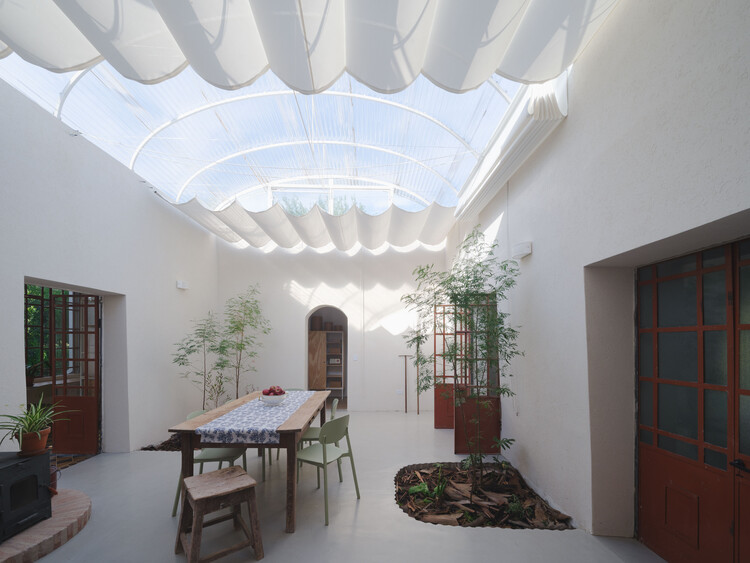
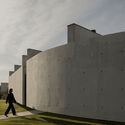
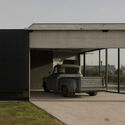
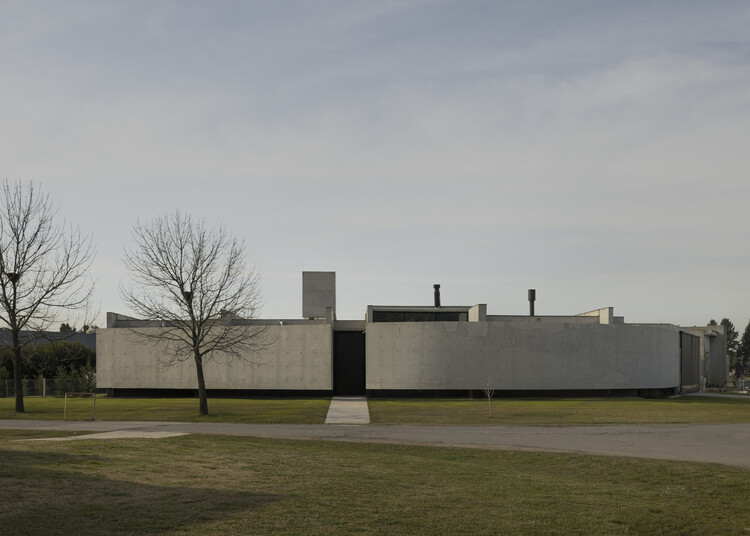
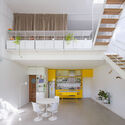
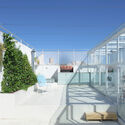
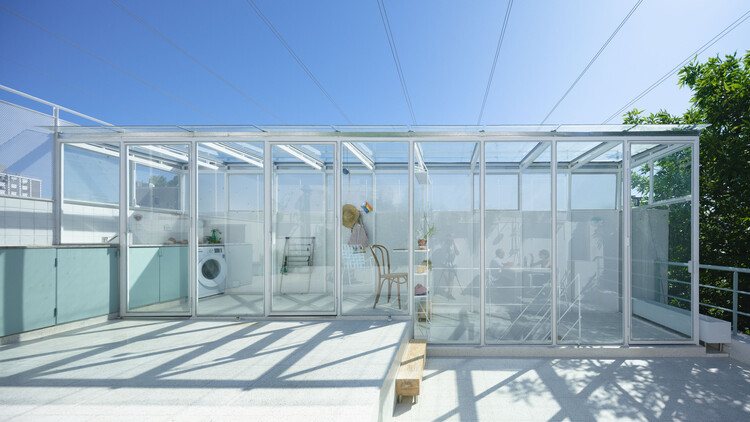
Theo Sarantoglou Lalis, Dora Sweijd. Spaces for Knowledge Exchange: New Worlds of Leisure, Diploma Unit 17, Architectural Association, 2017.
Digital Constructivism, a two-week workshop by the Architectural Association Visiting School (AAVS) taking place at the Torcuato Di Tella University School of Architecture and Urban Studies this coming July, explores the generation of material environments from conceptualization to production. Structured as a series and based on an intensive version of the creative process developed by Diploma Unit 17 of the Architectural Association in London, "Spaces for Knowledge Exchange: New Worlds of Leisure," each instance of the workshop informs the next, advancing its conceptual construction cumulatively. The series is based on the conviction that radical architecture does not require appealing to parallel or fictional worlds, but rather operating through technically precise and spatially creative decisions based on connections with a world that, while increasingly homogeneous, is replete with exceptions, specific conditions, and extraordinary situations. From these, the workshop encourages the production of speculations that transgress established cultural identities in order to define new forms of beauty.
As part of the first radio broadcast of the 2018 season—now in its third year on the air—Etéreo (arquitectura que se escucha) captures highlights from the sessions held during the course on urban resilience and climate change in Latin American cities, organized by CELFI (Latin American Center for Interdisciplinary Training).
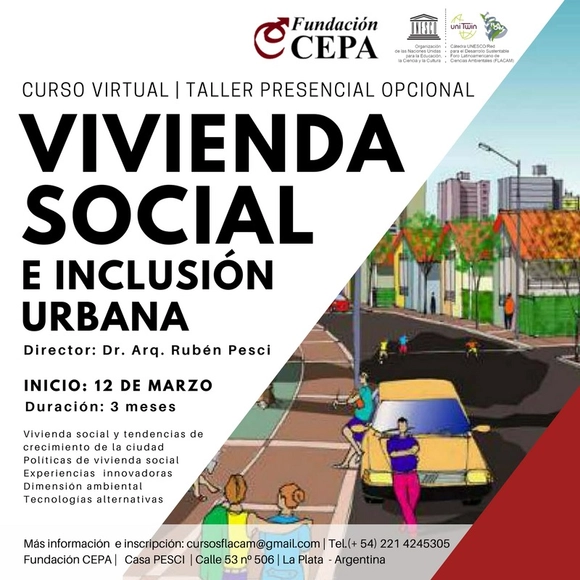
Pre-registration for the Social Housing and Urban Inclusion course: https://goo.gl/forms/32n3wXZRLtlJbKaS2
New course from Fundación CEPA: Social Housing and Urban Inclusion (2nd edition), starting March 12th, directed by architect and PhD in Urban Regeneration and Sustainability, Rubén Pesci.
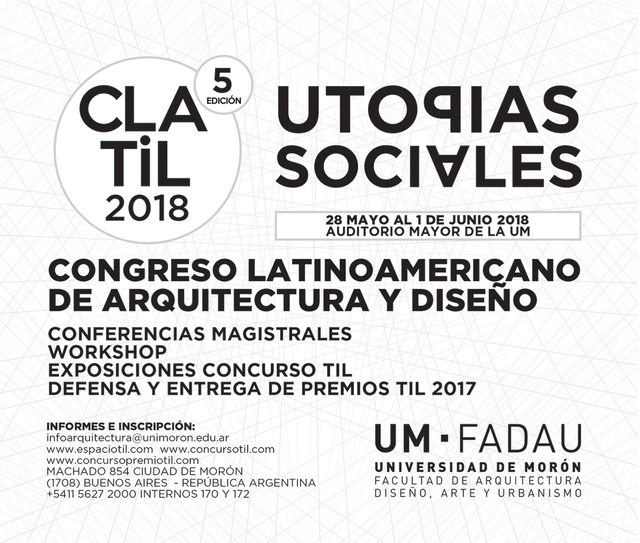
Building on its history, the Latin American Congress of Architecture (CLA TIL)—organized since 2013 by the Faculty of Architecture, Design, Art, and Urbanism at the University of Morón—will host its fifth edition in Argentina. The event, themed "Social Utopias," will take place from May 28 to June 1, 2018.
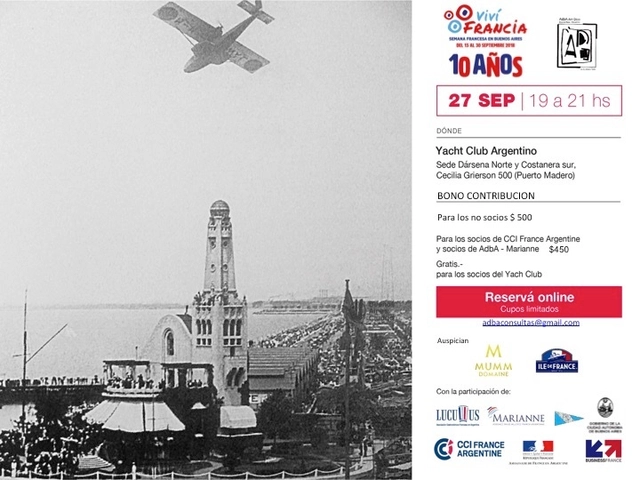
Viví Francia is the name of the French week, which aims to showcase the French presence across various fields. AdbA has selected gastronomy, architecture, and music, combining them in an iconic venue to offer you an exclusive experience in Buenos Aires.
The Master’s in History and Culture of Architecture and the City addresses the development of the relationships between architecture, culture, and the city from the Renaissance to Globalization. Intertwined with processes of political, technological, and cultural change, the increasing complexity of these relationships has eroded the mythical figure of the architect as an all-encompassing artist or intellectual, giving rise to new and unexpected ways of operating within the context of material culture. Today, architecture brings together numerous niches of knowledge that distribute competencies, all vying to position themselves at the center of the debate: history, theory, technology, representation, and design constitute domains in constant friction and exchange, forming a dynamic corpus of knowledge whose active principles of impact on reality are explored in the program.
The exhibition 'Archipaper: Drawings from the Plan,' at the National Museum of Decorative Art (MNAD) in Buenos Aires, brings together over 100 pieces in various techniques and dimensions by a diverse group of renowned Spanish architects, highlighting the importance of drawing and representation in architectural creative processes.
Find more information about the exhibition and words from architect Martín Marcos, director of the National Museum of Decorative Art, below.
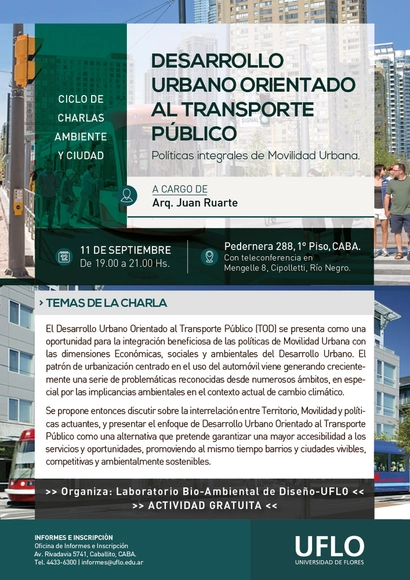
The Bio-Environmental Design Laboratory at the University of Flores (UFLO) invites you to the second free lecture of the ENVIRONMENT and CITY series, which aims to foster reflection and the exchange of perspectives on environmental issues within the urban context.
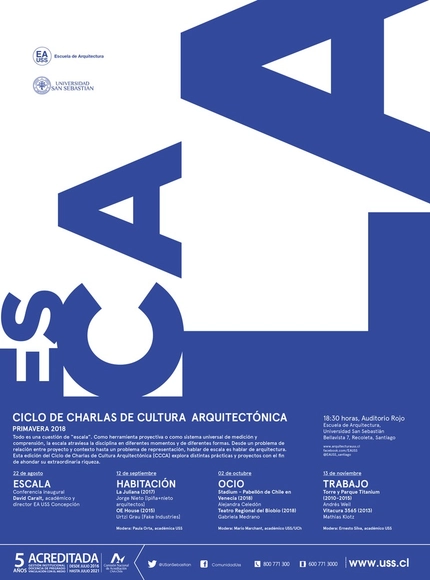
The spring edition of the series focuses on "scale" in architecture. Everything is a matter of "scale." Whether as a projective tool or a universal system of measurement and comprehension, scale permeates the discipline at different moments and in different ways. From the relationship between a project and its context to issues of representation, to speak of scale is to speak of architecture. This edition of the Architectural Culture Lecture Series [CCCA] explores various practices and projects to delve into its extraordinary richness.
How can we design complex solutions for leadership in decision-making? How is knowledge constructed, and what is the validity of that knowledge? Does objectivity exist in the sciences? What is intersubjectivity?
The most innovative voices and actions on the global stage warn that we are witnessing a global crisis of the current consumerist and materialist paradigm. This crisis is political, scientific, technological, and educational. Faced with this reality, the need to trigger a paradigm shift arises. This change requires a true rupture in the theory of knowledge (epistemology) and in individual, social, and public (policy) practices.