The 11th Scientific Initiation Symposium at Escola da Cidade – Faculty of Architecture and Urbanism will take place on October 29 and 30. Submissions for presentation will be accepted until September 20.
The 11th Scientific Initiation Symposium at Escola da Cidade – Faculty of Architecture and Urbanism will take place on October 29 and 30. Submissions for presentation will be accepted until September 20.

On August 29, the Istituto Europeo di Design (IED) in São Paulo will host the second edition of IED Parla, a series of open forums where IED coordinators and faculty invite design professionals to engage in discussions that bridge the gap between speakers and the audience. In partnership with the Istituto Italiano di Cultura (IIC), this edition features Alberto Salvadori, curator of the Munari exhibition, and Rafael Toledo, coordinator of the Product and Service Design undergraduate program at IED São Paulo, for a conversation on the contributions of Italian artist and designer Bruno Munari.
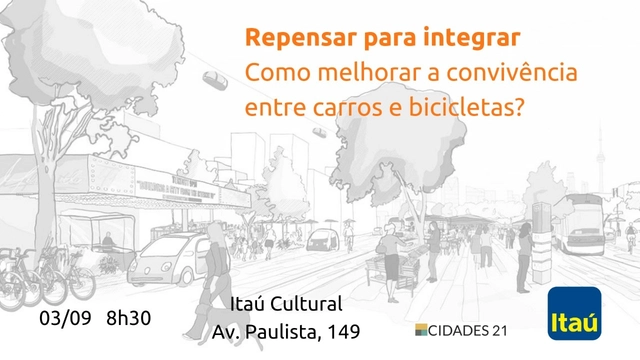
Supported by Itaú Unibanco, the event will bring together representatives from the automotive sector, environmental organizations, and mobility programs.

This course introduces students to five of the most significant thinkers in aesthetics from the first half of the 20th century. We will begin with an overview of the formation of aesthetics as a philosophical discipline. Next, we will examine how Benjamin, Bataille, and Merleau-Ponty—in the field of philosophy—and Argan and Greenberg—in the fields of art criticism and art history—insightfully and originally navigated the transformations Western art underwent following the advent of the avant-garde and the emergence of the culture industry. By considering these two radical shifts, which fundamentally altered our relationship with images and the sensory world at large, we will explore the perspectives of these authors and assess the reach and relevance of their writings today.
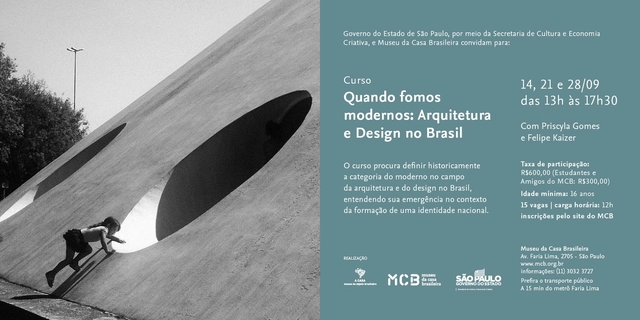
The legacy of Brazilian modernism is currently the subject of intense revisionism and serves as a central reference for many contemporary works, including those that reject its principles. This course seeks to historically define the category of "the modern" within the fields of architecture and design in Brazil, understanding its emergence in the context of the formation of a national identity.

Escola da Cidade – School of Architecture and Urbanism is hosting the third edition of the Portas Abertas program, featuring a series of activities for prospective students interested in pursuing a degree in Architecture and Urbanism. The program, which has been running since 2017, aims to provide students with the opportunity to experience the school firsthand, explore its facilities, and interact with faculty and current students.

The Japanese textile universe, with its richness and variety of fabrics and prints, is the latest facet of Japanese culture to be presented at Japan House São Paulo through the exhibition "NUNO – Contemporary Textile Poetics," on view from August 20 to October 27, 2019. The exhibition highlights pieces created by Japanese designer Reiko Sudo, from the brand NUNO (a word meaning "fabric" in Japanese), which develops aesthetic lines, materials, and techniques, often reinterpreting Japan's textile tradition for the contemporary world.
The Arquitetas Negras project emerged from the need to provide visibility to the work of Black Brazilian architects. By mapping the production of these professionals, the project is building a platform for both research and the hiring of architectural services across Brazil.

On August 23 at 7:00 PM, at IAB SP, the project Gustavo Penna 73/23 – 50 Years of Architecture, Design, and Word will launch the first volume of a five-book collection to be produced through 2023. Titled Gustavo Penna 73/83, the book covers the architect’s first decade of work, including their mentors, professional colleagues, and the early years of the firm, assembling a vast chronological puzzle.
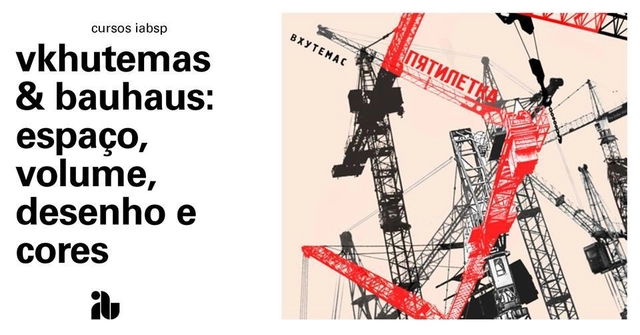
The workshop focuses on executing numerous foundational exercises proposed by masters from the Soviet "Vkhutemas" school and the German "Bauhaus." These exercises, which were part of introductory curricula, involve sensory experiments regarding volume, space, form, and color theory, featuring masters such as Nikolai Ladovsky, László Moholy-Nagy, Lyubov Popova, Lyudmila Mayakovskaya, Johannes Itten, among others. Each session will feature two masters and their respective foundational experimental proposals.

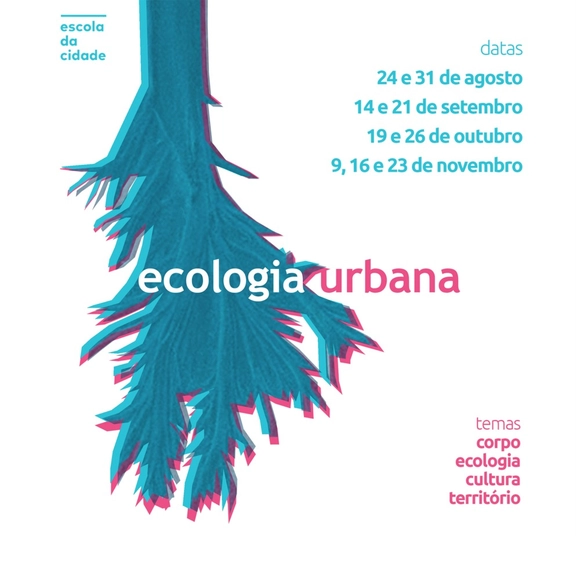
How can we cultivate a holistic, complex, and systemic perspective on what we call home? How can we produce new ways of valuing and recognizing non-hegemonic cultures? What are the pathologies of the systems we are taught to believe in, and how can we create new forms of perception and action that recognize the interconnectedness of life’s production and organizational systems?

On August 26 and 27, the second workshop of the project will take place, themed: “Comprehensive City – A New Vision of the Metropolis.” The proposal is to reflect on the issues surrounding large metropolises in the 21st century, focusing primarily on the perspective of people, the connections created between them and the city, and, above all, how architects, as professionals, can act as mediators in the challenges of the contemporary city.
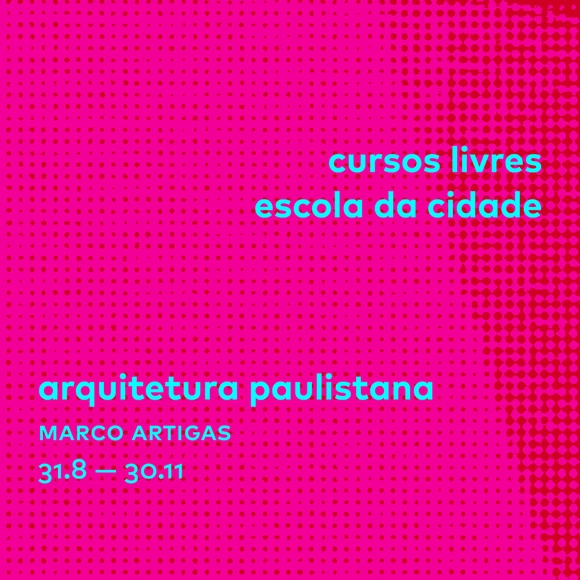
The course is structured around visits to contemporary architectural works in São Paulo, always in the company of the architect who developed the project.
A public inaugural class will be held to present the course and explain the logistics of the visits.
The selection of sites to be visited is based on the following criteria: location, scale, author, and use.
Each visit includes discussions on topics such as the practical realities of architectural practice, education, new technologies, work processes, and the project's relationship with the city.
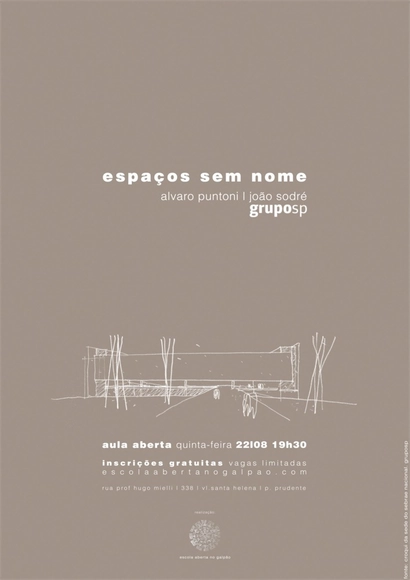
Open Lecture | Nameless Spaces

1st CineCubo IAB Short Film Festival
Followed by a conversation with the filmmakers and members of the jury
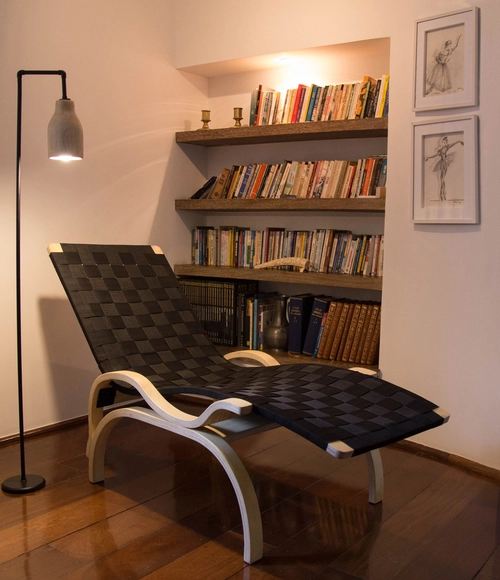
Furniture, developed by a 92-year-old designer, features a contemporary design and is crafted from wood, fabric, and steel.