What is the place of the museum in the modern city? What role does architecture play? How can these buildings be effectively interpreted?
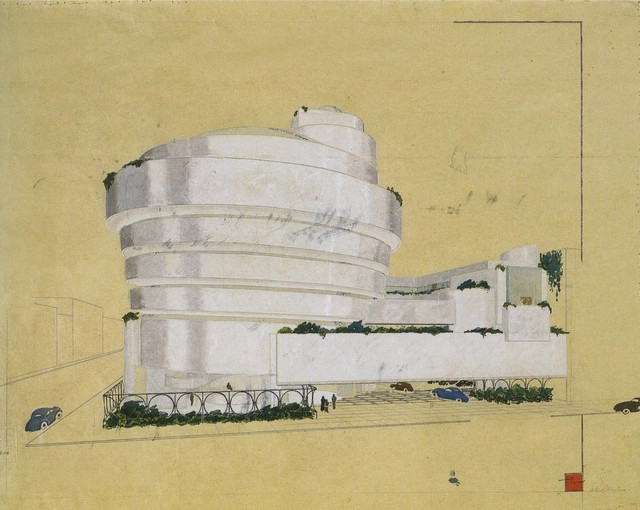
Frank Lloyd Wright’s design for the Guggenheim Museum in Manhattan broke with all existing conventions, setting a new standard for the postwar art museum and, together with the Museum of Modern Art, firmly establishing the city of New York as the cultural capital of the 20th century. A decade later, the significance of this new architectural genre was not lost on Georges Pompidou when he commissioned the cultural center that would eventually carry his name—and launch the successful careers of its architects, Renzo Piano and Richard Rogers—hoping that it would position Paris as New York’s cultural rival.
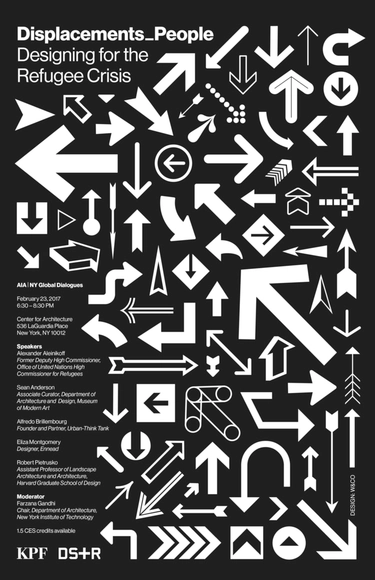
Displacements_People: Designing for the Global Refugee Crisis
For the first event of our 2017 panel season "Displacements" the AIA-NY Global Dialogues Committee explores how designers are responding to the global refugee crisis through analysis, advocacy, documentation, and design.
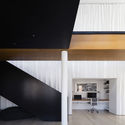
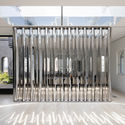
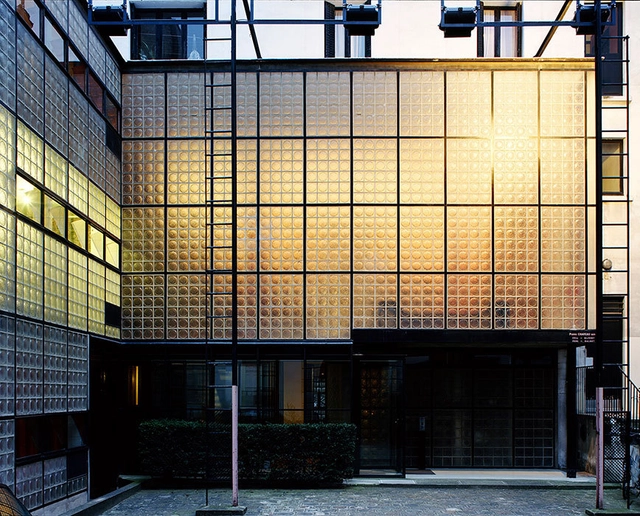
The Jewish Museum presents the first U.S. exhibition focused on French designer and architect Pierre Chareau (1883-1950). Showcasing rare furniture, light fixtures, and interiors, as well as designs for important projects in Europe and America, including the famous Maison de Verre in Paris and the Robert Motherwell House in East Hampton, Long Island, the exhibition will bring together rarely-seen works from major public and private collections around the world.
With the onset of the Great Depression in the 1930s, the great World’s Fairs that had been held around the globe since the Crystal Palace Exhibition of 1851 lost much of their momentum. With the specter of another global conflict looming like a stormcloud on the horizon in the latter half of the decade, prospects for the future only grew darker. It was in this air of uncertainty and fear that the gleaming white Trylon and Perisphere of the 1939 New York World’s Fair made their debuts, the centerpiece of an exhibition that presented a vision of hope for things to come.
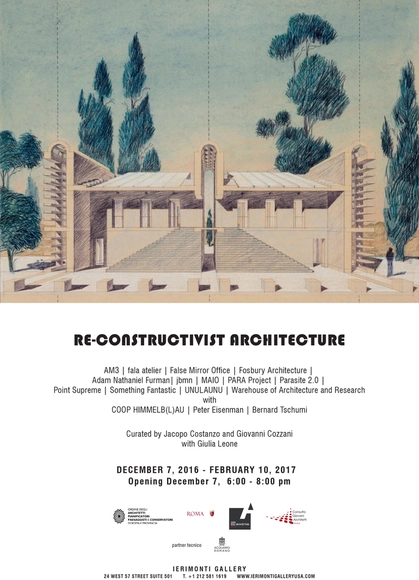
Casa Cecchini a S. Maria di Galeria, Roma, 1971 - A. Anselmi (with C. Giannini) - edited by Warehouse of Architecture and Research with Valentino Danilo Matteis
Their theoretical, critical and historical approach attempts to rediscover a thoughtful dimension behind the architectural subject. Each firm will present a residential project for the Roman countryside, a design exercise meant as a typological investigation, or, more generally, as a meditation on the autonomy of the architectural discipline. The thirteen projects for thirteen houses showcased in the exhibit are intended as a homage to the city of Rome and its countryside.
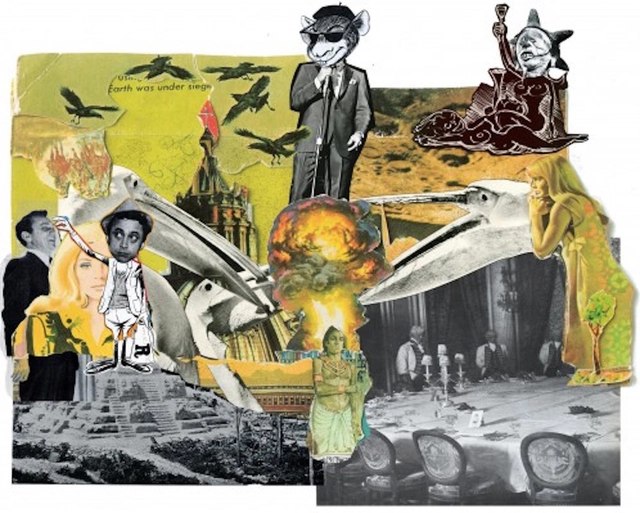
Storefront for Art and Architecture, in collaboration with the New York Comedy Festival (NYCF), has commissioned Jonah Freeman and Justin Lowe to create Paranoia Man in a Rat Fink Room at Storefront's gallery space. The exhibit opened on November 8, 2016, with special preview performances from November 2 - 6, 2016 during the NYCF. Paranoia Man in a Rat Fink Room continues after the festival with events and discussions curated by Storefront through February 18, 2017.
UIA (Urban Intensity Architect) Container Housing by SH Corporation. Photo by: Kyungsub Shin
The expansion of non-stop processes of twenty-first-century capitalism has accelerated the proliferation of digital sharing platforms for the exchange of goods, information, and spaces. Today, apartments, cars, work-spaces, and all kinds of services can be exchanged, opening the possibilities for new understandings of the city. But the promises of the so-called “sharing economies” come along with controversies around the unequal consequences of such a process.
Contemporary Aerial View of Oficina Maria Elena. Chile. Photo by Ignacio Infante.
Transnational projects for resource extraction have motivated the development of massive infrastructural corridors. The strategic siting of mining towns, petrochemical encampments, and industrial developments aims to integrate vast geographical and political entities. These experiments promise to advance economic development on a national scale, but their influence on regional and urban constructs tests the agency of architecture and planning at smaller scales.