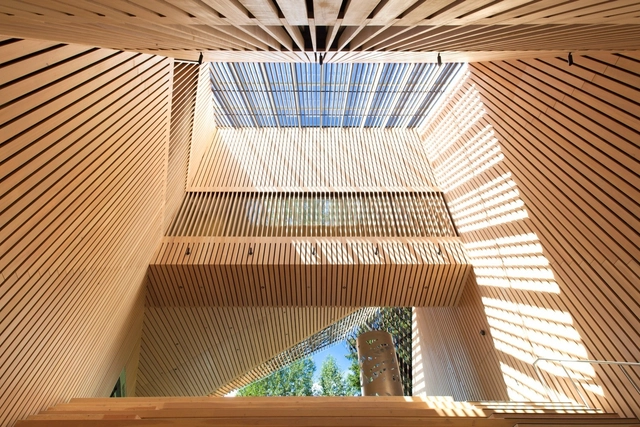
Audain Art Museum (Whistler, British Columbia) / Patkau Architects
The design and construction community is revolutionizing the way we think about wood in construction. Growing pressure to reduce greenhouse gas emissions, coupled with a desire for aesthetically appealing designs, have resulted in a wood momentum that is being celebrated by architects and engineers around the world.
Dubai Trade Centre, the city's first skyscraper, to be designated as modern cultural heritage by the Modern Heritage Initiative. Courtesy of Shutterstock
The Brazilian Trade and Investment Promotion Agency (Apex-Brasil) invites architecture and exhibition design professionals to participate in the competition to select the architectural and exhibition design project for the Brazil Pavilion at Expo 2020 Dubai, to be held from October 20, 2020, to April 10, 2021, in Dubai, United Arab Emirates. The competition is hosted by Apex-Brasil and organized by the Institute of Architects of Brazil, Federal District chapter (IAB-DF).
At ArchDaily en Español, we recognize the importance of maintaining constant contact with architecture students, who will be responsible for designing and building the cities of the future. For this reason, we are opening a new call for applications to join our editorial team through the ArchDaily internship program.
If you currently reside in Spain, this could be your opportunity to contribute local content to the world's most-visited architecture platform, which inspires and informs hundreds of thousands of architects around the globe. If you are interested, please read on.
At ArchDaily en Español, we recognize the need to maintain constant contact with architecture students, who will be responsible for designing and building the cities of the future. For this reason, we periodically open a call for applications to join our editorial team through our internship program.
If you currently reside in Argentina, this could be your opportunity to contribute local content to the world's most visited architecture platform, which inspires and informs hundreds of thousands of architects around the globe. If you are interested, please read on.
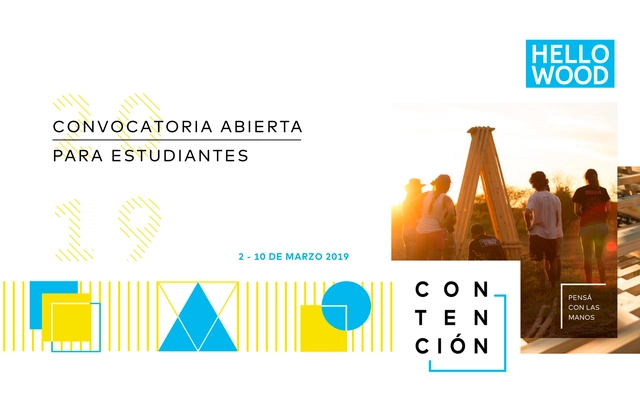
The third edition of Hello Wood in Argentina is approaching—scheduled for March 2–10, 2019—and is calling for university students or recent graduates in architecture, design, and art who are inspired to build around the new theme: CON-TENSIÓN.
The OPEN CITY FORUM is calling for contributions from research and practice, in which different disciplines have described, operationalized or implemented aspects of openness.
Following the confirmation that the Architecture and Urbanism Biennial will return to Santiago after two editions in Valparaíso, the countdown has begun for the close of the call for applications to select the next curator and their team, who will define the conceptual and curatorial framework for the upcoming edition of the event.
While the 2017 edition, "Diálogos impostergables" (Unpostponable Dialogues), addressed national issues that the discipline needed to confront beyond design itself, for the upcoming edition, the Colegio de Arquitectos de Chile is seeking a curatorial team to address the processes of urban renewal, heritage conservation, and densification currently shaping Chilean cities. In this context, the XXI Biennial will be held in Santiago's Barrio Biobío, a historic commercial district in the Chilean capital currently undergoing simultaneous processes of conservation, gentrification, and real estate speculation.
The city of Seogwipo is holding the “International Design Competition for Landscape of Columnar Jointing Area, Jeju” to improve the stunning scenery of the columnar jointing area near Jungmun Daepo Coast that reveals Jeju’s unique geological features, culture, and natural landscape. It will be conducted in the form of an international competition with 5 to 7 invited teams. Refer bellow for competition outlines.
The chosen proposals for Exit Architecture: Speculations on the Hereafter will be on display upstate at Art Omi inside Charles B. Beneson Center this winter. (Robert Prochaska/Original Copy)
Humans have been enshrining and memorializing their dead for millennia. While forms and rituals vary widely across cultures and religions, we are nonetheless reacting to similar desires: memorializing a life, coping with loss, religious symbolism, returning to nature, etc.
ArchDaily is looking for a motivated and highly-skilled architecture-lover to join our team of interns for Fall 2018! An ArchDaily Content internship provides a unique opportunity to learn about our site and write engaging, witty and insightful posts.
Interested? Then check out the requirements below.
ArchDaily is a constantly evolving digital project. It is an experiment in the documentation, discussion, and dissemination of the most important topics in architecture and urbanism on a scale that would not have been possible twenty years ago. Today, we are thrilled to announce that our team in Colombia is growing!
Our content team works to deliver knowledge to readers around the world on a digital platform that operates in four languages: Spanish, English, Portuguese, and Mandarin Chinese. Our primary goal is to ensure that all discussions surrounding architecture and the city reach the widest possible global audience.
As we grow, we are looking for talented new writers and editors. Are you passionate about architecture and the internet? If so, this opportunity might be for you!
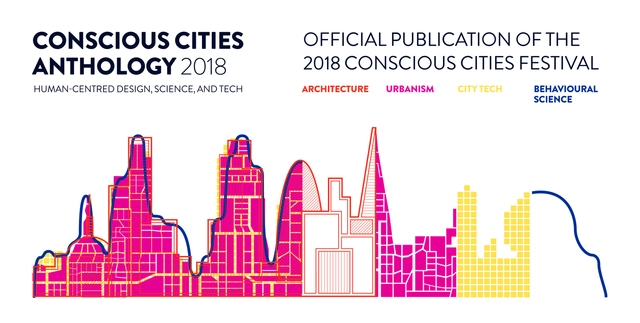
In anticipation of the 2018 Conscious Cities Festival this October, we are delighted to announce an open call for submissions to its official publication - showcasing the diverse and impactful thinking by Conscious Cities practitioners.
When learning about architecture, there is no replacement for practical experience: seeing how materials can be joined together, how structural elements respond to the stresses placed upon them, or how construction techniques can alter the finished project. For this reason, it is a good idea to give students a chance for some hands-on experience building real structures—something that, due to budgetary constraints and the academic culture of many architecture schools, has sadly been uncommon in the past.
However, in recent years, this culture has started to shift, with increasing numbers of architecture schools finding ways for students to be involved in construction projects, from small, temporary interventions and pavilions, to larger permanent buildings. In order to show the excellent work that can be done in an educational context, for the fourth timeArchDaily is calling on students and professors to submit the design-build projects they have completed in the past year. As always, we're teaming up with allofArchDailyen Español,ArchDaily Brasil, and ArchDaily China, in the hope that we can present the best work from students worldwide to a worldwide audience. Read on to find out how you can take part.
AIA Shanghai is pleased to announce its first ever awards program to celebrate China's best design and designers; a benchmark for international excellence.
Design ‘N Gather, the much-heralded, annual global mosaic design competition created by Artaic – Innovative Mosaic and sponsored by Bostik Smart Adhesives, has just started accepting submissions for its 2018 edition.
The Lisbon Triennale is looking for national and international independently funded proposals that can be articulated and also complement the central program of its 5th edition, that will take place between October 3rd and December 2nd 2019.
We're hiring! Our team works with the most prestigious and influential architectural practices around the world in order to deliver specific and valuable content to a premium readership of architects. ArchDaily quickly established itself as one of the leading architectural websites in the world due to our editorial staff’s meticulous understanding of what our audience is really looking for: the best architecture around the world, as soon as possible. And now, we're looking for another bright, enthusiastic and motivated member to join us.
https://www.archdaily.com/896851/were-looking-for-archdaily-chinas-next-content-editorAD Editorial Team
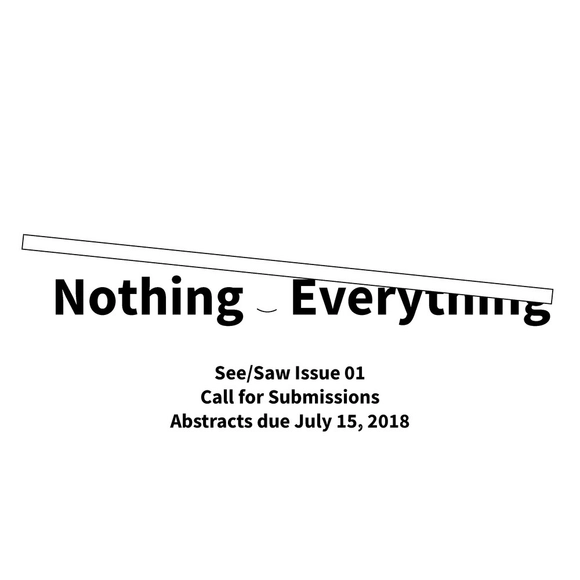
See/Saw is the student-run architecture publication of the University of Maryland.
“Nothing, and Everything Else” aims to locate architecture’s general position between nothing and something. Nothing is temporary, easily intimated, fleeing whenever something comes to take its place. At one point obsessed with space, architecture as a discipline has become occupied by a diffuse range of topics and fields which poses the question - is everything now architecture, or alternatively, is architecture now nothing? Is there a middle ground between the two? And is nothing residual - does it last or linger, smell stinky or pleasant, is it strong or subtle?
With more than 590,000 submissions in 2017, the EyeEm Photography Awards is the world's largest photography competition for discovering new talents.
The 2018 EyeEm Awards feature nine categories, including a category focused on architecture: "The Architect" where we encourage you to submit interesting lines, shapes, and beautiful spaces in architecture.
We live in a time of great change. As paradigmatic shifts in technology, social networks and the physical environment constantly reshape our way of living, we can foresee that the living space of the future in 10 or even 5 years will be drastically different from what it is today.
How will we live in 2025 with updated basic needs and redefined living spaces? Perhaps, physical space and distance will further give way to digital connectivity, while inter-personal relationships will be complicated by our latest affair with artificial intelligence. Or, unsustainable urban development and the celebration of all things virtual will come to a halt and humans will engage in a renewed conversation with each other and the environment.


.jpg?1539029465 "Valley Villa (Vilnius, Lithuania) / Arches")
.jpg?1539029241 "Organic Farm (Tangshan, Hebei , China) / ARCHSTUDIO")











.jpg?1529680690&format=webp&width=640&height=580)