Romullo Baratto

Romullo Baratto is an architect with a PhD from FAUUSP and Managing Editor of ArchDaily. He previously coordinated the editorial team of the 11th São Paulo Architecture Biennial and served as Managing Editor of ArchDaily Brasil, where he led the platform to win the FNA Award—the first time the honor was granted to a media outlet. He collaborated on the editing of the book "Concrete Jungle", published by gestalten, and has curated architecture exhibitions in Brazil, Chile, Denmark, and Italy, as well as delivered lectures and moderated debates in Spain, the United States, and Portugal. His doctoral thesis investigates the urban landscapes of São Paulo through cinema. His work spans academic research and editorial practice, communicating architecture through texts, interviews, lectures, curatorship, and photography. Follow him on Instagram @romullobf.

BROWSE ALL FROM THIS AUTHOR HERE

As virtudes e limites da fotografia na representação da arquitetura - cinco fotógrafos discutem

Subscriber Access | 

Enquanto meio de representação da arquitetura, a fotografia apresenta qualidades indiscutíveis. Com ela, é possível apresentar a um público distante obras erguidas em qualquer lugar do mundo, de vistas gerais a espaços internos e pormenores construtivos - ampliando o alcance e, de certo modo, o acesso à arquitetura.

Entretanto, como qualquer outra forma de representação, não é infalível. Na medida que avanços tecnológicos permitem fazer imagens cada vez mais bem definidas e softwares de edição oferecem ferramentas para retocar e, por vezes, alterar aspectos substanciais do espaço construído, a fotografia, por sua própria natureza, carece de meios para transmitir aspectos sensoriais e táteis da arquitetura. Não é possível - ao menos não satisfatoriamente - experienciar as texturas, sons, temperatura e cheiros dos espaços através de imagens estáticas. 

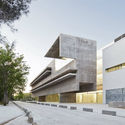
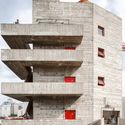
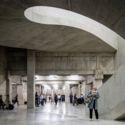
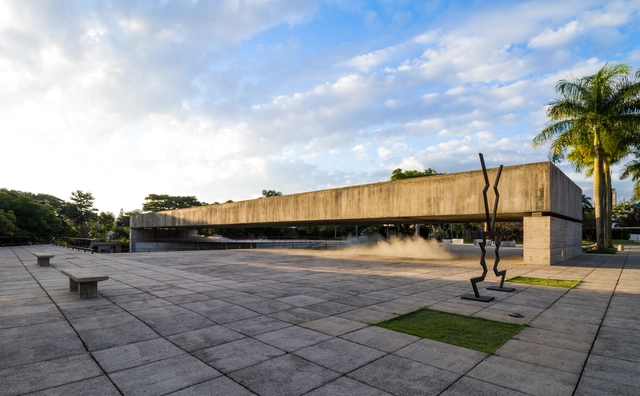
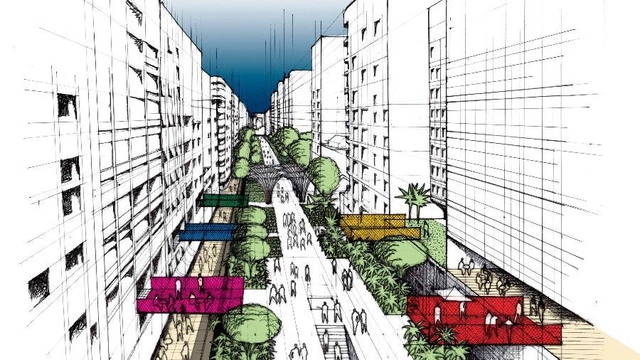
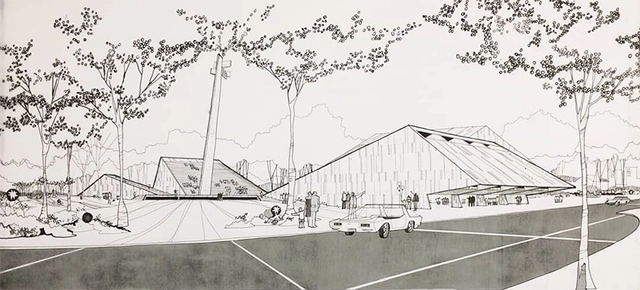
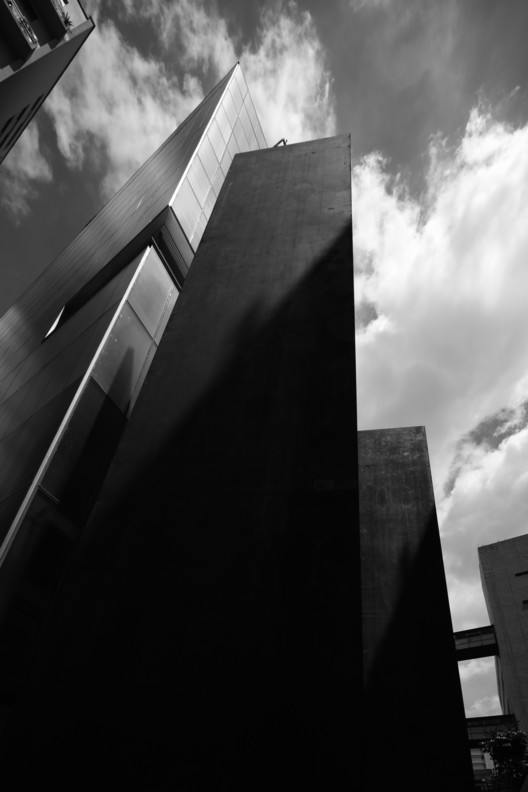
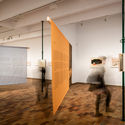
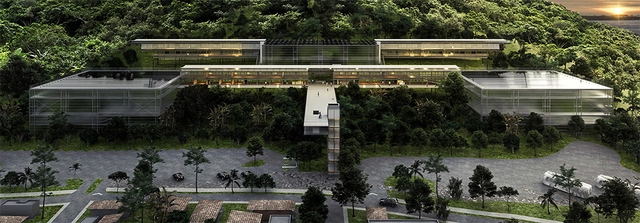
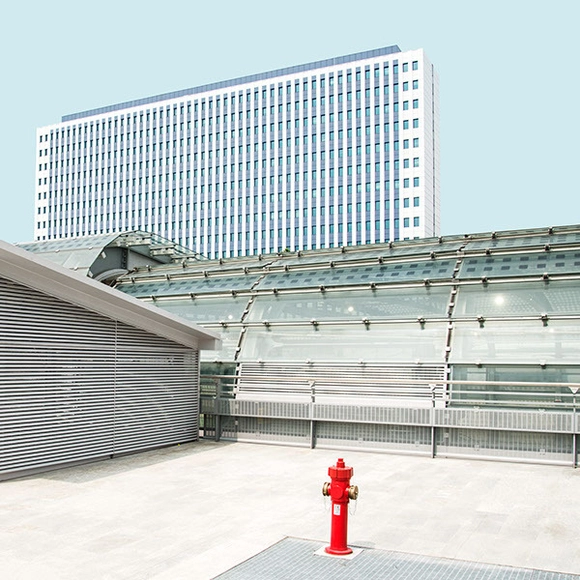
As virtudes e limites da fotografia na representação da arquitetura - cinco fotógrafos discutem  - Imagen 3 de 4As virtudes e limites da fotografia na representação da arquitetura - cinco fotógrafos discutem  - Imagen 1 de 4As virtudes e limites da fotografia na representação da arquitetura - cinco fotógrafos discutem  - Imagen 2 de 4As virtudes e limites da fotografia na representação da arquitetura - cinco fotógrafos discutem  - Imagen 5 de 4As virtudes e limites da fotografia na representação da arquitetura - cinco fotógrafos discutem  - More Images+ 10

São Paulo City Hall landmarks six works by Paulo Mendes da Rocha and 32 other properties

Yesterday, São Paulo City Hall approved the heritage listing of seven modernist works, six of which were designed by Paulo Mendes da Rocha and one by Gregori Warchavchik. In addition to these, 32 other properties were listed in the city.

UIA launches competition to design the logo of the World Capital of Architecture, Rio de Janeiro

The International Union of Architects (UIA) has launched a global competition to select the logo for the World Capital of Architecture, whose inaugural host city is Rio de Janeiro. The initiative aims to transform Rio, and future designated capitals, into open and creative platforms to discuss, exchange, and find solutions to urban challenges.

Brazilian Houses: 12 Countryside Residences

Subscriber Access | 

The future of architecture is urban; there is no longer any doubt about it. Projections indicate that by 2050—that is, in just over 30 years—75% of the world's population will live in cities, while in Brazil this figure will exceed 90%. However, our discipline must concern itself with the quality of life for everyone; therefore, projects in rural contexts will continue to be on the agenda of architects worldwide.

Below, we present a selection of residential projects built in the countryside. These Brazilian houses, nestled in rural and pastoral landscapes, are designed for the daily lives of their inhabitants or as temporary retreats to decompress from urban life. One way or another, they all share a single objective: to open themselves up to their bucolic surroundings. 

Illustrations of Sacred Spaces Around the World by André Chiote

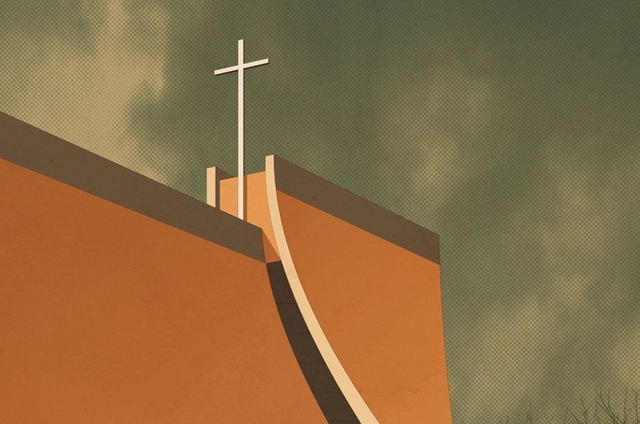
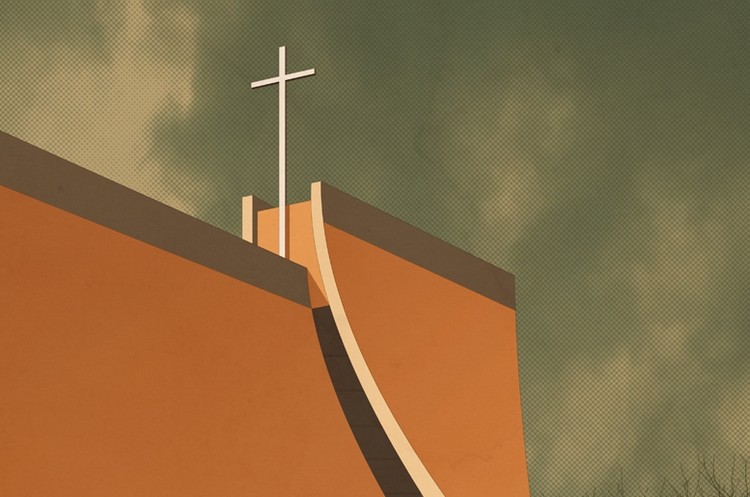
Architecture can be understood through many prisms but is often seen solely as the response to material demands - housing, leisure, commerce, etc. But perhaps no space is more emotionally and symbolically loaded than that of sacred spaces. Designing spaces for worship (religious or otherwise) can be one of the most creative and liberating tasks of this profession. These spaces transcend the terrestrial plane of mere material to become part of a universe of subjectivity and faith.

We present below a series of illustrations of such spaces by André Chiote, featuring famed architectural works by designers such as Gottfried Bohm, Oscar Niemeyer, and Peter Zumthor. 

Illustrations of Sacred Spaces Around the World by André  Chiote  - More Images+ 13

The work of Ruy Ohtake is the subject of two exhibitions in São Paulo

An overview of the work of Ruy Ohtake, spanning from his early career as a recent graduate to his current projects, will be featured in two exhibitions in São Paulo. While the Museu da Casa Brasileira exhibits about 40 projects, either built or under construction, curated by Agnaldo Farias, the Instituto Tomie Ohtake showcases his work as a designer, featuring approximately 25 pieces selected by curators Fábio Magalhães, Marili Brandão, and Priscyla Gomes.

São Paulo City Hall to Transform Minhocão into an Elevated Park – And Is This a Good Thing?

The long-standing debate over the future of the João Goulart Overpass—the famous Minhocão, which cuts through downtown São Paulo toward the city's West Zone—has finally come to an end. Current mayor Bruno Covas has decided to transform the massive structure into an elevated park, modeled after several others around the world that followed the example of the High Line in New York City.

Casa da Arquitectura presents an exhibition on the work of Brazilian architect Fabio Penteado

The designer of large-scale projects such as the Sociedade Harmonia de Tênis club in São Paulo, the Centro de Convivência Cultural in Campinas, and Parque Cecap in Guarulhos, São Paulo architect Fabio Penteado (1929-2011), who would have turned 90 this coming June, will have his work revisited in an exhibition in Portugal. 

Curated by Francesco Perrotta-Bosch, Irradiações opens on February 23 at Casa da Arquitectura, located in Matosinhos, a city in the Porto region. The exhibition will feature five radial-patterned projects developed by the architect in the 1960s, highlighting his attention to the collective and public dimensions of space.

Instituto Moreira Salles in São Paulo Installs Permanent Sculpture by Richard Serra

Instituto Moreira Salles in São Paulo Installs Permanent Sculpture by Richard Serra - Image 1 of 4
© Cristiano Mascaro - Instituto Moreira Salles

One of the most influential contemporary artists, American sculptor Richard Serra will have their first public artwork in Latin America installed in São Paulo. The headquarters of the Instituto Moreira Salles on Avenida Paulista will permanently house the sculpture Echo, created specifically for the cultural center, which will be open to the public free of charge starting next Saturday in the institute's outdoor garden.

Lina Bo Bardi’s Relationship with Drawing Explored by the Fundació Joan Miró’s Exhibition

The Fundació Joan Miró presents Lina Bo Bardi Drawing, the first exhibition to focus specifically on the role of drawing in the life and work of the Italian-born Brazilian architect.

The exhibition features a carefully selected collection of a hundred drawings from the Instituto Lina Bo e P. M. Bardi, bearing witness to the importance of drawing in all the stages of Bo Bardi’s multifaceted career. The project has been curated by another architect, Zeuler Rocha Lima - also an artist, researcher, and international expert on Bo Bardi - with support from the Fundació Banco Sabadell.

Lina Bo Bardi’s Relationship with Drawing Explored by the Fundació Joan Miró’s Exhibition - Imagen 1 de 4Lina Bo Bardi’s Relationship with Drawing Explored by the Fundació Joan Miró’s Exhibition - Imagen 2 de 4Lina Bo Bardi’s Relationship with Drawing Explored by the Fundació Joan Miró’s Exhibition - Imagen 3 de 4Lina Bo Bardi’s Relationship with Drawing Explored by the Fundació Joan Miró’s Exhibition - Imagen 4 de 4Lina Bo Bardi’s Relationship with Drawing Explored by the Fundació Joan Miró’s Exhibition - More Images+ 10

UMAPaz offers a free course on sustainable construction in São Paulo

In April, UMAPaz is offering a course aimed at individuals who want to learn more about sustainability applied to architecture and construction projects, including small renovations. With an introductory approach, it seeks to clarify concepts of sustainable construction for anyone interested in the topic, without requiring prior knowledge.

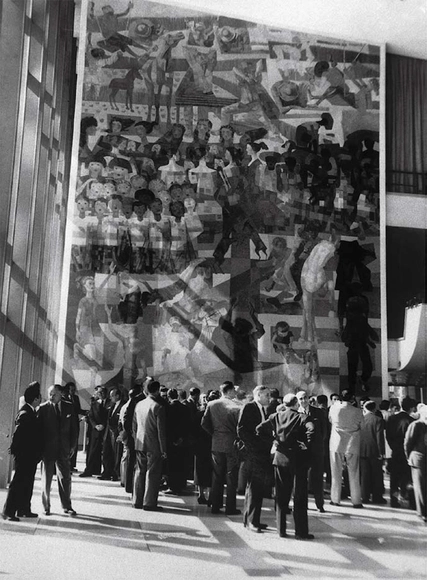
Portinari panel donated to the UN will be recreated as a mosaic at USP

Led by the Portuguese duo Isabel Ruas and Gonçalo Ruas, the studio Oficina de Mosaicos will create a mosaic reinterpretation of the work War and Peace, the monumental panel painted by Candido Portinari and donated to the UN in 1956. The piece will be permanently displayed at the USP campus in Butantã. The project has the support of the artist's son, João Portinari, and is currently in its fundraising phase.

Registration Open for the 12th CBCA Competition for Architecture Students

Factory of Ideas and Innovation is the theme for the 12th edition of the Architecture Student Competition, a project promoted by the Brazilian Center for Steel Construction (CBCA). Interested teams must register between February 4 and July 25; teams must consist of at least two and no more than four students. Each group must be advised by a professor from the same university and may also include a co-advisor.

Women in Architecture Photography: 12 Names to Know

Subscriber Access | 

In many parts of the world, more women have architectural degrees than men. However, this fact hasn’t translated past university into the working world as women continue to be underrepresented across nearly all levels of practice.

The conversation regarding women in architecture gained tremendous traction back in 2013 with the petition for Denise Scott Brown to be recognized as the 1991 Pritzker Prize winner, alongside her husband and the consequent rejection of that request by Pritzker. The Architectural Review and Architect's Journal have, since 2015, jointly presented awards to the exceptional female practitioners as part of their Women in Architecture Awards program. The swelling of these movements have helped to promote not only the role but also the recognition of women in architecture.

Brazilian Houses: 14 Courtyard Residences

There are various ways to position a residence on a lot. It can be built along the side boundaries, set back from the rear or one of the sides, aligned with the street, or freestanding on the plot. Each strategy presents its own advantages and drawbacks. On smaller plots, introducing courtyards is an effective way to site a house, particularly for maximizing natural light and ventilation.

"Somewhere in Afife": Visual narrative captures the daily life of a residence on the coast of Portugal

Subscriber Access | 

Portuguese architectural video production company Building Pictures, directed by Sara Nunes, has shared with us a visual narrative focusing on the Afife House, designed by Guilherme Machado Vaz.

The video, titled Somewhere in Afife, begins by contextualizing the house within the landscapes of Portugal's North Coast, gradually drawing closer until we enter the interior of a compact, vertical volume that, in the architect's words, “evokes the essence of a traditional construction type in Minho.”

Architecture in Dialogue Seminar: Portugal and Brazil

Based on themes suggested by the exhibition "Infinito Vão – 90 Anos de Arquitetura Brasileira" (Infinite Span – 90 Years of Brazilian Architecture), the "Architecture in Dialogue: Portugal and Brazil" seminar invites 13 architects from both countries to debate the distinctive features of new architectural production in both nations, and the extent to which they converge or diverge, on February 23rd, from 10:00 AM to 6:00 PM.

Using approaches such as program, technique, infrastructure, and cultural heritage as a starting point, the seminar will assess the current state of architecture in these two sister countries, separated by the Atlantic and by their own unique cultural dynamics.

Japan House and São Paulo City Hall launch doghouse design competition

Japan House SP, the City of São Paulo, and FAB LAB LIVRE SP have partnered to launch the competition New Perspectives, New Scales: Your Design for Dog Houses, which will select fifteen architecture and design projects for dog houses.

The initiative complements the exhibition currently on display, Architecture for Dogs, which brought dog house designs developed by Kazuyo Sejima, Toyo Ito, Sou Fujimoto, and FGMF, among other firms, to Japan House São Paulo.