Romullo Baratto is an architect with a PhD from FAUUSP and Managing Editor of ArchDaily. He previously coordinated the editorial team of the 11th São Paulo Architecture Biennial and served as Managing Editor of ArchDaily Brasil, where he led the platform to win the FNA Award—the first time the honor was granted to a media outlet. He collaborated on the editing of the book "Concrete Jungle", published by gestalten, and has curated architecture exhibitions in Brazil, Chile, Denmark, and Italy, as well as delivered lectures and moderated debates in Spain, the United States, and Portugal. His doctoral thesis investigates the urban landscapes of São Paulo through cinema. His work spans academic research and editorial practice, communicating architecture through texts, interviews, lectures, curatorship, and photography. Follow him on Instagram @romullobf.
Architecture is perhaps the built heritage that best expresses a city's history, highlighting major cultural figures whose work enriches the history of its people. The Porto Architecture Guide 1942-2017 follows the Lisbon Architecture Guide 1948-2013; together, they are the first two volumes in the Cities collection published by A+A Books.
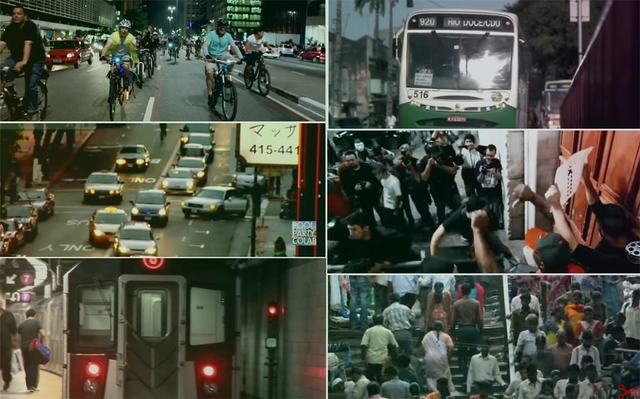
The website Mobilize, Brazil's first platform dedicated exclusively to sustainable urban mobility, has published a list of 30 must-see documentaries on the subject. Divided into feature and medium-length films, the selected titles address urban mobility from various perspectives, ranging from mass transit and non-motorized personal transport to urban culture and the June 2013 protests in Brazil.
The History Channel has released its first entirely Brazilian production. Titled Mil Dias - A Saga da Construção de Brasília, the series tells the story of the construction of the new capital from the perspective of four characters who built the city in the cerrado: a surveyor, an engineer, an architect, and a construction worker.
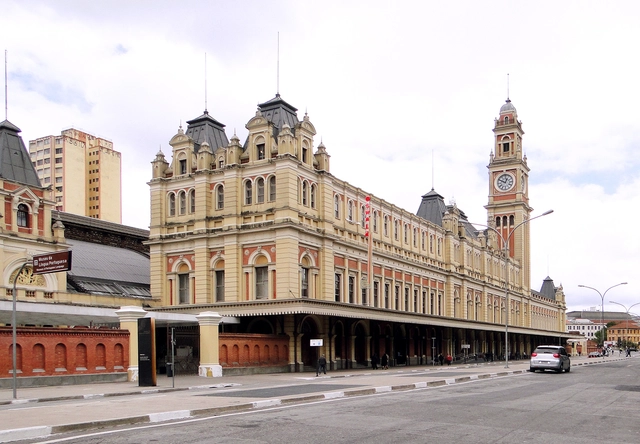
The site of a fire that left part of Luz Station in ruins in 2015, the Museum of the Portuguese Language, located inside the iconic station, had its new roof completed this week. Built with nearly ninety tons of certified timber from the Amazon, the new roof structure is another completed element of this project, which will ultimately cost around R$ 60 million.
Designed by the firm of Ramos de Azevedo and built in the famous Praça Clovis in downtown São Paulo between the 1920s and 1940s, the Palácio da Justiça de São Paulo occupies an area of 25,000 square meters. The building features a symmetrical layout with four corner towers whose wings house the interior spaces.
Between 2004 and 2009, the building's facades and the copper roof of the Jury Hall were restored by the firm APBA – Arquiteto Paulo Bastos e Associados. Later, between 2014 and 2016, another section of the building was restored by Kruchin Arquitetura.
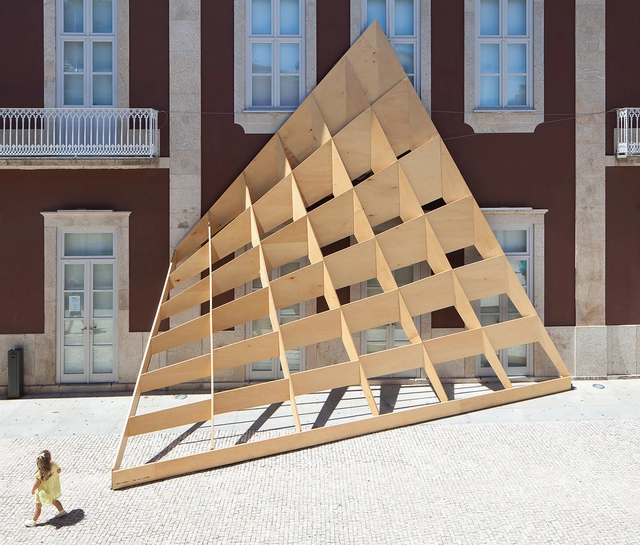
Portuguese studio FAHR 021.3 has created a temporary wooden installation that transformed the facade of the Cine-Teatro Garrett, a historic building in the city center of Póvoa, Portugal. Titled Ensaio 04, the project is a geometric study of a curved surface built from straight planes of poplar wood, resulting in a distorted perspective.
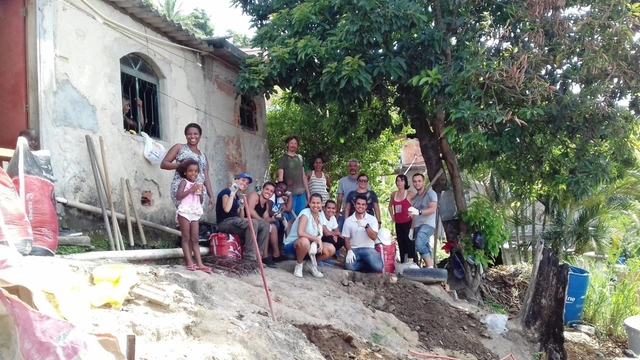
Jayana da Cruz's house (left) has already undergone some renovations with the help of the Arquiteto de Família project. Photo: ONG Soluções Urbanas
The NGO Soluções Urbanas launched a crowdfunding platform earlier this month to enable technical assistance, the purchase of materials, and renovation work in precarious housing. Named Arquiteto de Família, the tool was developed with sponsorship from CAU/RJ.
The platform's goal is to facilitate access to better housing conditions, and the funds raised through the tool can be combined with resources from other sources, such as microcredit and barter fairs.
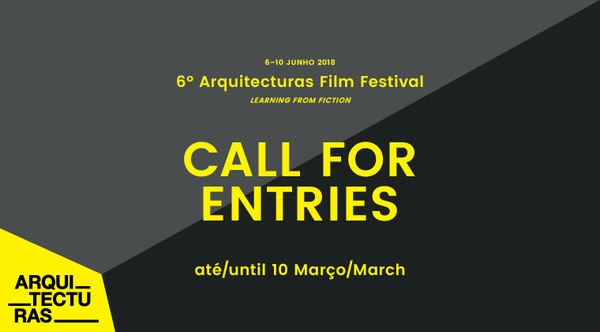
Now in its sixth edition, the Arquitecturas Film Festival invites directors, architects, and production companies to submit documentary, experimental, and fiction films—including feature, medium, and short-length films produced after January 1, 2017—on themes related to architecture, space, and cities. The official launch of the call for entries was marked by the screening of Henrique Pina's documentary "Aires Mateus: Matéria em Avesso," dedicated to the work of the renowned studio, in the main hall of Cinema São Jorge in Lisbon.
The *Geography, City, and Architecture* graduate program at Escola da Cidade invited architect Mario Figueroa to deliver a lecture on Chilean architecture, where he discusses the so-called “Generation of the '90s” and the Museum of Memory and Human Rights.
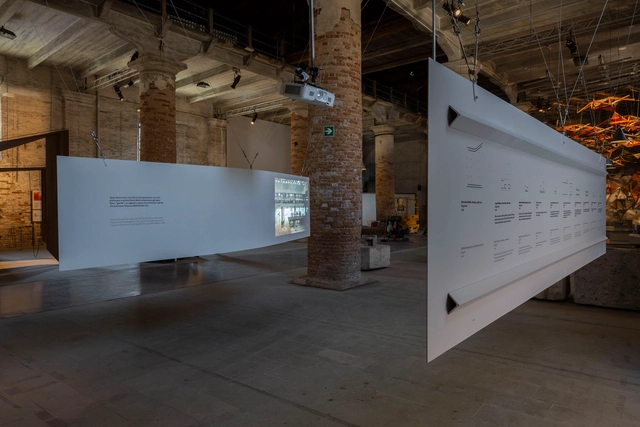
As part of our coverage of the 2018 Venice Biennale, we present the participation of the São Paulo-based firm GrupoSP: an installation titled "unnamed spaces" that is part of the FREESPACE exhibition. Below, the architects describe their contribution in their own words.
"Unnamed spaces" [espaços sem nome] was a term that professor and artist Flávio Motta [1] used to describe the free, generous, and open spaces of radical architecture that accommodated the unpredictability of life. They can also refer to the open spaces or clearings within our city.
Physical distance is no longer an obstacle for the world's major museums. Once limited by their geographic locations and accessible only to those who could visit them in person, many museums have now digitized their collections, while others are in the process of doing so—a strategy that broadens reach and, to some extent, democratizes access to culture.
Portugal will be home to another project designed by Álvaro Siza. The renowned Portuguese architect was invited by the authorities of Oleiros to design the revitalization of the Miradouro do Zebro, a prominent tourist attraction located in the country's central region.
Budgeted at two million euros, the revitalization project will also feature the construction of a suspension bridge connecting Oleiros, Pampilhosa da Serra, and Fundão.
View from the rooftop lookout. Photo: Courtesy of Sesc
Closed for renovations since 2010, the Sesc branch on Avenida Paulista now has an official opening date: April 29. Designed by the firm Königsberger Vannucchi Arquitetos Associados, the renovation project transformed the former Sesc Paulista space, creating three auditoriums, workshop rooms, exhibition areas, rehearsal and fitness rooms, as well as the traditional services offered by all Sesc branches, such as a café, restaurant, and shops.
Focused on performing arts and body movement, the program of Sesc Paulista is spread over 17 floors, featuring a rooftop café and an observation deck overlooking the avenue.
The Sebrae Sustainability Center (CSS), designed by architect and urban planner José Portocarrero, won the BREEAM Awards 2018 for best sustainable building in the Americas, as well as the popular vote category. Inspired by indigenous dwellings, which are benchmarks in bioclimatic design, the building in Cuiabá (MT) stands out for its thermal comfort and maximum use of natural light. Its double-shell roof enables internal cooling and rainwater harvesting, which is filtered and stored for garden irrigation and floor washing.
The exhibition "Women Architects XIX-XX" on the role of women in the history of the profession, installed at the University of Beira Interior (UBI) in Portugal, was vandalized between last Friday night and Saturday morning. Held by the Integrated Master's in Architecture of the university's Department of Civil Engineering, the exhibition occupied the building's lobby and was destroyed, likely by punches and kicks, according to an article published by the Portuguese newspaper Expresso.
Aiming to reflect on how "the visibility of women architects in the context of established architectural history is minimal and does not do justice to their actual and real presence in building cities and architecture," the exhibition, organized by Patrícia Santos Pedrosa, showcased the results of research on the production and presence of female architects over the past two centuries who contributed to expanding "the way we make, think, and question architecture."
National Architect and Urban Planner Day, celebrated on December 15, has officially become law. Law 13,627/2018, which adds the date to the official Brazilian calendar, was signed into law by the Presidency of the Republic on January 16. This marks an important step in the process of professional recognition initiated by CAU/BR and regional CAUs since their creation in 2011. The Council began operating precisely on December 15 so that its establishment would coincide with the birth date of Oscar Niemeyer.
This week, Congress approved the creation of 231 positions for the office of the federal interventor in Rio de Janeiro and the Extraordinary Ministry of Public Security — to fund these new roles, positions will be eliminated at the National Institute of Historic and Artistic Heritage (Iphan).
Of the newly created positions, all of which are appointed roles, 67 will be allocated to the office of the interventor, General Walter Braga Netto, and 164 will be chosen by the Extraordinary Minister of Public Security, Raul Jungmann.
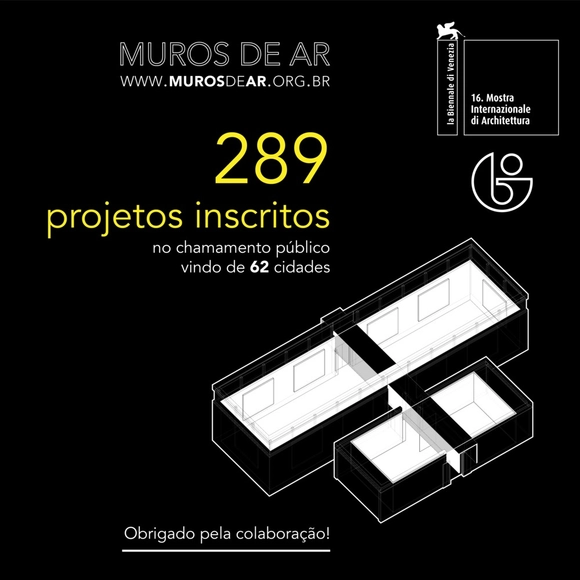
The open call for projects for the Brazilian Pavilion at the 16th International Architecture Exhibition of the Venice Biennale closed on Friday, January 19, at 11:00 p.m., after being open to the public for one month.
The initiative aimed to find projects across Brazil that demonstrate architecture as a tool to mediate conflicts, negotiate transitions between the public and private realms, and articulate connections between distinct urban fabrics.