As the end of the year approaches, we would like to thank you all once again for making 2018 our best year yet. Thanks to your continuous support and our close connection with our readers, we now reach far more architects around the world, inspiring them to create better urban environments.
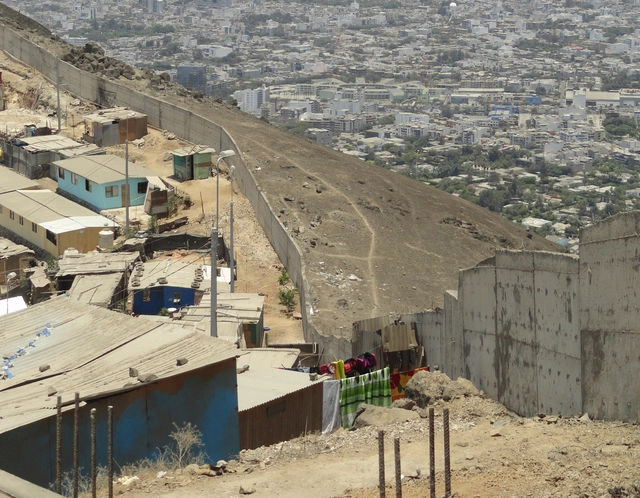
The initial question—and with it, the proposed discussion—stems from the original title of the article War-chitecture: How guilty are architects in urban violence? by Tomas Beverina, one of our readers in Argentina, who invites us to reflect on urban violence and prompts an even broader, collective debate.
Prison to Prison, Uruguay's official exhibition at the 2018 Venice Biennale, explores the existence of an unprecedented Freespace within the intimate relationship between two different architectural models of prisons.
The exhibition, curated by Sergio Aldama, Federico Colom, Diego Morera, Jimena Ríos, and Mauricio Wood, is an invitation to spark new dialogues and discussions that transcend the objects of study themselves, enriching our perspective and reconnecting us with the cultural dimension of architecture.
Every two years, the International VELUX Award challenges architecture students from around the world to envision the future of daylight, drawing inspiration from creative exploration and research.
For the 2018 edition, the jury—composed of Carme Pigém Barceló, Rick Joy, Li Hu, Saša Begovic, and Martin Pors Jepsen—has announced the global winners. Selected from among the 9 regional winners, the chosen projects are ‘Light Forms Juggler’ by Anastasia Maslova, and ‘Road to Light’ by Yuhan Luo, Di Lan, Yuan Liu, and Yusong Liu.
It is time to say goodbye to 2018. Following our showcase of the best architecture of the year, we have gathered the Chilean projects that generated the most engagement on our social media platforms. Indeed, in the architectural field, understanding where design is heading requires looking at its key works and observing how the public has responded to them.
What does it mean for an architecture biennial—especially a Pan-American one—to have reached more than 20 editions? Clearly, it represents a significant accumulation of participants, speakers, coordinators, and projects that over the years have not only showcased the sheer volume of regional production, but have also consistently reminded us of the potential of keeping both Latin American and global debate and exchange active.
For this reason, it is worth highlighting key figures and milestones. Both serve as empirical evidence of the historical development and reach of the Quito Architecture Biennial, helping us answer this initial question and understand why it is considered one of the most important architectural events in the Americas.
The Helium Pavilion —GA estudio— notonly demonstrates a design and construction exploration of temporary installations, but also highlights the compelling capabilities of inflatable architecture: lightweight, easy to assemble, flexible, economical, and nomadic.
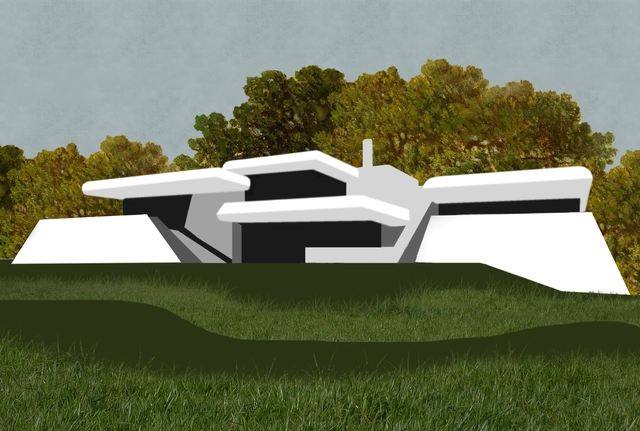
Overlooking the Río de la Plata, in the quiet of Laguna del Diario, amidst trees and a vast sky, lies Casa Poseidón, an example of modern Uruguayan architecture designed by Samuel Flores Flores in 1978. Unsurprisingly—as private interests and a lack of awareness have made demolition a recurring theme—its quiet existence is being disrupted to make way for yet another casualty of the real estate market.
The announcement of its demolition, justified by the construction of a building complex, has sparked well-founded criticism from the community seeking to protect the country's tangible architectural heritage. What are your thoughts on this?
"To create strong, modern pieces influenced by one's own heritage" is how industrial designer Emiliana Gonzalez and conceptual artist Jessie Young introduce their multidisciplinary studio, Persona.
Originally from Montevideo, Uruguay—though currently based in Los Angeles, CA—their focus centers on furniture design, with a material production distinguished by its austerity and continuity.
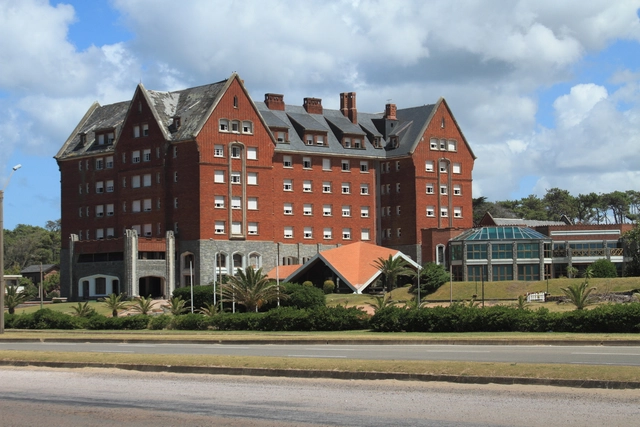
San Rafael Hotel Building, a symbol of Punta del Este. Image via Flickr user: Gabriel Millos Licensed under CC BY-SA 2.0
Media and social networks are abuzz. This time, the controversy centers on a proposal by architect Rafael Viñoly to build a three-building complex—including a skyscraper rising well over 250 meters tall—on the site of the former San Rafael Hotel in Punta del Este, Uruguay.
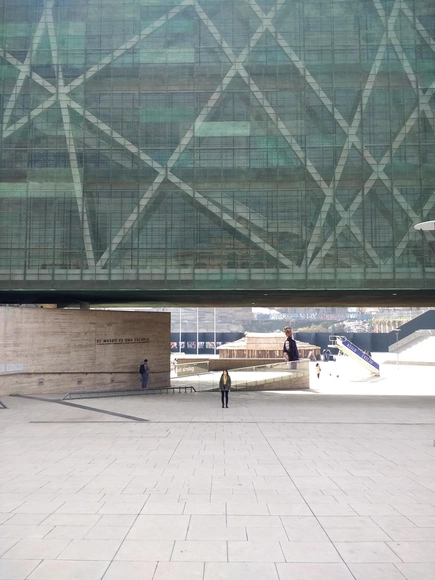
Museum of Memory and Human Rights / Mario Figueroa, Lucas Fehr, and Carlos Dias. Image
After visiting numerous sites that have been the setting for tragic crimes against humanity and violent conflicts, one can make a simple observation: the space of collective memory is not solely confined to a memorial building that commemorates through names and stories. Particularly in Latin America, it is also a place evoked through gatherings and public demands.
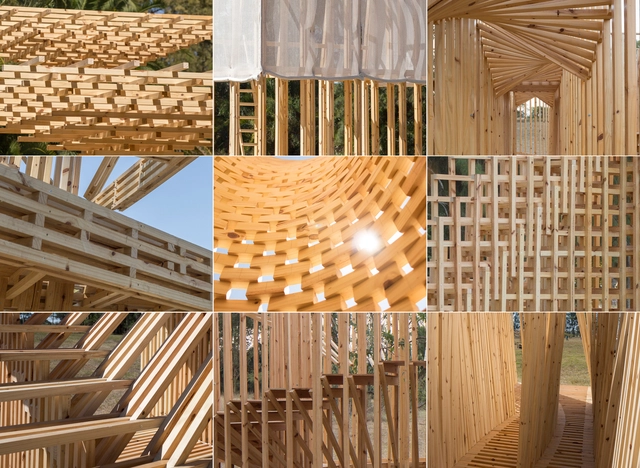
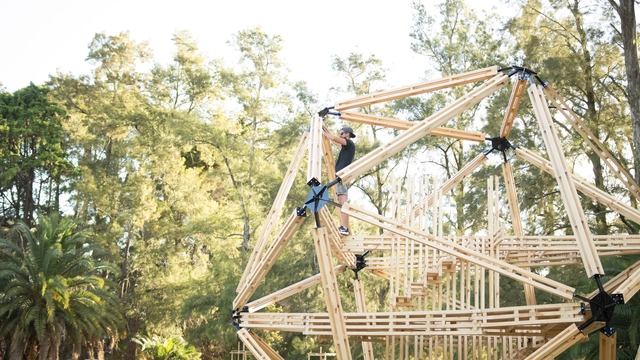
The third edition of Hello Wood Argentina is approaching—the renowned timber architecture and design festival that aims to teach thinking with your hands and learning through experience.
From March 2 to 10, 2019, 10 selected projects will be built around this edition's theme: a space of containment, a space of CON-TENSION.
Discover the projects selected for Hello WoodArgentina 2019, described in the words of their creators, below.
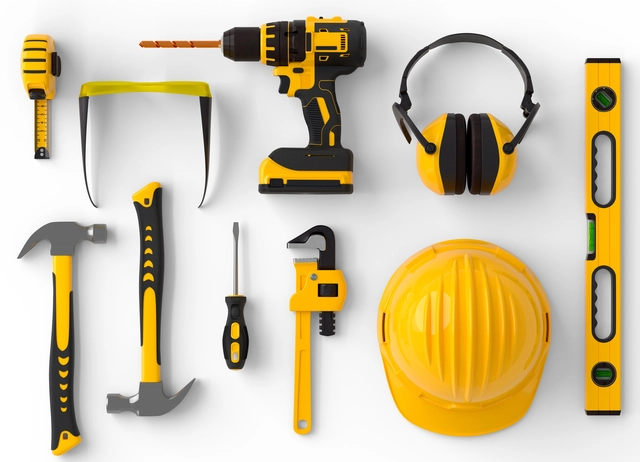
Construction is complex. Anyone who has been on a construction site understands this. It is not just about having the right attitude and knowing how to lead a team of skilled craftspeople, masons, and specialists, but also about providing—or at least understanding—the right tools for them to perform each task in the best possible way.
While the construction knowledge gained during your university studies might be minimal until you have a few projects under your belt, learning to recognize the tools available on the market will not only help you save costs, but also speed up construction and reduce physical effort—delivering significant advantages.
Here, we present an overview of the different equipment, tools, and machinery most commonly used in architectural construction.
In early March, students, architects, and designers from Argentina gathered to bring their ideas to life in the second edition of Hello WoodArgentina, an international experience brought by local partners TACADI and MANDARiNA.
For this edition, the chosen theme for 2018 was "CON-TEXT"—a context we consciously build, where balance is achieved through the interaction of each of its parts, and what each part contributes is unique.
Discover the projects built in this edition below.
It is time to say goodbye to 2018 and look back at everything we have achieved. What captured our interest? What surprised us? What made an impact?
After presenting the best architecture of 2018, we decided to round up and highlight some of the Argentine projects that generated the most engagement on our social networks. Goodbye 2018, hello 2019.
The third edition of Hello Wood Argentina, the distinctive wood architecture and design festival, has arrived. A creative, professional, and social program, it seeks to teach thinking with your hands and learning through experience.
Prompted by the invitation of the upcoming OH! Stgo 2018—taking place this September 8 and 9—architect Sebastián Gray uses striking data to launch a reflection on the challenges facing contemporary Santiago. For this edition, various figures were called upon to think about the city currently being built, the role that individuals and communities assume in this construction, the major urban issues of the past year, and the challenges projected for the future.
The video captures conversations that reflect the life and dynamics of our cities today. Other participants include architect Jorge Lobos, who addresses current migration processes and how they shape the urban landscape; journalist Soledad Onetto, who highlights the high costs affecting residents; and Paola Jirón, who delves into mobility systems, among others.




.jpg?1517761545)