As 2018 draws to a close, it leaves us with a particularly interesting realization. Given its visual nature, Instagram has become a highly important tool for the dissemination of architecture in the digital era.
On our account, we share the various projects published on the site and keep track of the photographs with the most engagement. Do you know which images were our most popular on Instagram in 2018?
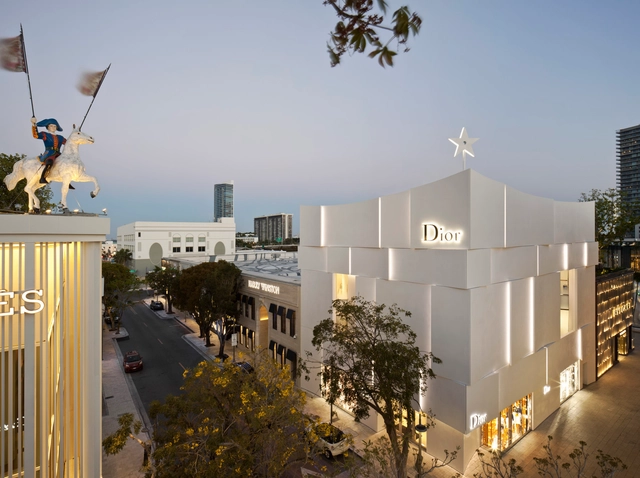
Prix Versailles is an international recognition promoted by UNESCO that addresses architecture and design—both interior and exterior—of commercial projects across four categories: shops, shopping malls, hotels, and restaurants. Its goal is to foster a better interaction between commercial and cultural spaces, highlighting the few examples that successfully achieve this.
This year, competing against numerous finalist projects from six major continental regions, the Porcelanosa Grupo showroom in Santiago, Chile, by Gonzalo Mardones V Arquitectos received the special prize for its exterior design in the shops category.
Discover the project in detail and read the architect's thoughts below.
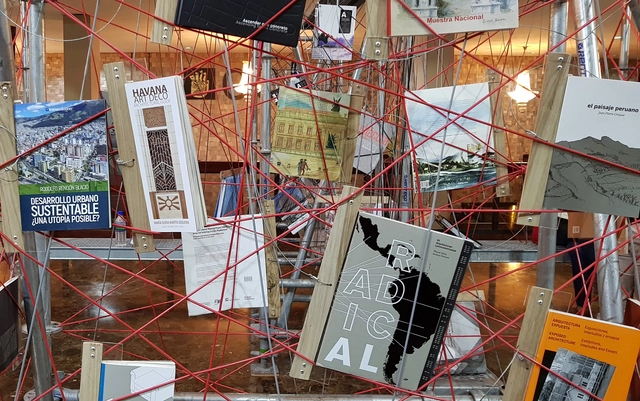
Exhibition of publications at Casa de la Cultura - BAQ2018 . Image
On Wednesday, November 21, the verdict of the competition of the XXI Pan-American Architecture Biennial of Quito - BAQ 2018 was announced.
Divided into six categories, the various juries selected projects and publications that stand out for making a significant contribution to their respective fields, offering relevant lessons for the discipline.
Below, we present the winners in Category (E) Theory, History, and Criticism of Architecture, Urbanism, and Landscape, and Category (F) Specialized Periodical Publications.
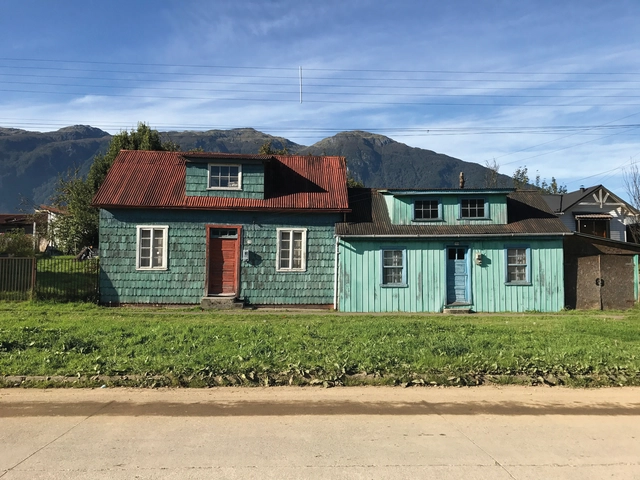
"Casas en el valle del río Simpson: el patrimonio desconocido de Aysén"by Lorena Pérez, Tomás Errázuriz, and Carlos Castillo, published by Fundación ProCultura, reclaims the vernacular architecture developed during the late colonization period in the region's residences, addressing their ways of inhabiting, transformations over time, and building systems.
The book explores a type of self-construction that does not follow blueprints or architectural models, but rather responds to the environment, traditions, locally available materials, and a myriad of other factors, resulting in a heritage unique to Chile.
The "Amenidades Urbanas" public initiative addresses co-production based on outreach and participation, responding to the challenge of connecting "different natures" within a single system: a sector in Caracas fragmented by large-scale infrastructure projects.
The first phase of these built urban interventions consists of diverse actions aimed at reactivating civic spaces. These new dynamics seek to redefine the street as a space for dialogue and mediation, occupying neglected voids and reclaiming the city's original human scale.
Read on to learn more about the project in the words of its authors.
The stories of women in architecture are often less known than those of their male counterparts. Here, we focus on the biographies of women architects who form a crucial link in the chain of architecture, highlighting the most-read profiles we have shared courtesy of Un día | Una arquitecta.
Un día | Una arquitecta seeks to bring visibility—through an impressive catalog of over 700 biographies—to the contributions of women architects across various fields: architectural, urban, and landscape design, technology, curatorial work and publishing, artistic production, politics, social habitat management, theory, and education, sharing a glimpse into their stories, backgrounds, and inspirations.
Below, discover twelve stories of women architects who stand out in the field.
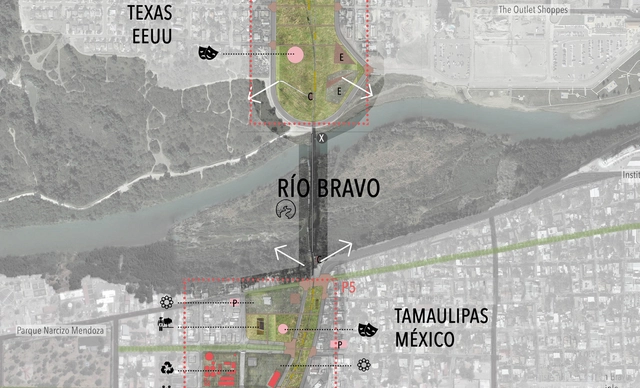
Corredor Cultural Binacional Laredo Nuevo Laredo - Proyecto destacado. Image Cortesía de XXXIII ELEA Santa Cruz
As part of the XXXIII Latin American Meeting of Architecture Students, the organizing committee launched an open call for students and young architects to participate in the XI Latin American Student Architecture Biennale, under the theme "Identity, Customs, and Traditions."
The selected projects were exhibited during the week of the ELEA event—from October 19 to 29—in the lobby of the main auditorium of the Private University of Santa Cruz de la Sierra (UPSA). The jury, consisting of four guest architects at the XXXIII ELEA, selected the grand prize winner of the biennale and recognized two projects out of the 16 finalists. Discover the projects below.
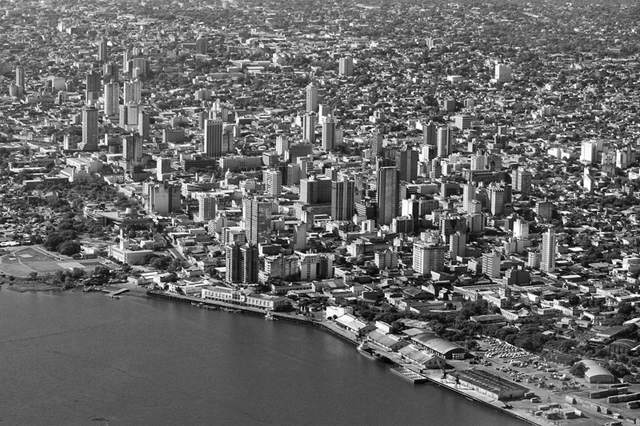
Aerial view of Asunción (adapted). Image via Flickr User: Tetsumo Licensed under CC BY 2.0
After establishing itself—with ten editions already—as a key reference event for understanding the current and future state of architecture and urbanism in the Ibero-American community, the XI BIAU will take place for the first time in the city of Asunción in October 2019. The program of activities will include the presentation of selected works, keynote lectures, specialized presentations, and panel discussions organized around the central theme: aĩ paragua y (I inhabit - water).
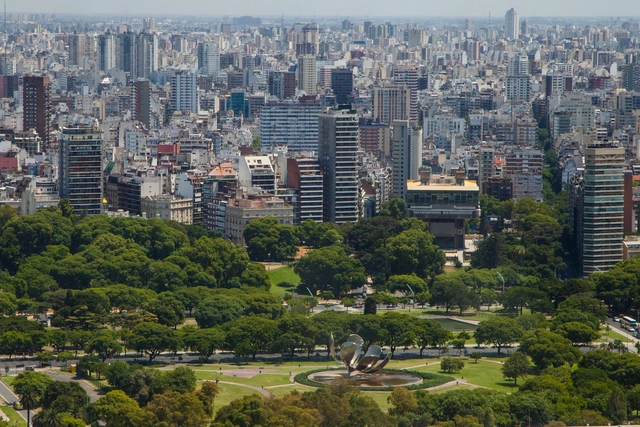
via Flickr User: Ricardo Patiño Licensed under CC BY-SA 2.0
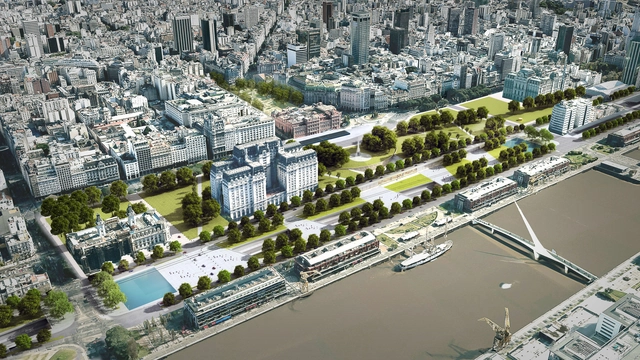
As the urban planning debate in Buenos Aires over the reform of the planning code unfolds, one only needs to look at the new issue of the online magazine Notas CPAU 'Código Urbanístico' to realize that it is no minor issue.
Consequently, attention is turning to the city's historic grid. If you have already heard of superblocks—a system bounded on its periphery by arterial roads and public transit networks, with an interior designed to prioritize cyclists and pedestrians—pay attention, because Salvador Rueda was recently in the city, and this concept could soon become a reality.
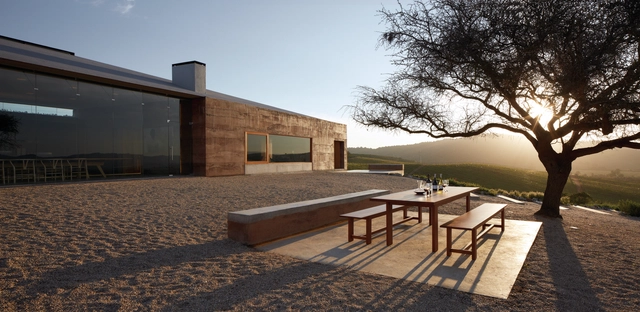
Casa Mirador at Viña Casas del Bosque won the “Architecture and Landscape” category at the International Best Of Wine Tourism 2019, awarded by Great Wine Capitals, competing against wineries from the world's ten most important wine-growing regions.
On Saturday, April 14, the continental award ceremony for the Prix Versailles will be held at Castillo Hidalgo in Santiago, Chile. The awards will honor the architecture and design of 24 completed retail, hotel, and restaurant projects across South America, Central America, the Caribbean, and North America.
Learn more about the event and past winners below.
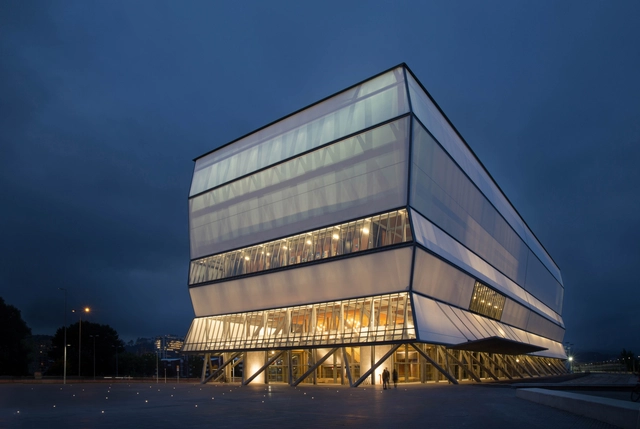
The Biobío Regional Theater, designed by Smiljan Radic, Eduardo Castillo, and Gabriela Medrano, has been nominated for the Beazley Designs of the Year 2018 award, presented annually by the Design Museum in London.
Imagen adaptada del proyecto 'Manzana Verde', Joaquín Pérez Grosso, publicado en Los 15 mejores proyectos de fin de carrera diseñados por estudiantes de arquitectura en Argentina 2016. Image Cortesía de Joaquín Perez Grosso
We believe that the work produced by Argentine universities is immense and valuable, which is why we once again see the need to launch a call to showcase the best thesis projects coming out of them. Many of these proposals raise compelling issues and can be truly intellectual and critical works. Unfortunately, the vast majority end up archived, gathering dust on shelves, missing the opportunity to drive real change in our cities and in the way we live and think.
If you believe your 2017 thesis project is compelling enough to be featured on our site, and that your hard work deserves recognition from the wider community, do not hesitate to submit it using the form at the end of this article.
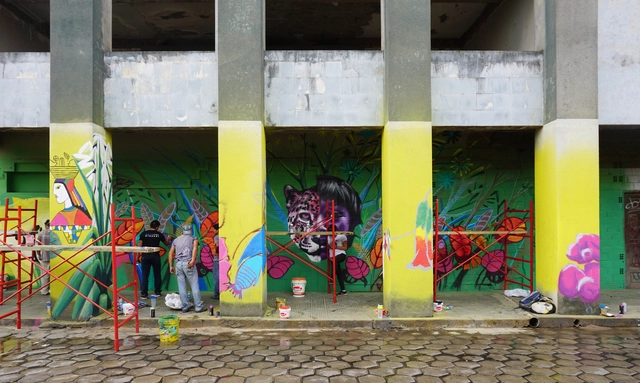
Painting Latin America, an encounter workshop that recovers the galleries of an abandoned building in the heart of the historic center of Santa Cruz. Image
In Santa Cruz de la Sierra, more than 150 students from 15 countries kicked off the 2018 Latin American Encounter of Architecture Students (ELEA), organized by the Latin American Coordinator of Architecture Students (CLEA) together with IBEA (Bolivian Integration of Architecture Students). As is now tradition, they joined forces with various public and private entities, architecture collectives, workshop leaders, educators, and members of civil society to think, design, and build across different points of the city under the theme "identity crisis?".
After receiving more than 70 submissions from various Argentine universities and cities, our editorial team selected 10 of them, focusing on projects that demonstrated critical thinking regarding contemporary issues, formal execution, and representation. The selection not only highlights projects that delivered the best possible architecture through simple design tailored to their context, program, and users, but also those showing significant attention to human scale, mediation, transition, and new ways of approaching urban architecture.
Discover our 10 highlighted projects below.
THE NEIGHBORHOOD AS A CULTURAL CENTER: Alejandro Asens - Victoria Carbonin - Juan Cardozo Sánchez - Italo Parietti
As the end of the year approaches, we would like to thank you all once again for making 2018 our best year yet. Thanks to your continuous support and our close connection with our readers, we now reach far more architects around the world, inspiring them to create better urban environments.
What does it mean for an architecture biennial—especially a Pan-American one—to have reached more than 20 editions? Clearly, it represents a significant accumulation of participants, speakers, coordinators, and projects that over the years have not only showcased the sheer volume of regional production, but have also consistently reminded us of the potential of keeping both Latin American and global debate and exchange active.
For this reason, it is worth highlighting key figures and milestones. Both serve as empirical evidence of the historical development and reach of the Quito Architecture Biennial, helping us answer this initial question and understand why it is considered one of the most important architectural events in the Americas.



.jpg__José_Alberto_Bastidas.jpg?1539798976)