Around the world campaigners, cities, and governments are declaring a state of emergency in response to accelerating global warming. Meanwhile systemic inequality continues to entrench deep divides between those who have far too little, and those who have far too much. In this unprecedented moment, an urgent question is cast into relief: how should architecture respond to a time of climate emergency and social division?
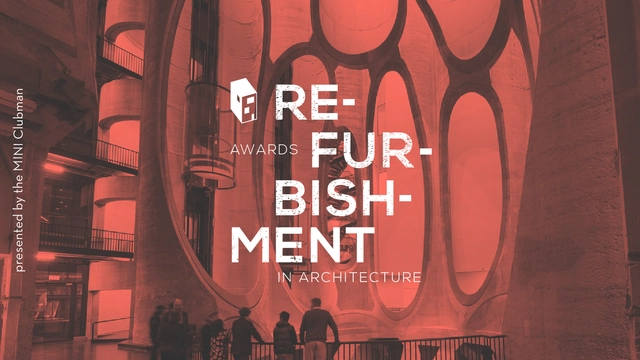
In partnership with MINI Clubman, we have launched our second edition of ArchDaily's 2019 Refurbishment in Architecture Awards. This award highlights the best refurbishment projects from around the world.
Alongside MINI, we believe that the recovery and refurbishment of existing structures is one of the most sustainable ways to develop architecture. From reviving abandoned factories to urban renovations and even remodeling centuries-old homes, refurbishment projects demonstrate the flexibility of our existing cities and the many scales at which past buildings can be repurposed.
Similar to our Building of the Year Award, we entrust our readers with the responsibility of rewarding the best refurbishment projects in architecture—the designs that have had an impact on our profession. By voting, you are part of an impartial and distributed network of professionals who act as a jury to choose the most relevant works of the last eight years. Over the next 3 weeks, the collective intelligence of our audience will filter more than 600 projects to select 3 winners representing the best of architecture refurbishment published on ArchDaily.
Entries for the World Architecture Festival close on Friday 3rd May. The 12th edition of the World Architecture Festival will take place in Amsterdam from the 4th to 6th December, where more than 550 architectural and design practices from over 68 countries are expected to compete for category and overall prizes.
Following two weeks of enthusiastic voting, ArchDaily readers have selected their top 10 projects of the year from a pool of over 400 nominees.
The nomination phase demonstrated the positive impact of these awards on architectural development. The shortlisted projects are undoubtedly those that have most inspired and resonated with our readers.
The selection features not only industry-leading design firms but also small practices and highly personal works. This year's competition also highlights projects that actively improve our built environment.
We are pleased to present today the finalist projects for the 2019 Building of the Year Award (ODA19). After two weeks of nominations and more than 10,000 votes, the favorite projects have been selected from hundreds of works built in Portuguese-speaking countries. Our jury of experts—our own readers—has once again done an outstanding job selecting the 15 finalists. The projects span a remarkable diversity of programs, including cultural, commercial, and educational facilities, public squares, high-end residences, and renovations. This selection offers an engaging overview of contemporary architectural production in Brazil and Portugal, deeply shaped by material exploration, the richness of our geographic contexts, and the diverse challenges faced by our societies.
2018年,ArchDaily China 的传播力一年胜过一年。我们让中国建筑参与到全球交流的浪潮之中,向世界介绍中国建筑,同时也为中国读者带来全球化的建筑信息。我们坚守初衷,成为让大众获益的开放平台,让建筑行业变得更为具包容性也更加平等。
今年,我们再次向中国读者发出邀请,希望每个人都能参与2019年中国年度建筑大奖的评选。通过不带偏见、不受地域限制投票的方式,成为庞大评委群体的一份子,为大家选出了最够能当下最具代表性的建筑项目。在接下来的三周,在超过600个中国项目其中有10个将通过您的提名脱颖而出,入围 ArchDaily China 的十佳建筑,最终再投票选出仅三个获奖建筑。
For the fourth time, we are giving our readers the responsibility of recognizing and awarding the projects that have had the greatest impact on the profession through the ArchDaily Brasil Building of the Year 2020 Award. By voting, you become part of an unbiased network of jurors recognizing the most relevant projects of the past year.
Over the next three weeks, the collective intelligence of our readers will filter through hundreds of projects from Portuguese-speaking countries—Brazil, Portugal, Mozambique, Angola, Guinea-Bissau, East Timor, Equatorial Guinea, Macau, Cape Verde, and São Tomé and Príncipe—published in 2019, selecting the best built works in Portuguese-speaking territories.
With the launch of ODA19, this year we celebrate the eleventh anniversary of the Obra del Año (ODA) Award, the highest accolade in the architectural world where the winners are chosen by popular vote. Starting today, Monday, April 1, and for the next three weeks, our readers are responsible for determining which projects inspired us during 2018, faithfully representing the identity of our local contexts while shaping the way architecture is practiced around the world.
Over the next three weeks, the entire ArchDaily en Español network (Plataforma Arquitectura, ArchDaily México, ArchDaily Colombia, and ArchDaily Perú) will serve as the platform to celebrate the best built architecture in Spain and Spanish-speaking countries in Latin America.
Under heavy bombing, buildings seem to have only one fate: destruction. Severely damaged during the Spanish Civil War, the 13th-century Gothic Church of Vilanova de la Barca (Lleida, Spain) remained abandoned since 1936.
It was only almost 80 years later that the remnants of the structure – parts of the naves, the west façade and the apse towards the east– went through a restoration and refurbishment process. This time, however, the building was not meant to be used as a church but as a multi-purpose hall.
The World Architecture Festival (WAF) has announced some of the most influential names in international architecture as the members of the jury for its 12th awards programme, which is to be held in Amsterdam from 4-6 December 2019.
As Headline Media Partner of the World Architecture Festival and INSIDE, we are offering you the chance to win one of 10 free entries for this year’s awards programme. Simply complete your details here to be entered into the free prize draw for a free WAF or INSIDE awards entry. All submissions for the prize draw must be entered by Friday 5th April and you will be informed on Tuesday 9th April if you have won.
Since our mission is directly related to the architecture of the future—in inspiring and educating the global community of architects who will design the urban fabric of the future—the trust placed in us by our readers to reflect architectural trends from regions around the whole world creates challenges that we are eager to rise to. The democratically-voted, user-centered Building of the Year Awards is one of the key pillars of our response to these challenges, aiming to tear down established hierarchies and geographical barriers.
But before we get to shortlisted nominees, we want to emphasize the values embodied by this awards process. As the world’s largest platform for architecture we are acutely aware of our responsibility to the profession, and to the advancement of architecture as a discipline. Since our mission is directly related to the architecture of the future—in inspiring and educating the global community of architects who will design the urban fabric of the future—the trust placed in us by our readers to reflect architectural trends from regions around the whole world creates challenges that we are eager to rise to. The democratically-voted, user-centered Building of the Year Awards is one of the key pillars of our response to these challenges, aiming to tear down established hierarchies and geographical barriers.
By participating in the process, the ArchDaily community decides what it means to push architecture forward. So without further ado, these are the most inspiring building, according to ArchDaily readers.
2019 is a special year for the Fundació Mies van der Rohe, with three dates coinciding very closely: the 100th anniversary of the Bauhaus, the 50th anniversary of Mies van der Rohe´s death, and the 90th anniversary of the inauguration of the German Pavilion. This year is also the 16th edition of the Prize for Contemporary Architecture of the European Union - Mies van der Rohe Award. Each of these dates will be reflected in this year's program.
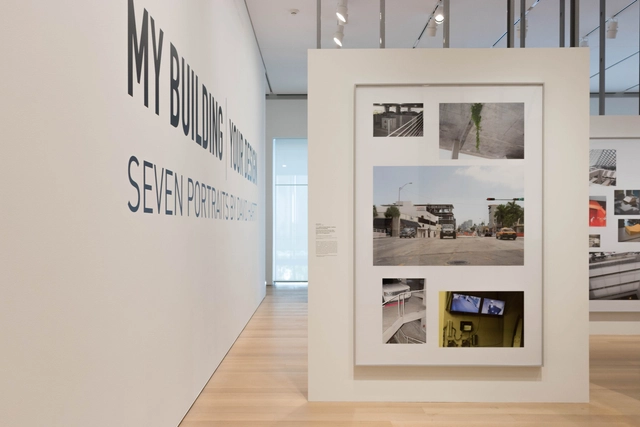
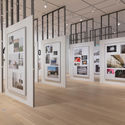
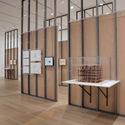
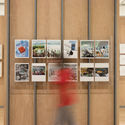
Installation view of My Building, Your Design: Seven Portraits by David Hartt, The Art Institute of Chicago, September 29, 2018 - February 3, 2019. Photo: Miguel Herreras.
In spite of their apparent simplicity, small cabins have always been a welcome design challenge in which scale, materiality and habitability must be resolved in order to take maximum advantage of minimal spaces. Perhaps the most famous exercise in cabin design, the Le Corbusier-designed 16m2 cabanon was a container of ideas in which the Swiss architect explored the "modulor"-- an understanding of the fundamentality of human scale. In the ensuing half-century, many prominent architects have ventured into cabin design both experimentally and at a primitive level, especially as a small refuge in harmony within a natural context.
We have selected 40 small cabin designs from around the world that explore different types of solutions according to context and programmatic needs.
The polls are closed and the votes are in! With nearly 15,000 votes cast over the last three weeks, we are ready to unveil the winners of ArchDaily's inaugural Refurbishment in Architecture Awards. This crowdsourced architecture award, developed in partnership with MINI Clubman, showcases the best refurbishment projects published on ArchDaily throughout 2017, with our readers filtering a 450-strong shortlist down to 15 finalists, and ultimately, three winners.
Reflecting ArchDaily's global reach, the 15 finalists hailed from five continents, with the three winners located in South Africa, Mexico, and the United States. The award therefore demonstrates the global importance of architectural refurbishment as a means of enhancing sustainable urban environments at different scales.



_.jpg?1553955025&format=webp&width=640&height=580)
_.jpg?1553955147 "© Laurian Ghinitoiu")
_.jpg?1553955015 "© Laurian Ghinitoiu")
_.jpg?1553955174 "© Laurian Ghinitoiu")
_.jpg?1553955102 "© Laurian Ghinitoiu")
_.jpg?1553955025)


.jpg?1549896642&format=webp&width=640&height=580)