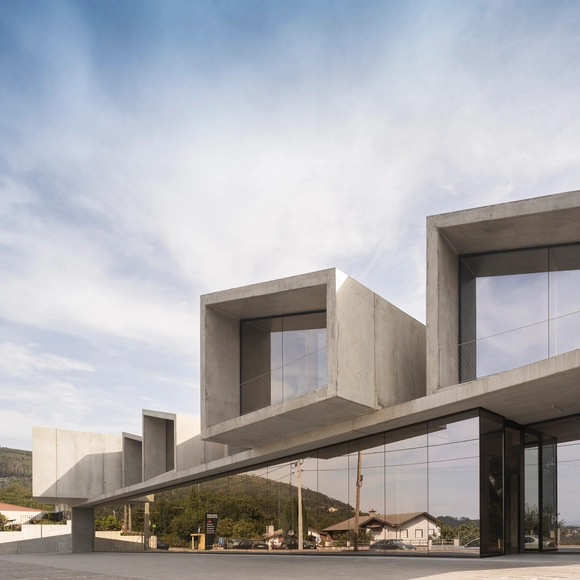
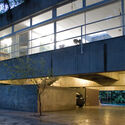
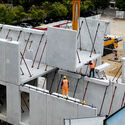
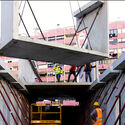
The precast and prefabricated elements made of concrete (such as slabs, pillars, beams and walls) are part of the constructive process known as modular construction. A construction methodology carried out in stages, based on the standardization of the parts that make up the building, with its modules produced on an assembly line, transported and assembled to shape the architecture.
You are likely familiar with the story of a man who received a divine command to build an ark to shelter his family and animals of every species, saving them from a great deluge. This flood narrative, known as the story of "Noah's Ark," is found not only in the Bible but also in the Quran and many other cultures—with the Sumerian "Epic of Ziusudra" being the oldest known flood myth, dating back to 2000 BCE. These examples show that the forces of nature, by taking center stage in religious teachings, were already recurring concerns that inspired both fear and respect in early civilizations.
World Wetlands Day is celebrated every February 2nd to raise awareness of wetlands. This day also marks the anniversary of the Wetlands Convention, adopted as an international treaty in 1971. Its enactment is because nearly 90% of the world's wetlands have been degraded since 1700, decimated three times faster than the forests. However, they are essential ecosystems that contribute to biodiversity, climate mitigation and adaptation, freshwater availability, world economies, and much more.
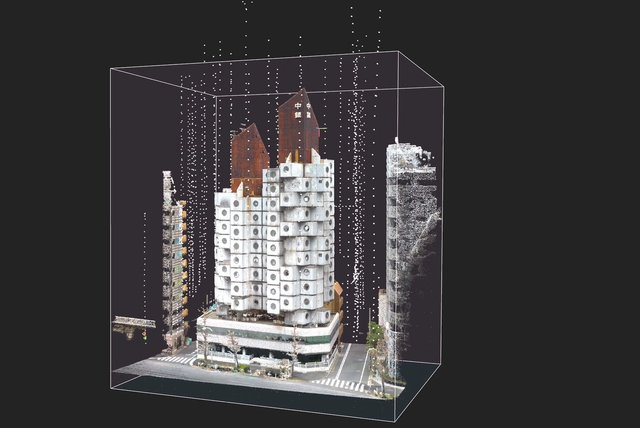
Imagine that you have scheduled a visit to an important building for the history of architecture, a reference work for all enthusiasts. Probably you would equip yourself with a camera or a good cell phone, take a pencil, notebook and even a measuring tape to record all its aspects.
However, this is not the only way to “visit” a building of historical importance nowadays or, at least, that is what some researchers are trying to show. The metaverse is being explored for its role in architecture and culture preservation, embracing different generations.
"The flat floor is an invention of architects. It suits machines, not humans." Inspired by the Viennese Secessionists and Austrian artists Egon Schiele and Gustav Klimt, as well as bold Gaudinian forms, the author of this phrase, Friedensreich Hundertwasser (1928-2000), was a prolific painter, sculptor and architect. His works are marked by the dualities between discipline and indiscipline, the predictable and the unexpected, rational and irrational. In his creative adventure, Hundertwasser was not just an enemy of the straight line. He despised architectural rationalism, claiming fluid forms and striking colors.
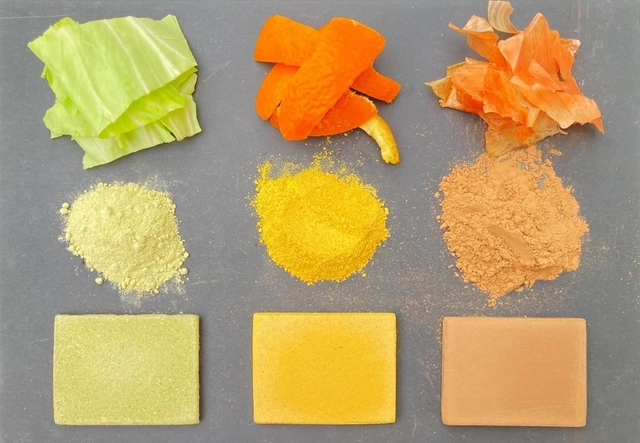
Add cabbage leaves, orange peels, onions, bananas and a few slices of pumpkin to get... cement. That's right, researchers from the University of Tokyo in Japan have developed a technique through which it is possible to produce cement from food waste. Besides being used in construction, the innovative initiative is edible as well. You can make boiled cement into a delicious meal by adjusting flavors, adding seasonings, and breaking it into pieces.
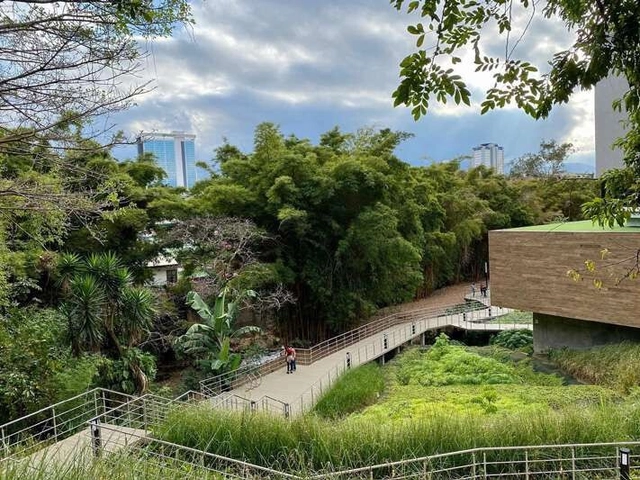
Rutas Naturbanas (San José, Costa Rica. 2015 – 2020). Fundación Rutas Naturbanas - Federico Cartín. Image Courtesy of Jeannette Sordi
Green corridors, or biodiversity corridors, are large portions of land that receive coordinated actions to protect biological diversity. According to Brazil’s National System of Nature Conservation Units, they strengthen and connect protected areas, encouraging low-impact use by implementing a more comprehensive, decentralized and participatory conservation alternative.
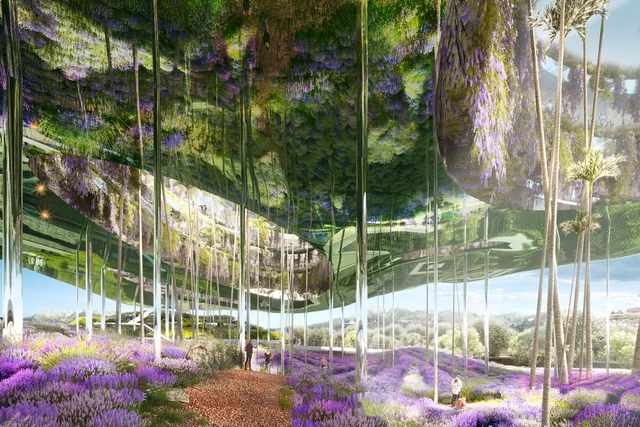
Jean Nouvel + OXO Architectes design Mountainous Mixed-Use Campus in Antibes. Image via Compagnie de Phalsbourg
Nowadays, much is said about the importance of collaborative design processes that involve joint creation, affirming a context in which there is less and less room for individual work and much more for the logic of collective and co-creation. Therefore, the idea that the work is created exclusively by the architect is already understood as a distortion of the complex reality of designing a project, going beyond the technical staff and also adding the community and its users.
Aging means learning to live with dependence - physical, social, or spatial - and in this long process, which cannot even be measured in years, it is increasingly understood that aging is closely related to genetics, lifestyle, location, and socioeconomic group. Therefore, this very diverse process varies according to each individual, to different interests as well as abilities and preferences in the way of life.
It was in the early 1960s that the young architects Plínio Croce and Roberto Aflalo joined Gian Carlo Gasperini to participate in the biggest international competition at the time, organized by the UIA (International Association of Architects). The challenge was to design the tallest office tower in Latin America, which would house Peugeot's headquarters in Buenos Aires. Winning the competition with the 55-story building was the incentive that was needed to create aflalo/gasperini arquitetos, betting on contemporary projects, focused on technological aspects and, as they define it, presenting a clear and honest language,
In the early 19th century, in a Paris on the verge of having its medieval fabric torn open by Haussmann's grand boulevards, novelist George Sand dressed as a man to walk the streets. According to her journals, "in trousers and boots I could fly from one end of the city to the other, regardless of the weather, the hour, or the place." No one paid her any attention, no one guessed her disguise, and no one stared or criticized; she was just another "atom lost in that immense crowd." Thanks to her male attire, Sand experienced fearless incursions and solitary wanderings like a true flâneur—experiences that would later become fundamental to crafting her successful narratives.
According to the latest survey carried out by the World Health Organization - WHO, in 2019 there were more than 700,000 suicides worldwide. In Brazil, records approach 14,000 cases per year, that is, on average 38 people commit suicide per day. In this context, “Yellow September” was created in Brazil, the largest anti-stigma campaign in the world that encourages everyone to actively act in the awareness and prevention of suicide, a topic that is still seen as taboo.
DEADMAU5 The Metaverse Festival. Image by Duncan Rawlinson flickr under Attribution-NonCommercial 2.0 Generic (CC BY-NC 2.0).
“All the physical spaces that we (architects) design – buildings, interiors and cities are born as metaspaces, and we call them 3D models”. With this statement Brian Jencek, director of planning at San Francisco-based architecture firm HOK, narrows the boundaries between the current way of designing and the future of architecture in the metaverse. According to him, we are not that far from this technology, since we already use the same tools that visual designers use to create realistic environments, such as Unity, Twin motion and Blender.
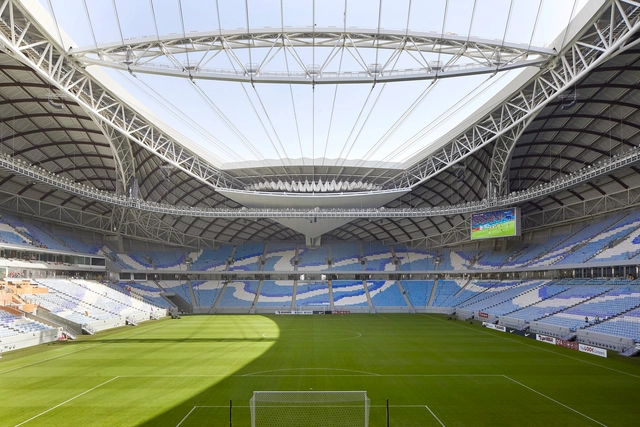
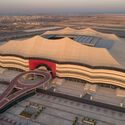
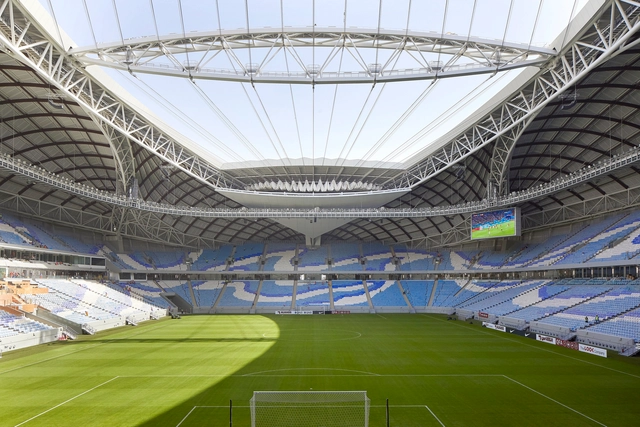
The World Cup will take place between November and December. This scheduling is due to the fact that average temperatures in the host nation, Qatar, can soar to 40 to 50°C during June and July.
TV shows about renovations are seductive. We feel anxiety when seeing that home remodeled in an unimaginable way, providing a family reconnection with the new space. The tears at the end, the host-architect-contractor satisfied with the result, intact wooden floors, shiny appliances, and bathtubs ready to be used. It is no wonder that these programs are reaching an ever-increasing audience and, consequently, inspiring many transformations in other people's homes.
But if, on the one hand, they encourage viewers to change by showing the infinite possibilities of transforming and improving a space, on the other hand, they can reproduce misconceptions about architecture, especially concerning the conception and execution process.
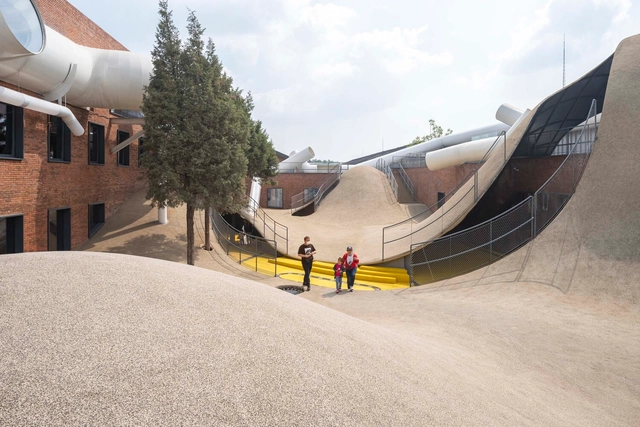
There was a time when buildings wanted to be mountains, roofs wanted to be forests, and pillars wanted to be trees. As the world began to go into a state of alert with the melting of glaciers and the consequent rise of Earth’s temperature, architecture – from a general perspective – was concerned with imitating the shapes of nature. Something close to human-made “ecosystems”, seen by many as allegoric and decorative, in service of marketable images of “sustainable development”.
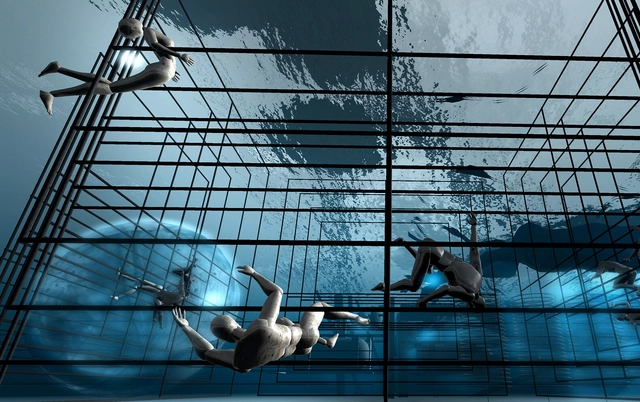
Image: Elif Ayiter/Alpha Auer/..../, via VisualHunt
Imagine the daily life of an architect today. There is a demand for a new project, a blank canvas full of countless possibilities. The creative delight is about to be started. The main constraints are established: brief, analysis of the terrain and surroundings, solar orientation and prevailing winds. The first sketches are created, always combined with structural knowledge, even if basic, fundamentally determining for those who live in the gravitational acceleration of 9.807 m/s².
But what if only the brief remains among these basic premises?
The World Cup will take place between November and December. This is due to the host country’s climate in June and July when Qatar can reach average temperatures of 40 to 50°C.