Dorkly's latest animation gives the architect responsible for the Death Star an opportunity to defend himself and prove that his "shoddy design" was not to blame for its destruction. Instead, he condemns space wizards - a unworldly force he neglected to consider during planning.
Videos
Video: The Death Star Architect Speaks Out
https://www.archdaily.com/779075/video-the-death-star-architect-speaks-outKarissa Rosenfield
Brut Deluxe Lights up the Streets of Geneva with LUX.LGE Installation
Brut Deluxe has created a colorful light installation, made up of 48 chandelier-like pieces that dangle above Geneva’s Rue du Mont Blanc for the 2015 Geneva LUX light festival. The project continues on Brut Deluxe’s extensive work with ephemeral installations and their study of spatial qualities through light.
Miguel de Guzmán and Rocío Romero, from the photography studio Imagen Subliminal, have shared with us their images and video of the installation.
Learn more and view more images after the break.





https://www.archdaily.com/778542/brut-deluxe-lights-up-the-streets-of-geneva-with-luge-installationKatie Watkins
This SOM Archive Video Offers a Look Back at the Early Days of 3D Visualization
Until recently, the only options for providing clients and the public with visualizations of what a prospective building would look like were almost exclusively hand drawn renderings, or scale models built by hand. Both of these practices are still in use today, but now there is a much wider range of options with 3D modeling software providing the bulk of renderings, the growing presence of 3D printing, and even video fly-throughs with special effects that rival the latest Hollywood action movie. This 16mm film created by architecture firm Skidmore, Owings & Merrill (SOM) in 1984, and digitized by illustrator Peter Little, reminded us of what the early days of digital 3D modeling looked like.
https://www.archdaily.com/778376/this-som-archive-video-offers-a-look-back-at-the-early-days-of-3d-visualizationDavid Douglass-Jaimes
Video: RNT Architects’ La Jolla Shores Lifeguard Station
Following the demolition of the original lifeguard station at the La Jolla Shores beach in San Diego, RNT Architects was commissioned to design its replacement. The project began with several models proposing different directions for the project – its final iteration began with a single, miniature staircase leading to a small shelter on top.
https://www.archdaily.com/778256/a-hovering-geology-la-jolla-shores-lifeguard-stationEric Oh
Video: Garden School / OPEN Architecture
"A counteraction to what is happening today in China," OPEN Architecture's Garden School in Beijing seeks to reconnect its students with nature. Located in a new town that, as founding partner Li Hu says, was built "too fast," the school serves as one of the few spaces students can interact with nature. The school is designed like a garden, from its sloping "floor zero" to rooftop gardens, offering unconventional spaces for teaching and inviting public areas that encourage social interaction.
“What is problematic is that these new towns are designed too fast, without much thinking about how the spaces are going to be used, and what kind of space they are going to create. I think it is a problem for human psychology. Living in a new town with not enough good green space, good social space, we’ll become very problematic urban animals,” Hu told Spirit of Space.
Read on for a conversation with the architects.
https://www.archdaily.com/778311/video-garden-school-open-architectureKarissa Rosenfield
Video: Inside FR-EE's Mexico City Office
FR-EE / Fernando Romero Enterprise, a global architecture and design firm founded by Fernando Romero that is known for its radically diverse portfolio, is currently working on designs for Mexico City's new international airport. Watch the video above, filmed by German photographer Yannick Wegner and his colleague Julián Cáceres Aravena, for an introduction on the massive project and insight on the firm's overall design approach.
https://www.archdaily.com/778266/video-inside-fr-ee-fernando-romero-enterprises-mexico-city-officeKarissa Rosenfield
Video: Frank Gehry, Paul Goldberger and Charlie Rose on the Art and Science of Architecture
Frank Gehry and critic Paul Goldberger sat down with Charlie Rose to "the art and science of architecture and Golberger's new biography, Building Art: The Life and Work of Frank Gehry." You can watch the full 34-minute discussion above.
https://www.archdaily.com/778039/video-frank-gehry-paul-goldberger-and-charlie-rose-on-the-art-and-science-of-architectureKarissa Rosenfield
Peter Zumthor: “There’s Nothing I’m Not Interested In”
The Louisiana Channel recently made a trip to the hometown of Peter Zumthor for an extensive and rare video interview on the Swiss architect's life journey, passion for learning, and how "different kinds of silence" help him reach his potential.
https://www.archdaily.com/778026/peter-zumthor-theres-nothing-im-not-interested-iKarissa Rosenfield
The Dam Collapse that Changed the History of Los Angeles
Los Angeles, as we know it today, was made possible by massive infrastructure projects that provide reliable sources of water to the otherwise semi-arid region. The mastermind behind many of these infrastructure projects in the early twentieth century was William Mulholland, the self-taught engineer who rose through the ranks to become the Chief Engineer and General Manager of the Bureau of Water Works and Supply (the precursor to today’s Los Angeles Department of Water and Power). Mulholland is most commonly remembered for the construction of the Los Angeles Aqueduct, which piped water to the city from the Owens Valley, over 200 miles away. But Owens Lake was drying up faster than expected, and the aqueduct was threatened by both earthquakes and sabotage from angry landowners and farmers in the Owens Valley who orchestrated dynamite attacks on the waterway, in what became known as the California Water Wars.
Mulholland needed a backup plan, so he turned to building reservoirs, most of which still function to this day. Tom Scott’s video above tells the story of how one of those reservoirs, and the failure of the dam that held it back, shaped the development of Los Angeles itself. When the St. Francis Dam collapsed in 1928 the ensuing rush of water killed at least 450 people (though some estimate the total is closer to 600), destroyed 1,200 homes, forever altered the reputations of Mulholland and the city’s water infrastructure, and ultimately cemented the boundaries of the city and its neighbors.
https://www.archdaily.com/777727/the-dam-collapse-that-changed-the-history-of-los-angelesDavid Douglass-Jaimes
Hiroshi Nakamura Describes the Inspiration Behind the Ribbon Chapel in This Stunning Video
Hiroshi Nakamura, architect of the Ribbon Chapel in Japan, describes the design ideology and his personal favorite elements of the project in this stunning new video by Matthew Allard ACS. Shooting the chapel at various times during the day, its changing characteristics are captured in the movement of the light and camera, the twisting concrete forms seeming to dance.
https://www.archdaily.com/777777/hiroshi-nakamura-describes-the-design-ideology-behind-the-ribbon-chapel-in-this-stunning-videoEric Oh
Canstruction Timelapse: Architects Build Transportation-Inspired Sculptures at the National Building Museum
Twenty-four teams from Washington, DC-based architecture and design firms participated in CanstructionDC 2015 at the National Building Museum, building transportation-themed sculptures out of canned food. At the end of the display, the sculptures will be dismantled and the food will be donated to local hunger relief organizations. Watch the sculptures come together, including a Mayflower bean soup ship and a full-scale smart car, in the timelapse video above. Learn more on the National Building Museum website.
https://www.archdaily.com/777828/canstruction-timelapse-architects-build-transportation-inspired-sculptures-at-the-national-museumKatie Watkins
Issa Diabaté on His Work Reshaping Urban Africa
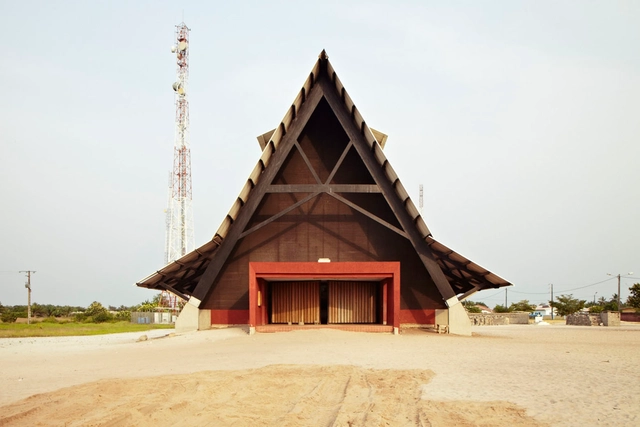
In a video interview with BBC news, Issa Diabaté of Koffi- Diabaté Architects discusses the need for an improvement in the urban fabric of Africa, and specifically in the city of Abidjan in Côte d’Ivoire, where he has been working for the past 20 years. “It’s not by building one house after the next that we will have an impact on the city…I feel that the architects of tomorrow, especially in African cities, need to become developers, to actually imprint his or her vision on the city,” he says in the video. “There are no better ways of integrating issues of sustainability or issues of density than by doing it yourself.”
Watch the video after the break.
https://www.archdaily.com/777426/issa-diabate-on-his-work-reshaping-urban-africaEric Oh
TED Talk: Shea Trahan on the Relationship Between Sound and Architecture
“As a designer, we create architectural spaces which are de facto instruments—they contain sound, they manipulate it, they can even create sound—so we’re tasked with a very powerful tool for affecting human cognition.”
https://www.archdaily.com/776913/ted-talk-shea-trahan-on-the-relationship-between-sound-and-architectureSabrina Santos
Watch Gregg Pasquarelli and Vishaan Chakrabarti Describe their Ideal New York
In this new video by WIRED, Gregg Pasquarelli of SHoP Architects and Vishaan Chakrabarti of Partnership for Architecture and Urbanism discuss the biggest changes that they would make to New York City. Covering everything from public green space to transit infrastructure, the two speak at length on the Big Apple’s planning and how it compares to other massive metropolitan cities around the world. Major changes they suggest include the separation of Central Park into two large strips, for example “West Side” and “East Side” Park, with industrial areas on the outside edge and residential/commercial areas located between them.
https://www.archdaily.com/776601/watch-gregg-pasquarelli-and-vishaan-chakrabarti-describe-their-ideal-new-yorkEric Oh
Video: Bird's Eye View of Brasília's Tesourinhas
Drone Brasília has shared with us a brief video filmed by a drone that gives a bird’s eye view of a signature feature of Brasília -- the “tesourinhas,” the so-called cloverleaf interchange that the city’s highways form.
In just thirty seconds the video shows the scale of the space, marked by cars traveling through the wide avenues, which themselves are projected onto an expansive green plane.
https://www.archdaily.com/777069/video-birds-eye-view-of-brasilia-tesourinhasRomullo Baratto
Video: Hiroshi Nakamura’s Ribbon Chapel
The latest video by French architect and filmmaker Vincent Hecht visits Hiroshi Nakamura’s Ribbon Chapel in Onomichi, Japan. Built in 2013, the 80 square meter wedding chapel features two spiraling stairways that wrap around the building, connecting at the top to form a viewpoint. Watch the video above for a closer look at the stunning chapel.
https://www.archdaily.com/777001/video-hiroshi-nakamuras-ribbon-chapelKatie Watkins
Watch the Official Performance of “We Know How to Order” at the Chicago Architecture Biennial
The city of Chicago is an intersection of multiple systems – the organizational orders of its modernist buildings; the presence of the federal government; the negotiations and orders of the lives of its marginalized communities. “We Know How to Order”, conceived by Bryony Roberts, choreographed by Asher Waldron and performed by the South Shore Drill Team, brings these intersections to life in a vibrant street performance for the first ever Chicago Architecture Biennial. A series of drill routines with influences from street choreography, the project explicitly "super-imposes" its system of movement onto the organization of Mies van der Rohe’s Federal Center, calling "attention to the accessibility of public space in the US" and "how architectural systems alongside social expectations influence the occupation of common space," according to the Chicago Architecture Biennial guidebook.
https://www.archdaily.com/776712/watch-the-official-performance-of-we-know-how-to-order-at-the-chicago-architecture-biennialEric Oh
Video: Charles & Ray Eames Explore Mexico’s Day of the Dead
Celebrated in Mexico on November 1st and 2nd, Día de Muertos (Day of the Dead) honors the deceased. This video, made by Charles and Ray Eames in 1957, looks at the philosophy and origins of the Mexican holiday, presenting the folk objects and rituals associated with the celebration. Watch the short film above to learn more.
https://www.archdaily.com/776322/video-charles-and-ray-eames-explore-mexicos-day-of-the-deadKatie Watkins