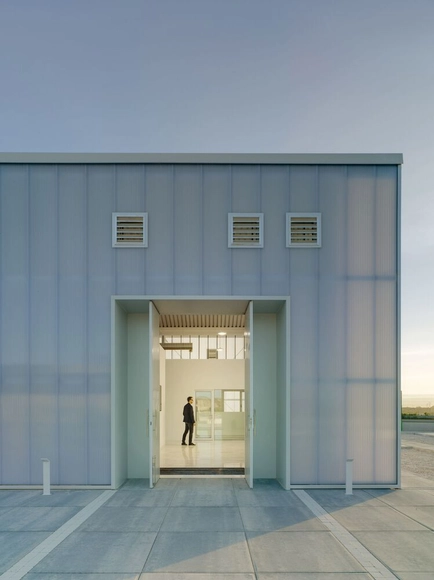
Transparent media allow light to pass through without dispersing it. Translucent materials, on the other hand, allow light to pass through in an irregular manner; because a portion of the light disperses, they prevent us from seeing through them with total clarity. Translucent surfaces act as veils, revealing without exposing, and literally blurring the boundary between interior and exterior. This effect is widely utilized in architectural design. From the signature facades of Steven Holl to the Moreira Salles Institute (IMS) in São Paulo, as well as many other examples in global architecture, this translucency can be achieved through specialty glass, acrylics, or other plastics. However, polycarbonate is a material that inherently delivers this effect, and it can be used in countless applications, from walls to skylights, and across highly diverse programs.









.jpg?1635426678 "Serpentine Pavilion / BIG. © Iwan Baan")