
Over the centuries, kitchens have undergone an interesting transformation that has dictated both their use—once frequented only by staff, today an essential social hub—and their size—shrinking from the largest room in the house to one of the smallest. Yet, regardless of size, the kitchen increasingly represents the heart of the home. An essential space, it now transcends the simple act of preparing food, becoming a place associated with leisure and togetherness. Consequently, this space must meet a series of specific demands, balancing functionality and efficiency with comfort and well-being.
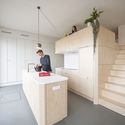


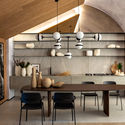

In projects with limited square footage and fully integrated layouts, such as lofts and studios, the challenge is even greater. Beyond the kitchen's symbolic role, designers must create strategies to dynamicize the space and optimize its use. Alongside this, fundamental guidelines are established to programmatically and conceptually integrate this environment with its adjacent spaces.


