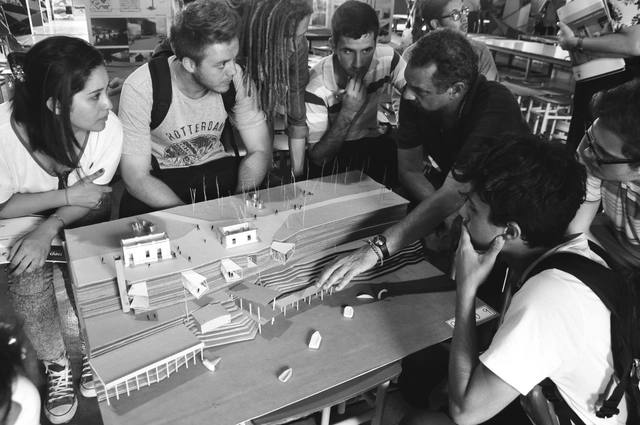
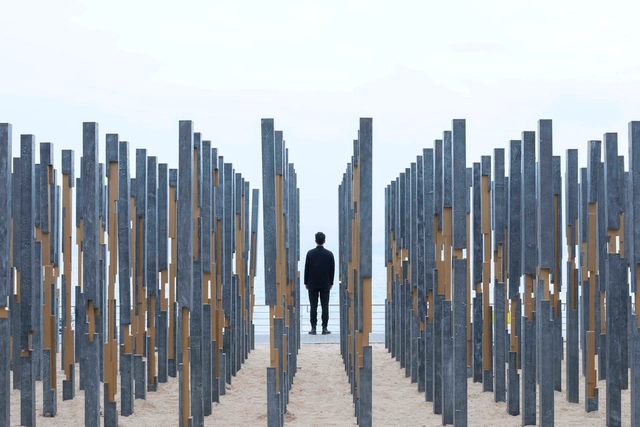
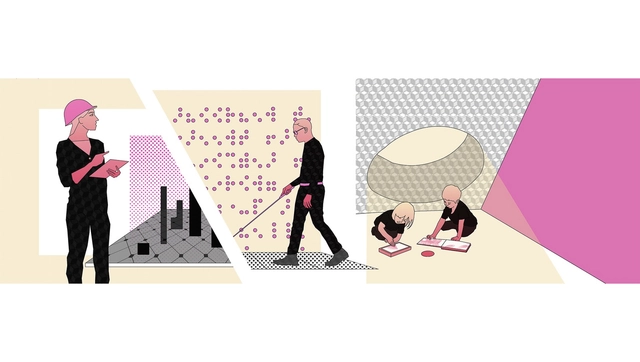
With a new academic year, SCI-Arc has continued to develop its global network of Satellite Initiatives. Serving as sites of experimentation and bringing together minds from around the world for unique symposia, diverse exhibitions, and workshops, these initiatives present new opportunities for engaging and testing the Institute’s cutting-edge ideas against the backdrop of cities outside of its native Los Angeles context.
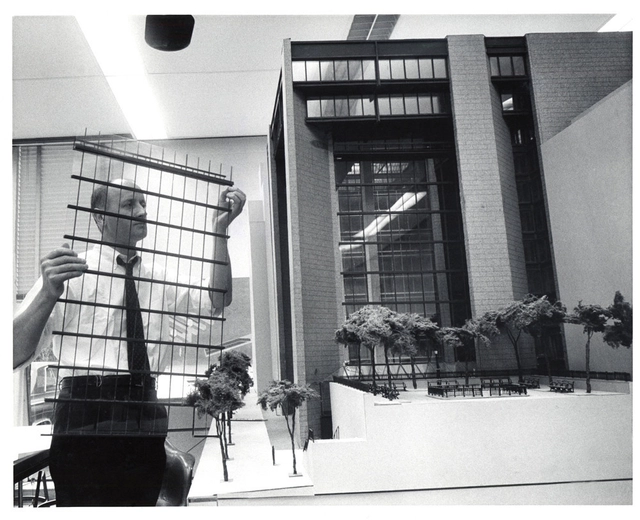
Kevin Roche, the Irish-American architect and Pritzker laureate known whose modernist sensibility transformed America’s post-war cultural and corporate institutions, has died of natural causes in his home in Guilford, Connecticut. News of Roche’s passing was first posted to the website of his office, Kevin Roche John Dinkeloo and Associates late on 02 March. He was 96 years old.
The escalating use of air conditioning is pushing urban temperatures to unprecedented heights. In highly populated nations like India, China, Indonesia, Brazil, and Mexico, major urban centers are becoming virtual ovens. At the same time, heat absorbed by buildings is re-released into the environment, driving local temperatures even higher. This outdoor heat, in turn, triggers demand for more air conditioning, creating a vicious cycle that increases both energy consumption and atmospheric carbon emissions.
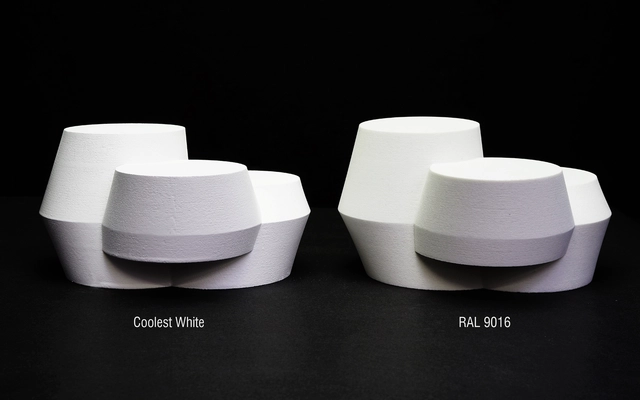
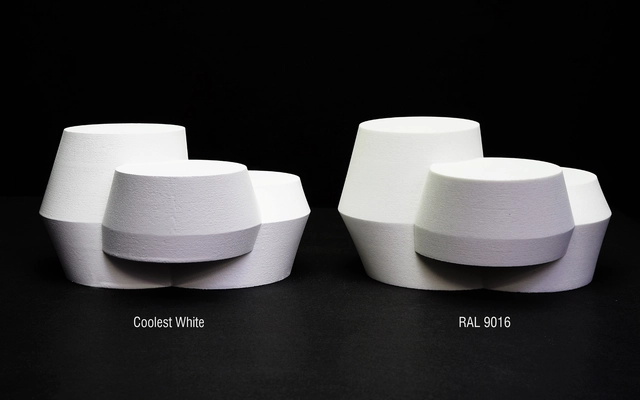
In response to this feedback loop, UNStudio partnered with Swiss paint specialists Monopol Colours to develop “The Coolest White”—an ultra-durable coating that protects buildings and urban structures from excessive solar radiation, thereby mitigating the urban heat island effect. Darker materials used in urban construction are a primary driver of urban heat accumulation. These materials absorb up to 95% of solar radiation, re-releasing it directly into the atmosphere, whereas standard white surfaces reduce this absorption to 25%. Now, The Coolest White lowers this absorption and emission value to a groundbreaking 12%.
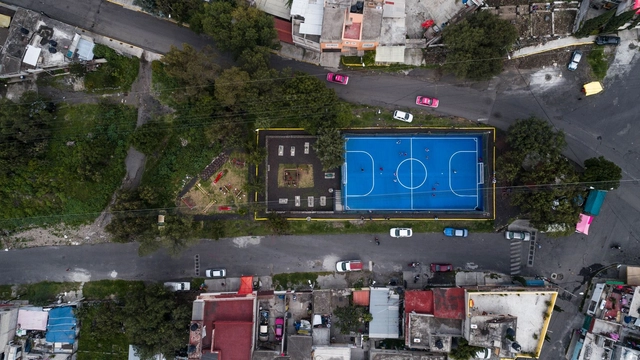
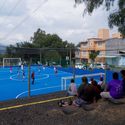
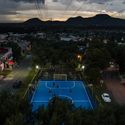
ALL Arquitectura is a Mexican firm that focuses on developing projects at both urban and architectural scales through methodologies rooted in participatory design. One of these projects is Cancha “LA DOCE”, a collaborative initiative born from a network and a proposal for change driven by the need to develop high-quality public spaces in marginalized areas of various cities worldwide. Drawing on an activity deeply woven into the lives of local residents, ALL Arquitectura leveraged soccer as a design catalyst to encourage participation, observation, and community life.
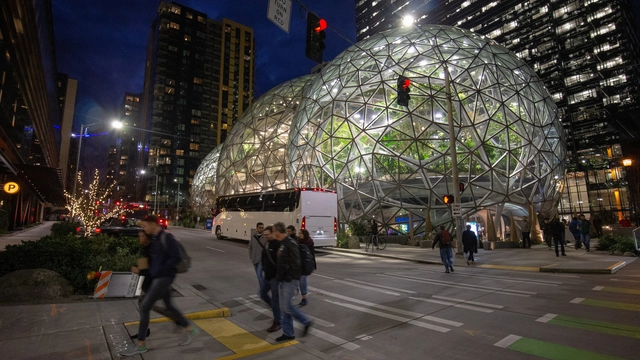
The Amazon brouhaha needs clarification: the company is not “pulling out of New York.” It’s simply canceling the construction of a physical campus in Long Island City, the fastest growing neighborhood in the city for almost a decade. The fate of that neighborhood reflects the outsize development trend of the larger city and the erroneous assumption that construction means growth. But let’s leave the bigger picture aside for the moment.
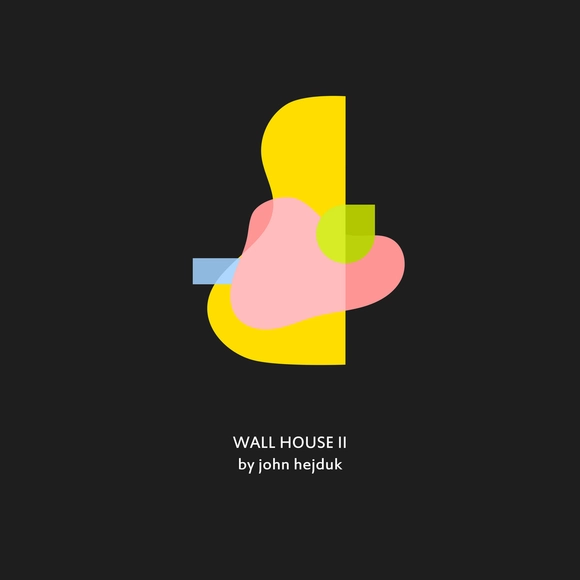
For a couple of years students at Belgrade’s Fakultet savremenih umetnosti have been designing posters dedicated to architectural masterpieces. The series, titled Architecture – Strictly Minimal, is part of the course Contemporary Architecture and Design and school’s Interior Design module. Presented with a template, each of the students was tasked with selecting a piece of architecture he or she found fascinating and then designing a single figure. The language applied throughout the series was formulated intentionally as a means of reducing the given piece to a single and eye-catching motif. This minimalist gesture was imagined as revealing something special about this same work of architecture.
Keys to facing a studio presentation or exam in the first years of architecture. Image via Facultad de Arquitectura, Planeamiento y Diseño UNR
Quacquarelli Symonds (QS) has released the 2019 edition of its annual ranking of the world's top universities in the field of architecture. This year, UCL (University College London) took the lead, a position held by the Massachusetts Institute of Technology (MIT) in the United States for the past four editions.
In Latin America, institutions from Chile, Brazil, and Mexico occupy the top three spots, respectively. See the top 10 below:
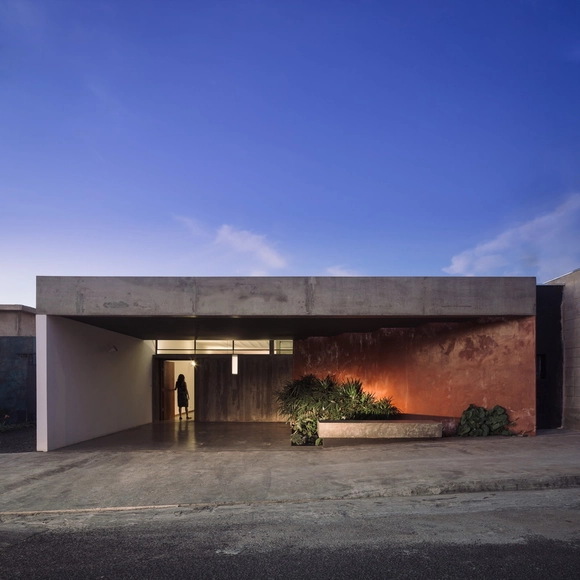
Designing a home is an experience that nearly all architects have either already had or will encounter over the course of their careers. However, balancing the future residents' requests with technical requirements brings daily challenges, whether due to tight budgets or limited space—both of which can serve as intriguing catalysts in architectural practice. As a result, architects are often challenged to maximize the residential program within a constrained footprint.
Transforming urban centers can be slow going when the process is rooted in community engagement. But within the next five to ten years, historically African-American neighborhoods in Charlotte and Greenville, North Carolina; Miami; Vancouver; and Los Angeles will experience major change, thanks to architect Zena Howard, who leads Perkins+Will’s cultural practice in North Carolina.
https://www.archdaily.com/912312/how-zena-howard-uses-design-to-help-cities-healJ. Michael Welton
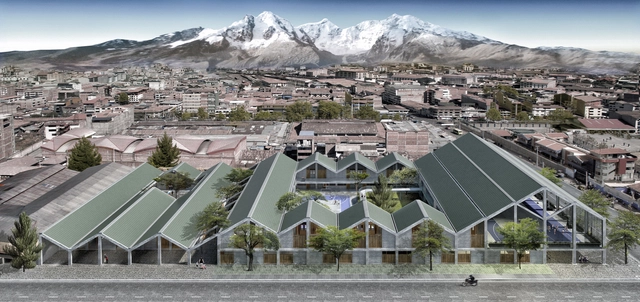
Vista_Panorámica. Image Cortesía de leonmarcial + Ghezzi Novak
The results of the National Catalog of Modular Schools Competition in Peru were recently announced, with a single winning team unanimously selected for all five categories across their respective bioclimatic zones: Coast, Rainy Coast, Highlands, Frost, and Rainforest. Remarkably, this team was formed by an alliance of several highly influential architecture firms in the country, as evidenced by the caliber of their proposals. What made this outcome so compelling was that unity and diversity prevailed in a competition that seeks to foster those very principles through architecture and education.
However, there is an important detail in the competition's process—and processes are journeys worth remembering. The project developed by the architecture offices leonmarcial + Ghezzi Novak was awarded first place by the jury in the Highlands Catalog category; however, it was disqualified for failing to meet the required documentation. Such situations are common in architectural competitions, where regulations must ultimately be upheld.
Beyond the outstanding projects that ultimately won, what happens to those left behind? What becomes of all that valuable material? They, too, deserve visibility, as they represent efforts that should lead to some outcome. We are committed to sharing quality architecture, and this project, given its winning caliber, is undoubtedly one of them.
The increasing use of air conditioning is causing many cities to hit record energy consumption levels during brutally hot summer months. In populous countries like India, China, Indonesia, Brazil, and Mexico, large urban centers function like ovens: buildings absorb heat that is re-released back into the environment, further increasing the local temperature. More heat outside means more air conditioning inside, which not only raises energy consumption, but also increases the levels of carbon dioxide in the atmosphere.
With this vicious cycle in mind, a paint was created to protect buildings and urban structures from excessive solar radiation, diminishing the effect of the urban heat island. The innovation came from the partnership of UNStudio, a Dutch architectural firm, and Monopol Color, a Swiss paint specialist. The dark-colored materials that are used to construct the buildings in our cities are one of the main causes of heat accumulation in urban areas. While darker materials absorb up to 95% of the sun’s rays and release them straight back into the atmosphere, this value can be reduced to 25% with a normal white surface. Now, with ‘The Coolest White’, it is possible to reduce absorption and emission to 12%.
Le Corbusier’s statement, “a house is a machine for living in,” forecasted a future where the house would become an engineered product of standardized, easily-duplicable pieces for an ideal city, while also achieving its ultimate functional purpose: the well-being of its inhabitants.
The curatorial team of the fifth edition of the Tallinn Architecture Biennial (TAB), for which ArchDaily is a proud partner, has announced the winner of their installation program “Huts and Habitats”. The winning proposal, Steampunk, designed by SoomeenHahm Design, Igor Pantic and Fologram (UK), was chosen from a shortlist of more than 137 international submissions.
https://www.archdaily.com/912436/tallinn-architecture-biennial-announces-winner-of-installation-program-huts-and-habitatsKatherine Allen
Key strategies for facing a studio presentation or exam in the first years of architecture school. Image via Facultad de Arquitectura, Planeamiento y Diseño UNR
Quacquarelli Symonds (QS) presented the 2019 edition of its annual ranking of the world's best universities in the field of architecture, in which UCL (University College London) dethroned the Massachusetts Institute of Technology (MIT) in the United States, which had led the list for four consecutive years.
Within the Ibero-American region, the list has not changed significantly compared to 2018: Spain maintains a strong presence, while Chile leads Latin America. Discover the top-ranked institutions below!
Guilherme Essvein de Almeida's doctoral dissertation presents an analysis of two major works of contemporary architecture: the Casa da Música in Porto, designed by Rem Koolhaas, and the Cidade das Artes in Rio de Janeiro, designed by Christian de Portzamparc. Defended in 2018, the dissertation was advised by Prof. Dr. Carlos Eduardo Dias Comas as part of the graduate program at the Federal University of Rio Grande do Sul. Read the author's abstract and find the link to the full dissertation below.
https://www.archdaily.com/1122173/casa-da-musica-and-cidade-das-artes-towards-monumentalityPedro Vada
However, just as the selection of the Pritzker Prize can shape public debate, it is also influenced by public opinion. Consequently, a month ago we asked our Ibero-American readers from ArchDaily en Español and ArchDaily Brasil to share their thoughts on the potential winners. We conducted a poll on who should win the 2019 Pritzker Prize, offering a selection of architects we thought stood a chance, along with the freedom to nominate their own candidates—always keeping in mind not who is likely to win, but who should win.
https://www.archdaily.com/1120841/our-readers-suggest-who-should-win-the-2019-pritzker-prizeArchDaily Team
The Mirror Mind Without Time / RSAA/Büro Ziyu Zhuang, Shenzhen, China. Image
Enquanto meio de representação da arquitetura, a fotografia apresenta qualidades indiscutíveis. Com ela, é possível apresentar a um público distante obras erguidas em qualquer lugar do mundo, de vistas gerais a espaços internos e pormenores construtivos - ampliando o alcance e, de certo modo, o acesso à arquitetura.
Entretanto, como qualquer outra forma de representação, não é infalível. Na medida que avanços tecnológicos permitem fazer imagens cada vez mais bem definidas e softwares de edição oferecem ferramentas para retocar e, por vezes, alterar aspectos substanciais do espaço construído, a fotografia, por sua própria natureza, carece de meios para transmitir aspectos sensoriais e táteis da arquitetura. Não é possível - ao menos não satisfatoriamente - experienciar as texturas, sons, temperatura e cheiros dos espaços através de imagens estáticas.
Materials, products, and construction systems are constantly evolving and following new technologies, discoveries, and market trends. The question is: are we, as architects, evolving with them? We have heard about robots working on construction sites, responsive and intelligent materials and the continued rise of 3D printing, but is it all white noise at the moment of starting a new design? More importantly, could these new systems continue to progress without sensitively and effectively taking people's quality of life into account?
How should we use materials—both in their traditional forms and in their future conceptions—so that our projects are making relevant contributions to the way we are inhabiting our planet?
In order to evolve, we have to know how, so it' s worth beginning a discussion around these issues.




.jpg?1551613771 "Ezra Stoller for ESTO")












.jpg?1551430458&format=webp&width=640&height=580)