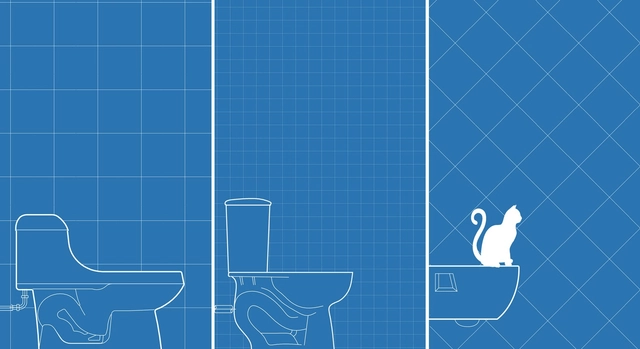
We may not give them the importance they deserve, but toilets are fundamental to our daily lives and our health. There are two "golden rules" that articulate their usefulness: they 'separate' us immediately from our waste, and they transport them for treatment, preventing them from contaminating the environment or making people sick.
In addition to being a good place to think about new ideas, browse Instagram, and answer emails, the toilet helps us stay healthy, an attribute we take for granted until we lose access to it.
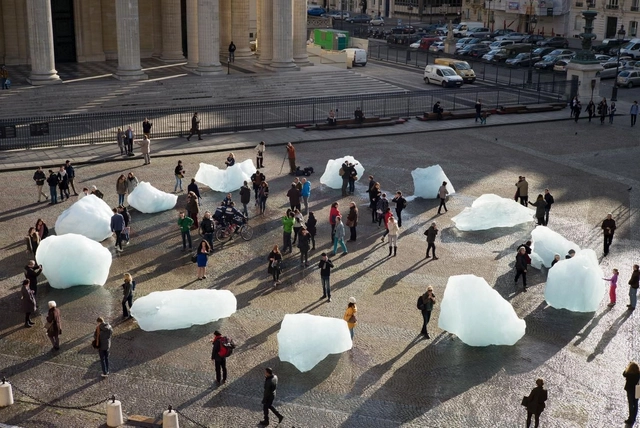
Studying the data that indicates a climate crisis that has been affecting the whole planet for the last decades, the reactionary attitudes may sound disappointing. However, at the same time that the news indicates a global average temperature rise, the political focus on the climate crisis is also intensified, according to the UN Environment report released in 2019, which is a reflection not only of the occurrence of manifestations and protests around the world but also of the so-called activist art expression.
Today's designers have inherited unprecedented global challenges, a legacy which will require radically new ways of fashioning the buildings, places, and landscapes that harbor our diverse ways of life. The College of Environmental Design offers several introductory and advanced programs for those interested in confronting these challenges in the fields of architecture, landscape architecture and environmental planning, urban design, and sustainable city planning. Please visit UC Berkeley's Summer Programs website to view images of student work and learn more about the CED Summer experience.
With growing awareness of the impact of fossil fuels on the natural environment and their common usage in buildings, architects are increasingly required to specify and accommodate alternative energy sources in their design approaches. Included in this portfolio of progressive energy sources is biomass, a scalable system that combines the usage of raw, sustainable materials with a lower resulting emission of CO2. As a method often heralded as the most transferable alternative to gas and coal, we answer a simple question: what is biomass energy?
https://www.archdaily.com/933023/what-is-biomass-energyNiall Patrick Walsh
Last week, The School of Architecture at Taliesin announced the closing of the school after 88 years. Both the school and the Frank Lloyd Wright foundation issued statements on the closure, and now the Student Body has created their own statement outlining the impact of the decision. The news of closure followed the conclusion of a multi-year struggle back in 2017, when the school was approved to maintain its accreditation as an institute of higher learning.
At the last Seoul Biennale of Architecture and Urbanism, the interdisciplinary team from Medellín ARQUIURBANOtogether with the multidisciplinary team from Bucaramanga TABUÚ, presented their proposal Transformation of Collective Spaces: “Public Space, the Skin of Democracy." In this proposal, they showcase the collaborative and co-creative process behind both the Revitalization of Rionegro's Historic Center and the reactivation and recovery of public spaces in Bucaramanga.
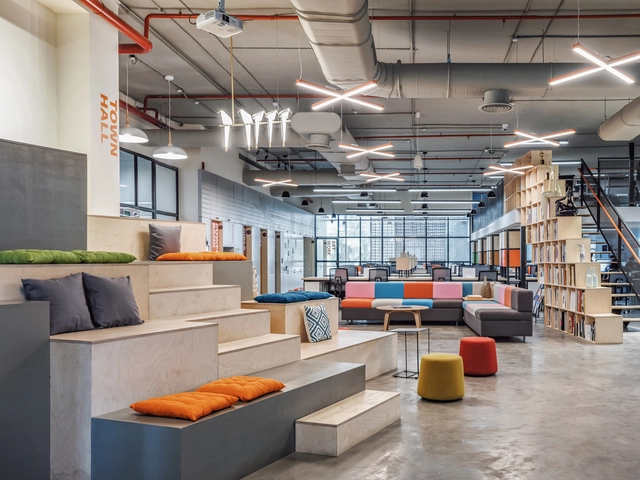
It is truly odd how we always find ourselves in a bad mood at work and our productivity keeps decreasing as the week passes by. To be fair, we can’t keep blaming our colleagues, clients, or Monday for our rough day; sometimes it’s the chair we are sitting on, the fluorescent lighting above our computer, or the constant “chugging” sound of the printer near the desk.
Other than the fact that people spend about 70-80% of their time indoors, almost 9 hours of their day are being spent at work; and studies have indicated that the environmental quality of an office has short and long term effects on the comfort, health, and productivity of the people occupying it. While research on the comfort conditions of workplaces is still relatively minimal, we have put together a list of factors that have proved to be highly influential on the comfort of individuals in workplaces.
Labor gives rise to design. As the aggregate of physical and mental effort used in the creation of goods and services, labor is tied to both what we create and our process. In a field shaped by production, architecture and design depend on labor from a broad range of professionals. But as workers increasingly put in longer hours and traditional measures of security change, questions of labor practices have arisen amid broader conditions of contemporary work culture.
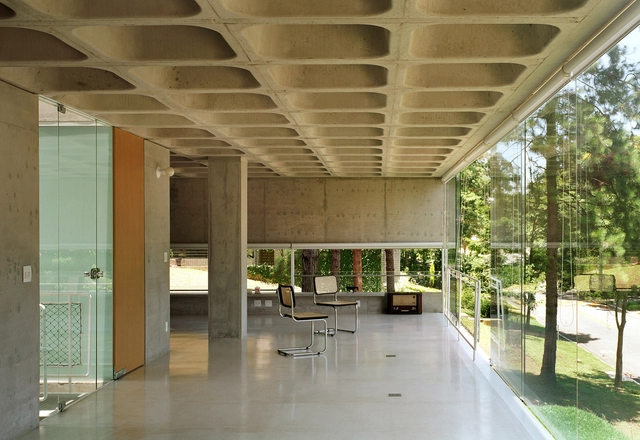
Waffle and ribbed slabs are highly efficient systems for spanning large distances. The T-shaped section formed by the flanges and ribs functions as a network of beams, reducing the number of support points required compared to a solid slab. Although lightweight or insulating materials can be used to fill the voids formed by the grid, these slabs are often left exposed and unfilled, lending a distinct aesthetic quality to the construction system.
While technology and construction have progressed rapidly in recent years, allowing structures to be built taller and faster than ever, remnants of colossal ancient monuments remind us that construction techniques from as long as hundreds of years ago had enormous merit as well. In fact, many of the innovations of antiquity serve as foundations of modern construction, with the Roman invention of concrete serving as a cogent example. Other essential ancient construction techniques, such as the arch and the dome, are now often considered stylistic flourishes, with designs like the Met Opera House reinterpreting classical typologies in a modern context. Yet perhaps the most relevant reinterpretations of ancient construction today are those that do so in the interest of sustainability, renouncing high-energy modern construction methods in favor of older, more natural techniques.
https://www.archdaily.com/933010/the-future-of-the-old-how-ancient-construction-techniques-are-being-updatedLilly Cao
Construction of a 1,000-bed hospital in Wuhan, China. Via Shutterstock
Does the Coronavirus concern us? Yes, it does. Beyond the rush for health cures, cities are seen to react by using both architecture and urban strategic planning as tools for the virus’ containment, shattering our notions of city and resilience planning.
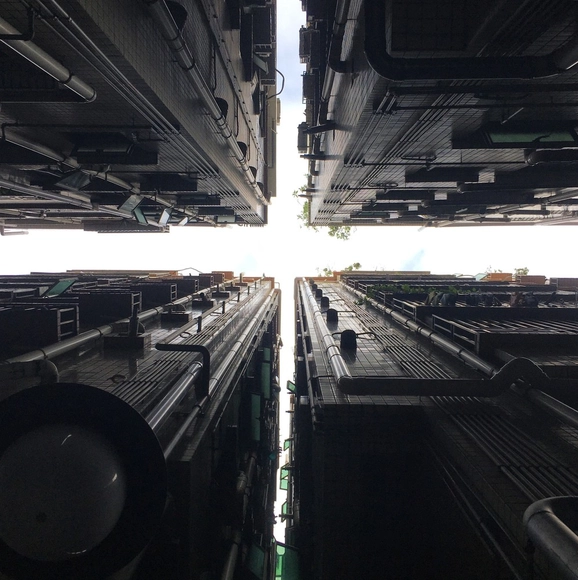
The Chinese megacity of Shenzhen bares all the hallmarks of a surging modern metropolis. Busy (and loud) five-lane motorways weave through islands of glittering glass skyscrapers, rising from podiums filled with designer shops, fronting vast squares and plazas, activated by screen-savvy young professionals fueling the city’s booming tech economy. Such a scene is truly remarkable considering that before 1980, Shenzhen was nothing more than a provincial fishing town of 60,000 people. Today, that figure has risen to 13 million.
This poses the question of how the urban environment accommodated such a rapid population explosion in such a short time. The answer lies in the city’s “Urban Villages,” remarkable manifestations of Shenzhen’s past and present, though likely not of its future.
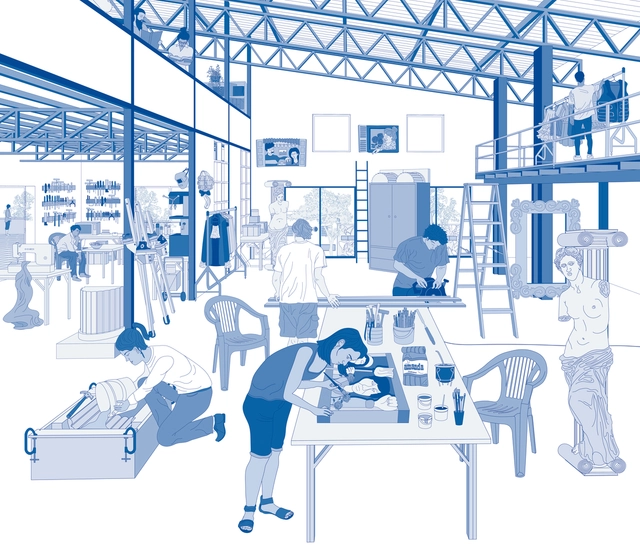
“The architectural configurations where the cultural development of a city takes place—workshops, recording studios, rehearsal rooms, factories, homes, and offices—are often private, invisible, and restrictedto the general public.” Based on this premise, Urban Backstages—an exploration by the organization Theatrum Mundi that represents the first stage of the pilot project Making Cultural Infrastructure—seeks to reveal what the areas dedicated to the production of art, design, and crafts in the City of Buenos Aires are like, shedding light on how the region's cultural practices are conceived and developed “behind the scenes.”
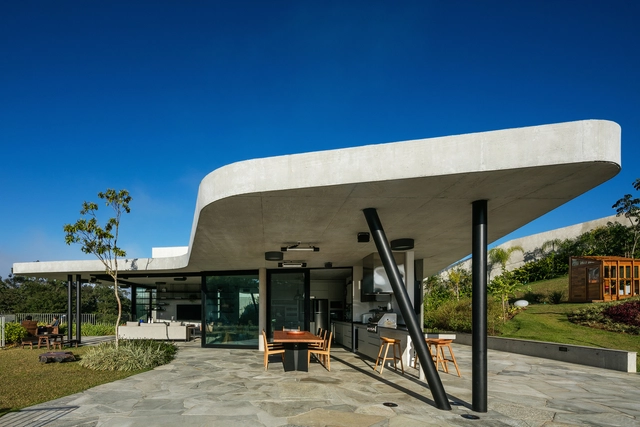
It is no coincidence that curved forms in architecture are deeply embedded in the global perception of Brazilian architecture. Invariably evoking the work of Oscar Niemeyer, curves are hallmark features of the landmark architectural complexes of Pampulha and Brasília. Yet they are also found in residential masterpieces, such as the Casa das Canoas in Rio de Janeiro.
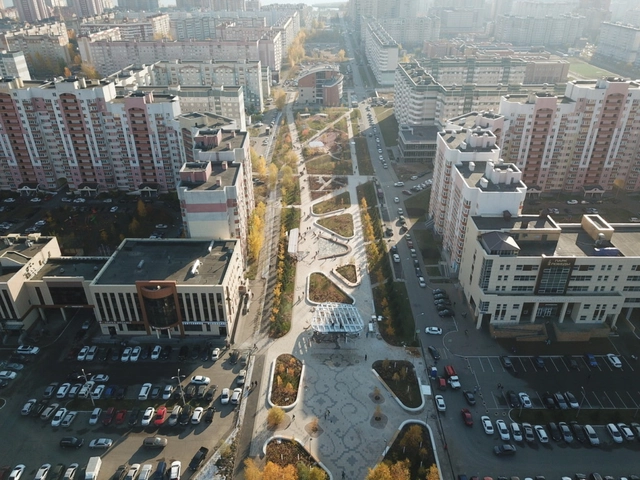
The newly landscape White Flowers Boulevard park in Kazan. Image Courtesy of Foundation Institute for Urban Development of the Republic of Tatarstan
Costing less than glitzier parks in Moscow, the Tatarstan initiative is revivifying the local design and manufacturing bases with a "teach a man to fish" approach.
In places without an established design force, there have historically been two opposing approaches at play: hire experts from abroad or nurture a local design community, a la “give a man a fish or teach him how to fish.” In the Russian republic of Tatarstan, located at the intersection between Europe and Asia, a recent Public Spaces Development Program has created over 350 parks in five years—by choosing the latter approach.
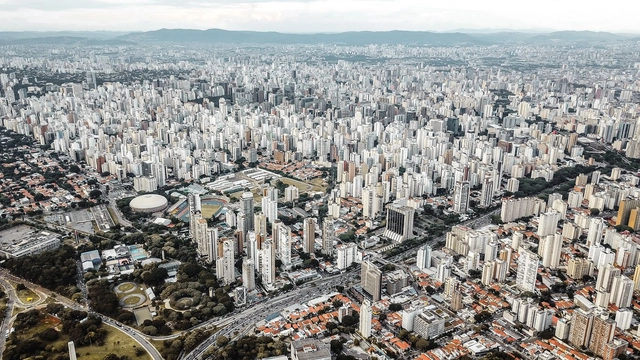
Aerial view of São Paulo. Photo by Sergio Souza via Unsplash
How many jobs can someone access in less than an hour using public transit? How long does it take to reach the nearest healthcare clinic or school from home? The answers to these questions depend directly on cities' transportation and urban development policies. These policies largely determine urban accessibility—that is, the ease with which people from different social groups and income levels can access employment opportunities, healthcare and education services, and cultural and leisure activities. However, urban accessibility has received little attention from public officials in Brazil, and research on the topic remains limited to case studies of a few cities, partly due to challenges in data availability.
https://www.archdaily.com/1123753/socio-spatial-inequalities-and-access-to-opportunities-in-brazilian-citiesRafael Pereira, Carlos Braga, Bernardo Serra e Vanessa Nadalin
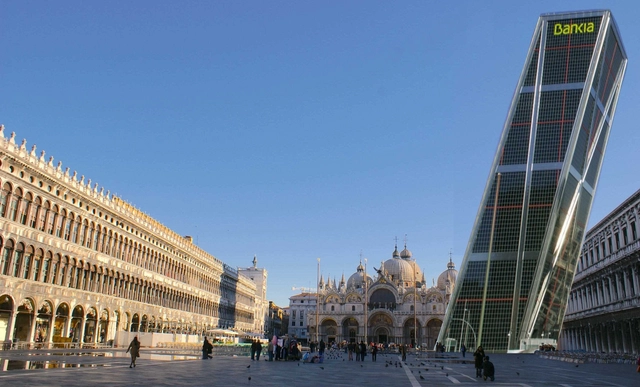
Imagine the following scenario. It is 1902, and to the great shock and distress of the citizens of Venice, the beautiful campanile tower in its Piazza San Marco has just collapsed. That very evening, the city’s communal council votes to approve 500,000 Lire for the prompt rebuilding, “com’era, dov’era” — “as it was, where it was”. Future residents and visitors alike may now continue to enjoy this beautiful structure, which had also been restored and added to many times previously.
But then an authority from far away steps up to speak. “Our regulations do not allow this! Our funding policies require that ‘a project shall use contemporary design’ — which means that you may use only current styles of which we approve, and you may not use the local traditional styles of Venice. That would be a ‘falsification of history’, a ‘mingling of the false with the genuine’, and we decree that this would have harmful consequences!” The project does not go forward, and something entirely “contemporary” is built instead.
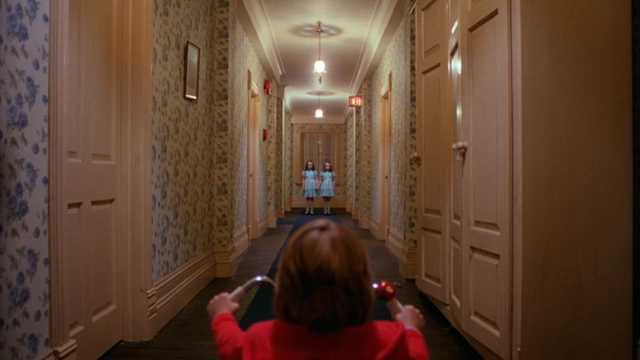
The field of architecture is not exactly a hot topic of study for most undergraduate students. The closest they might get to the subject is an art history survey course in which architecture is presented as a parade of styles across the millennia—just another form of visual expression.
https://www.archdaily.com/932965/teaching-an-appreciation-for-architecture-through-filmMichael J. Crosbie



_9546.jpg?1580726149 "BIG Offices. Image")








.jpg?1580468377 "An embankment on Kaban Lake in Kazan, Tatarstan’s capital city. Kaban consists of three lakes stretching north to south, with connected ducts. These are the largest in area in Tatarstan. The concept of this project was based on the creation of a single Kaban Lakes Water Park, uniting the three lakes’ embankments.. Image Courtesy of Foundation Institute for Urban Development of the Republic of Tatarstan")