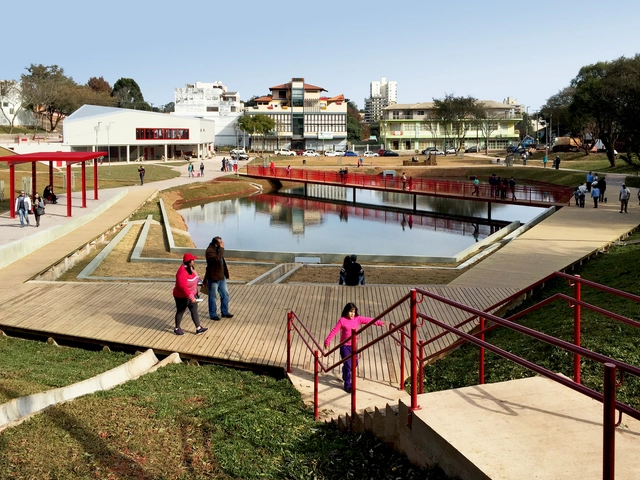
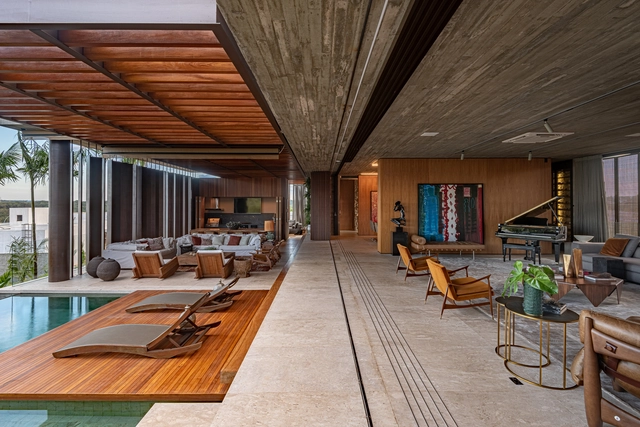
In the 21st century, smart city management will be one of the most influential factors in economic development. Addressing challenges in housing, sanitation, democracy, education, safety, economic development, and quality of life will be at the forefront of the agenda for city leaders.
https://www.archdaily.com/1122274/urban-planning-and-public-spaces-parks-as-tools-for-social-transformationAna Paula Wickert
Originally published in ArquitecturaAhora, architect Ana Sugranyes explores the origin and evolution of the concept of the right to the city, from 1960s Paris to its global expansion.
In the name of social integration or sustainability, the United Nations New Urban Agenda (2016) also incorporated a reference to the right to the city. “Words, then, are of no use: they are just words,” says Alberti. Meanwhile, Chile maintains its high level of income inequality, which has a direct, correlative effect on the deep socio-spatial segregation of its territories and cities; this, in turn, corresponds to worrying levels of social, cultural, and structural violence.
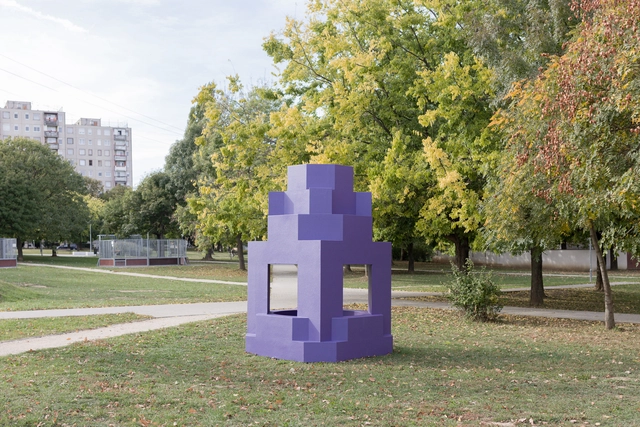
The Haszkovó housing estate in the city of Veszprém, Hungary has been seen as a failed urban development: "grey, sad, and soulless". However, this cold structure managed to shelter 20,000 inhabitants within its walls, standing as a "real city" within the area.
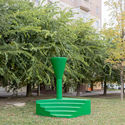
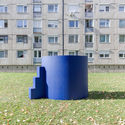
On the occasion of Veszprém Design Week, a collaborative project by five renowned architects and architecture studios: Edward Crooks, Point Supreme, Supervoid, MAIO, and Paradigma Ariadné, invited the visitors to change the perception and current state of Haszkovó, by creating five vibrant, portable, and durable urban artifacts.
To its great credit, the American Institute of Architects recently denounced the Trump administration’s decision to formally withdraw from the Paris Climate Agreement. This may put the professional organization on the right side of history, but it’s unlikely to sway any hardened hearts and minds in Washington. Obviously, the executive branch is worse than useless on this issue: not just an impediment to change, but a malevolent force for willful inaction. It’s hard to see it as anything less than an enemy of the climate.
Most architects can agree that they would prefer to spend more time designing and less time managing. Management is a vital role architects play, yet increased efficiency is always valuable. Whether it involves coordinating consultants or ensuring a job site is progressing to meet the contract documents, architects are in charge of orchestrating many moving parts throughout the life of a project. With an app like Archireport, architects can keep track of projects in the office or on site, wherever the work day may lead.
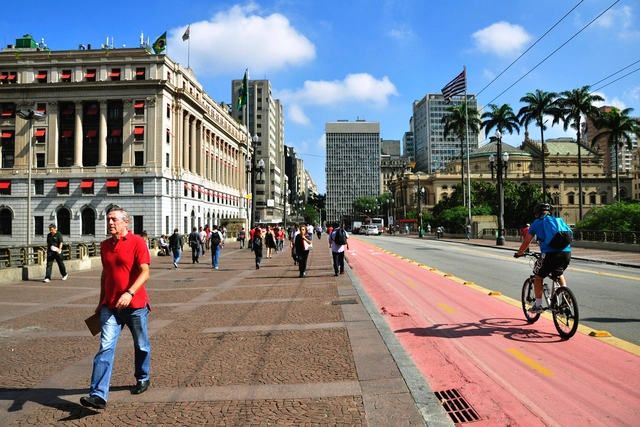
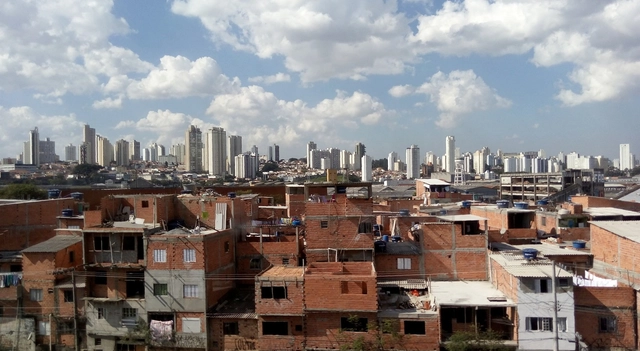
Downtown São Paulo. Photo: Mariana Gil/EMBARQ Brasil
Five Brazilians die in traffic accidents every hour. While highly critical statistics like this can spark positive reactions, they are not always enough to change reality on their own. However, knowing that in the city of São Paulo intersections concentrate more accidents per kilometer, and that these rose by 5% from 2017 to 2018, provides decision-makers with the concrete data needed to implement measures to reduce these numbers. Acting on the most dangerous intersections will save lives.
https://www.archdaily.com/1121376/how-sao-paulos-street-design-influences-traffic-accidentsWRI Brasil
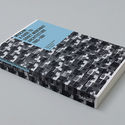
After the success of the original guide-book on underrated Soviet architecture, Garage Museum of Contemporary Art is publishing an English version of the bestselling guide: Moscow: A Guide to Soviet Modernist Architecture 1955–1991in a new digitalized format with six new chapters.
The history of the spaces presents an important diversity throughout the world, which corresponds to different geographical, economic and cultural moments and conditions. Technology plays an important role since the constructions through which time has passed also work with a kind of sample that breaks down all the advances and ambitions in force of the time, leaving reflections that it are important to keep today.
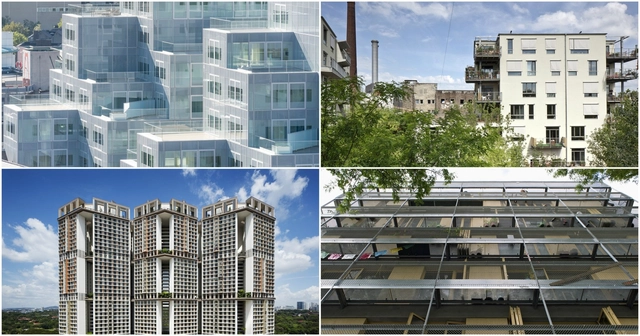
The challenges associated with the provision of adequate and affordable housing around the world demand that architects respond with original solutions that challenge traditional building forms, typologies and methods of delivery.
PLANE–SITE brought together the architects of four inventive housing projects. These projects represent a diversity of approaches to similar housing challenges across radically different global contexts. From the redensification of European urban centers to the rapid urbanization of the tropical Asian megacity, these radical housing models challenged existing paradigms in order to advance resident well-being as their principle design concern. In contrast to Schumacher’s divisive speech, the panel illustrated projects that were deliberately designed to promote community life and social interaction between residents – and in some cases also with other citizens in spaces that blur the line between public and private.
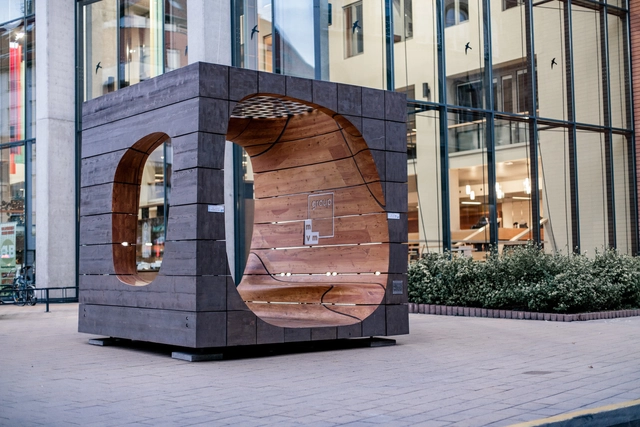
Architecture and design studio Hello Wood have created a line of "smart" outdoor furniture for educational institutes and public communal spaces. The two furniture pieces, Fluid Cube and City Snake, re-introduce modular public structures in a contemporary and sustainable way.
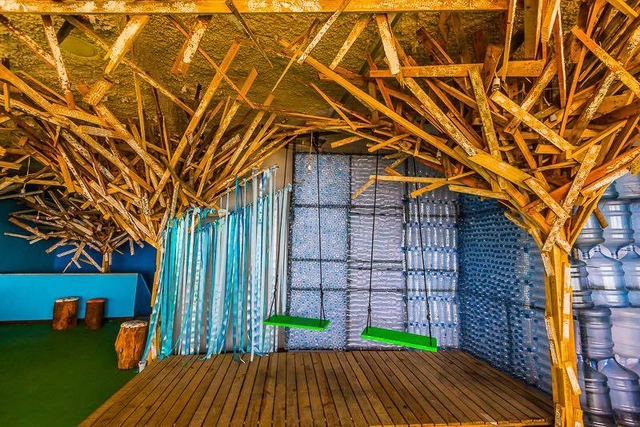
The global need to find more sustainable ways to meet new demands is one of the most compelling catalysts for the reuse of materials or structures in contemporary architecture. In the field of scenography, repurposing materials to construct stage sets has long been a reality. Professional practice in this field deals with the representation of a scene, using temporary elements designed to stimulate the spectator's imagination. In this context, the work of scenographer Renata Mota has paired repurposing with the reuse of materials—either discarded or donated—that have lost their original function, using them to craft sets for performances, exhibitions, and other events.
Automation is rapidly becoming a normalized part of many people’s daily lives and careers, a trend which has by no means evaded the construction industry. While this increasingly pervasive technology is often considered a symptom of the contemporary 21st century, however, one automated construction technology may have a history stretching as far back as the 1960s. This technology, the bricklaying robot, has transformed dramatically since its limited realization over 50 years ago, splintering into newer, more technologically advanced variations today.
https://www.archdaily.com/928440/the-evolution-of-bricklaying-robots-changing-the-rules-of-traditional-constructionLilly Cao
Mexico City’s vecindades (traditional tenement housing) are urban settlements located primarily in the downtown area. According to the National Institute of Anthropology and History (INAH), these buildings first emerged in the late 18th century, though their peak occurred during the 19th century as a result of rapid population growth, serving to provide affordable housing for the city's most marginalized sectors.
In Brazil, an increasing number of people are choosing to live in apartments rather than houses. Mirroring this trend, the supply of residential buildings with diverse floor plans and typologies has grown at a similar pace. In this context, and aiming to evoke the feeling of a standalone house, developers are increasingly offering lofts and duplex apartments. These layouts foster spatial openness, functional design, and enhanced natural light and ventilation through large openings and glass expanses. Additionally, double-height ceilings establish a visual connection between different floors, among other features that provide greater comfort to residents.
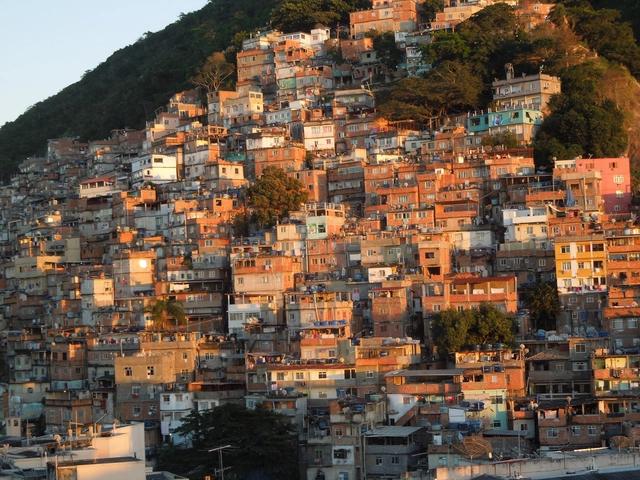
Continuing our series of articles studying social housing in Latin America, Nikos A. Salingaros, David Brain, Andrés M. Duany, Michael W. Mehaffy, and Ernesto Philibert-Petit present a reflection on the problems and solutions of favelas. Read the previous articles and the new piece below.
https://www.archdaily.com/1121024/problems-and-solutions-of-social-housing-in-latin-americaNikos A. Salingaros, David Brain, Andrés M. Duany, Michael W. Mehaffy & Ernesto Philibert-Petit
Every field has its heroes. In architecture, heroic designers have often been celebrated both for their skills and as public personalities. Frank Lloyd Wright and Louis Kahn were icons in the 20th century. In the 21st, Zaha Hadid was as bold and evocative as her buildings, and she became a “starchitect” (to use the industry-specific parlance), her untimely death further elevating her to what-might-have-been status. But heroes are only human, and their deaths do not automatically convey a permanent place in the pantheon. They do, however, allow for a fresh perspective on the living.
In the fields of architecture and engineering, the term "span" refers to the distance between two structural supports, typically describing the uninterrupted space between the columns of a building's load-bearing frame. Several notable spans have achieved fame for their impressive scale, particularly in public and civic projects, such as Lina Bo Bardi's MASP and Paulo Mendes da Rocha's MuBE, both in São Paulo. Yet, large spans can offer spatial generosity and visual freedom in any project, including those on a smaller scale.
A person living in Moema, a neighborhood with one of the highest income concentrations in São Paulo, lives 20 years longer than someone born in Cidade Tiradentes, in the far east of the capital. Brazil's wealthiest city exposes just how unequal the country is, and how much access to public policies varies depending on where one lives.