1. ArchDaily
  2. Articles

Articles

Dubrovnik, the medieval city that invented quarantine

Subscriber Access | 

The medieval city of Dubrovnik, in Croatia, boasts many distinctions. Surrounded by ancient walls and a sea of azure waters that enchant visitors, during the Middle Ages it was the only city-state with enough prominence to rival Venice.

Another lesser-known aspect is that the Pearl of the Adriatic, as this Croatian city is known, was the first known European municipality to implement a smart quarantine and to build isolation spaces to combat the major diseases that plagued humanity. This is what archaeologist Ante Milošević and physician Ana Bakija-Konsuo assert in their book "Lazaretto in Dubrovnik: Beginning of Quarantine Regulation in Europe."
The Limits of Flexibility in Domestic Space: Determination vs. Indetermination

Subscriber Access | 

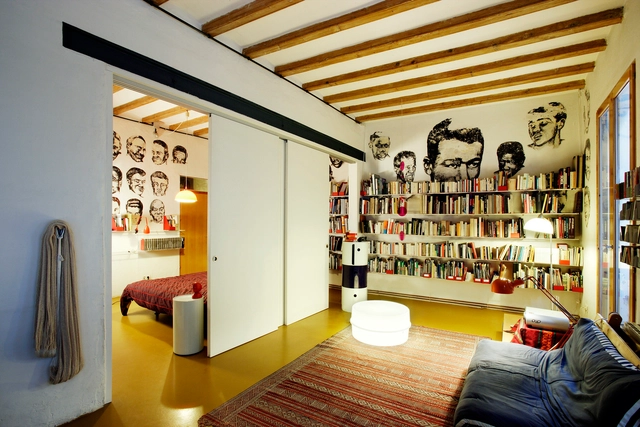
This article by Jaime Coll López was originally published in the 10th issue of revista rita_ under the title "Determination vs Indeterminacy in Domestic Space." It is a critique of flexibility in housing, one of the primary paradigms of 20th-century domestic architecture.

Brazilian Houses: 19 Residences with Integrated Kitchens

Subscriber Access | 

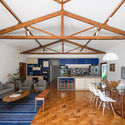
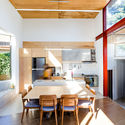
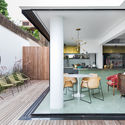
With the goal of blurring the boundaries traditionally imposed by walls, so-called integrated kitchens can be incorporated into adjacent spaces—most commonly living and dining rooms—using counters, tables, split levels, or even contrasting flooring and finishes.

Brazilian Houses: 19 Residences with Integrated Kitchens - Image 5 of 4Brazilian Houses: 19 Residences with Integrated Kitchens - Image 8 of 4Brazilian Houses: 19 Residences with Integrated Kitchens - Image 17 of 4Brazilian Houses: 19 Residences with Integrated Kitchens - Image 18 of 4Brazilian Houses: 19 Residences with Integrated Kitchens - More Images+ 14

Applying Material Innovation: Does Architecture Have What It Takes?

There is a slide I like to show at the beginning of the architecture courses I teach that provides an overview of the last hundred years or so in design and technology. In the left column, a car from the beginning of the 20th Century (a Ford Model T) is poised over a contemporary car (a Tesla). The middle column contains a similar juxtaposition, showing a WWI-era biplane and a modern-day stealth fighter (an F-117A). In the right column, Walter Gropius’s 1926 Bauhaus Dessau building is seen next to an up-to-date urban mixed-use building. The punch line, of course, is that the two buildings—separated by roughly 100 years—look basically the same, whereas the cars and planes separated by the same timespan seem worlds apart. What is the reason for this?

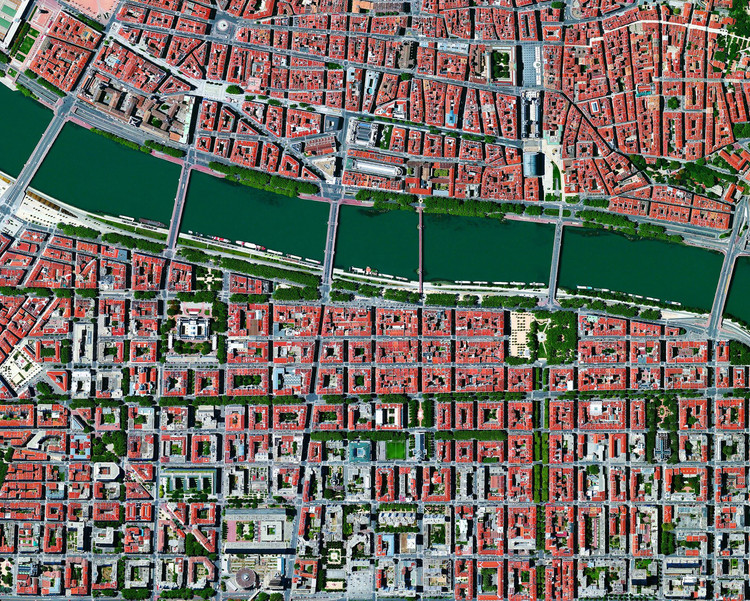
Gardens, Parks, and Boulevards: Mapping Green Spaces Via Satellite

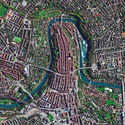
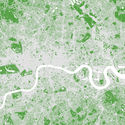
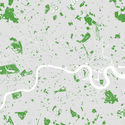
There are a plethora of benefits associated with urban green spaces, namely pollution control, temperature regulation, and biodiversity--all of which ultimately add to the quality of life of city dwellers. Like other urban common areas used for sports and recreational activities, green spaces have a direct impact on the health and well being of the residents who use them.

Gardens, Parks, and Boulevards: Mapping Green Spaces Via Satellite - Image 4 of 4Gardens, Parks, and Boulevards: Mapping Green Spaces Via Satellite - Image 8 of 4Gardens, Parks, and Boulevards: Mapping Green Spaces Via Satellite - Image 12 of 4Gardens, Parks, and Boulevards: Mapping Green Spaces Via Satellite - Image 13 of 4Gardens, Parks, and Boulevards: Mapping Green Spaces Via Satellite - More Images+ 11

"Bodies of Water": PSA Announces the Theme for the 13th Shanghai Biennale

Subscriber Access | 

Power Station of Art (PSA) has announced the curatorial team and theme for the 13th Shanghai Biennale, proposed by its Chief Curator, the architect and writer Andrés Jaque (Office for Political Innovation).

A Rare View of Siberia's Soviet Architecture

Subscriber Access | 

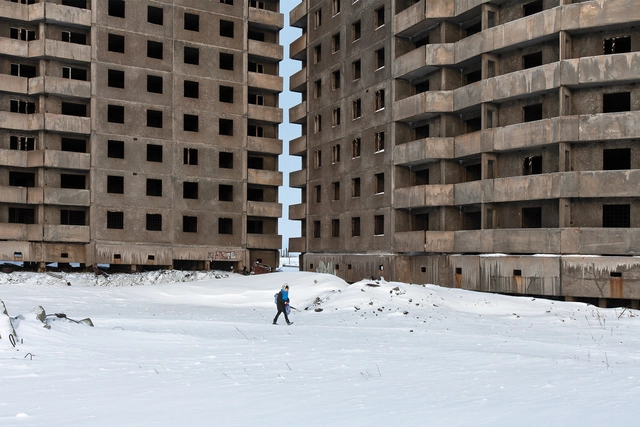
Over the past few years, a series of exhibitions and monographs have prompted a rediscovery of socialist modernism, its powerful expression and exoticism stirring significant interest. The recently published photo book Concrete Siberia. Soviet Landscapes of the Far North by Zupagrafika casts a new light on this relatively unexplored chapter of architecture history by showcasing the Soviet architecture of Siberia's major cities while providing an insight into a little-known landscape. The book presents the architecture and urban environment of six Siberian cities: Novosibirsk, Omsk, Krasnoyarsk, Norilsk, Irkutsk and Yakutsk, through the lens of Russian photographer Alexander Veryovkin, bringing about a new-found perspective on post-war architecture.

A Rare View of Siberia's Soviet Architecture - Films & ArchitectureA Rare View of Siberia's Soviet Architecture - Films & ArchitectureA Rare View of Siberia's Soviet Architecture - Films & ArchitectureA Rare View of Siberia's Soviet Architecture - Films & ArchitectureA Rare View of Siberia's Soviet Architecture - More Images+ 12

Why It’s Effective To Wrap Architecture In Zinc

Subscriber Access | 

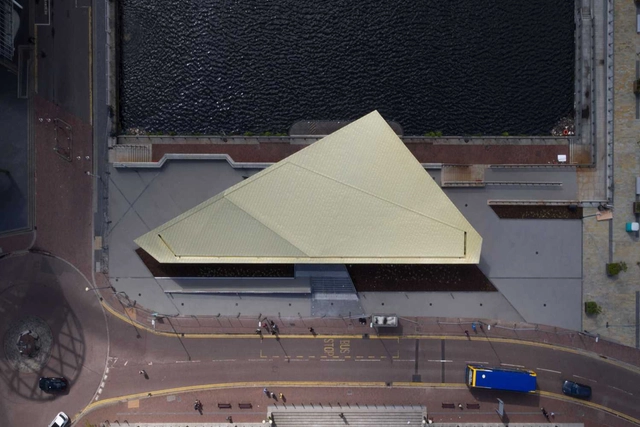
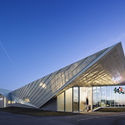
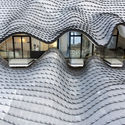
A lightweight material par excellence, zinc is a non-ferrous metal that provides an effective solution for coating buildings exposed to adverse weather conditions, while simultaneously delivering a creative response to the requirements of a project.

When in contact with humidity during the summer, zinc panels generate a self-protecting layer that isolates heat from indoor spaces. Rain and snow slide easily over its surfaces, and its modular panels can wrap curved shapes or be perforated according to the architectural design, and combined in facades and/or ceilings through different shades, brightness, and colors.

Why It’s Effective To Wrap Architecture In Zinc - Image 1 of 4Why It’s Effective To Wrap Architecture In Zinc - Image 2 of 4Why It’s Effective To Wrap Architecture In Zinc - Image 3 of 4Why It’s Effective To Wrap Architecture In Zinc - Image 4 of 4Why It’s Effective To Wrap Architecture In Zinc - More Images+ 14

How AR and VR Will Enhance the Future of the Sports Arena Experience

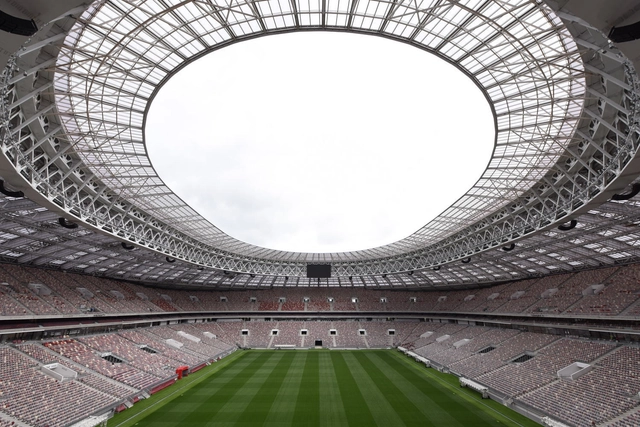
Throughout history, people from all walks of life with little in common have found ways to unite in neighborhood parks and filled stadiums to put those differences aside for the sake of the sports they love. Sports, and sports fandom, is a source of global unity, and perhaps fewer events in the world can generate such a wide range of emotions quite like a live match.

Post-COVID-19: On the Reinvention of Our Relationship with the “Great Outdoors”

Subscriber Access | 

Post-COVID-19: On the Reinvention of Our Relationship with the “Great Outdoors” - Image 1 of 4Post-COVID-19: On the Reinvention of Our Relationship with the “Great Outdoors” - Image 2 of 4Post-COVID-19: On the Reinvention of Our Relationship with the “Great Outdoors” - Image 3 of 4Post-COVID-19: On the Reinvention of Our Relationship with the “Great Outdoors” - Image 4 of 4Post-COVID-19: On the Reinvention of Our Relationship with the “Great Outdoors” - More Images+ 5

"How will we live together?" The question, the theme of the 17th Venice Biennale, has been providentially timely. Indeed, it has acquired a sense of urgency with the outbreak of COVID-19 and the crisis it has unleashed, prompting us to examine the sustainability of our current civilizational model and the need to renew both thought and action regarding the environment. In response to an article published on ArchDaily titled How Will We Live Together with All Other Species?, this article aims to contribute further perspective to the debate.

Children's participation in building humanized cities

Subscriber Access | 

Today, building humanized cities is predicated on full public participation, as outlined by national public policies institutionalized in Brazil's City Statute. However, it is clear that these mechanisms are largely geared toward adults, leaving children and youth on the margins of the participation and decision-making process.

Children's participation in building humanized cities - Image 1 of 4Children's participation in building humanized cities - Image 2 of 4Children's participation in building humanized cities - Image 3 of 4Children's participation in building humanized cities - Image 4 of 4Children's participation in building humanized cities - More Images+ 5

Social Impact: Architecture Building Space for Empathy

Subscriber Access | 

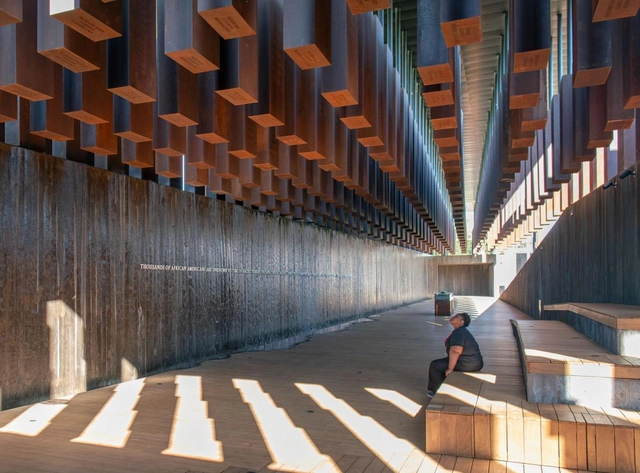
Architecture shapes how we live and come together. Amidst a pandemic and protests around the world, architects and designers are speaking out to condemn injustice and build space for empathy and understanding. In listening, they are looking to how we live together, and in turn, how we can create a more equitable and just world.

Social Impact: Architecture Building Space for Empathy - 1 的图像 4Social Impact: Architecture Building Space for Empathy - 2 的图像 4Social Impact: Architecture Building Space for Empathy - 3 的图像 4Social Impact: Architecture Building Space for Empathy - 4 的图像 4Social Impact: Architecture Building Space for Empathy - More Images+ 4

COVID-19, Spatial Planning, and Urban Planning in Latin America

Subscriber Access | 

The crisis brought about by the pandemic and the resulting new global order compel us to review and adjust all Land-Use Plans—or their local equivalents—across Latin American cities. 

Solar Lighting for An Affordable, Sustainable Future

 | Sponsored Content

While first developed as a practical power source during the 1950s, solar systems were too expensive for mainstream use until the 1970s. Starting from their early use to power Cold War era military satellites, silicon photovoltaic solar cells achieved their first commercial success in places where electricity was not available, such as lighthouses and off-shore oil rigs. 

Tips for Using Rainwater in Architectural Projects

Subscriber Access | 

The total amount of water on our planet has, theoretically, stayed the same since earth's formation. It's possible that the glass of water you drank earlier contains particles that once ran down the Ganges River, passed through the digestive system of a dinosaur, or even cooled a nuclear reactor. Of course, before it quenched your thirst, this water evaporated and fell as rain millions of times. Water can be polluted or misused, but never created or destroyed. According to a UNESCO study, it is estimated that the Earth contains about 1386 million cubic kilometers of water. However, 97.5% of this amount is saline water and only 2.5% is fresh water. Of this fresh water, most (68.7%) takes the form of permanent ice and snow in Antarctica, the Arctic, and in mountainous regions. Another 29.9% exists as groundwater. Ultimately, only 0.26% of the total amount of fresh water on Earth is available in lakes, reservoirs, and watersheds, where it is easily accessible for the world's economic and vital needs. With the population steadily increasing, especially in urban areas, several countries have already had severe problems with providing the necessary amount of drinking water to their populations.

Tactical Urbanism: Reimagining Our Cities post-Covid-19

Subscriber Access | 

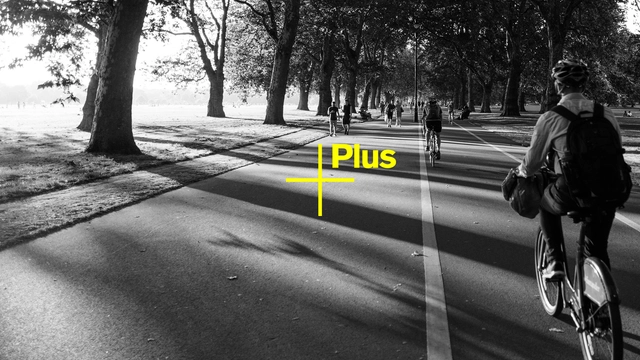
The Covid-19 pandemic has transformed the way we live our lives. Significant and long-lasting repercussions will be felt across society and industry, many of which are sure to influence the way we approach the design of our buildings and cities. Over the past few weeks, the Urban Design team at Foster + Partners has been exploring how recent and fast moving developments in urban planning – instigated and encouraged by the current crisis – will affect and shape the future of London and others worldwide.

Tactical Urbanism: Reimagining Our Cities post-Covid-19 - Image 1 of 4Tactical Urbanism: Reimagining Our Cities post-Covid-19 - Image 2 of 4Tactical Urbanism: Reimagining Our Cities post-Covid-19 - Image 3 of 4Tactical Urbanism: Reimagining Our Cities post-Covid-19 - Image 4 of 4Tactical Urbanism: Reimagining Our Cities post-Covid-19 - More Images+ 8

The City of Germán Bannen: A Documentary on the Milestones and Works of Chile's National Urban Planning Award Winner

Subscriber Access | 

Chilean architect and urban planner Germán Bannen, renowned for his work in the municipality of Providencia, is thoroughly examined in a new documentary by visual artist Gabriel Del Favero and journalist Ana Rodríguez. La ciudad de Germán Bannen traces the key milestones of his projects—such as the design and construction of Nueva Providencia Avenue—through a compilation of photographs, plans, archival footage, lectures, architectural drawings, and a dozen interviews.

Structure Only: 20 Houses That Showcase Their Structural Systems

Subscriber Access | 

Although some projects conceal it, structure is always a primary concern in architectural design. Defining the structural system is among the first crucial decisions to be made, and it will likely shape a series of other aspects of the building. There are, however, extreme cases where architecture is seen and read simply as structure—projects whose character and image are largely defined by the chosen structural solution.

Structure Only: 20 Houses That Showcase Their Structural Systems - Imagem 1 de 4Structure Only: 20 Houses That Showcase Their Structural Systems - Imagem 2 de 4Structure Only: 20 Houses That Showcase Their Structural Systems - Imagem 3 de 4Structure Only: 20 Houses That Showcase Their Structural Systems - Imagem 4 de 4Structure Only: 20 Houses That Showcase Their Structural Systems - More Images+ 16