Videos
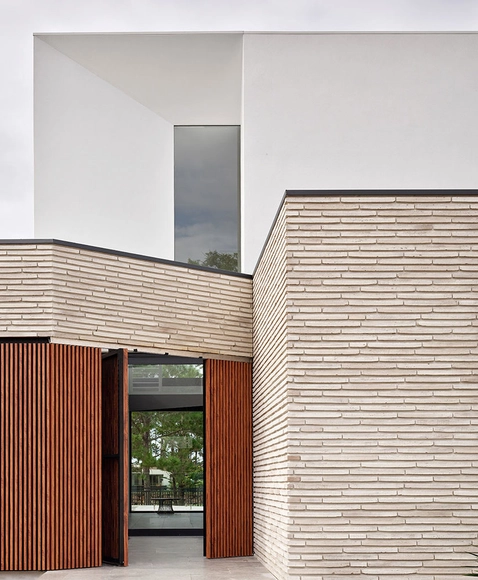
Stratum, Australia. Image Courtesy of Randers Tegl
When creating a contemporary atmosphere for living, many factors come into play. The surrounding environment, its climate, use of materials, spatial organization, and the attention to detail in both the interior and exterior design, all impact the quality of the design as a whole.
With increasingly better renderings becoming ubiquitous, students and architects alike feel the pressure of mastering an additional set of skills to get their ideas across. To what extent do renderings make or break a portfolio or a project? How important are they in the design process, and do renderings inform of a particular set of skills besides the software ones? This article explores different perspectives on the role of renderings within the profession.
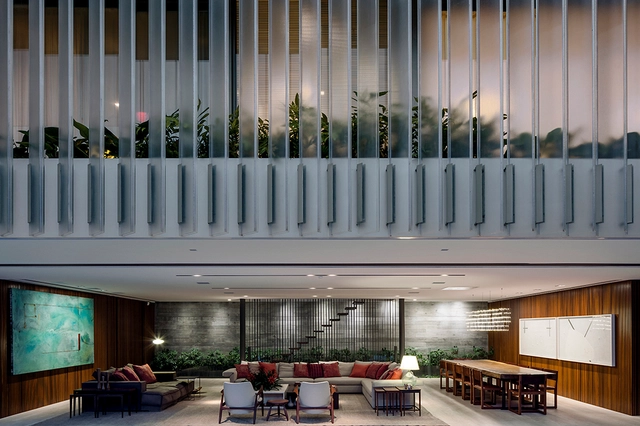
Designing spaces below ground level is always a major challenge, particularly regarding lighting and ventilation. However, creative solutions make it possible to create welcoming, airy subterranean spaces, such as the use of perforated panels to bring light into Casa K or even the strategic implementation of a glass-bottomed reflecting pool on the ground floor, allowing natural light to reach the basement of Jardim do Sol House.
Would you be willing to buy a home from a robot using only an app? As technology becomes more and more integrated into the design and real estate sector, that once an outlandish idea has become a reality. Only a decade ago, almost no one talked about technology and start-ups in the built environment. The real estate industry, which has historically lacked technological innovations compared to other sectors, is now taking a stance to reinvent itself as an industry that is more efficient, flexible, and automated- all resulting in one of the newest buzzwords that has taken the world by storm, proptech or Property technology.
The Second Studio (formerly The Midnight Charette) is an explicit podcast about design, architecture, and the everyday. Hosted by Architects David Lee and Marina Bourderonnet, it features different creative professionals in unscripted conversations that allow for thoughtful takes and personal discussions.
A variety of subjects are covered with honesty and humor: some episodes are interviews, while others are tips for fellow designers, reviews of buildings and other projects, or casual explorations of everyday life and design. The Second Studio is also available on iTunes, Spotify, and YouTube.
This week David and Marina are joined by Marion Weiss, architect and co-founder of Weiss/Manfredi. Marion discusses her childhood interests in the arts, architecture, and landscape design, how her office was formed and its design process, working with clients on large cultural projects, how architecture can have a social impact beyond its physical footprint, and more. Enjoy!
https://www.archdaily.com/959806/marion-weiss-you-could-spend-30-percent-less-and-with-good-design-do-something-thats-200-percent-betterThe Second Studio Podcast
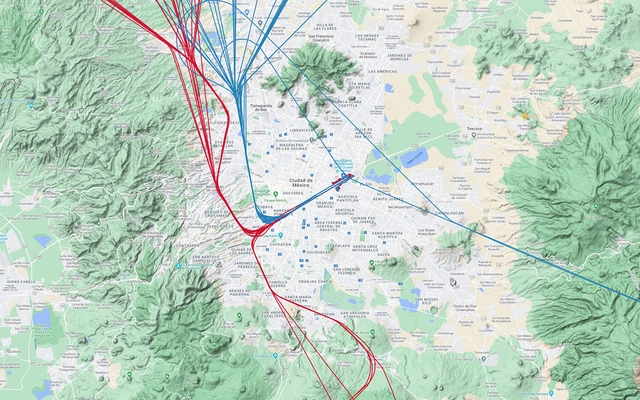
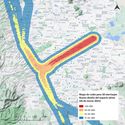
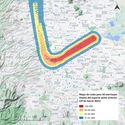
On Thursday, March 25, the agency that provides air navigation services in Mexican airspace (SENEAM) announced the implementation of the first phase of the Mexico City Airspace Redesign. Listed benefits of this redesign include reductions in flight times, operational delays, and fuel consumption, although the primary driver behind it is to integrate the future Felipe Ángeles International Airport in Santa Lucía into the capital's airspace. From day one, areas that previously did not experience aircraft noise from arrivals at the Mexico City International Airport (AICM) began to notice the effects of the redesign. How significant is the noise impact of this airspace redesign for the population of the capital's metropolitan area?
Videos
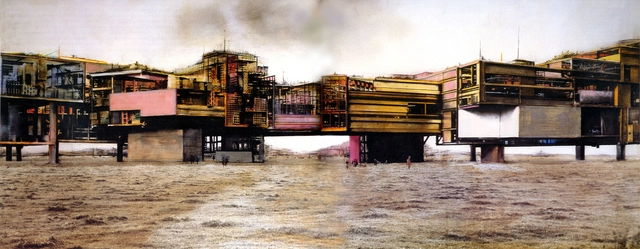
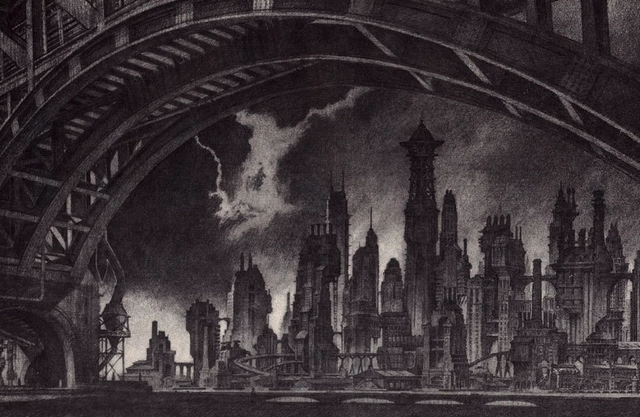
Looking west from across the Gotham River, by Anton Furst
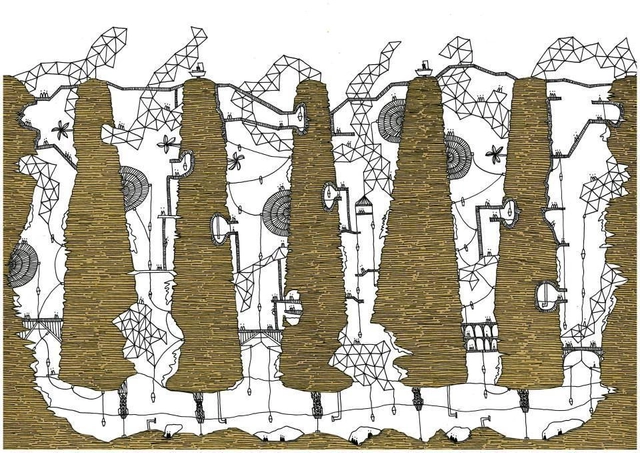
Graphic novels fold drawings of people, space, and time into their narrative structure to produce powerful visual stories. Graphic novels and architecture also share a set of common tools that are central to their depiction — drawing, sequencing, text, action, character, etc. This makes for a natural allegiance between graphic novels, architecture, and the city. In this episode, Stewart pulls the graphic novels off his bookshelf to show how and why they influenced his approach to architectural design and led to the creation of award-winning competition entries. In particular, David Mazzuchelli’s City of Glass and Asterios Polyp, and Chris Ware’s Building Stories offer lessons for developing a holistic approach to architecture that involves multiple points of view, politics, fiction, and visionary design.
Believing firmly that "architecture is [...] too important to leave solely to architects", Ole Bouman embarked on diverse activities throughout his three decades of work, reflecting on “architecture, not so much as the art or technique of making buildings, but architecture as the intelligent way to organize our lives on earth, and infuse it with purpose”.
After having shared Bouman's essay Finding Measure, ArchDaily had the chance to discuss with DesignSociety’s founding director his thoughts on the role of architecture, the current challenges of the world, the digital revolution, and many other thought-provoking topics.
Fangcheng Design (FCHA) is an architectural design studio dedicated to the research and practice of Chinese urbanization. Driven by a pace, density, and development model unique in the world, China's urbanization is reshaping the built environment. Composed of a design team with international backgrounds, Fangcheng Design studies and researches Chinese cities to design contemporary architecture tailored to the Chinese context.
https://www.archdaily.com/1127941/jobs-in-shenzhen-fangcheng-design-architects-planners-landscape-architectsMilly Mo
During the week of the final selection of ArchDaily China Building of the Year 2021 Awards, we received a total of 75,000 votes, thanks to our readers from all over the world. ArchDaily China strives to bring more Chinese firms to the wave of global exchanges and introduce Chinese architecture to the world.
This year, CCTN Design, with Shougang NO.3 Blast Furnace Museum, were selected for the first position, adopting the design strategy of “sealing the old, dismantling the surplus, and replenishing the new”, and transforming the industrial remains of Beijing into an inviting urban space. MAD Architects, with YueCheng Courtyard Kindergarten, won second place by dismantling and expanding the traditional courtyard house. gad, with Mountain & Sea Art Museum, won the third position by solving the problem of mountain construction and shaping the sculpture form of the art museum.
Dan Klyn, who teaches information architecture at the University of Michigan, is currently researching and writing a biography entitled Richard Saul Wurman’s 5 Lives. It’s an apt title, since the intellectually peripatetic Wurman has had several career incarnations: architect, author, publisher, designer, painter, sculptor, impresario (he created and thoroughly curated the early TED talks). “In a sense, I’m an amateur, a dilettante, I don’t do anything particularly well, but I see patterns between things,” he said to me in a recent interview, although his modesty here seems somewhat false: Wurman is a member of the Art Directors Club Hall of Fame; an AIA Fellow; has written, designed, and published more than 100 books; won a lifetime achievement award from the Cooper Hewitt; and is the recipient of the AIGA Gold Medal.
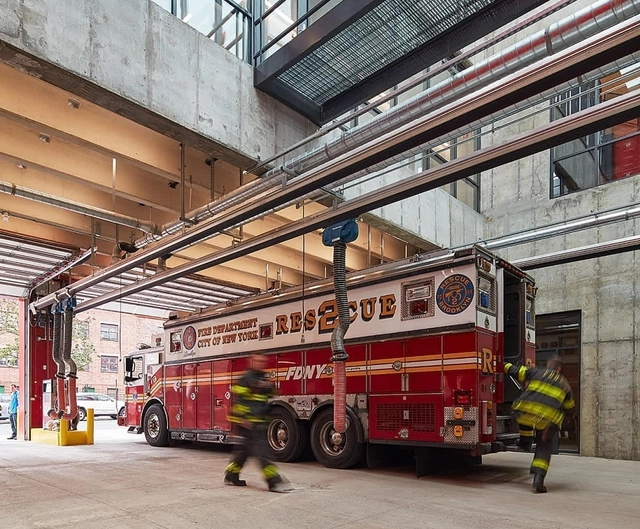
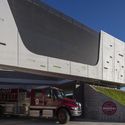
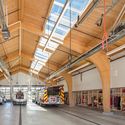
Architects are charged with protecting the public’s health, safety, and well-being. When buildings fail, whether through increased loads, poor design, or natural disasters, that charge also falls to those capable and willing to aid people in need. Firefighters regularly experience architecture’s collapse, often risking life and limb to save occupants and individuals they do not know. Yet firefighters and emergency personnel also have their own buildings they call home, rare typologies where recreational, domestic, and professional activities collide.
March 9 of last year marked Luis Barragán's 119th birthday and, in celebration of their namesake, the Barragan Foundation announced via their Instagram that they were launching the institution's newly revamped website. This signified two things--one, the absolute effort needed in order to compile every known Barragan work and the value this archive will have in aiding in the study of the architect's work and, two, the sweeping de-mystification of Barragan himself.
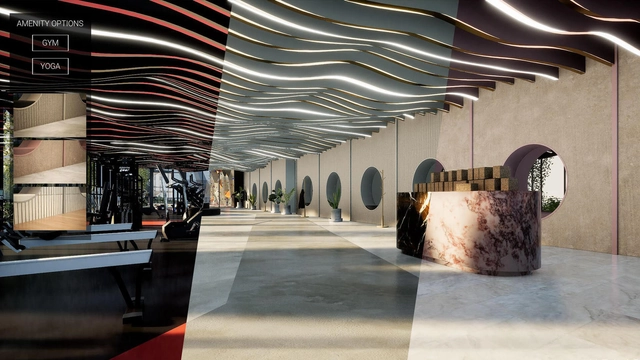
Twinmotion 2021.1 offers powerful new possibilities to create, develop and present visualizations as a fully connected member of the Epic ecosystem, cementing its place as an essential component of the entire archviz process from concept to advanced photorealistic experience. Additionally, with this release, Unreal Engine continues its efforts to improve existing features and workflows in response to customer feedback.
This self-dialogue by Francesco Careri (associate professor, Università Roma Tre), translated by Alessandra Merlo (associate professor in the Department of Languages and Culture, Universidad de los Andes), was originally published under the title Autodialogo sulla produzione di utopie concrete, in Alessandra Criconia (ed.), Una Città per tutti: Diritti, spazi, cittadinanza [Milan: Donzelli, 2019, 111-120], and previously in issue 28 of Dearq journal on 01/01/2020 under the title "Francesco Careri, Self-dialogue on the production of concrete utopias" (https://doi.org/10.18389/dearq28.2020.02) and is part of a joint dissemination partnership.



.jpg?1617841545 "Geminada House / CR2 Arquitetura. © Alessandro Guimarães")

.jpg?1617841649 "Jardim Paulistano Residence / Perkins+Will. © Daniel Ducci")








.jpg?1617861414&format=webp&width=640&height=580)


-14.34.gif?1616187182)