1. ArchDaily
  2. Editor's Choice

Editor's Choice

AIA Selects the 2013 COTE Top Ten Green Projects

The American Institute of Architects (AIA) and its Committee on the Environment (COTE) have selected the top ten examples of sustainable architecture and green design solutions that protect and enhance the environment. 

The COTE Top Ten Green Projects program, now in its 17th year, is the profession's best known recognition program for sustainable design excellence. The program celebrates projects that are the result of a thoroughly integrated approach to architecture, natural systems and technology. They make a positive contribution to their communities, improve comfort for building occupants and reduce environmental impacts through strategies such as reuse of existing structures, connection to transit systems, low-impact and regenerative site development, energy and water conservation, use of sustainable or renewable construction materials, and design that improves indoor air quality.

The 2013 COTE Top Ten Green Projects and Top Ten Plus after the break...

7 Reasons Architecture (As We Know It) Is Over

Subscriber Access | 

Steve Mouzon, a principal of Studio Sky and Mouzon Design, is an architect, urbanist, author, and photographer from Miami. He founded the New Urban Guild, which hosts Project:SmartDwelling and helped foster the Katrina Cottages movement. The Guild's non-profit affiliate is the Guild Foundation, which hosts the Original Green initiative.

Architecture has changed irreparably in the past decade, but those who know how to adapt just might find themselves in a far better place in a few years. It has now been 8 years since construction peaked in 2005, nearly 6 years since the subprime meltdown, and close to 5 years since the big meltdown that really kicked off the Great Recession.

Today, it appears that construction is finally beginning to pick back up, but it's too late for architecture as we knew it. Here are seven reasons why...

UK Survey Reveals Gap Between Large and Small Practices

A recent survey by the RIBA of over 2,100 UK practices revealed there is now a widening gap between 'massive' and 'micro' practices, with a 'squeezed middle' in between, as reported by BD.

This was the first mandatory survey of its members conducted by the RIBA, and gives a glimpse, for the first time, into the workings of every chartered UK practice. The RIBA's executive director of membership and profession Richard Brindley described the findings as a "tale of two professions operating in different universes". The polarized profession is most damaging to the practices in the middle; those of 10-50 employees which are large enough to have costly overheads, but not large enough to absorb them.

Large practices, employing 50 people or more, include just 3% of practices, but, thanks to their size, include 40% of registered architects. At the other extreme are practices of 10 employees or less, who account for 53% of practices despite employing a meager 10% of architects. The survey found that the majority of practices employs fewer than six people.

Read on for more results and analysis of the survey

The Uncertain Future of Seoul, Korea's "Dream Hub"

The Uncertain Future of Seoul, Korea's "Dream Hub"  - Mixed Use Architecture
Block H; Courtesy of Kohn Pedersen Fox Associates

According to Business Insider and a number of other real estate development outlets, the "Dream Hub" project in Seoul Korea that drew designs from internationally renowned architects including Daniel Libeskind -designer of the master plan - MVRDV, Dominique Perrault, BIG, REX, KPF and Tange Associates is on the verge of collapse. The Yongsan Development Corporation reportedly defaulted on a major loan repayment, citing difficulties in raising funds due to the real estate slump since the 2008 global financial crisis. The collapse of the project is still speculative, as it is unclear how the next round of loans that are to mature in June will fare.

The $28 billion real estate "Dream Hub" project was to develop 56-acres in central Seoul into a modern business hub. In its planning it included shopping malls, hotels, department store, apartment blocks, and mixed-use office towers. Follow us after the break for a recap of the projects that were planned for this development.

Light Matters: Louis Kahn and the Power of Shadow

Light matters, a monthly column on light and space, is written by Thomas Schielke. Based in Germany, he is fascinated by architectural lighting, has published numerous articles and co-authored the book „Light Perspectives“.

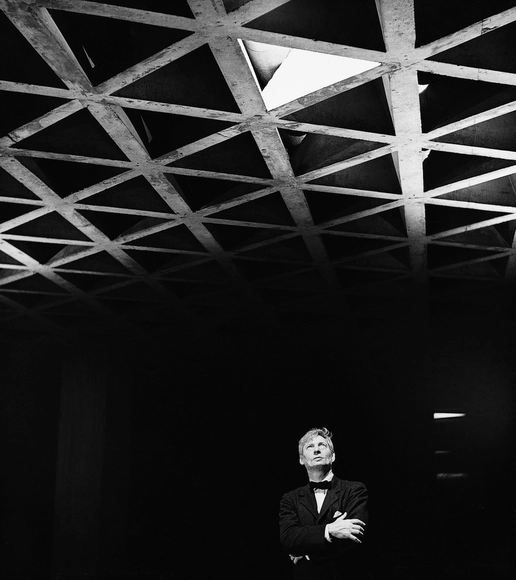
Does shadow have the power to give form to architecture? The increasing number of transparent buildings and LED installations would enforce the impression that light has eliminated the relevance of shadow. But to answer that question, let’s look back to a master of light whose architecture was shaped by shadow: Louis Kahn.

More Light Matters, after the break…

Is the Price of Software A Barrier of Entry to Architecture?

According to writer Ana Lui, architecture is an "unlevel playing field." From unpaid internships to the C-suite, the profession has made itself awfully difficult to break into - unless you come from privilege, of course. However, there is one factor contributing to the profession's inaccessibility that you may not have considered: the prohibitive costs of design software for young, budding architects.

Ten Ways to Transform Cities through Placemaking & Public Spaces

In 2011, UN-HABITAT and Project for Public Spaces (PPS) signed a 5-year cooperative agreement to aspire to raise international awareness of the importance of public space in cities, to foster a lively exchange of ideas among partners and to educate a new generation of planners, designers, community activists and other civic leaders about the benefits of what they call the "Placemaking methodology." Their partnership is helping to advance the development of cities where people of all income groups, social classes and ages can live safely, happily and in economic security and in order to reach these ambitious goals, the duo recently released 10 informative steps that cities and communities can take to improve the quality of their public spaces.

To find out what these steps are, read on!

"If you Build It, Will They Come?" - The Architecture Foundation Discusses Cultural Centers' Impact on Cities

Subscriber Access | 

A Look at Hollywood's Love Affair with John Lautner

Subscriber Access | 

You have to admit it, Hollywood really seems to have a thing for John Lautner; his designs are continuously cropping up in tv-shows, films, cartoons, music videos and even video games. The occasional despondent college professor aside, his exuberant mansions are usually typecast as the bachelor-pads of various flamboyant psycho-paths, pornographers or drug-smugglers. Curbed Los Angeles have compiled this excellent video of the various Lautner-featuring scenes, so we thought that we'd take a closer look at some of his buildings, which tend to pop up in all manner of unexpected places.

Read more about Hollywood's love affair with Lautner after the break...

Kickstarter Campaign Seeks Funds To Produce Film About Eileen Gray

As we've mentioned before, Irish designer Eileen Gray was undoubtedly one of the most influential, and most overlooked, designers of the 20th century. However, a new Kickstarter campaign aims to put that right once and for all. The campaign is seeking funds to help renovate Gray's seminal house, E-1027, for the production of a feature film about the architect.

Critics React to Folk Art Museum’s Imminent Demolition

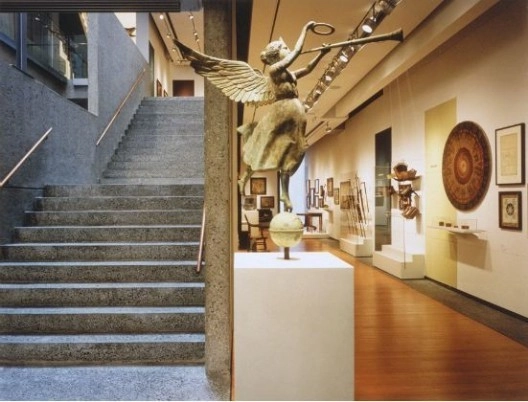
Just as designers have reacted to the death sentence of Ted Williams and Billie Tsien's American Folk Art Museum building, forming petitions and a tumblr (crowdsourcing designs that integrate the building with the MoMA's existing facilities), architecture critics have also been wielding their weapon - words - and entering the fray.

Most critics have responded with outrage (it's "nothing less than cultural vandalism" says Martin Filler), denouncing MoMA's prioritization of corporate needs over cultural value. However, a few are actually defending MoMA's decision, saying the building was never ideal for displaying art anyway. See a round-up of all the opinions - from Davidson to Goldberger - after the break...

Video: Architecture with capital letter A

Subscriber Access | 

From Frank Lloyd Wright to Oscar Niemeyer and the 2013 Pritzker Prize laureate Toyo Ito, this short film features a series of excerpts from interviews, speeches and documentaries of the most influential Architects from the past 70 years who have shaped the notion of Architecture. As described by the video’s producer, viaViLi, “this accumulation of scenes some how expresses the condition of Architecture today - its moments of Glory and Misery.”

SOM & CASE Launch AEC Industry's First Crowd-sourced, Web-based Resource for Sharing Innovative Tools & Technologies

SOM and CASE has formally launched AEC-APPS, the first crowd-sourced, web-based library for applications used by architects, engineers and construction professionals. This is a one-of-a-kind initiative in the AEC Industry and is a non-profit online community that allows digital tool users and toolmakers to share ideas, tips and resources covering a wide array of applications, ranging from commercially-marketed products to user-created scripts and utilities. After months of beta testing, the site currently hosts more than 500 users who have posted 800 apps that can be used in the design, construction and operation of buildings.

Read more about this new initiative after the break.

Is an Olympic Bid Ever Worth It? What if You Lose?

In "How (Not) to Host the Olympics," I suggest that, when it comes to Olympic Planning, there is one Golden Rule: “The best thing to do if you’re bidding for the Olympics, Is to Not Get the Olympics.”

However, a recent article from The Atlantic Cities' Emily Badger takes that claim to question.

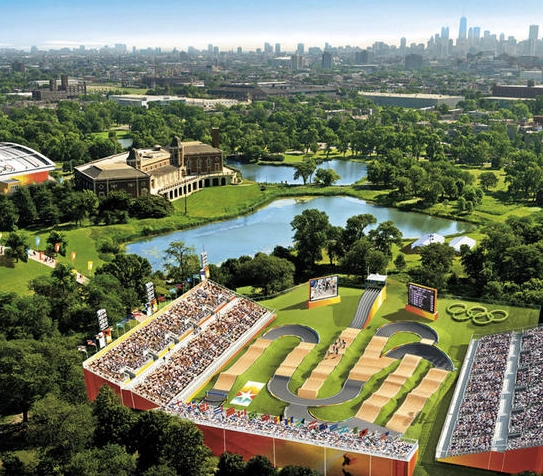
Badger follows up in Chicago, a city that bid - hard - for the 2016 Olympics (which will take place in Rio de Janeiro). As she puts it: "We often ask what Olympic cities really get in return for all the money, energy, and construction chaos invested in hosting the world's largest sporting event. But the story of cities that vie for but never win the Games raises a different question.

'What does putting together a bid that is unsuccessful leave you?'"

Video: Sou Fujimoto at IE Master in Architectural Design

Subscriber Access | 

IE Master in Architectural Design opens its 2013 lecture series program, at the Círculo of Bellas Artes in Madrid, with the Japanese architect Sou Fujimoto.

Fusing Architecture and Music: Philip Kennicott Describes the Inspiration Behind Steven Holl’s Daeyang Gallery and House

Awarded yesterday with the 2013 Pulitzer Prize for criticism, Philip Kennicott has built an honorable reputation as a art and architecture critic for Washington Post’s Style section. One of his most recent works, Music Holl: A Copper Clad Pavilion in Seoul recounts the inspiration behind Steven Holl’s award-winning Daeyang Gallery and House in Seoul.

Designed as an experiment on “the architectonics of music,” the basic geometry of the Daeyang Gallery and House was inspired by Istvan Anhalt’s 1967 Symphony of Modules - a uniquely transcribed sheet of music found in John Cage’s contemporary music compendium, Notations. Reminiscent of the “blocky and shard-like shapes” of Anhalt’s sketch, Holl’s design features three copper-clad pavilions punctured by a symphony of carefully placed, rectangular skylights that animate the interior with “bars of light”. As Kennicott describes, Holl uses music as a “powerful metaphor for the dynamic unfolding of experience” (captured in this film by Spirit of Space).

Read Kennicott’s Music Holl: A Copper Clad Pavilion in its entirety here on Dwell. Continue after the break to compare Steven Holl's sketch above with Anhalt’s Symphony of Modules.

Gehry's Software Enters the Cloud, Promotes Paperless Construction

There are many ways that the architecture profession has lead the way in environmentally friendly design - but when it comes to the process of creating buildings themselves, the industry works its way through huge amounts of paper. Frank Gehry, through his offshoot technology company Gehry Technologies, is aiming to change that.

The company has recently announced that its GTeam software, which has so far been available for less than a year, will now make use of Box, a cloud based storage system that is well suited to large files associated with complex 3D models that are often required in designing buildings.

Read more about Gehry Technology's new software collaboration after the break

Herzog & de Meuron Breaks Ground on ‘Grand Stade de Bordeaux’

Nearly two years after unveiling the design to the public, Herzog & de Meuron broke ground this morning on the new ‘Grand Stade de Bordeaux’ in France. Surrounded by lush vegetation typically found in this green belt district, the stepped concourse transitions visitors through a forest of slender white columns to the stadium’s bowl, whose form ensures maximum flexibility and optimal visibility for all 43,000 spectators.

Completion is set for 2015, just in time to host the Euro 2016 football championship.

The architect’s description after the break...

You've started following your first account!

Did you know?

You'll now receive updates based on what you follow! Personalize your stream and start following your favorite authors, offices and users.