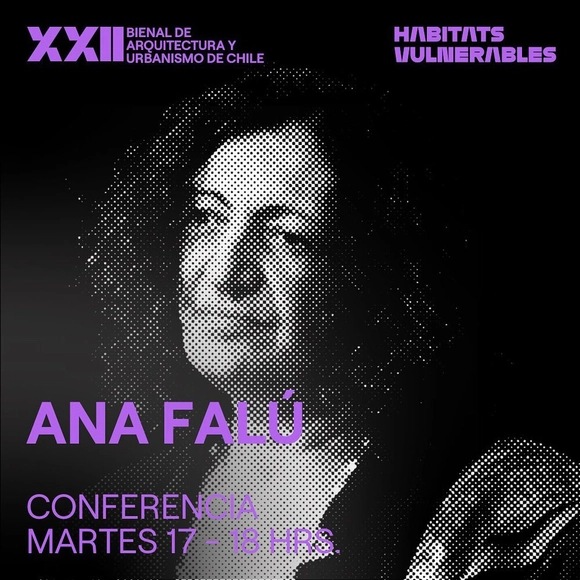
Ana Falú will give a lecture this Tuesday, January 17, at 6:00 PM as part of the XXII Biennial of Architecture and Urbanism of Chile: 'Vulnerable Habitats.' The event will take place in the temporary inflatable structure designed by Smiljan Radic at Plaza Bulnes, Santiago.
Thirty years after its founding, SIGraDi and the University of Chile invite the academic, professional, and creative community to participate in the 30th international congress of the Ibero-American Society of Digital Graphics, to be held in Santiago at the University of Chile from November 18 to 20, 2026. This gathering marks a symbolic return to the University of Chile, which hosted SIGraDi 2006 two decades ago under the theme "The Human Factor." At that time, we invited participants to reflect critically on the role humans played in the emerging world of digital design. That critical look at the past—and the future—is more relevant than ever in the face of even more disruptive technologies. In this spirit, we are proposing the concept of "AI_ded Design," a notion that updates the legacy of CAD (Computer-Aided Design) and projects it toward a new horizon where design, architecture, and urbanism are redefined by algorithmic structures, intelligent environments, and autonomous systems mediated by Artificial Intelligence. We invite you to think beyond computer-aided design. We aim to open a space for discussion on a form of design where computation—increasingly transparent, ubiquitous, and autonomous—gives way to new forms of cognition, agency, emergence, distributed processes, and a necessary technological ethics that reconfigures design practices. To stimulate this collective conversation, we propose four open questions: What have we learned in these 30 years? What have we improved in these 30 years? What have we achieved in these 30 years? What challenges are emerging in the relationship between humans, machines, and environments?
Kazuyo Sejima, a guest of Congreso Futuro, will join Alejandro Aravena in Santiago to discuss the significance of receiving the Pritzker Prize, reflecting on the challenges facing 21st-century cities and the impact of the spaces we inhabit.
Photographer Matias Olate, Graphic design Juan Valdés Seguel
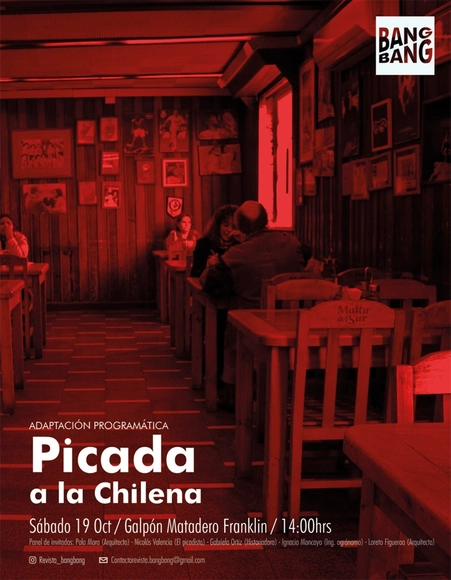
This edition of Bang Bang magazine explores the programmatic adaptation of picadas in Chile, recognizing how they have endured over time and within the collective cultural memory. To this end, we analyze four picadas: La Piojera, El Quitapenas, Las Pipas de Einstein, and Los Canallas.
An artist who bridges sound and space, a CAD illustrator, a researcher and cultural manager, and a cultural agitator will be the guests at the summer session of the Chilean project XFORMAS, taking place next Saturday, January 12, at 4:00 PM at Persa Víctor Manuel in Santiago.
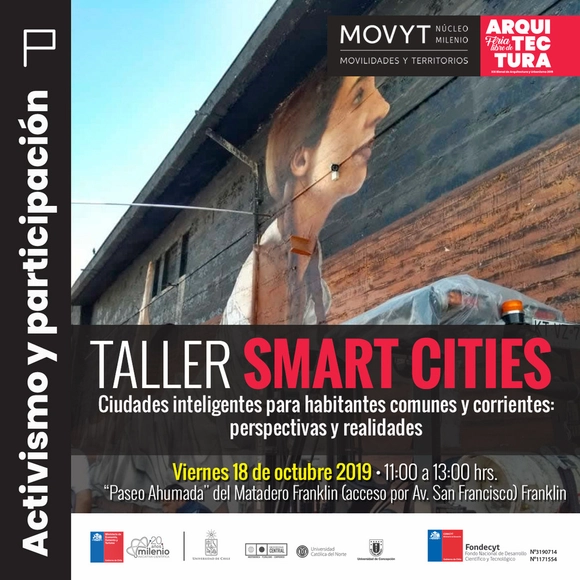
The concept of Smart Cities has become a recurring theme in visions of the city of the future. But what about the average citizen? If we ask acquaintances or passersby, very few have heard of the topic.
The role of the playground in schools is a question that invites reflection from both the fields of education and architecture. Historically, playgrounds have been viewed as spaces for recreation, rest, and breaks in the learning process, in contrast to classrooms, which are defined as the primary setting for pedagogical activity. This secondary status is being challenged by contemporary pedagogies, which recognize that learning processes occur everywhere. Consequently, it is essential to reflect on the architectural brief for school spaces, particularly regarding the playground as a significant site for education.
Prima is an independent architecture publication focused on the discipline's means of representation. Each issue is structured around a single medium of representation, used to explore a topic best discussed through that specific lens. For each issue, two young Chilean firms and a critic or academic whose work aligns with the theme are invited to contribute.
As part of the XXI Bienal de Arquitectura y Urbanismo de Chile, Fundación Vértice invites you to discuss how the city recognizes—or fails to recognize—women in history, particularly the history of women in Chile. Do we know where we voted for the first time? Where did we gather? How did the territory influence the advancement of our rights?
Heritage Day is one of the country's most significant cultural celebrations. In this context, the team behind the XXI Architecture and Urbanism Biennial of Chile will set up at the Teatro Huemul in the Franklin neighborhood to conduct its third public consultation.
Sound, visual, and architectural interventions, panel discussions, and lectures—among other actions taking place across three spaces at the Persa Víctor Manuel—will seek to address the current demands fueling the country’s ongoing mobilization. This is part of the fourth edition of Estrategias Oblicuas (Oblique Strategies), an event that uses interdisciplinary intersections to contemplate, reflect upon, discuss, and report on the social uprising currently unfolding in Chile.
University of Chile Directorate of Services and Infrastructure
At this First Meeting on Infrastructure Management and Planning for State Universities, "How do we move forward together to build quality learning spaces?", we will share experiences focused on Educational Infrastructure Management, Institutional Infrastructure Planning, Design, Architecture, Innovation, Universal Accessibility, and Sustainability.
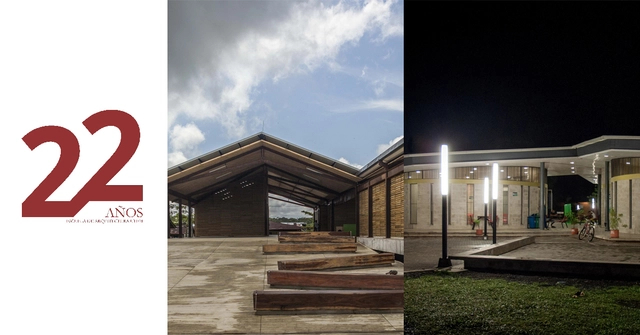
As part of the celebration of 22 years of disciplinary and professional training, the UTEM School of Architecture (Chile) is organizing the 2019 UTEM School of Architecture Week, titled "The Project Within the Project." The event will feature international participation from Colombian architects Farhid Maya (Taller Síntesis) and María Paula Vallejo (Célula Arquitectura).
The "Approaches to Housing Projects" forum will feature a series of presentations by Fabiola González and Yair Estay, Taller 25 (Encargos Comunes), Gabriel Lagos, Consolida (Small family condominiums, a work selected for the Biennial), Alejandro Soffia (SIP Panel System, a work selected for the Biennial), and Rodrigo Duque (Single-family homes).
In October 2016, the School of Architecture at the Universidad San Sebastián launched a series of inter-school workshops aimed at promoting critical discussion in architecture, using the project as a vector.