
The Case Study House program was founded in 1945 with the goal of adapting wartime era technologies and materials into future forward, mass produced, middle class homes for a peacetime economy.
The Case Study House program was founded in 1945 with the goal of adapting wartime era technologies and materials into future forward, mass produced, middle class homes for a peacetime economy.

Hsinming Fung, AIA has been Principal and Co-Founder of Hodgetts + Fung since 1984, a studio with expertise in the design of unique places for learning, cultural events, and civic functions. H+F’s approach is multifaceted, embracing visitor experience, technology, and iconic presence in a disciplined process, resulting in a bold, uncompromising architecture. The firm’s award-winning projects include the design of the renovated Hollywood Bowl, Menlo-Atherton Performing Arts Center, CalArts’ Wild Beast Pavilion, Jesuit High School Chapel, and Nashville’s new Ascend Amphitheater. Current projects include the renovation of Culver City’s historic Robert Frost Auditorium and a West Hollywood mixed-use development. H+F was awarded the AIA Gold Medal and the AIA CC Firm of the Year Award.

Mark Lee is a principal and founding partner of the Los Angeles-based architecture firm Johnston Marklee. Since its establishment in 1998, Johnston Marklee has been recognized nationally and internationally with over 50 major awards. A book on the work of the firm, entitled HOUSE IS A HOUSE IS A HOUSE IS A HOUSE IS A HOUSE, was published by Birkhauser in 2016. Monographs include: 2G N. 67, El Croquis N. 198, and A+U N. 614.

Rooms that resonate, colours that breathe – the exhibition presents a multifaceted chapter of Ingeborg Kuhler's œuvre bringing together travel sketches, watercolours and technical drawings to create a dialogue that renders architecture tangible as visual poetry.

Mark Jarzombek is Professor of the History and Theory of Architecture at MIT's School of Architecture + Planning. Jarzombek works on a wide range of topics – both historical and theoretical. He is one of the country’s leading advocates for global history and has published several books and articles on that topic, including the ground-breaking textbook entitled A Global History of Architecture (Wiley Press, 2006) with co-author Vikramāditya Prakash and with the noted illustrator Francis D.K. Ching. He is the sole author of Architecture of First Societies: A Global Perspective (Wiley Press, 2013), which is a sensitive synthesis of first society architecture through time and includes custom-made drawings, maps and photographs. The book builds on the latest research in archeological and anthropological knowledge while at the same time challenging some of their received perspectives. Jarzombek also published a book that interrogates the digital/global imaginaries that shape our lives: Digital Stockholm Syndrome in the Post-Ontological Age (University of Minnesota Press, 2016).

Life adapted to our material environment. Until the moment we discovered tools, technology and architecture. Then we acquired the power to adapt our material environment to life. You can look at the evolution of human history as a tale shaped by the materials we have known how to harvest and process. As evidenced in how we name the epochs of human history – the Stone Age, the Bronze Age, the Iron Age – our capacity to manipulate matter is perhaps the greatest force driving the development of our culture. By reclaiming the term materialism from the realm of empty consumerism, we aim to bring it back to the practice of formulating our future through form and matter. We will go on an odyssey through the material world through the works of BIG starting with solid rock and ending with the flow of electrons.

Marlon Blackwell, FAIA together with his partner in life and work, Ati Blackwell, AIA, ASID lead the internationally recognized practice Marlon Blackwell Architects. Their work has received recognition with significant publication and more than 200 design awards including the 2016 Cooper Hewitt National Design Award in Architecture and the 2025 Mies Crown Hall Americas Prize. Working between the universal language of architecture and the particulars of place, they have cultivated a studio recognized for its formal clarity, contextual depth, and architectural integrity.

David Godshall is principal at TERREMOTO, an award-winning California-based landscape architecture studio he started in 2012 with his late business partner Alain Peauroi. TERREMOTO has offices in Los Angeles and San Francisco.

The latest release of Offsitewood.org marks a significant step forward in making offsite wood construction more approachable for architects. Version 2.0 introduces a set of digital resources aimed at helping designers model, plan, and collaborate more efficiently.
Free downloadable libraries are a central and expanding feature of the site. Additionally, new applications and services are now available that include wood material e-sample viewers, an advanced panelization and framing toolbar for Revit, and a collaborative workspace for project optimization.
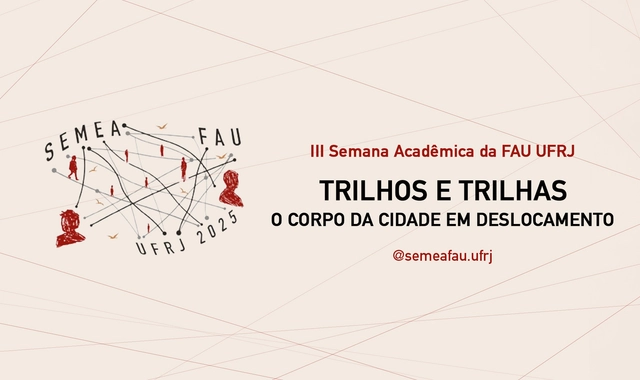
The 3rd Academic Week of the Faculty of Architecture and Urbanism at the Federal University of Rio de Janeiro (SemEA FAU UFRJ) is a free event, organized entirely by students with the support of FAU UFRJ, collectives, and academic institutions, aiming to expand debate and education through lectures, workshops, exhibitions, discussions, and cultural activities. In its third edition, the event will take place on October 1, 2, and 3, 2025, at the Jorge Machado Moreira Building, home to the FAU and the UFRJ School of Fine Arts.

“Construyendo Paisajes” is the title of the lecture series organized by Espaço de Arquitetura, taking place on September 23 and 24 at 9:00 PM in Lisbon and Porto, featuring the 2017 Pritzker Architecture Prize winners, RCR Arquitectes, as the guest studio.
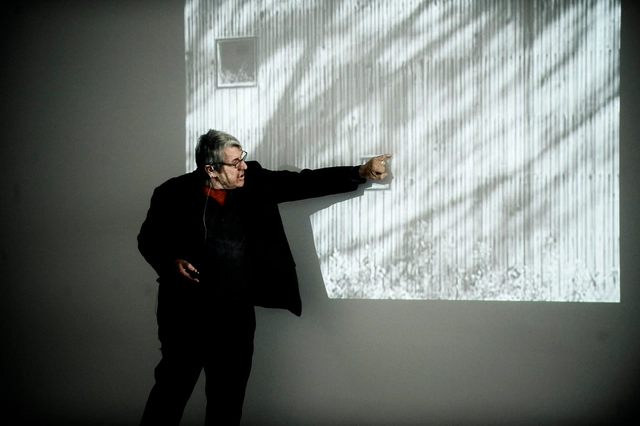
This year marks 20 years since the first VELUX Daylight Symposium—two decades of shared insights, ideas, and exploration into the role of daylight in our built environment. Since its humble beginnings in 2005, the symposium has grown into a leading international forum for cross-disciplinary dialogue on daylight.
The 10th edition, taking place in the heart of Copenhagen, will once again bring together researchers, architects, engineers, and policymakers to examine the evolving role of daylight in architecture and design. It's a space where science and practice meet to reflect on past learnings and look ahead to the future of daylight in our cities and spaces. Join the livestream on September 18th, 2025, from 09:00 to 17:30 (CEST).
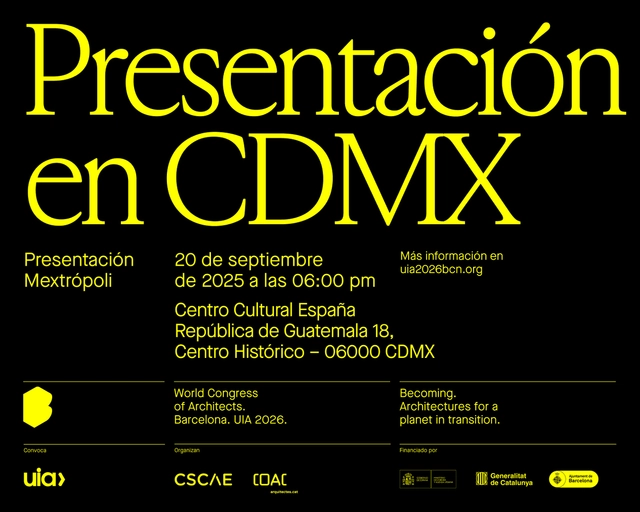
From June 28 to July 2, 2026, Barcelona will host the UIA World Congress of Architects 2026, becoming a true international open laboratory for architecture that will attract more than 10,000 professionals, representatives of the academic community, and students from around the world to discuss the future of the planet and the role of architecture in the most urgent and necessary upcoming transitions.

The SOM Foundation is pleased to announce the opening of the 2025 Research Prize, the 2025 European Research Prize, and the 2025 Robert L. Wesley Award.

The City of Toronto is launching an international design competition!

Obra Blanca is an essential experience for professionals in the architectural finishes and design products sector, including ceramics, bathroom fixtures, faucets, lighting, and more. It is a unique opportunity to expand projects and reach new goals through interaction and connection with suppliers, professionals, and industry leaders.

The Capital City of Podgorica has launched an international, open, single-stage, anonymous design competition for the conceptual urban and architectural design of a residential and mixed-use complex within the "Gradski Stan" (City Housing) project.

The PAVE Global Educator of the Year Award honors and celebrates a full-time educator for their outstanding accomplishments and commitment to design education.