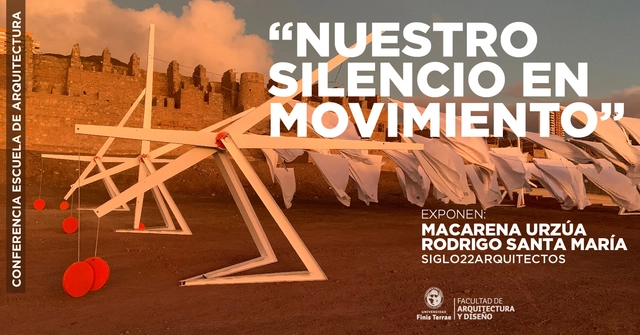
“#MOBILIS, a shifting narrative” is a project designed by Universidad Finis Terrae School of Architecture faculty members Macarena Urzúa and Rodrigo Santa María (Siglo22arquitectos), consisting of a temporary intervention built from the accounts of 40 Chilean voices. The project was presented in April at the Young Architects Festival (YAF Constructo) held at the Ruinas de Huanchaca (Antofagasta) and at Puerto de Ideas.
The Museu do Pontal is hosting the seminar "Modernisms, Art and Popular Culture" at its new headquarters in Barra da Tijuca, featuring two sessions: the first on May 21 and the second on June 11. The discussions will explore the relationships between modernisms and Brazilian popular culture. The event aims to review, reflect upon, and better understand the connections that can be drawn from a museum of popular art amidst the centennial commemorations of the 1922 Week of Modern Art.
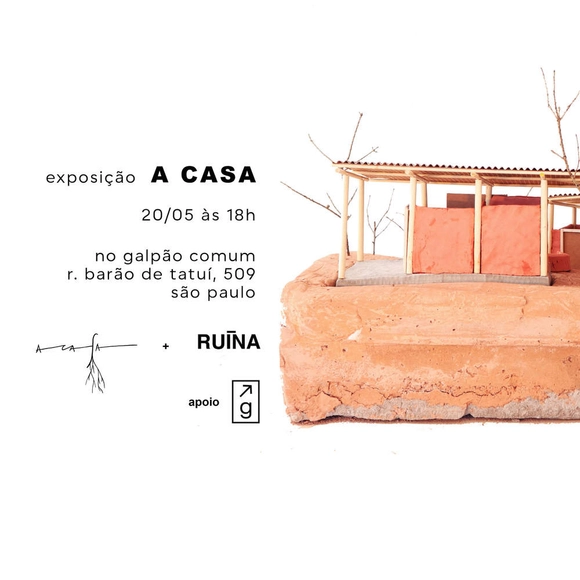
A Casa is a non-profit initiative that leverages architecture as a tool to bridge ancestral knowledge, academia, and human connection, dedicated to proposing emancipatory and sustainable construction techniques to facilitate access to housing.
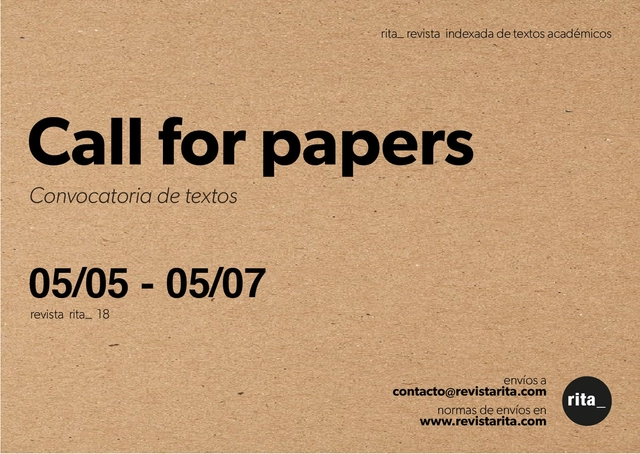
The call for academic papers for the upcoming 18th issue of rita_ journal is now open. Submissions in Spanish or Portuguese are welcome from faculty, graduate students, and professionals holding a master's or doctoral degree.
The Atraviesos Urbanos (Urban Crossings), organized by the School of Architecture at Universidad Finis Terrae, consist of four walking tours through different sectors of the capital during the first semester of 2022. Each tour is led by an architecture faculty member who discusses the history and heritage value of each site for an audience of students, faculty, and the general public interested in learning more about the city.
This upcoming session, titled "From Plaza de Armas to the General Cemetery," will take place on Monday, May 16, at 3:00 PM. The route begins at kilometer 0 in Plaza de Armas, continuing through the Central Market, the Mapocho River, the Pérgola de las Flores, and Avenida La Paz, ending at the cemetery. The tour will be led by academic Max Palma.
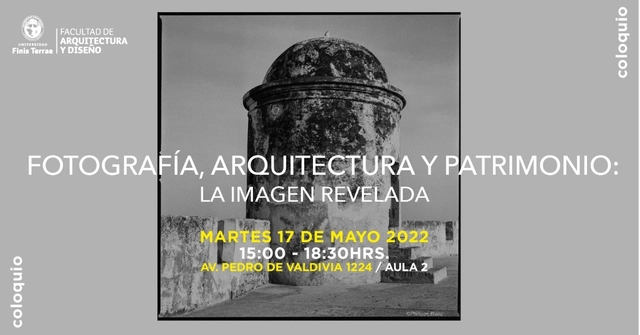
The Universidad Finis Terrae School of Architecture is hosting the colloquium "Photography, Architecture, and Heritage: The Revealed Image," featuring speakers Emilio de la Cerda, Francisco García Huidobro, Felipe Fontecilla, Alberto Moletto, Hugo Mondragón, and Andrés Téllez.
Offering productivity levels 50% higher than previous models, HP introduces its new range of large-format printing solutions, HP Latex. The series consists of four devices—the HP Latex 700 and 800, and the HP Latex 700W and 800W—bringing white ink printing capabilities to this category for the first time. Print jobs run on this new series will not only deliver brighter colors and finer details, but will also do so at even faster print speeds, reaching up to 36 m2 per hour.
Before the pandemic, there was a concerted effort from world leaders to curb the effects of global warming, with nations from around the world trying to unite in this endeavor. There was an increased emphasis on policies and action plans to reduce greenhouse gas emissions by 2030 through the rapid introduction of new energy saving technologies and innovative carbon dioxide removal techniques, with the purpose of meeting the Paris Agreement goal of carbon neutrality and limiting global warming to 1.5ºC.
What looks like a residential paradise, where the indoor and outdoor space seamlessly merge, will, in fact, be a site for professionals to indulge, reflect and create. Image Courtesy of NOA
At a prime location in the middle of Belgium, an original concept has taken form, as NOA Outdoor Living invites professionals to experience outdoor design in an entirely different way.
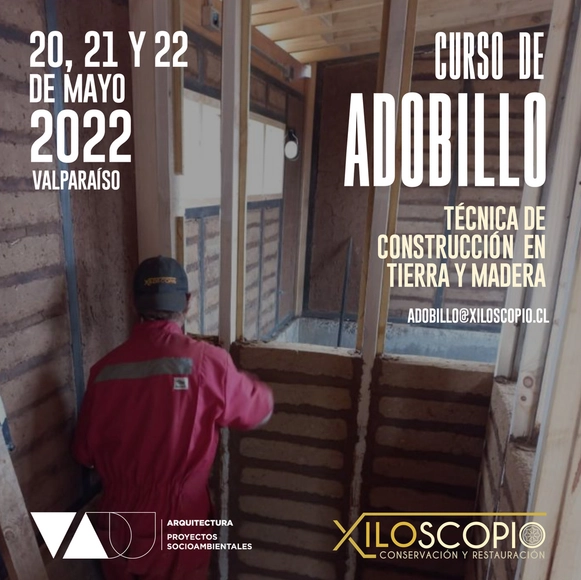
El tabique-adobillo es una técnica constructiva mixta de madera y tierra, una de las más utilizadas en la construcción de inmuebles en Valparaíso desde el siglo XIX al XX, que se proyecta como una alternativa completamente viable para nuestros días. Hoy en Chile, con manejo forestal y con acceso a suelos para la fabricación de los adobillos, resulta ser una buena respuesta constructiva, de origen natural, térmica, de bajo impacto ambiental, que ya ha demostrado un buen comportamiento ante sismos gracias a la flexibilidad de sus estructuras de madera.
The 10th International Architecture Biennale Rotterdam (IABR 2022) asks how architecture can respond to socioecological urgencies by considering time as a crucial factor in the design process. Time is an essential yet neglected parameter in designing sustainable futures.
Videos
Installation of 1070 pieces of frosted Soap Mini. Image Courtesy of BOMMA
A starry blend of vision, talent, craft and technical know-how aligns for BOMMA. The glass-lighting producer, based in the Czech Republic, fuses centuries of glassmaking tradition as hand-blown, monumental-sized designs take shape and form through the use of unconventional materials, daring colours and modern technological advancements. These combinations characterise each of BOMMA’s seventeen collections, five of which can be arranged into otherworldly constellations. To expand the artistry further, designers and architects are invited to project their boldest creative visions of space through several of the brand’s collections.
The arrival of spring coincides once again withthe launch of in-person and online courses by YACademy, the school founded by YAC through the collaboration with some of the most prestigious names in contemporary architecture. Its fifth edition offers a unique experience to young designers that are looking for postgraduate international training.
Poster, Department of Architecture Students, NUS | Entangled Landscapes
The National University of Singapore (NUS) Department of Architecture presents the twin photographic exhibition “Entangled Landscapes”, featuring the work of of internationally renowned Architectural Photographer and Visiting Professor at NUS Dr Erieta Attali, as well as students’ photography work from coursework led by Dr Erieta Attali in the NUS Department of Architecture. The exhibition comprises a selection of Attali’s international works which highlight her reading of architecture as part of a larger landscape, in parallel with her students’ works that interpret Singapore through the same lens of continuity between landscape and architecture.
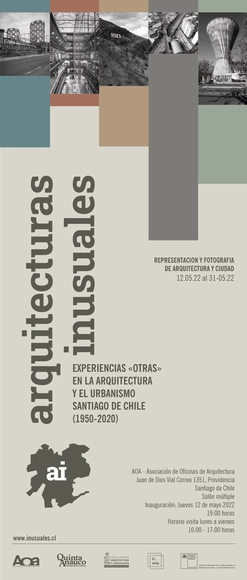
'Unusual Architectures: "Other" Experiences in the Architecture and Urbanism of Santiago de Chile (1950–2020)' is an exhibition of city representation and photography. It showcases a collection of objects and cases from Santiago, a capital that increasingly presents itself as a casual, uncontrolled, and contingent accumulation of matter and experience—an expression of the "other" and the unfathomable.