


Articles
Disaster Ready Housing / Y/N Studio
https://www.archdaily.com/287151/disaster-ready-housing-yn-studioIrina Vinnitskaya
Oscar Niemeyer Hospitalized Again

Only a few weeks after Oscar Niemeyer’s hospitalization, the renowned architect has been admitted, once again for dehydration, to the Samaritan’s Hospital of Rio de Janeiro.
https://www.archdaily.com/291080/oscar-niemeyer-hospitalized-againVanessa Quirk
A Short Break: The Story of Paul Goldberger

National Building Museum and Metropolis Magazine contributor Andrew Caruso takes you “inside the design mind” of Pulitzer Prize-winning architecture critic Paul Goldberger.
It’s rare to find someone willing to pay for opinions these days, and rarer still to be known for them. Yet, Paul Goldberger has crafted a career by objectively navigating the subjective. As an arbiter of quality in architecture and design for nearly four decades, he spends a few moments with me to reminisce about the “short break” he took from journalism that led to, among many accolades, the Pulitzer Prize in 1984 and, more recently, the Scully Prize.
Andrew Caruso: You’re being recognized this year by the National Building Museum with the Vincent Scully prize. Given your relationship with Scully began when you were a student at Yale, this must be a very meaningful award.
Paul Goldberger: Scully was very much a teacher and mentor to me. Actually my first exposure to him was a high school visit to Yale. I observed one of his classes and was blown away. He was one of the reasons I wanted to go to Yale in the first place and I was lucky to work with him through college and as my thesis adviser.
The complete interview after the break…
https://www.archdaily.com/291050/a-short-break-the-story-of-paul-goldbergerKarissa Rosenfield
Video: Zaha Hadid / Galaxy SOHO, Beijing

https://www.archdaily.com/290599/video-zaha-hadid-galaxy-soho-beijingSebastian Jordana
Daegu Gosan Public Library Competition Entry / TheeAe LTD

Titled ‘Standing Shelves’, the design concept for the Daegu Gosan Public Library agrees that people are in need of finding places to sit and get relaxed for getting information from books, magazines, articles, etc. Thus, the expanded program for the local community by providing classrooms, an exhibition area, lecture room, semi‐private reading areas, digital data corner, etc. will be another major change in the current library system. TheeAe LTD believes not in a dramatic way, but strongly, the new design of a space that should convey this change in a way to enhance and motivate the public to come and enjoy the use of a library. More images and architects’ description after the break.
https://www.archdaily.com/282637/daegu-gosan-public-library-competition-entry-theeae-ltdAlison Furuto
Lucernas House / 01 Arq

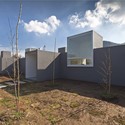
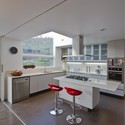
Architects: 01 Arq Location: Catemito, San Bernardo, Chile Design Team: Cristian Winckler, Pablo Saric, Felipe Fritz Project Year: 2011 Photographs: Aryeh Kornfeld



https://www.archdaily.com/290455/lucernas-house-01-arqFabian Cifuentes
'Rain Room' Installation / rAndom
Rain Room is an art installation by rAndom presented at the Barbican in London composed of a hundred square metre field of falling water through which it is possible to walk, trusting that a path can be navigated, without being drenched in the process. As you progress through The Curve, the sound of water and a suggestion of moisture fill the air, before you are confronted by this carefully choreographed downpour that responds to your movements and presence. The installation was made possible through the generous support of the Maxine and Stuart Frankel Foundation for Art. The video was done by Gramafilm, with music by Max Richter. More images can be viewed after the break.
https://www.archdaily.com/288219/rain-room-installation-randomAlison Furuto
Revitalization of the City of Andenne / Frédéric Haesevoets Architecture + Art and Build

Located in the heart of Andenne, near the town square, the project by Frédéric Haesevoets Architecture + Art and Build focuses on the revitalization of the city center, to assure for the future a coherent urbanization. These future blocks will complete the existing urban fabric of the neighborhood which is booming. Carefully integrated, these blocks will fit into the urban fabric without attacking the city, on the contrary, they weave links with the surrounding streets by a sensitive treatment of the spaces. More images and architects’ description after the break.
https://www.archdaily.com/281672/revitalization-of-the-city-of-andenne-frederic-haesevoets-architectureAlison Furuto
Video: Hotel Lone / 3LHD Architects
3LHD Architects shared with us their video for one of their recent projects, Hotel Lone, the first design hotel in Croatia. The hotel’s identity is recognized through the external design of the building, with a facade that is defined by dominant horizontal lines – terrace guards designed to evoke the image of slanted boat decks. The site’s complex terrain with dramatic altitude changes determined the locations of internal facility spaces through a dynamic interweaving of public areas and guest suites at all levels. More information on their project can be viewed here.
https://www.archdaily.com/285829/video-hotel-lone-3lhd-architectsAlison Furuto
Spotlight Award: Pezo Von Ellrichshausen Architects

The bold, yet seemingly simplistic geometric structures designed by architects Mauricio Pezo and Sofia von Ellrichshausen of Pezo von Ellrichshausen are turning heads internationally, as the Chilean firm has been announced as the recipient of the fourth annual Spotlight Award. Presented by the Houston-based non-profit Rice Design Alliance (RDA), the international award spotlights “exceptionally gifted” architects during the early phase of their professional careers.
https://www.archdaily.com/290015/spotlight-award-pezo-von-ellrichshausen-architectsKarissa Rosenfield
LA's Millennium Hollywood Project

Millennium Partners and Argent Ventures are moving forward with their plan to transform 4.47 acres of vacant parking lots surrounding Hollywood’s iconic, mid-century Capitol Records Building into a transit-oriented, mixed-use development. Located on the famous intersection of Hollywood and Vine, the Millennium Hollywood Project will feature two residential buildings reaching heights up to 585 feet, designed by Handel Architects, that are grounded by a High Line-inspired public space by James Corner Field Operations.
With the Draft Environmental Impact Report (DEIR) currently on public review, the New York-based developers are hoping to get city approvals underway in early 2013.
Continue reading to learn more…
https://www.archdaily.com/290508/las-millennium-hollywood-projectKarissa Rosenfield
AD Round Up: Public Facilities Part X

https://www.archdaily.com/290579/ad-round-up-public-facilities-part-xDiego Hernandez
Winners of 2012 RIBA President's Awards for Research

Research plays an integral role in the evolution of architecture. To celebrate it’s importance and acknowledge outstanding research currently happening within the field of architecture throughout the UK, The Royal Institute of British Architects (RIBA) has announced the winners of the RIBA President’s Awards for Research.
RIBA President Angela Brady said: “The RIBA President’s Awards for Research highlight and reward the outstanding research in architecture that is taking place across the country. Congratulations to all of this year’s winners, your research is hugely appreciated and highly valued across the profession. Research into architecture provides a lasting legacy to all in the profession and reminds us of the importance of innovation and strategic thinking in our everyday work.”
The RIBA President’s Awards for Research, presented in four categories, were awarded to:
https://www.archdaily.com/289606/winners-of-2012-riba-presidents-awards-for-researchKarissa Rosenfield
Helmut Jahn receives AIA Chicago's Lifetime Achievement Award
German-American architect Helmut Jahn of Murphy/Jahn Architects has been announced as this year’s recipient of Chicago’s AIA Lifetime Achievement Award. Following his arrival to the U.S. more than 40 years ago, the Chicago-based architect has been lauded by some of the industry’s best for continuously breaking new ground with his postmodern steel-and-glass structures. Some of his most notable works include the SONY Center in Berlin and the University of Chicago Campus.
The film above, shared with us by our friends at Black Spectacles, captures the essence of Helmut Jahn’s work through images, videos and peer interviews with Jeanne Gang, FAIA, John Ronan, AIA, Ron Krueck, AIA, Werner Sobek and Franz Schulze.
The news of this award was followed by Jahn’s announcement that he will be changing the name of his firm to “Jahn”. Browse through some of Jahn’s most recent works, here on ArchDaily.
https://www.archdaily.com/290454/helmut-jahn-receives-aia-chicagos-lifetime-achievement-awardKarissa Rosenfield
Films & Architecture: "The Fountain"

Everyone that has seen an Aronofsky film can recognize there is something beyond “special” in his work. This is not the exception, and specifically for us in terms of space, the movie travels from the past to the future, and back to the present utilising amazing contrasts for the three realities. These realities could mean a theocentric, scientific and anthropocentric views of the world. In any case, the director generates amazing transitions and spatial effects to represent those ideas.
Nothing more to say, enjoy of a great movie and let us know your comments and ideas about it!
https://www.archdaily.com/289551/films-architecture-the-fountainDaniel Portilla
'The City That Never Was' Symposium

Co-organized, in cooperation with the Architectural League, by Christopher Marcinkoski and Javier Arpa, The City That Never Was symposium is a day-long event that uses the current crisis in Spain as a lens to reconsider patterns of urbanization and development around the world. Taking place November 9th from 9:00am-5:00pm at the Scholastic Building in New York, the event will reconsider how planners, designers, politicians, and financiers conceive of and realize large-scale contemporary urbanization and settlement. This event seeks to better understand the systems that have produced certain imbalances resulting from this urban growth and explore new models and approaches for urbanization and development. For more information, please visit here.
https://www.archdaily.com/286012/the-city-that-never-was-symposiumAlison Furuto
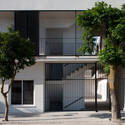
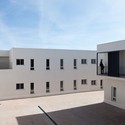
40 Homes, Maimona Saints / GAas architecture studio

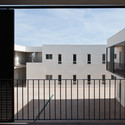
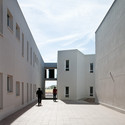
Architects: GAas architecture studio Location: Guadiana Street, 16. 06230 Los Santos de Maimona, Badajoz, Extremadura, España. Design Team: Raúl Gálvez Tirado, José Algeciras Rodríguez Project Year: 2009 Photographs: Fernando Alda

https://www.archdaily.com/288506/40-homes-maimona-saints-gaas-architecture-studioFabian Cifuentes
Zaarour Club Resort Second Prize Winning Proposal / 109 Architectes

Designed by 109 Architectes, their proposal in the Zaarour Club Competition, which won the second prize, takes advantage of the natural setting while creating a distinctive yet unobtrusive project identity. Consequently, the primary challenge with the Zaarour Resort is to construct the density required while still respecting and incorporating the rich natural environment. More images and architects’ description after the break.
https://www.archdaily.com/285800/zaarour-club-resort-second-prize-winning-proposal-109-architectesAlison Furuto
Daegu Gosan Public Library Competition Entry / FORMA

Not long ago the library was thought of as a huge archive, a storage of human knowledge. Now, all human knowledge is just information that after being digitalized can fit into the pocket. Therefore, FORMA aims toward the accessibility of information and etherealization of knowledge. Also, the concept of information (being shared) is wider than the concept of knowledge (being rather stored than shared), which means the space and activities in the library should become significantly more diverse. Not only does it share information, but also provides an intelligent pastime for local community and sets space for live communication between people. More images and architects’ description after the break.
https://www.archdaily.com/285727/daegu-gosan-public-library-competition-entry-formaAlison Furuto
Iwan Baan vs. Sandy: The Story Behind That Iconic NYC Shot

We got in touch with Iwan Baan to ask him how on earth he got that incredible aerial shot of a Sandy-struck New York City for New York Magazine; he told us what it was like to face the frenzy and fly into the storm itself. Read his incredible story, after the break...
https://www.archdaily.com/290416/iwan-baan-vs-sandy-the-story-behind-that-iconic-nyc-shotVanessa Quirk
The Masséna Competition Entry / Harmonic + Masson Architects and Comte Vollenweider Architects

Designed by, the proposal by Harmonic + Masson Architects and Comte Vollenweider Architects for The Masséna is emblematic of the new Left Bank, which has spread along the Seine in Paris. Created to be symbolic move, the Left Bank has always been the public face of Paris, but it is now expressing that in height terms. The first and only 50-metre projects in Paris for many years are both being built in the same part of the city. Height is staking a claim as a possible planning tool in a “new” urban environment – and at the same time marking out new city limits. More images and architects’ description after the break.
https://www.archdaily.com/279519/the-massena-competition-entry-harmonic-masson-architects-and-comte-vollenweider-architectsAlison Furuto
Mayors Challenge Finalists Announced

Twenty cities from across the U.S. are competing for nine million dollars in grant money that could fund their innovative solution to some of the major urban challenges that face our communities today. These Top 20 finalists were selected from 305 teams, formed by mayors, architects and local professionals, representing a city of 30,000 or more residents that responded to Mayor Bloomberg’s Mayors Challenge with a bold idea that could potentially make our government more efficient, solve a serious problem, or improve city life.
The five boldest ideas with the greatest potential for impact will win funding as well as national and local recognition. The winning city will receive a $5,000,000 grand prize and four other cities will receive $1,000,000 to help implement their ideas.
The Top 20 finalists are…
https://www.archdaily.com/289782/mayors-challenge-finalists-announcedKarissa Rosenfield
AD Recommends: Best of the Week

https://www.archdaily.com/289748/ad-recommends-best-of-the-week-105Diego Hernandez
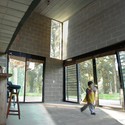
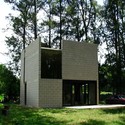
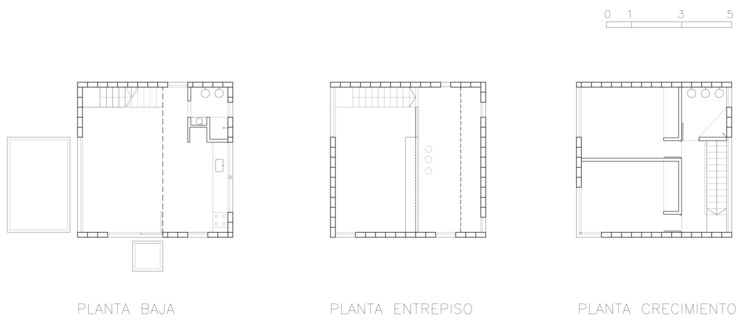
Roblas Cube / Moscato Schere Todo Terreno

Architects: Moscato Schere Todo Terreno Location: Buenos Aires, Argentina Design Team: Agustin Moscato, Joaquín Moscato, Ramiro Schere Project Year: 2007 Photographs: Ramiro Schere


https://www.archdaily.com/289751/roblas-cube-moscato-schere-todo-terrenoFabian Cifuentes