This reportage was originally published in issue 207 of Revista El Malpensante (Colombia), with Spanish translation by Andrés Hoyos.
Once subjugated by illegal armed groups and devastated by the largest urban military operation in Colombia's history, the Las Independencias neighborhood, located in Medellín's Comuna 13, is today an open-air graffiti gallery. Access and transit through the area are facilitated by an outdoor escalator system—the only one of its kind in the world installed in an informal settlement.
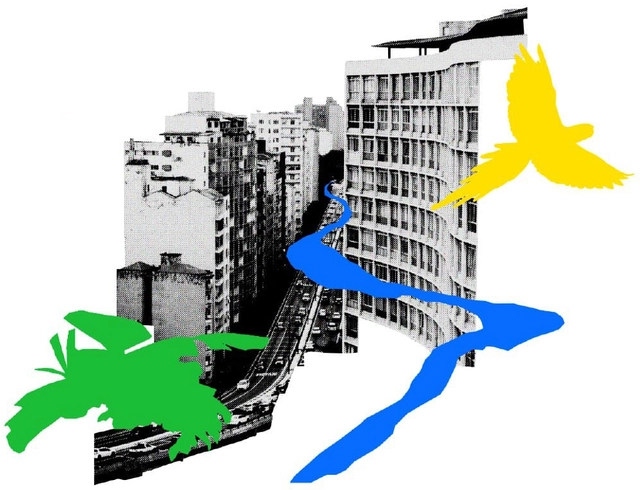
The debate over materiality and how it shapes the spaces housing our entire social dimension lies at the core of architectural discourse. Although architects define a concept, a *parti*, and adhere to a program that can even influence urban life, ultimately it is everyday life and each individual's cultural repertoire that dictate how a place is experienced. The understanding that there are multiple layers in society capable of building invisible walls—which dissolve architectural poetics and unfold into other issues crucial to understanding the system in which we are embedded—is one of the reflections proposed by Nova República, a project created by anthropologist Hélio Menezes and the architects of Cape Town-based Wolff Architects for the São Paulo International Architecture Biennial.
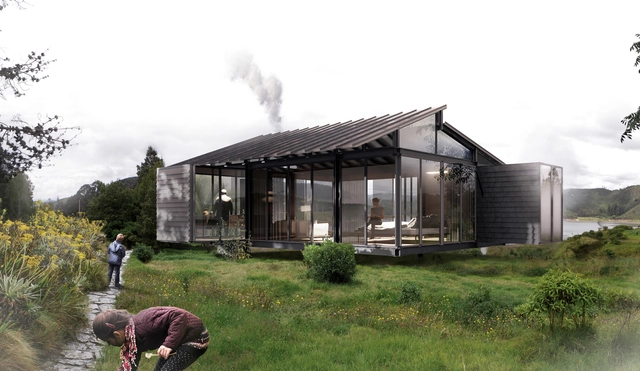
Presented at the recent edition of the Feria del Diseño 2019 in Medellín, Iku Hábitat is a modular architectural construction system developed in Colombia that aims to streamline construction processes using designed and prefabricated components assembled with screws.
https://www.archdaily.com/1120967/iku-habitat-a-modular-home-in-colombia-assembled-with-screwsArchDaily Team
Accessibility and mobility. When perceived through the architectural lens, these terms often evoke a range capped by two extremes. On the one end, the flexibility of circulation systems; the universality of egress networks; and the technicalities of minimums and maximums. On the other end, a project’s capacity to support broad ranges of socioeconomic narratives; its malleability in the face of rapid fluctuations of program and function; and its reactivity in maintaining a productive role amidst the ebbs and flows of societal dynamics.
Facades are the interface between the interior and exterior of a building. They are the most striking and visible parts of a building, they protect it from external agents and are one of the main contributors to creating comfortable environments since it is where thermal gains and losses occur. Just like our skin, an extremely versatile organ of our body, it should be natural for it to be the part of the building which bears technology capable of becoming adaptable to the environmental conditions of the place where it is located.
Customization, within the context of interior architectural design, is a resurfacing topic among cross-disciplined design firms focused on interior architecture. Since the reemergence of the Localism trend, individuals and organizations increasingly seek one-of-a-kind experiences, objects, and spaces that can help deepen their connections to their communities.
This article was originally published on May 23, 2019.
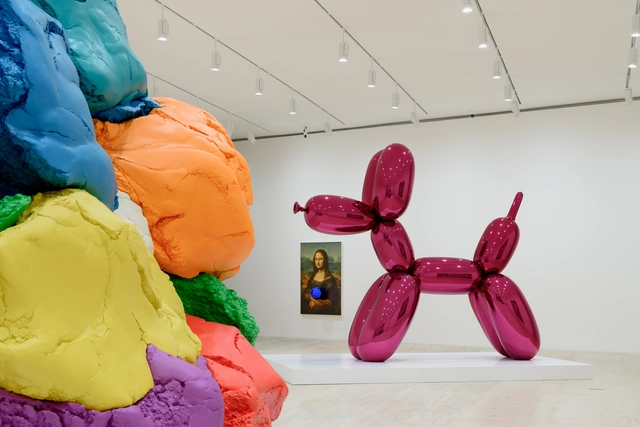
‘Appearance Stripped Bare’ is the exhibition that opened on May 19 at the Museo Jumex. It establishes a parallel fold right in the middle of the twentieth century, bringing face-to-face some of the most representative works of Marcel Duchamp and Jeff Koons—key figures in global contemporary art—to address concepts of objects, commodities, and the artist's relationship with society.
The Midnight Charette is an explicit podcast about design, architecture, and the everyday. Hosted by architectural designers David Lee and Marina Bourderonnet, it features a variety of creative professionals in unscripted conversations that allow for thoughtful takes and personal discussions. A wide array of subjects are covered with honesty and humor: some episodes provide useful tips for designers, while others are project reviews, interviews, or explorations of everyday life and design. The Midnight Charette is also available on iTunes, Spotify, and YouTube.
On this episode of The Midnight Charette podcast, hosts David Lee and Marina Bourderonnet are joined by Andrew Kovacs - Architect and Founder Office Kovacs and Curator of Archive of Affinities - to discuss the philosophy behind his work, the lack of opportunities young progressive architects have in the United States, designing Colossal Cacti for Coachella, the positives of Postmodernism, using Archive of Affinities as a design resource, and more! Call the hotline to leave feedback and questions by voicemail at 213-222-6950.
https://www.archdaily.com/925399/andrew-kovacs-on-archive-of-affinities-and-postmodernismThe Second Studio Podcast
Campo Baeza asserted that “Light is the most beautiful, richest, and most luxurious material used by architects. The only problem is that it is given to us for free, is within everyone's reach, and is not valued enough” [1]. Today, many architects agree on the importance of lighting when creating architectural spaces, reflecting on its quality, quantity, nuance, and directionality. Despite this, when determining the characteristics of their building enclosures, many choose to work with materials that ensure a high degree of privacy, either by incorporating opaque elements or envelopes that screen views and diffuse contact with public outdoor spaces.
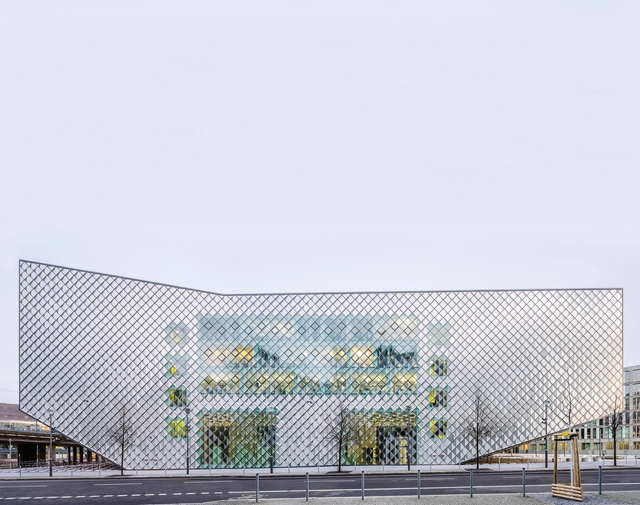
In certain cases where solar conditions permit, modern technological developments allow for the incorporation of translucent enclosure systems that ensure the entry of abundant, controlled natural light throughout the day without sacrificing privacy. These self-supporting treated glass panel systems offer the possibility of generating completely glazed, continuous, homogeneous, unobstructed, and translucent surfaces while simultaneously screening views into the spaces. Below, we present 6 projects located in Argentina that exemplify different ways of working with these systems.
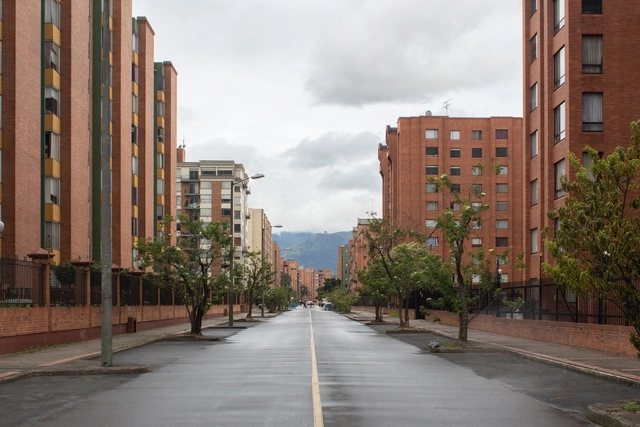
Ciudad Salitre. Foto de Santiago Beaumé, María Luisa Cervantes y Federico Chaparro. Image Cortesía de Ciudad Isla
In Bogotá, a third of all households live in gated communities. This phenomenon is a misguided application of the model idealized by post-war American suburbs, which projected an idyllic, safe, happy, and perfect life—a life where mobility prioritizes motorized vehicles, utilizing simple, replicable, and, of course, highly profitable construction models.
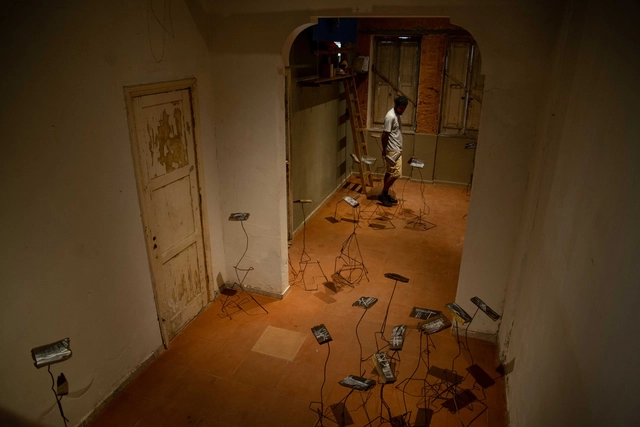
In the experiment by the collective Mouraria 53, the spatial operation—unlike a typical architectural project—begins before construction is finished and is integral to its ongoing development. Exhibitions, presentations, concerts, workshops, and classes serve as a daily exchange in building the house. The process itself is of paramount value to this initiative, bringing together projects, materials, dialogues, execution, and collective dreams.
Architecture is inherently linked to policy, politics, and power. With responsibility for the design and perception of the built environment, architects have a distinct role in shaping the human urban experience. As the world confronts issues of climate change, forced migration, and affordable housing, architects are increasingly putting themselves on the front line of the debate, using a variety of tools and avenues to clamor for change, and indeed design for it. However, while many official avenues exist for architects to advocate for social and environmental reform, there is an under-theorized method of resistance, a ‘road less traveled’ for social progress beyond officialdom.
https://www.archdaily.com/925260/we-need-diy-activist-architecture-to-fight-climate-changeNiall Patrick Walsh
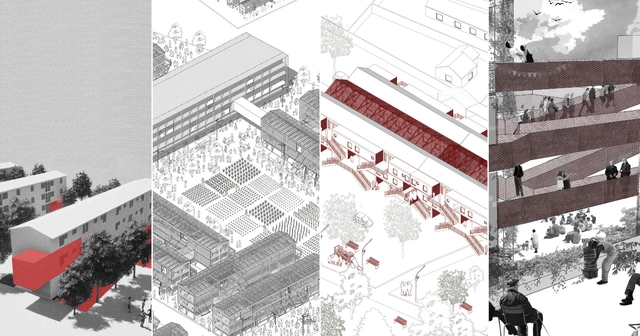
As part of Semana UTEM 2019—"The Project Within the Project"—21 teams from the Faculty of Architecture at the Metropolitan Technological University of Chile (UTEM) participated in the Domestic Pre-Existences workshop. The students proposed interventions for the historic "C Blocks" in Santiago's pericenter—residential complexes designed by the state Housing and Urban Development Service (SERVIU) between 1986 and 1996.
There’s a lot of buzz going on in terms of technology-driven innovation in the AEC industry. Especially the increasing use of 3D renderings and virtual reality for architectural projects is hitting every architect’s newsfeed. Photorealistic images and virtual reality walk-throughs seem to be turning into the new industry standard. That being said, for many architectural firms it seems to be hard to keep up with quickly developing new tech and thereby find ways to differentiate themselves from the competition.
Recent years have seen a dramatic transformation in population distribution: today, more than half of the world's population now lives in cities. In parallel fashion, housing and work spaces have all increasingly embraced the communal, resembling the impulse toward public spaces in new cities.
Throughout Brazil and across different sectors of society, organized groups are collaborating to develop projects and initiatives aimed at improving the quality of urban life and transforming cities into more democratic spaces, reinforcing collective identity and a sense of belonging. The 4th Project Exhibition, an event taking place during the 4th COURB - Collaborative Urbanism Meeting, aims to celebrate and bring visibility to these groups. It focuses on themes such as Public Policy and Legislation, Communication and Information, Education and Culture, Physical Intervention in the Territory, Mobilization and Advocacy, Research, Projects, and Plans.
https://www.archdaily.com/1122704/21-collaborative-urbanism-projects-from-all-regions-of-brazilCOURB Brasil
What happens when the sensor-imbued city acquires the ability to see – almost as if it had eyes? Ahead of the 2019 Shenzhen Biennale of Urbanism\Architecture (UABB), titled "Urban Interactions," ArchDaily is working with the curators of the "Eyes of the City" section at the Biennial to stimulate a discussion on how new technologies – and Artificial Intelligence in particular – might impact architecture and urban life. Hereyou can read the “Eyes of the City” curatorial statement by Carlo Ratti, the Politecnico di Torino and SCUT.
Thanks to the development of the digital world, cities can be part of natural history. This is our great challenge for the next few decades.
The digital revolution should allow us to promote an advanced, ecological and human world. Being digital was never the goal–it was a means to reinvent the world. But what kind of world?
The Architecture Academy podcast is a new architecture and design podcast which has a focus on ideas and education. The team believes that through education and better conversations they can improve how people design their buildings and cities. The Architecture Academy has just completed their first series of podcasts with conversations with world experts on topics such as beauty, happiness, education, sustainability, vernacular architecture and housing.
As a result of programmatic uncertainty, the diversity of individual lifestyles, and the impossibility of planning future ways of living, our architectural spaces have begun to call their own boundaries into question. The inability to confine contemporary activities to specific rooms, combined with new demands for adaptability and constant mutation in *micro-spaces*, has led to various architectural strategies in pursuit of flexible living.
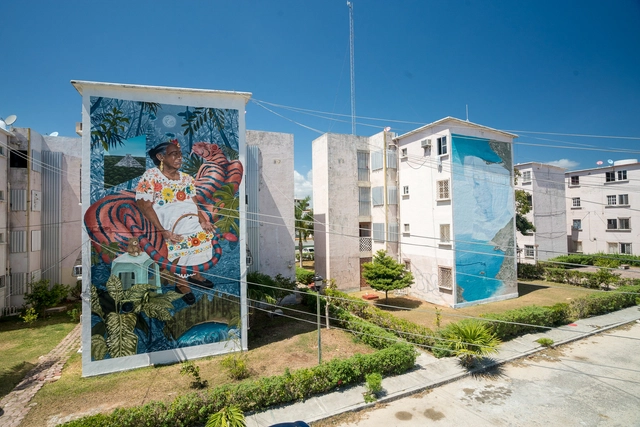
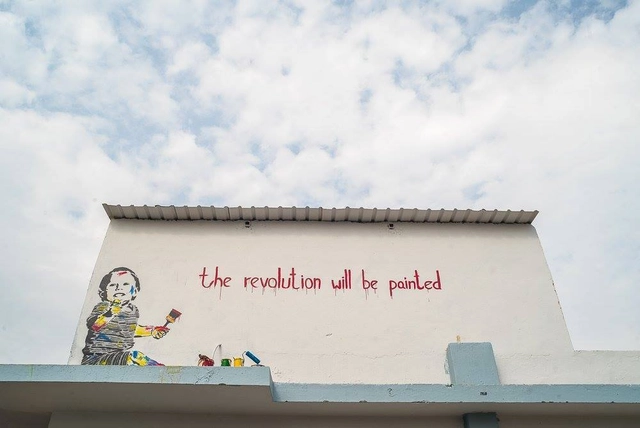
Proyecto Panorama is a civil association made up of a diverse group of young people from Cancún, who have been actively working for more than two years on public space interventions in Quintana Roo through urban art. These interventions have proven to generate a positive impact on the residents' environment, strengthening the sense of identity and belonging in one of the country's most important developing regions. Since its founding in 2016, and thanks to collaborations with renowned national and international artists, Proyecto Panorama has intervened in more than 30 public spaces, as well as an elementary school in Cancún and another in the Riviera Maya, resulting in 116 murals.
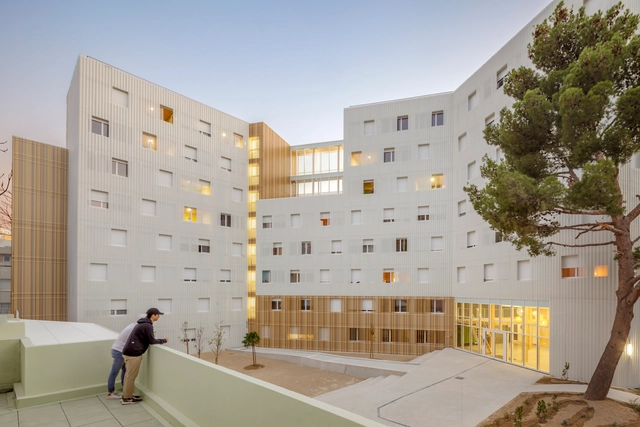
An alternative for students who choose to study away from their hometowns, student housing acts as an extension of educational institutions. Emerging almost concurrently with the first universities, these spaces have evolved over the years to adapt to societal shifts, such as the rise of co-ed dormitories.
In May of this year, *The Guardian* recommended in its style guide that journalists and contributors heighten their language when discussing climate change or global warming. Now, the British newspaper announced, it is a climate crisis, emergency, or climate breakdown.
https://www.archdaily.com/1122551/climate-crisis-and-the-right-to-the-cityTama Savaget e Henrique Frota
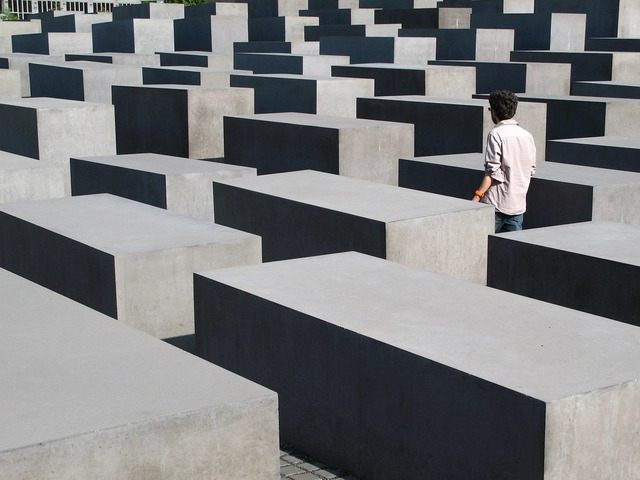
Memorial to the Murdered Jews of Europe. Photo: paula soler-moya, via Flickr. License CC BY-NC-ND 2.0
The steady escalation of complexity attributed to architecture and other fields of art over the past century—driven by a long process of disciplinary redefinition since the Modern era, coupled with an effervescence of experimentation and hybridization—has fostered the creation of innovative solutions designed for the human environment, while simultaneously giving rise to new challenges of categorization.













.jpg?1569016185&format=webp&width=640&height=580)
.jpg?1568660571&format=webp&width=640&height=580)