New Generations is a European platform that analyses the most innovative emerging practices at the European level, providing a new space for the exchange of knowledge and confrontation, theory, and production. Since 2013, New Generations has involved more than 300 practices in a diverse program of cultural activities, such as festivals, exhibitions, open calls, video-interviews, workshops, and experimental formats.
New Generations has launched a fresh new media platform, offering a unique space where emerging architects can meet, exchange ideas, get inspired, and collaborate. Recent projects, job opportunities, insights, news, and profiles will be published every day. The section ‘profiles’ provides a space to those who would like to join the network of emerging practices, and present themselves to the wide community of studios involved in the cultural agenda developed by New Generations.
ArchDaily and New Generations join forces! Every two weeks ArchDaily publishes a selection of studio profiles chosen from the platform of New Generations.
Wife and husband pair Alison (22 June 1928 – 16 August 1993) and Peter Smithson (18 September 1923 – 3 March 2003) formed a partnership that led British Brutalism through the latter half of the twentieth century. Beginning with a vocabulary of stripped-down modernism, the pair were among the first to question and challenge modernist approaches to design and urban planning. Instead, they helped evolve the style into what became Brutalism, becoming proponents of the "streets in the sky" approach to housing.
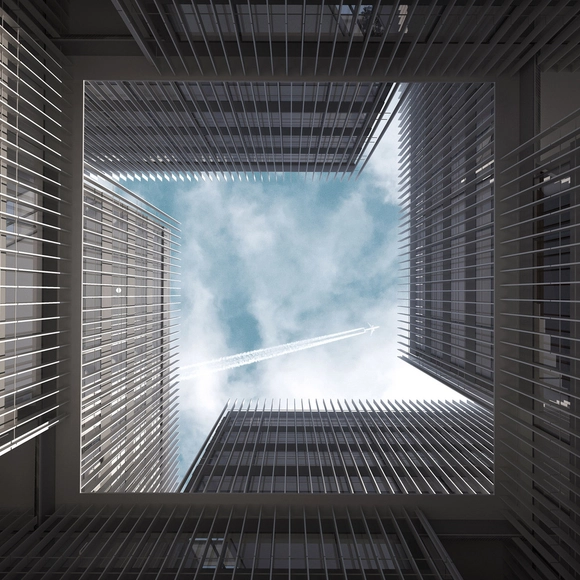
Since the moment the first all-glass building was proposed by Mies van der Rohe, architects have sought the perfect façade. A well-designed façade system is often the difference between a mediocre and a spectacular design impression. Budget, aesthetic, and performance constraints require careful balancing. While every project is different, developing a decision-making framework greatly simplifies the process.
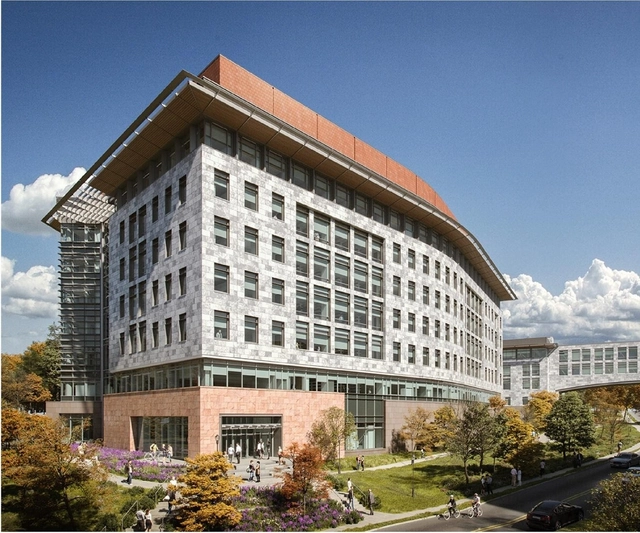
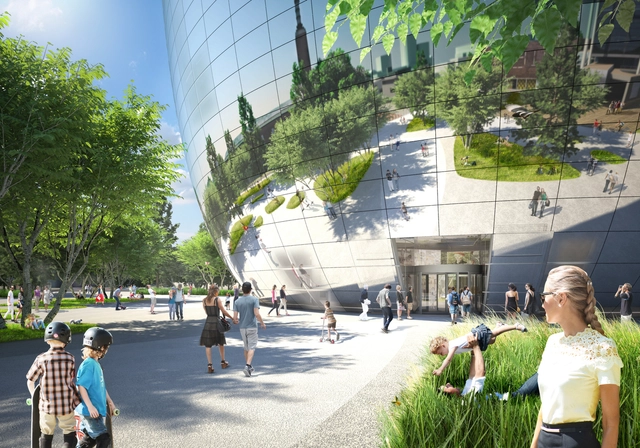
As architects rely heavily on imagery to convey abstract information to a broad audience, there is a recurrent conversation on the role of visualizations in architecture and how they impact the general perception of the built environment.
The relevance of the Greater Bay Area within international geo-political assets is steadily increasing. Relying on projections and observations by Li Shiqiao, Rem Koolhaas and Manuel Castells as main bases for his interpretation of this process, Thomas Chung investigates the future layout that president Xi Jinxing’s project will delineate, involving nine urban areas of the Pearl River Delta and the two Special Administrative Regions of Hong Kong and Macao. In order to construct a range of possible futures, the author critically traces the various political turns that affected the Pearl River Delta since the 80s Open Door Policy up to affirming its contemporary role on a global scale.
For the 2019 Shenzhen Biennale of Urbanism\Architecture (UABB), titled "Urban Interactions," (21 December 2019-8 March 2020) ArchDaily is working with the curators of the "Eyes of the City" section to stimulate a discussion on how new technologies might impact architecture and urban life. The contribution below is part of a series of scientific essays selected through the “Eyes of the City” call for papers, launched in preparation of the exhibitions: international scholars were asked to send their reflection in reaction to the statement by the curators Carlo Ratti Associati, Politecnico di Torino and SCUT, which you can read here.
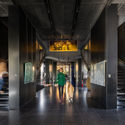
What makes Denmark a role model, and what are the ingredients of the coveted Danish everyday life? The new exhibition Hello Denmark presented by The Danish Architecture Centre (DAC) in Copenhagen showcases the conditions that contribute to the Nordic country’s high quality of life and this exploration of the mundane creates a new and unique way of understanding architecture and design.
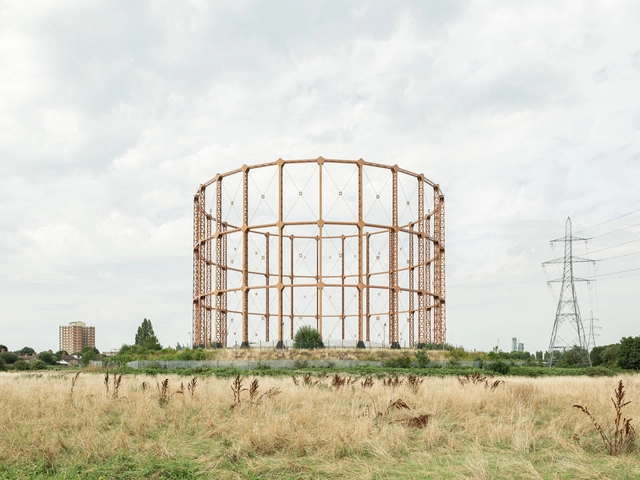
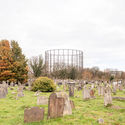
As remnants of the Industrial Age, the London gas holders are a fascinating presence across the urban landscape, one which is on the verge of disappearing. The photographic essay Ruin or Rust portrays the uncanny structures as the backdrop of everyday life, capturing their relationship to the urban context. The result of a two-year-long endeavor, this personal project of London-based photographer Francesco Russo frames the dialogue between these elements of the cityscape and the life going on around them, investigating their role in contemporary society and the urban fabric.
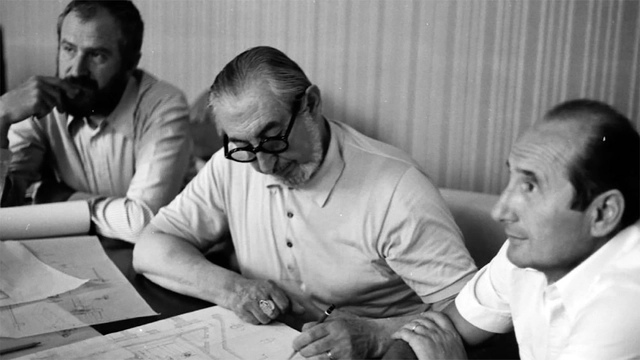
Carlo Scarpa working on the design of the Banca Popolare di Verona, with his associates, Arrigo Rudi and Renato Scarazzai. Photo courtesy of George Dodds.
This essay is an excerpt from the final chapter of Draw in Order to See: A cognitive history of architectural design, which outlines recommendations for reforming architectural education and practice. It uses the theory of embodied cognition—the science behind how our brains take in the built environment—to underscore the need for designers to reject the alienating legacy of Enlightenment rationalism that has pushed architects away from artisanal literacy since the industrial revolution. Although some of these practices and methods are already employed by individual educators and included in some curricula, they are neither widespread nor (more important) mandated in NCARB standards.
https://www.archdaily.com/941809/12-ways-to-reform-architectural-educationMark Alan Hewitt
Romania's modern architecture merges global perspectives with local traditions. From pre-modern styles to post-revolution work that began in the early 90s, the country's built environment is incredibly diverse. From cities like Bucharest to Cluj-Napoca and Timișoara, modern projects are being designed between historic structures.
In her Sesc Pompéia theater, architect Lina Bo Bardi designed a central stage revealing the structure and all the functions of the theater's program, and renouncing traditional theater seating. Her seats were not upholstered, were close to each other, and encouraged a more aware, attentive, and upright posture among the audience, thus honoring, according to her, the ancient art of theater.
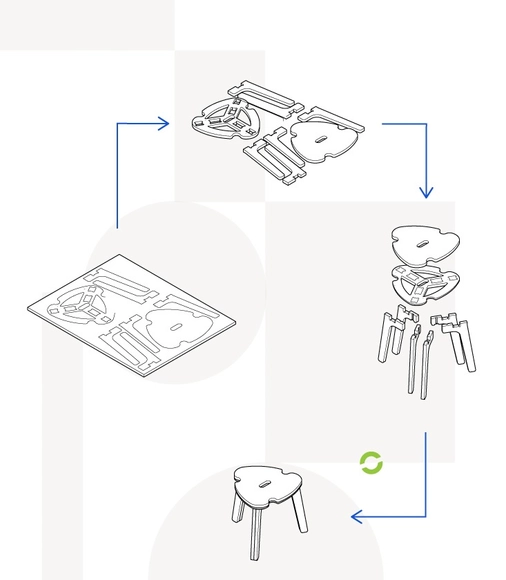
In the same way that the characteristics of architectural spaces alter our mood, feelings, concentration, and learning, so does the integral design element of furniture, which must be taken seriously when considering comprehensive user experiences. Regarding schools and learning environments in particular, the same attention given to teaching materials is often not conferred on furniture and physical structure.
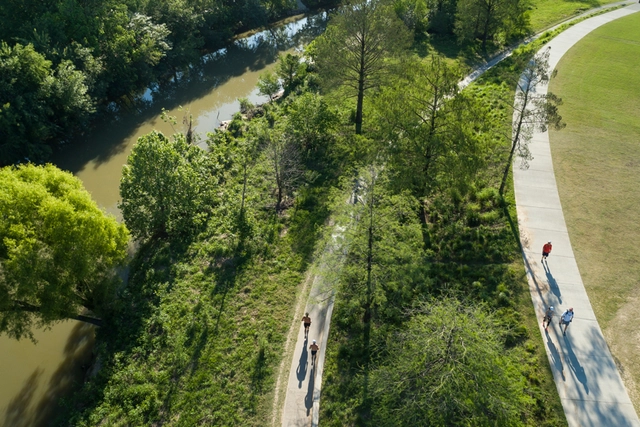
Buffalo Bayou Park in Houston, by SWA. Courtesy Jonnu Singleton
The urban crisis brings many challenges, but also presents opportunities for landscape architects to help build more equitable green spaces and cities.
As a Los Angeles resident who doesn’t drive, navigating the city on foot and bike has always made me feel like I have the whole place to myself.
But over the last two months, Angelenos have been freckling the streets—it’s like they’ve all discovered for the first time that they’re capable of exploring this city without a car. While most beaches and trails in the city were shuttered (they have since re-opened), I noticed the LA River becoming the city’s new “it spot” for socially distant hangouts. And in a city that lacks adequate public parks, people are turning any patch of grass or sidewalk—whether it’s an elementary school yard, a traffic median, or a bit of concrete next to a parking lot—into a bit of respite from the madness.
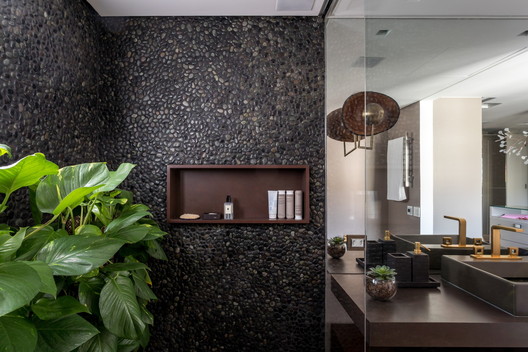
Interior design is a fundamental piece in creating an ambiance and complementing the architectural qualities of a residential project. It can either reinforce or subvert aspects of a building, create its own narratives within the rooms and also define the living spaces. Whether in renovations or designs started from scratch, creating interiors requires an understanding of the purposes and dynamics of those who will occupy the spaces. It brings architecture closer to a day to day level, in its most intimate form when it comes to housing programs.
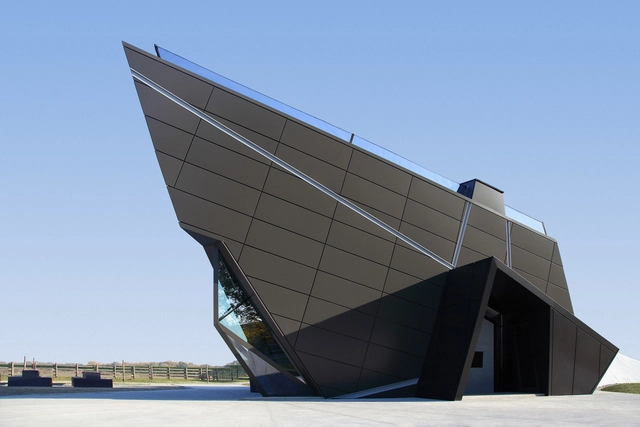
North Design Union Headquarters. Image Courtesy of SPIM Studio
Highlighting proposals presented in international competitions, this week’s selection of Best Unbuilt Architecture combines various functions, diverse conceptual approaches, and innovative ideas. Submitted by our readers, these projects include an awarded pavilion in Vietnam, a cantilevered-bridge proposal in New York, and a sustainable botanical center in Poland, amongst others from all over the globe.
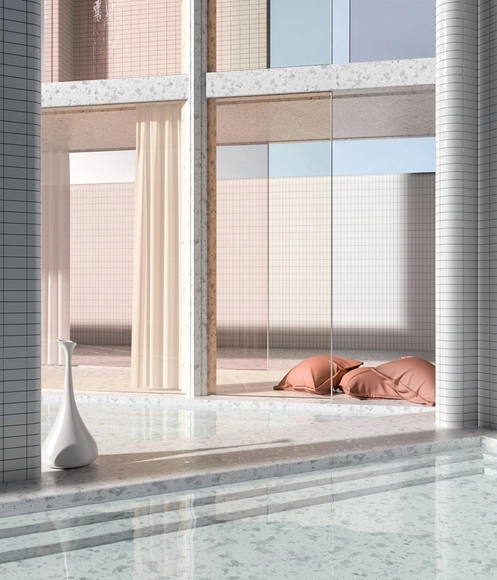
With a lot of projects coming in from China, we have compiled in this roundup, a design for a children’s hospital and education building, as well as a national science center encompassing research buildings, laboratories, exhibition spaces, commercial use, and public facilities. On another hand, for the first time, a virtual project is featured, celebrating the LGBTQ community with a vessel of a layered and labyrinthine system of baths, showers, and pools.
The issue of the housing deficit plagues virtually all countries today. According to a study by the McKinsey Global Institute, 330 million urban families worldwide lack decent housing, or housing costs are so heavy that they need to forgo other basic needs such as food, heath care, and education for children. According to the WRI (World Resources Institute), it is estimated that 1.6 billion people will lack adequate housing by the year 2025.
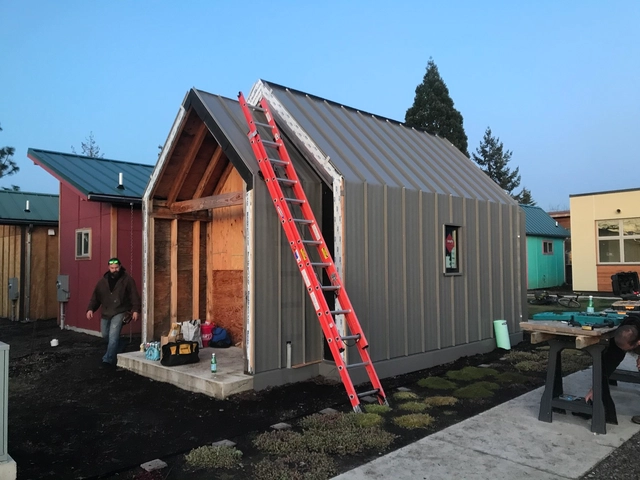
Solving this problem is, understandably, complex. Having good housing means much more than simply having a roof over your head. Good housing is essential for physical and financial security, economic productivity, and human well-being. In addition to adequate comfort, it is essential that these houses are integrated with the city, jobs, infrastructure, and city services. For people living on the street, this issue is even more delicate. Among many other necessities, having a place to structure a life is essential to moving forward and prospering. One project that confronts this issue is Emerald Village Eugene (EVE), an affordable micro-housing community with a unique housing model structured to enable residents to transition from the streets.
Alexis Christodoulou, out of office reply, 2017, 3D rendered artworks. Courtesy of the artist.
Social media is changing urban planning, facilitating the shift from a functional understanding of design to a formal and commercial one. Behind the friendly veneer of spaces conceived as sets for social media content, complex systems of surveillance are being tested and developed. The built environment turns into an attraction, populated not by citizens but rather by users who feel the need to self-document their lives. Public space disappears under the lack of agency and collective use, becoming a stage on which bodies move according to predefined rules and choreography.
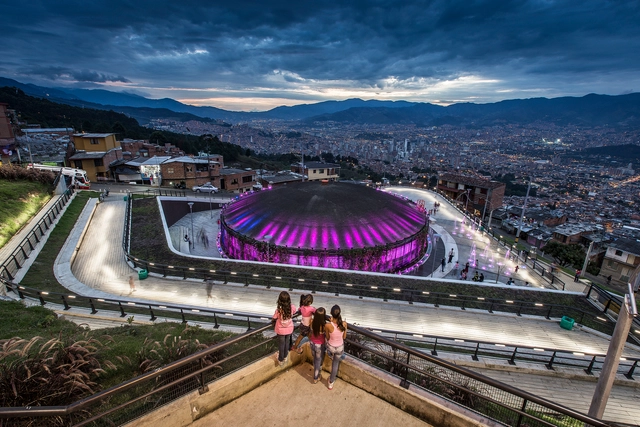
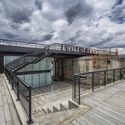
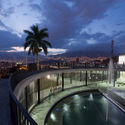
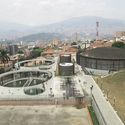
While developing a master plan for Medellin's urban lighting system, EPM, Medellin's public utility company, analyzed the Colombian city's infrastructure and nocturnal lighting system by superimposing a map of the system over a map of the city. What they found was an urban landscape blotted by "islands" of darkness.
Much to the surprise of the utilities company, the dark spots were actually 144 water tanks that were initially built on the city's outskirts; however, thanks to the progressive expansion of Medellin's city limits, the tanks now found themselves completely surrounded by the informal settlements of the Aburra Valley. Even worse, they had become focal points for violence and insecurity in neighborhoods devoid of public spaces and basic infrastructure.
We’ve asked our ArchDaily readers about which video game has impressed them most in terms of architectural visualization, and why. Hundreds of various answers later, it became evident that there isn’t one element that makes a video game stand out, but the virtually-built environment is almost always a key factor in how the game is experienced.
In video games, architecture plays a much bigger role than just being a backdrop of a virtual city or an authentic render of an existing one, it is, in fact, a fundamental component of transcending gamers into a virtual world that feels just as authentic as the real world does, but with extra adrenaline.
(WARNING: the videos and images featured in this article may potentially trigger seizures for people with photosensitive epilepsy)
The dialogue with history is certainly one of the most exciting topics for reflection that a designer may approach. Among the several academic and post-graduation courses, YACademy is certainly one of the most prestigious contexts within which designers may explore the topic of history and past architectures. Located in the historical heart of one of the oldest and most important Italian cities, YACademy offers a refined specialization program in "Architecture for Heritage". Now in its third edition, the course offers the opportunity to discuss the topic with some of the most refined design firms, with the likes of Alberto Veiga, Kazuyo Sejima, David Chipperfield and Benedetta Tagliabue.
Architect Antoine Predock (b.1936 in Lebanon, Missouri) started his pursuit of an engineering degree at the University of New Mexico College of Engineering. A chance encounter with architecture professor Don Schlegel sparked a life-long passion in architecture. After switching to architecture school – first at the University of New Mexico and then, at the advice of Schlegel, transferring to Columbia University, Predock obtained a Bachelor of Architecture in 1962. After traveling throughout Europe on a Columbia University Traveling Fellowship with a focus on work in Spain, he began his internship in San Francisco with Gerald McCue, a future Dean at Harvard’s Graduate School of Design. In 1966, Predock went back to New Mexico, the place he considers his spiritual home, to establish what since has become a world-renowned practice. In 1985, he was awarded the Rome Prize with residency and study at the American Academy in Rome.
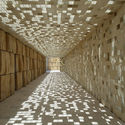
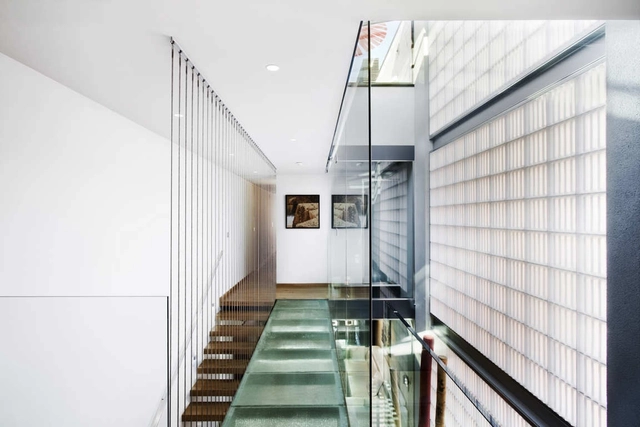
In 1977, a New York Times article by Carter B. Horsley proclaimed that “Glamorous Glass Bricks Are Booming:” once a “less than first-class” material, it was beginning to gain acceptance among architects in residential and restaurant projects for its translucence, privacy, visual interest, and sense of order. However, following the industry’s brief but widespread use of glass bricks, many now associate the material with outdated 80’s architectural styles, an aesthetic that few seem interested in reviving. Yet pioneering contemporary architects have begun using this unique material in new and distinctly modern ways, whether for sleek and minimalist bathrooms, industrial bars and restaurants, vintage residential windows, or even experimental urban facades. As Horsley stated, it appears that glamorous glass bricks are booming – again.
https://www.archdaily.com/941686/glamorous-glass-bricks-are-booming-nil-againLilly Cao
Architecture is constantly changing and adapting to new needs, which are linked to social, economic, technological, political, and demographic changes. In this sense, the aging population is one of the most outstanding changes of the 21st century: The increase in life expectancy and the decrease in fertility rates mean that the older population is increasingly numerous. How can architecture help to provide a better quality of life, promote the autonomy, dignity, and well-being of the elderly?
Videos
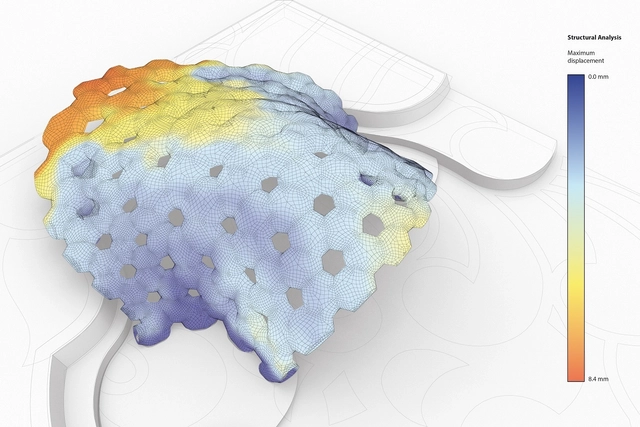
Análises estruturais. Image Cortesia de Oliver Krieg
When someone mentions architecture visualization, most immediately think of sketches, computational renderings, and drawings. This connection occurs because we almost always associate visualization with picturing a project that is not yet built, either for the validation of aesthetic and functional decisions or to represent the idea to a client, who is often unfamiliar with technical drawings. Yet in addition to considering superficial elements such as materials, plans, textures, and colors, when carrying out a project, the architect needs to be aware of technical issues that are invisible to the naked eye, which may directly influence the project.
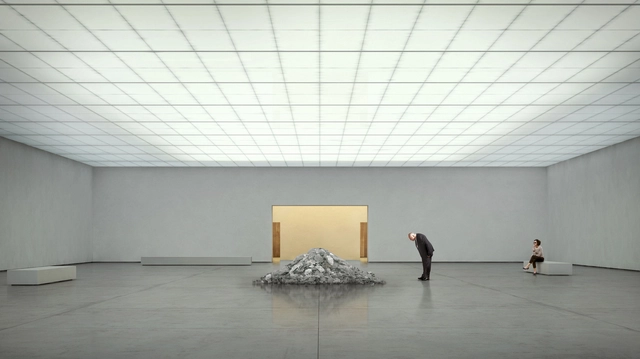
In architecture, professionals must constantly deal with the challenge of representing a project clearly and understandably before it is built, making the space somehow more perceptible to people who are often not specialized in the field. Rendering is one of the most popular methods of three-dimensional representation among architects because it portrays the project more realistically. Reality, however, implies the presence of people and their ways of inhabiting spaces, which can be depicted through human figures, that must be coherent with the intended picture and interpretation of the architecture, the place it is located in, and the way it is inhabited.







.jpg?1592394198&format=webp&width=640&height=580)
























.jpg?1591280425 "© Archstorming")