

Produce personalized presentation boards that distill complex concepts into simple visual representations with a few helpful tools and effects.
Articles
How to Create Architectural Presentation Boards
| Sponsored Content
https://www.archdaily.comhttps://www.archdaily.com/catalog/us/products/37234/how-to-create-architectural-presentation-boards-lumion
Civic Architecture in the Image of the Community
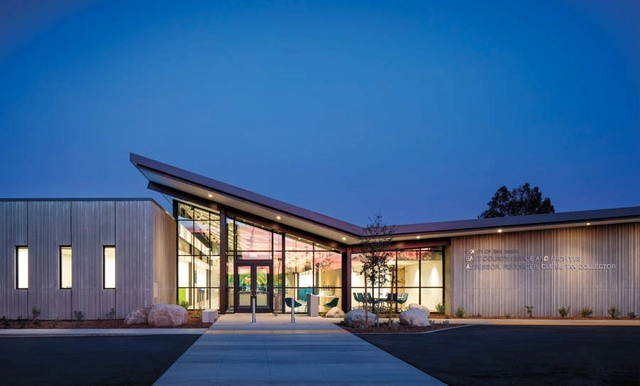
Back in February this year, the American architectural community was scandalised by a draft executive order from the White House threatening to make neoclassical or traditional regional styles compulsory for all new federal buildings. The initiative fails to recognise the specificity of the architectural expression and the innovation that stems from understanding the local context. Metropolis Magazine has gathered together several examples of civic architecture that succeed in expressing the needs and aspirations of their communities, thus building a compelling argument against a mandated, unified architectural expression.

https://www.archdaily.com/940145/civic-architecture-in-the-image-of-the-communityAndreea Cutieru
The Post Anthropocene: JOA's Exhibition Envision Life in Hard Future

JOA is honoured to participate in the 2019 Bi-City Biennale of Urbanism\Architecture (Shenzhen). We have always taken the research led perspective as the starting point of the design, trying to discuss the story behind the architecture in greater depth, and present it to the public through the exhibition. Our understanding of the future world is more based on the perspective of architecture rather than sci-fi movies. The premise of envisioning the future is actually to discuss the current social pain points, and then come up with critical reflections in a future dimension, which we call "The Post Anthropocene” project.
https://www.archdaily.com/939698/the-post-anthropocene-joas-exhibition-envision-life-in-hard-futureJust Open Architecture
Architecture post COVID-19: the Profession, the Firms, and the Individuals
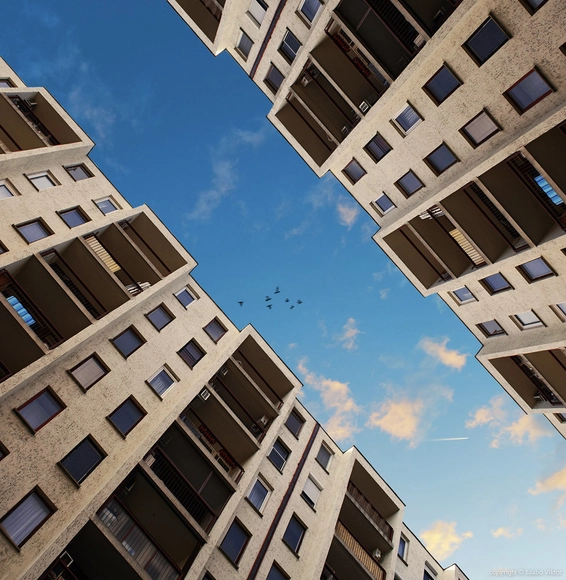
As the world is slowly reopening, easing lockdown measures, everyone is adapting to new realities. Imposing drastic adjustments to our lives, the coronavirus has introduced a new “normal”, changing our perceptions and altering our priorities. Driven towards questioning and evaluating our environment, we are constantly reacting and anticipating a relatively unknown future.
A casual conversation between two editors at ArchDaily generated this collaborative piece that seeks to investigate the current trends, predict the future, and offer insights to everyone/everything related to the architectural field. Tackling the evolution of the profession, the firms, and the individuals, especially young adults and students, this article, produced by Christele Harrouk and Eric Baldwin, aims to reveal what is happening in the architecture scene.
https://www.archdaily.com/939534/architecture-post-covid-19-the-profession-the-firms-and-the-individualsChristele Harrouk
This 125-year-old Swedish Town Has Relocated, Buildings and All

Kiruna Forever, an exhibition at ArkDes, traces the town's relocation due to geological instability.
“Kiruna is on the move,” says Carlos Mínguez Carrasco, curator of the new exhibition Kiruna Forever. Kiruna, a 125-year-old Swedish town that sprouted around the iron mine of the same name, started an official relocation process in 2018 after decades of discussion with the state-owned mining company LKAB. Today, as the expansion of the mine destabilizes the ground surrounding it, nearby buildings are being demolished or loaded onto flatbed trucks and moved to the new city center nearly two miles east.
https://www.archdaily.com/940050/this-125-year-old-swedish-town-has-relocated-buildings-and-allMolly Butcher
The Use of Prefabrication in 6 Emergency Projects Around the World
.jpg?1588864578)
Emergencies include a variety of contemporary scenarios ranging from natural disasters to extreme poverty or isolation due to social and political conflicts. In all cases, the disruption of normality and the requirement of basic needs for maintaining a decent quality of life become the basis for finding quick and efficient alternatives to respond to this type of urgency.
https://www.archdaily.com/939754/the-use-of-prefabrication-in-6-emergency-projects-around-the-worldJulia Daudén
Architects Doing their Bit: 5 Architecture-Related Organisations for Emergency Response
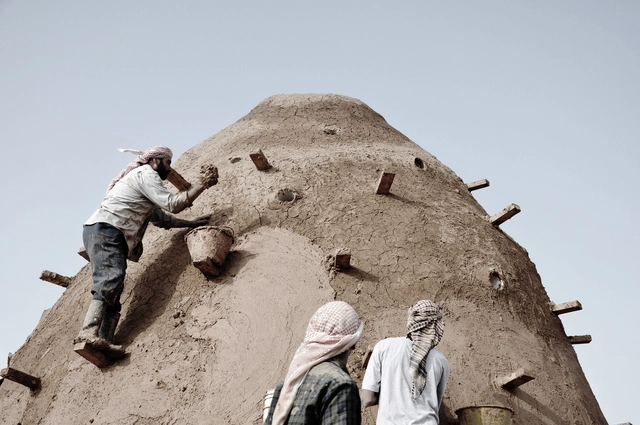
Architecture can be a tool for social change, and the belief in this statement is what motivates the work of many architectural NGOs who strive to address the lack of adequate shelter, generate social and economic change and build resilience in communities. These NGOs operate in two major areas, disaster relief and community development, with many organisations pursuing both types of actions. This article rounds-up several architecture-related foundations that act in emergencies, covering their expertise, past involvement in humanitarian crises, as well as the means to join them in their efforts.
https://www.archdaily.com/940036/architects-doing-their-bit-5-architecture-related-organisations-for-emergency-responseAndreea Cutieru
How New York City's Architecture Has Responded to National Emergencies over the Last 20 Years
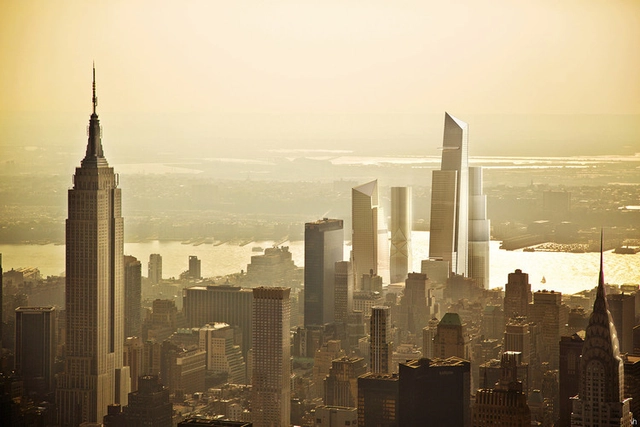
New York City is the pinnacle hybrid between the vibrant and granular neighborhoods that Jane Jacobs once envisioned and the sweeping urban innovations of Robert Moses. However, its diverse population has experienced hardship over the last twenty years, forcing the city into a recursive wave of self-reflection to reevaluate the urban strategies, design trends, and global transportation methods that it had grown so accustomed to. After the September 11th and Hurricane Sandy tragedies, the delicate balance between promoting a sense of individual culture and the strength in unity that New Yorkers are so often known for served as the lifeblood for revitalization. New York City has consistently handled adversity, by always rethinking, redesigning, and rebuilding this city for a better future.
https://www.archdaily.com/940064/how-new-york-citys-architecture-has-responded-to-national-emergencies-over-the-last-20-yearsKaley Overstreet
Education Needed: 4 Schools Designed in Response to Crises
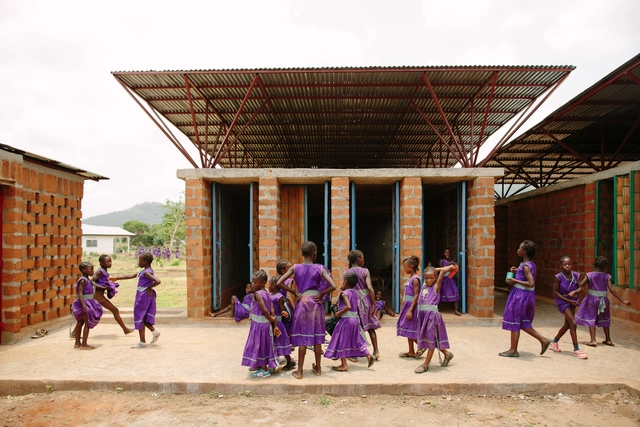
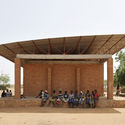
As an aftermath of natural disasters, viruses and wars, in society, we often require emergency architecture. In this round-up, we explore how emergency architecture can accommodate educational needs and how it can bring together a community that has suffered social and economic hardship.
Emergency architecture can occur under a variety of circumstances and through the recent COVID-19 pandemic we have started to get a glimpse of the urgency for certain types of architecture across the world. What we sometimes take for granted in regards to socialising — a sense of community and access to quality education — some countries go without for large periods of time due to natural disasters, viruses and war.

https://www.archdaily.com/939814/education-needed-4-schools-designed-in-response-to-crisesKate Grace
Architecture of Healing: Post-Emergency and Recovery
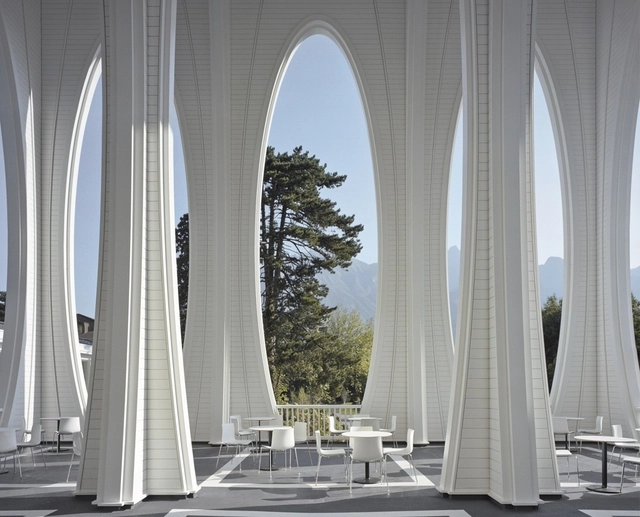
Architecture can ground both healing and wellness. Whether mitigating and reducing the transmission of disease, or simply providing a tranquil space for solace, the buildings of our daily lives directly shape our experience. In the case of emergency architecture, spaces are built to address issues of health and shelter. As architects continue to rethink designs for housing and basic human needs, they've also extended their focus to mental, physical and spiritual well-being.


https://www.archdaily.com/939969/architecture-of-healing-post-emergency-and-recoveryEric Baldwin
Emergency Architecture: How Temporary Should It Be?
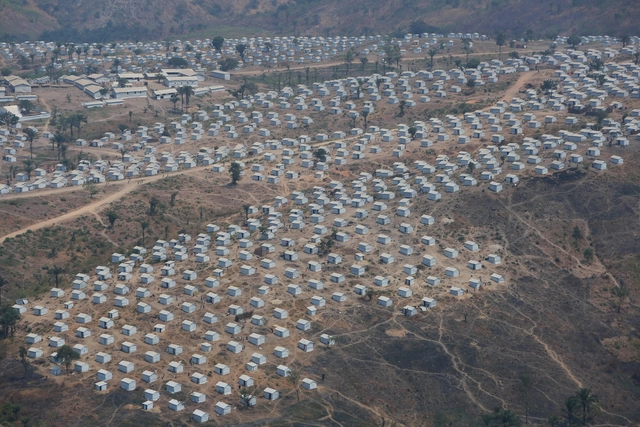
Floods, earthquakes, tsunamis, hurricanes, war, economic and social conflicts, pandemics. The number of refugees in the world is setting records year after year. Immediate and temporary solutions, produced in batches in response to crises, mark the difference between doing what is possible and doing what should be done, always doing a lot with what's at hand. But how temporary is emergency architecture? Is it more permanent than we think?
We want to offer our readers the possibility to openly express their opinions and experience on the matter. If we were aware of the difficulty of coping with major losses, that result in the temporary becoming "permanent", would it change the way we design emergency architecture? Would we demand a higher quality emergency architecture? Would we propose other types of solutions?
We invite our readers to fill out the following form and share their ideas on this topic -- the opinions will be collected and processed by our team to form a future article.
https://www.archdaily.com/940052/emergency-architecture-how-temporary-should-it-beFabian Dejtiar
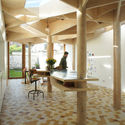
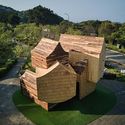
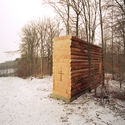
Architectonic & Structural Possibilities of Log Wood
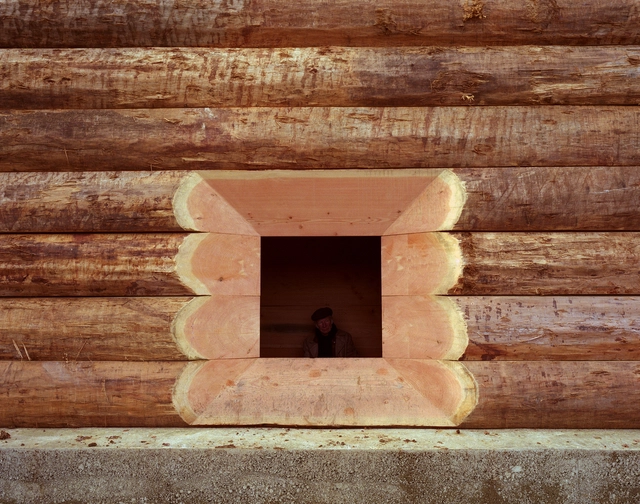
The world of architecture and construction has observed, with increasing attention, technological innovations involving wood. Although it is a material that has been widely used for thousands of years, recent research involving industrial manufacturing and machining technologies has provided even greater quality control and an increased diversity of uses, causing it to be described by many as the material of the future. To this end, common myths including wood's lack of resistance to fire and the implausibility of using it to structure tall buildings have been debunked.

https://www.archdaily.com/938814/architectonic-and-structural-possibilities-of-log-woodEduardo Souza e Matheus Pereira
11 Colombian Houses That Feature Exposed Brick

Brick is one of the most widely used materials in Colombia, making the architectural designs in its capital city, Bogotá, stand out worldwide. Due to the excellent quality of the clay found in some regions of the country, brick is used in all aspects of construction, from adobe floor slabs to exterior facades.
https://www.archdaily.com/939644/11-colombian-houses-that-feature-exposed-brickSantiago Baraya
A Panda Sightseeing Tower and a War Museum in New Delhi: 10 Unbuilt Projects Submitted by our Readers
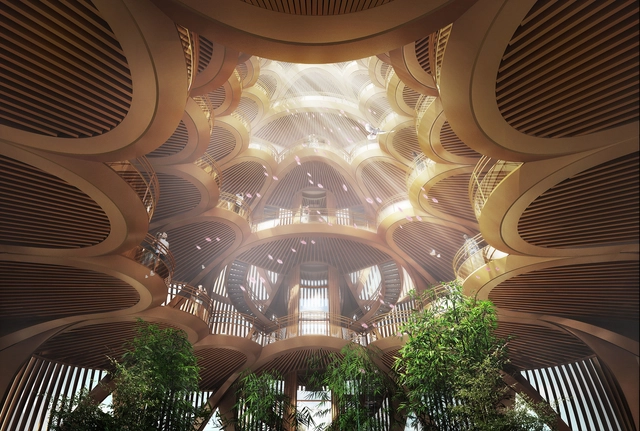
With more competition entries coming our way, our curated selection of best-unbuilt architecture features this week, exceptional projects presented in an international context. ArchDaily has rounded up another collection of proposals, gathering interventions from across the world, and highlighting never-seen-before programs, designs, and innovations from our readers’ submissions.
The article includes a couple of groundbreaking projects from the Far East with a Panda Sightseeing Tower, a production complex, and the regeneration of an industrial area in China. In addition, the selection showcases a proposal for the Jacques Rougerie Foundation Space and Sea Generation in Melbourne, Australia, and a finalist for the LACMA Not LackMA International Design Competition. Other proposals highlighted encompass a Multi-cultural Complex in South Korea, a recreational zone on an Austrian lake, a peace pavilion in Senegal, and a dream mansion "between mountain and sea" by Penda China, to name a few.
https://www.archdaily.com/939947/a-panda-sightseeing-tower-and-a-war-museum-in-new-delhi-10-unbuilt-projects-submitted-by-our-readersChristele Harrouk
YACademy 2019 Students Design a New Alpine Bivouac
| Sponsored Content
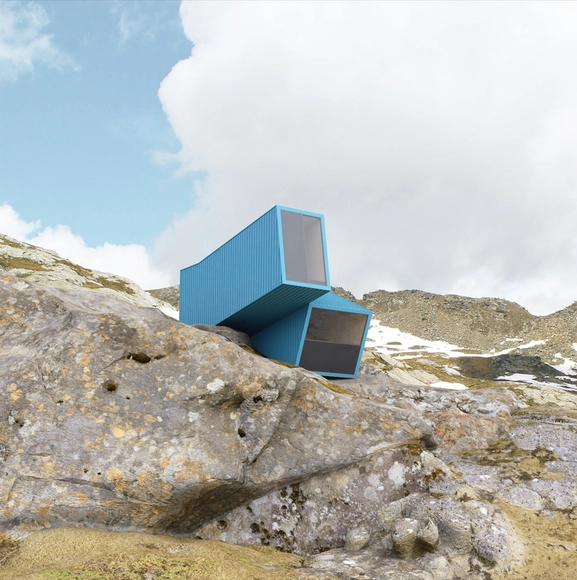
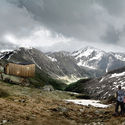
A characteristic feature of the classes of YACademy - the school of architecture founded by YAC in 2018 - is offering students interesting, hands-on workshops. In the school's curriculum, a key focus is the relational dynamics between natural and artificial, between anthropic intervention and landscape pre-existence. These themes prompted YACademy to create a High-Level Training Course in Architecture for Landscape: a program made up of lectures by renowned professionals, followed by internships in some of the most well-regarded firms in the world.

https://www.archdaily.com/939575/yacademy-2019-students-design-a-new-alpine-bivouacRene Submissions
On the Mode of Existence of Smart Urban Object
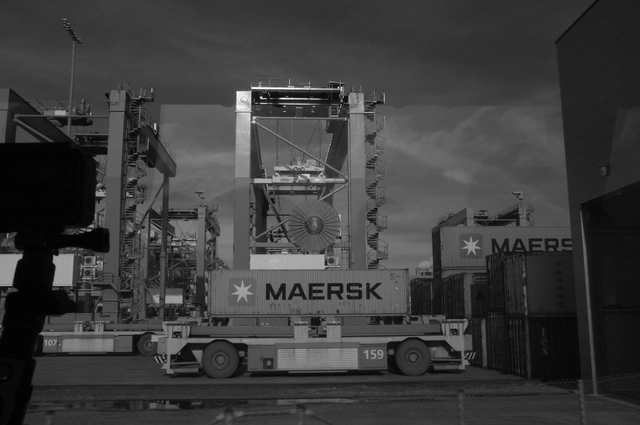
Lukáš Likavčan takes us on a rich and satisfying philosophical journey. From Agamben's apparatus, through Hegel's positive religion (in contemporary robes), on to its materialization in Graeber's fetishes, the author reads the smart objects that are at the basis of the smart city paradigm as fetishes of sorts. In this perspective, it is necessary to redefine the autonomy of humans through an act of reverse prostheticization: what position should humans occupy in the technosphere? And what kind of relationships are emerging, or are being consolidated, between us (humans) and them (objects)? By accepting a collective vision of intelligence as a product of human and non-human data, it is possible to move away from the notion of fetish, towards an anti-narcissistic condition that sees humans as one of the entities having agency in a universe that has moved far beyond the phenomenological.
For the 2019 Shenzhen Biennale of Urbanism\Architecture (UABB), titled "Urban Interactions," (21 December 2019-8 March 2020) ArchDaily is working with the curators of the "Eyes of the City" section to stimulate a discussion on how new technologies might impact architecture and urban life. The contribution below is part of a series of scientific essays selected through the “Eyes of the City” call for papers, launched in preparation of the exhibitions: international scholars were asked to send their reflection in reaction to the statement by the curators Carlo Ratti Associati, Politecnico di Torino and SCUT, which you can read here.
https://www.archdaily.com/939807/on-the-mode-of-existence-of-smart-urban-objectLukáš Likavčan
A Call for Global Cooperation for Sustainable Urban Transitions

The World Health Organisation (WHO) supports that even if vaccines are found, COVID-19 may never go away. ‘Post-virus’ recovery mechanisms suddenly become out-of-place and obsolete. If we wait for the coronavirus crisis to be over to tackle climate change, then many of us may be swimming in deep waters. Coordinated and immediate actions, coupled with planetary-scale cooperation, to tackle both crises in parallel is now needed. For cities, this means adopting mechanisms that enable both economic recovery and sustainable transitions.
https://www.archdaily.com/939930/a-call-for-global-cooperation-for-sustainable-urban-transitionsZaheer Allam, Gaetan Siew and Felix Fokoua
Innovation and Collaboration in Brick Design Blends Past and Present
| Sponsored Content
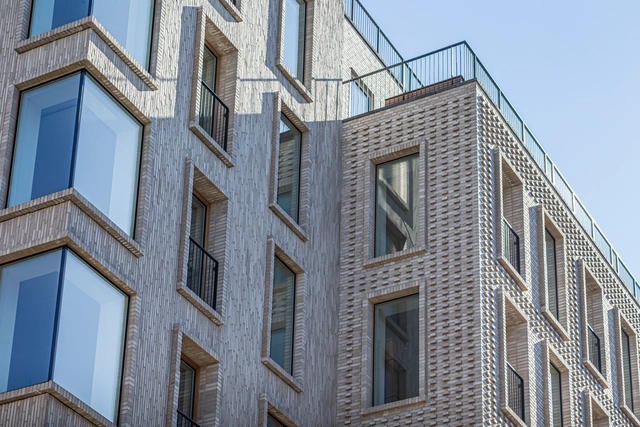
It is a rare occasion for a historic neighborhood to have new buildings. Never the less, this is exactly what happened along the elegant and ornate structures of Frederiksberg Allé in Copenhagen. The historical avenue was inspired by Parisian architecture and features many buildings notable for their intricate architectural detail.
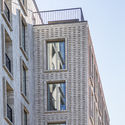
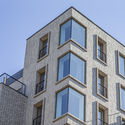
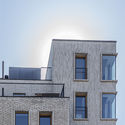

https://www.archdaily.com/939231/innovation-and-collaboration-in-brick-design-blends-past-and-presentMegan Schires
Forecasting the Future of Sports Architecture with 10 Newly Built Stadiums around the World

On April 16, a ground-breaking ceremony was held in the city of Guangzhou, China, for what is to be the world’s largest soccer stadium. The most controversial aspect of the project was not its $1.7 billion price tag, but its bold lotus shape causing a backlash from the local architectural community but praise from the general public.
https://www.archdaily.com/939211/forecasting-the-future-of-sports-architecture-with-10-newly-built-stadiums-around-the-worldMilly Mo
How to Optimize Small Spaces: 9 Folding and Sliding Beds

As the number of smaller and more compact apartments grows, architects and interior designers are challenged to create multifunctional solutions and systems capable of optimizing spaces, in a way that every inch seems to make a difference. As a result, it is increasingly common for professionals to focus on designing creative furniture solutions that allow the space to transform completely in a few seconds.
ArchDaily has already published numerous articles on how to design for compact spaces, from closets and shelves to plan solutions for small apartments. We have now put together a collection of interesting projects in which the beds seem to camouflage themselves among the furniture and architectural elements, thanks to smart systems which, by using hinges and sliding tracks, allow them to be concealed in a matter of seconds, saving space and allowing versatility.
https://www.archdaily.com/939363/how-to-optimize-small-spaces-9-folding-and-sliding-bedsMatheus Pereira
ArchDaily's Best Articles about Bamboo

ArchDaily has created a list of best articles, news and projects that address everything you need to know about bamboo.
https://www.archdaily.com/939625/archdailys-best-articles-about-bambooFabian Dejtiar
Architecture Visions at a Global Scale

For more than a century, architects have been addressing the world as a project through speculative designs in an attempt to imagine the future and reframe global issues. Globalisation, the ever-increasing interconnectedness demands action on a worldwide scale and invites a reflection on the profession's responsibilities. The latter is precisely what the book The World as an Architectural Project achieves, through a compilation of world-scale speculative projects of the past century, making a compelling case for the agency of architecture.
https://www.archdaily.com/939388/architecture-visions-at-a-global-scaleAndreea Cutieru
A Solitary "Walk": Building Images in Times of Isolation and Social Distancing
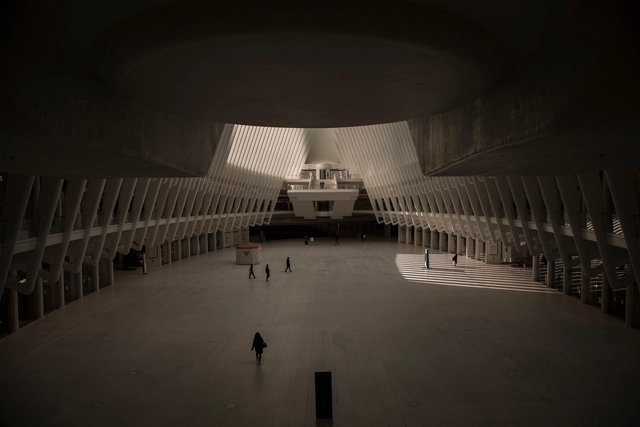
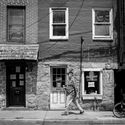
There are strange elements of connection within this phenomenon of social distancing: not only is the whole world experiencing it simultaneously, but we also seem to share a global momentum of awareness that something unique is taking place, which demands to be documented and gradually understood.
Moved by that impulse and under the guidance of professor Erieta Attali, 16 students from The Cooper Union, explored, through photography, their everyday life now ruled by isolation and social distancing. And they did so, not from a single city, but from 10 different places, as they returned to their home countries amidst the crisis.


.jpg?1589391920 "© Andrew Song")

https://www.archdaily.com/939550/a-solitary-walk-building-images-in-times-of-isolation-and-social-distancingDiego Hernández
Long-Term Plans: To Build for Resilience, We’ll Need to Design With—Not Against—Nature
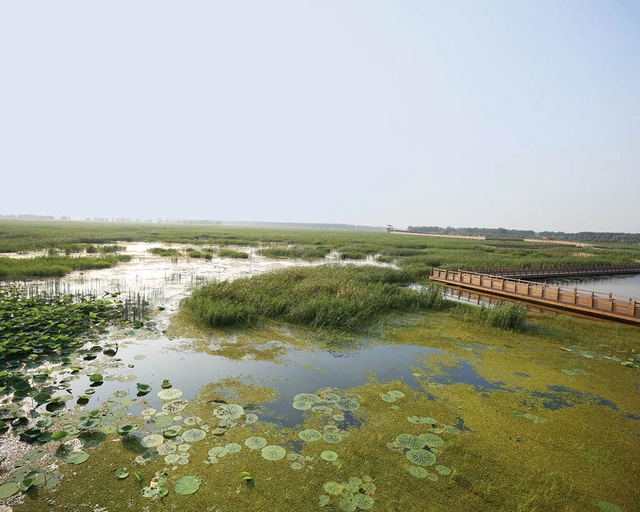
Moving away from its early exclusive focus on natural disasters, resilient architecture and design tackles the much tougher challenge of helping ecosystems regenerate.
Thirty years ago, as a high school student at the Cranbrook boarding school in suburban Detroit, I wrote a research-based investigative report on the environmental crisis for the student newspaper. I had been encouraged to do so by a faculty adviser, David Watson, who lived a double life as a radical environmentalist writing under the pseudonym George Bradford for the anarchist tabloid Fifth Estate. His diatribe How Deep Is Deep Ecology? questioned a recurring bit of cant from the radical environmental movement: Leaders of groups like Earth First! frequently disparaged the value of human life in favor of protecting nature.
https://www.archdaily.com/939624/long-term-plans-to-build-for-resilience-well-need-to-design-with-not-against-natureStephen Zacks
Architecture of Exhibition Spaces: 23 Art Galleries around the World
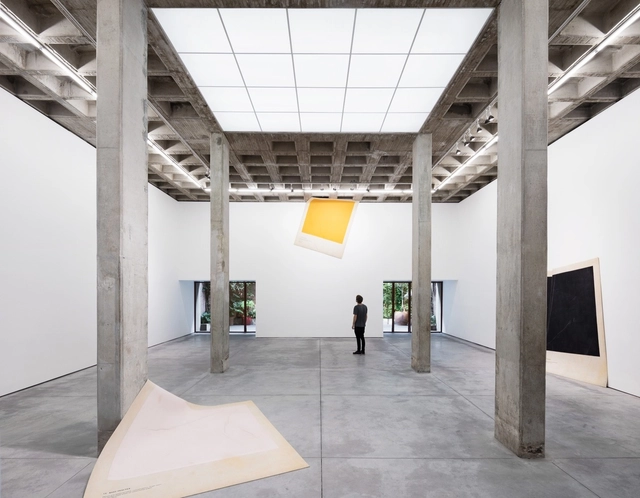
Overall, when designing exhibition spaces, certain aspects contribute to an effective display of the pieces: diffuse lighting, spatial distribution, and high ceilings are some of them. The combination of these features with rooms that are able to transform themselves (using elements that can be perforated, repainted, and adapted according to each exhibition), is common in many art galleries, expressing the dialogue between art and architecture.



https://www.archdaily.com/939035/architecture-of-exhibition-spaces-23-art-galleries-around-the-worldSusanna Moreira