When designing in times of quick and constant transformations, one must keep a close eye on the surge of new demands, and one must design spaces that embrace such mutability.
Flexible furniture is a reflection of this contemporary behavior because they can be moved around easily, they have great adaptability, and because they can perform different functions in a single piece. These pieces enable several different layouts, being able to adjust their shape according to specific requirements and changes, which helps optimizing interiors.
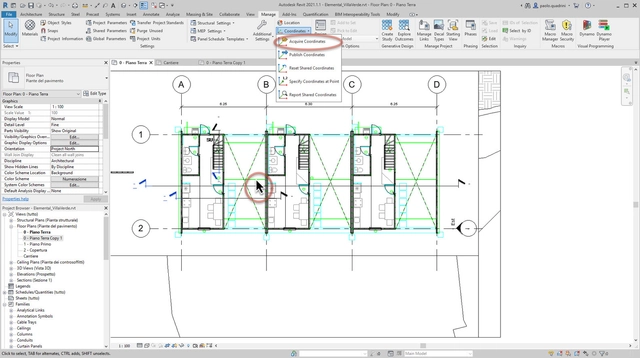
Revit is a parametric and multidisciplinary design software that can virtually create and insert any building within a BIM process. Revit is not a true modeler, but an aggregator of construction components governed by a series of specific rules. In order to avoid issues within the Revit project, it must be set up carefully. Since each project has different characteristics and requirements, there is no standard procedure when starting a new one. However, becoming familiar with various situations and their necessary steps will greatly help.
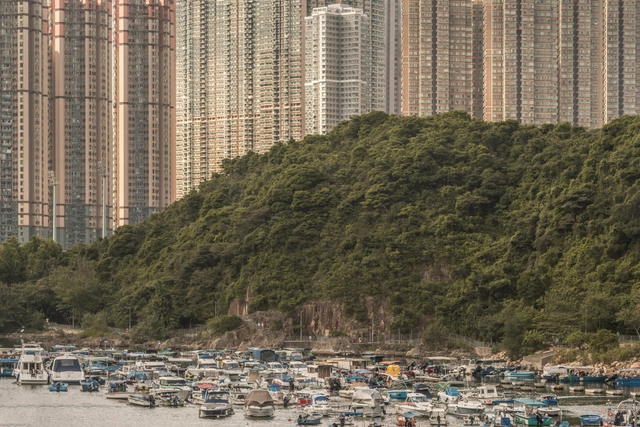
In the introduction of Cities for People, Jan Gehl stated clearly that most cities have neglected the human aspect when planning the built space. While technologies have allowed us to build large, our focus shifted from creating architecture for humans to erecting structures that look like they are meant for a different kind of species. Top-down urban planning decisions have ignored scales adapted to the senses and organic growth, and new ideologies prioritized speed, functionality, and profitability.
Dictating our city experience, scale, this major spatial component related to the human dimension, stimulates our senses, and influences our well-being. In this article, we lay down historical changes and underline scientific facts to highlight how scale can impact our daily city life, guided by Eden of the Orient, a series of photos by Belgian photographer Kris Provoost, portraying a battle of scale in Hong Kong.
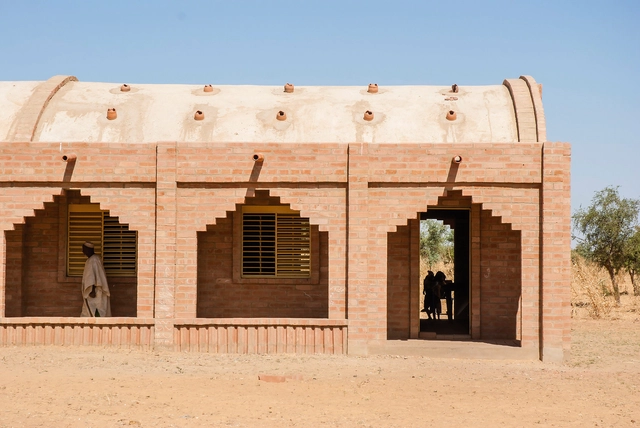
Primary School Tanouan Ibi, Mali. Image Courtesy of LEVS Architecten
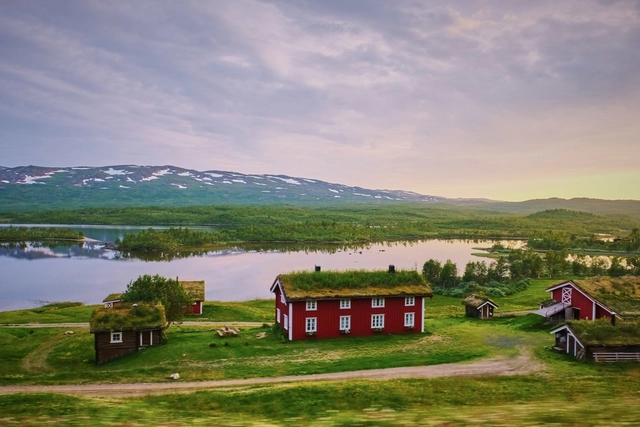
Vernacular architecture can be defined as a type of local or regional construction, using traditional materials and resources from the area where the building is located. Consequently, this architecture is closely related to its context and is aware of the specific geographic features and cultural aspects of its surroundings, being strongly influenced by them. For this reason, they are unique to different places in the world, becoming even a means of reaffirming an identity.
On November 3rd, 2020, after successfully holding the Award Ceremony and the Shanshui City Theme Forum in Lishui, the site of the competition, the Future ShanShui City • Dwellings in Lishui Mountains International Urban Design Competition finally came to a successful conclusion after more than seven months.
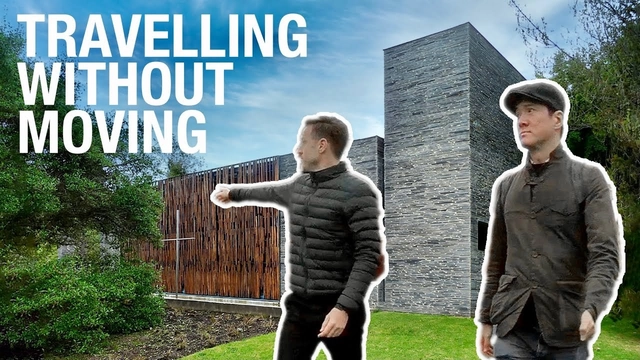
Now that traveling is restricted and mobility is limited, having the ability to get a sense of the space in person is somewhat impossible. Naturally, if we were to choose between being present in the project or skimming through images online, the choice would be the former. But luckily, we still have books and architecture websites to keep us well-informed.
In a new Youtube video, Archimarathon’s Kevin Hui and Andrew Maynard explain how we can understand architecture without being physically present in the project, but by letting our visualization skills and imagination do the investigations instead.
Videos
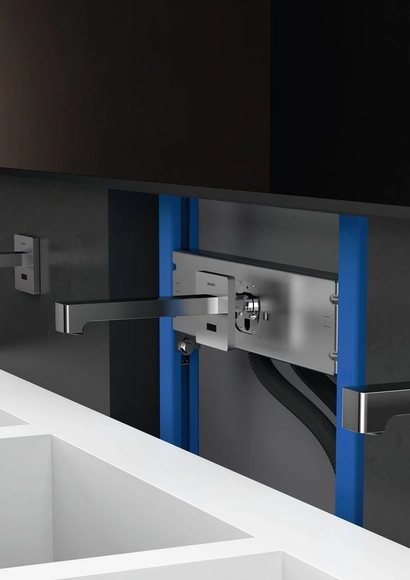
There are no installation problems with Geberit’s washbasin mixers due to their practical mounting elements. All electronic components are stored in a separate box, meaning they are protected and easily accessible for repairs. Image via Architonic
Where have your hands been today? This was the question asked by the head of the German Ministry of Health Education on the occasion of Global Handwashing Day on 15 October. While it sounds like a simple question, it isn’t that easy to answer. How many doorknobs do we touch every day? How often do we push buttons on elevators that are used by countless people on any given day? And what about touchscreens in the office or at ATMs?
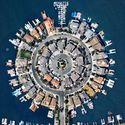
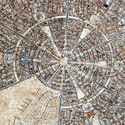
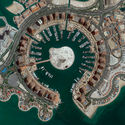
A radial concentric city plan is formed by streets that extend outward from a defined center and reach the outer edge of the city, together with concentrically arranged roads that connect the radial streets to the lots. This pattern traces back to ancient times and continues even to this day.
Depending on the historical context, location, or purpose of the city planning, the element found in the center may vary. Plazas, churches, or government buildings are among the most common elements and this is no accident, nor is the urban design pattern. Basically, the radial arrangement of streets is intended to highlight a particular element or location that has great political, religious, financial, or symbolic value to the city as a whole.
Architecture is defined by its context. This holds especially true when buildings are located in harsh climates and must respond to natural conditions. This week’s curated selection of the Best Unbuilt Architecture focuses on designs located at the intersection of nature and the built environment. Drawn from all over the world, they represent proposals submitted by our readers.
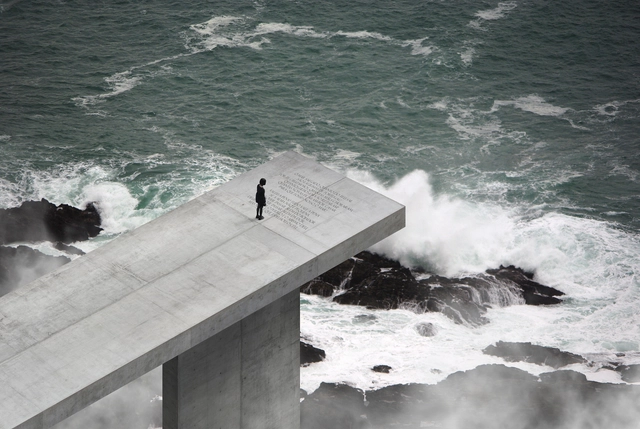
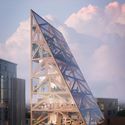
The article features a range of building types and locations, including many coastal proposals, from a regeneration plan on the South Coast of England and a proposal to link the famous Turku archipelago, to a dockside timber tower in Dublin. Also included are more extreme ideas, from an overlook on the Algarve coast to a vertical city with greenhouses located along a cliff on Mars.
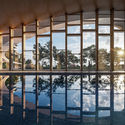
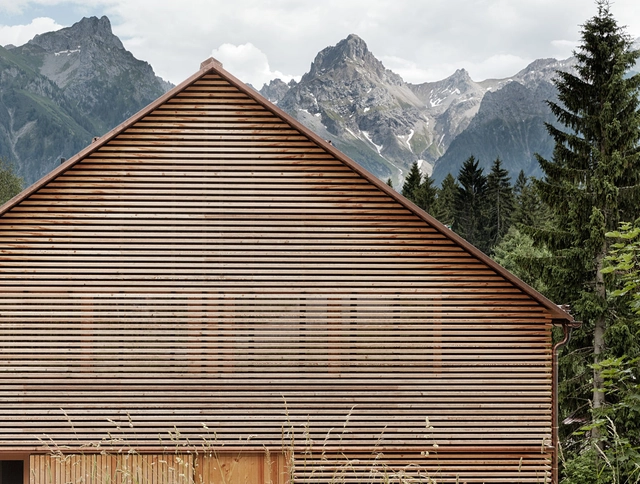
When designing the Nordic Pavilion in Venice, Sverre Fehn incorporated Nordic architectural elements in unusual ways. One of the most attention-grabbing elements of the building is its laminar roof cover of white concrete, which is broken by trees planted inside the building blocking the sun's rays and filtering the light. Depending on the angle, the roof blades allow visitors to see the colors of the sky and the canopy of the trees, bringing dynamism to the pavilion's lighting and movement. In fact, the use of parallel slats on facades, walls, and roofs is a tradition that comes from Nordic architecture and has spread throughout the world. In this article we will cover some examples that use this element, including its variety of possibilities and the best ways to amplify their effect.
There’s nothing green about your back-up generator. Manufacturing it released tons of CO2 into the atmosphere; so did shipping it from the factory to the dealership to your backyard. There it will sit, idle, waiting to be deployed only when the much cleaner—but underfunded—public infrastructure fails. At that point, it will fill the air with additional pollutants. There may be perfectly good reasons to buy an emergency generator but being green—that is, protecting the environment—isn’t one of them.
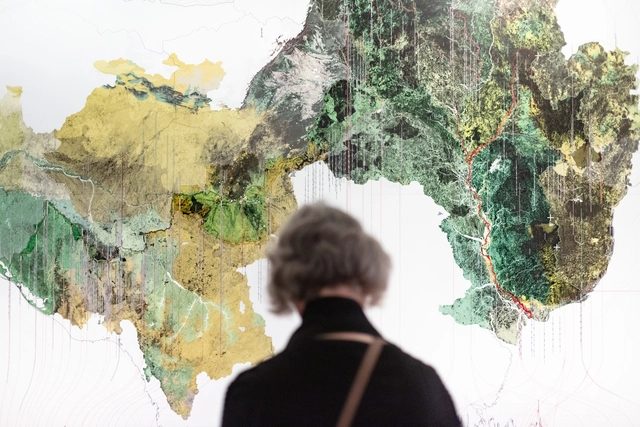
As the forces shaping our built environment have shifted, engaging technology, networks, and complex systems, architects need to envision more than the physical space but produce narratives on how to best operate within this new societal landscape. In this context, speculative architecture seems to have never been more critical; therefore this article takes a closer look at the mediums that currently question the existing conditions of the built environment and explore new architectural possibilities.
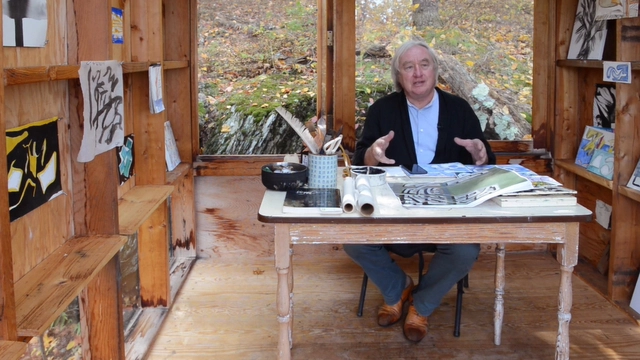
When it comes to the design process behind architectural projects, brainstorming is never the same for everyone. Some find inspiration in crowded rooms with loud music in the background, some walk around public spaces and observe people’s behaviors, and some need almost no resources whatsoever, just a pen, paper, and complete silence.
In an interview with architecture filmographers Spirit of Space, Steven Holl shares how being completely isolated in the Watercolor Hut contributed to some of his office’s most notable creations.
Final Project by Khalya. Image Courtesy of PennPraxis x Fresh Air Fund
This past summer, the nonprofit design practice, PennPraxis, in partnership with The Fresh Air Fund, piloted a new program, Virtual Design Studio, that sparked the imaginations of nearly 150 students to show how design has the power to change the built environment. Their courses, which were taught by University of Pennsylvania Stuart Weitzman School of Design graduate students, generated multiple designs for a nature center operated by The Fresh Air Fund and public spaces in New York City and offered children an introduction to explore future careers in design that could have a lasting impact on their communities and the design professions for years to come. Over the course of seven weeks, these students committed over 150 hours to the program while also receiving a stipend.
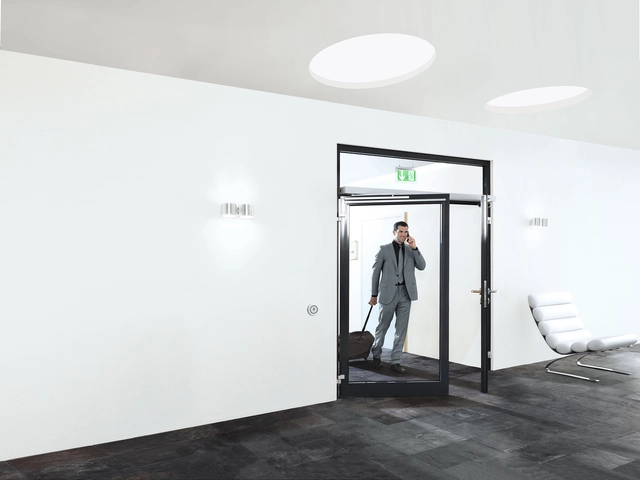
Building design today, and throughout the 20th century, has been significantly shaped by fire safety considerations. Architects today are familiar with the wide range of code requirements for a building to be compliant, from materials, to fire extinguisher locations, to fire-rated walls and doors. As buildings have become better-equipped to withstand fire emergencies, however, modern life has simultaneously increased the amount of fire hazards we live with.
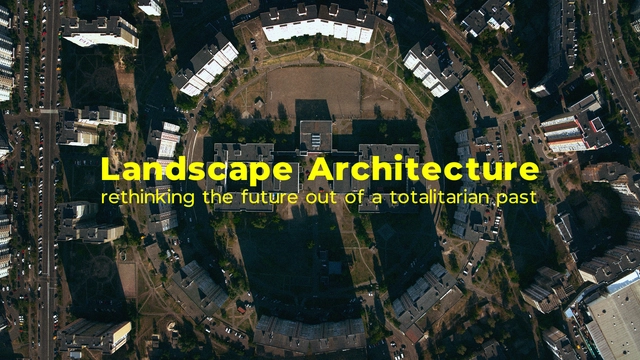
The built manifestation of an ideology, the urban landscape left behind by the socialist regimes around Europe are removed from the aspirations of contemporary urban living, thus trigger a unique process of re-appropriation of the post-soviet landscapes. The short film Landscape Architecture: Rethinking The Future out of a Totalitarian Past created by Minimal Movie invites a conversation around urban planning, cultural identity, and community building relating to the urbanism and architecture of Ukraine's Socialist Era.
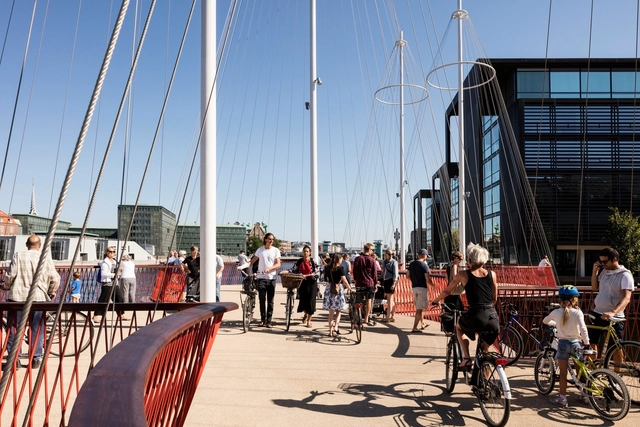
I spent four glorious days in Copenhagen in 2017 and left with an acute case of urban envy. (I kept thinking: It’s like..an American Portland—except better.) Why can’t we do cities like this in the United States? That’s the question an urban nerd like me asks while strolling the famously pedestrian-friendly streets, as hordes of impossibly blond and fit Danes bicycle briskly past.
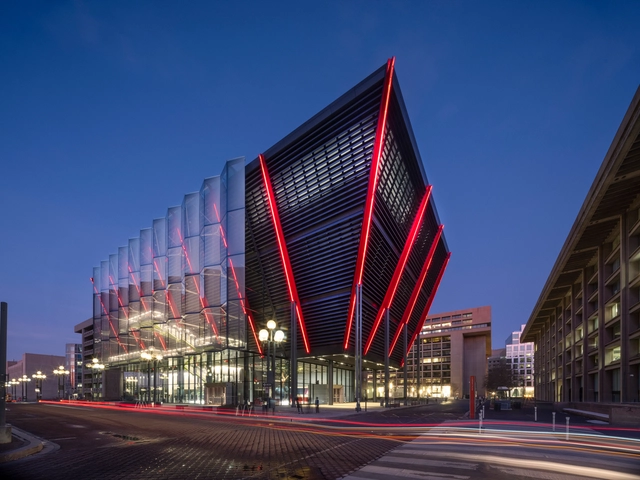
Washington D.C. has earned a reputation for iconic architecture. Emerging from the L'Enfant and McMillan Plans, Washington’s cityscape includes wide streets and low-rise buildings that sprawl out from circles and rectangular plazas. From the White House to Lincoln Memorial, Washington’s architecture was built to symbolize the nation’s values. Today, new projects are designed to rethink the city’s morphology while respecting its identity.
The 1st stage of the Architectural Visualization Awards has come to an end. 30 finalists, 10 from each category: Exterior, Interior, and Conceptual were selected by the official ArchDaily jury. Launched thanks to IPEVO, Cove.tool, and Concepts, this 1st edition of the award gathered a whopping number of proposals, with 750 visualizations submitted from all over the world.
One of the great difficulties we encounter with “classic” plan delineation methodologies are ramp and stair projections. It has always been difficult to avoid calculating the ramp’s slope, as well as the dimensions of the footprint and riser of the communication staircase between two floors of a building. Do they comply with current regulations in my country? Do they adapt to the project standards? Will they be accurately calculated?
Thanks to great advances in project modeling using BIM methodology and Revit software, these calculations can be made with greater ease. However, these elements will probably be an aspect of modeling that will bring us the most difficulties in the project phase.
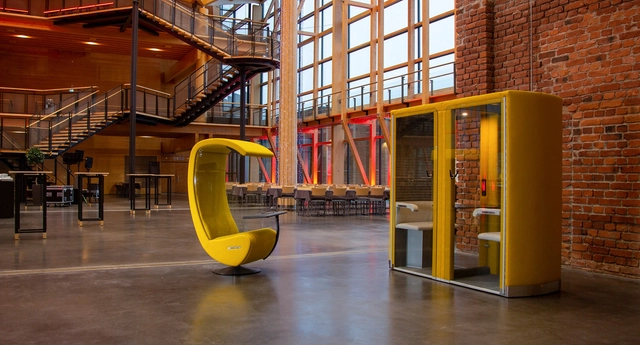
The sshhh 2 pod (right) takes all the important aspects of a meeting room and throws everything else away. The result is shockingly small – the 4-person sshhh 4 weighs just 400kg and fits inside a standard elevator. Image via Architonic
The gradual accumulation of various complementary technologies has unshackled employees from previously restrictive office and desk-based work. In the modern world, they have the freedom to work wherever they want, be it at home, on the train, in a café, in the park or anywhere else. These often cacophonous working locations, however, provide little privacy, and often result in the pioneering professionals fighting a losing battle against concentration.
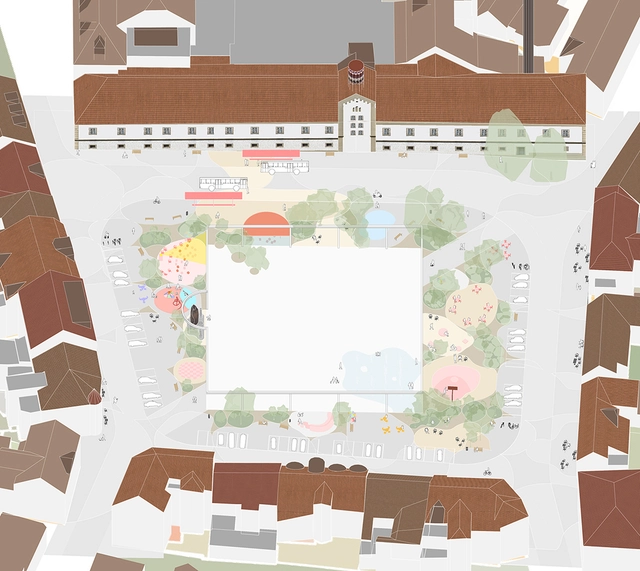
Zbraslav Square . Image Courtesy of Architects for Urbanity
Recognizing the importance of international contests in pushing forward inventive concepts and design, ArchDaily has put together a curated selection of Best Unbuilt Architecture featuring competition entries from around the globe. Submitted by our readers, these projects include winning proposals, honorable mentions, and recognized admissions.
In this week’s article, urban interventions take the lead with multiple square designs and infrastructural elements. On the cultural level, projects underlined include Museums in Iran and Norway, a National Concert hall in Lithuania, and a Mosque in Turkey. For the civic category, the functions highlighted comprise a new city hall for a South Korean district and an Indian community development center for at-risk women. Finally, other programs involve a rural school in Haiti, a tourist center in China, and a housing complex in Prague.
Under the theme of “good neighbors”, the IE School of Architecture and Design celebrated World Architecture Day, highlighting the importance of our commitment and collective responsibility for the future of human beings, societies, and built environments.
To celebrate the projects that have impacted our daily lives positively, the university showcased these buildings on their social media platforms and asked renowned architects and program directors on the importance of maintaining a sense of community and what makes buildings our good neighbors. The school hosted its dean Martha Thorne and award-winning international architect Jeanne Gang during a live interview on Instagram to discuss the evolution of the field of architecture after this year’s new set of living conditions.
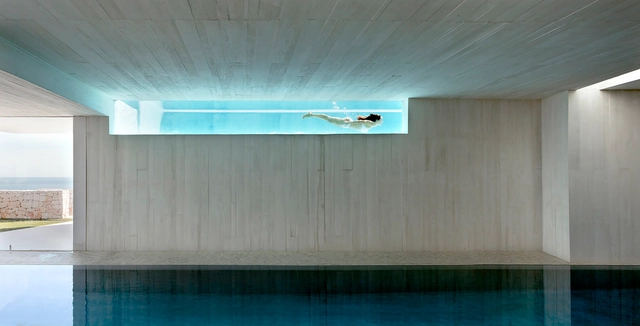
What's better than a house with a pool? A house with a pool that's part of the structure of the house. These projects show different ways to incorporate pools and how to resolve issues of weight, moisture and leaks. See the houses below, featuring photos by photographers like Mariela Apollonio, Kent Soh y Marcello Mariana.


.gif?1604578732)






.jpg?1606152301&format=webp&width=640&height=580)




.jpg?1605991358 "Nüwa City on Mars. Image Courtesy of ABIBOO Studio")
.jpg?1605991377 "Nüwa City on Mars. Image Courtesy of ABIBOO Studio")



.jpg?1605822515 "Surface Ex-Tension by Jonathan Craig, Luis Arjona, Marco Nieto & Philip Elmore. Image Courtesy of Arch Out Loud. Image Courtesy of Arch Out Loud")











.jpg?1605563692&format=webp&width=640&height=580)