Bees are perhaps the insects that most arouse our fascination and curiosity. With the exception of Antarctica, they are found on all continents, in all habitats that contain insect-pollinated flowering plants. Representations of humans collecting honey from wild bees date back to 15,000 years ago, and pots of honey have even been found in the tombs of Egyptian pharaohs like Tutankhamen. Although we generally have a fixed idea about what cartoon bees look like, there are thousands of species around the world, with different sizes, colors and behaviors. There are even several examples of solitary bees, many without stingers, and even some species that survive by plundering other weaker colonies. But something that has consistently impressed researchers is the organization of their hives, which are truly highly populated cities with an efficiency to make any urban planner envious.
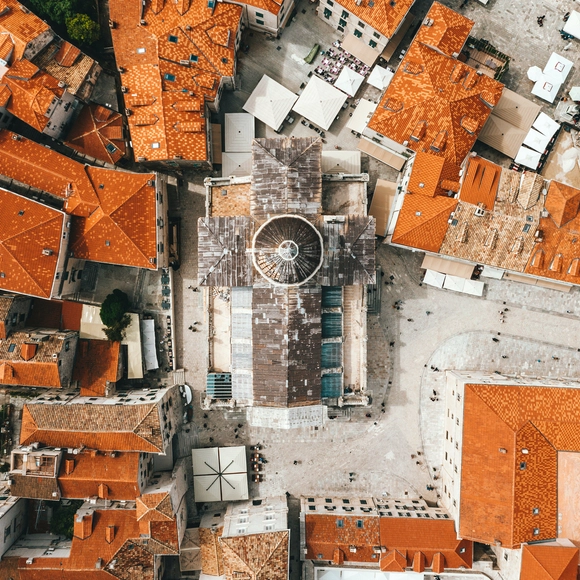
Dubrovnik, Croatia. Drone photo by @spencerdavisphoto
Some of the most characteristic features of city squares are related to the presence of people in the space and the purposes they are given, such as places for socializing, sports, tourism, and demonstrations. These different uses, often not foreseen in the project, are closely associated with the ground level, where people can walk around and experience the space. Viewed from an aerial perspective, on the other hand, squares can reveal other aspects related to their architectural design and their placement in the urban context.
As a response to this rapidly changing world, flexibility has become a top priority in contemporary interior design. That explains, for example, the growing demand for spacious and multifunctional spaces over rigid, enclosed floor plans –as is the case of the open kitchen trend. This shift in spatial needs suggests that designing for the present and the future is about creating spaces that can easily adapt to many uses: one day, a room may be destined for a big event; another day, it may be needed for smaller, more private environments. Therefore, materials, products and other interior design elements must respond accordingly, integrating technology and innovation to create flexible, yet functional spaces.
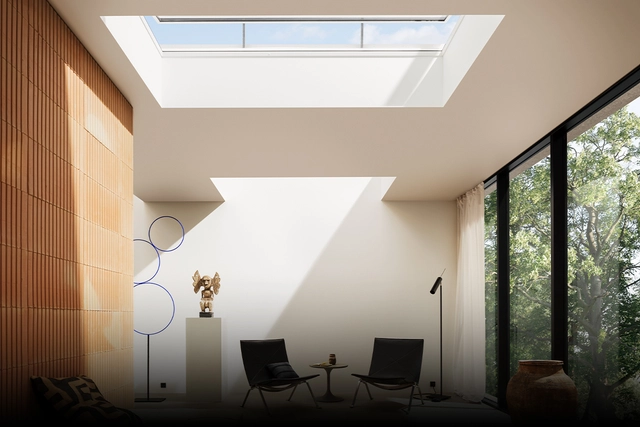
Natural light is a key design element that can improve indoor comfort in architectural projects. VELUX Academy offers courses, videos on daylighting design, and information modules featuring exclusive content on the subject. This expert-curated content challenges how architects and designers think, ensuring the best possible design outcomes for their clients.
The passage of the Biden Administration’s climate change package, the so-called “Inflation Reduction Act,” has predictably split along partisan lines, with Republicans characterizing the bill as an act of reckless government spending, certain to raise taxes and fuel further inflation. But does this act really represent reckless spending? The legislation authorizes $430 billion in spending, the bulk of which—more than $300 billion—is earmarked for tax credits; other spending, and initiatives aimed at stimulating the clean energy economy; and reducing carbon emissions. (The bill also allows Medicare to negotiate prices with drug companies for certain expensive drugs.) The bill is funded in part by a 15% minimum tax on large corporations and an excise tax on companies that repurchase shares of their own stock. Given the scope of the problem, and the escalating future costs of climate inaction, this legislation is an exceedingly modest, but very necessary, first step.
https://www.archdaily.com/988604/its-time-to-be-honest-about-the-impending-costs-of-climate-changeMartin C. Pedersen, Steven Bingler
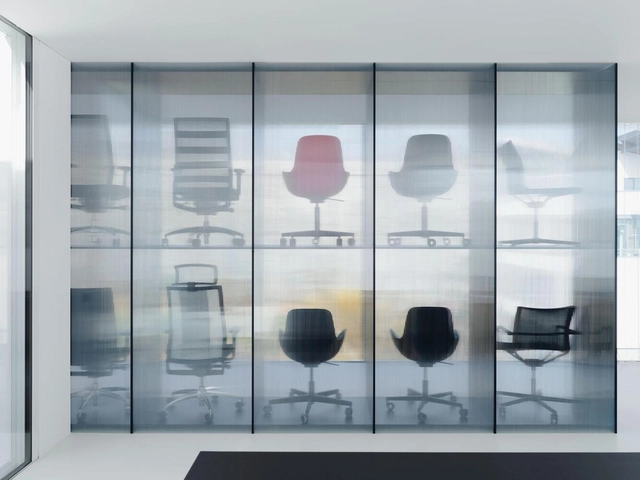
The new D2 shelving system, designed by Munich-based Diez Office for Wagner Living, can be used not only in living and office spaces, but also for the presentation of exhibition exhibits. Image Courtesy of Wagner
Anyone who has been writing about design for 25 years has seen many trends come and go. In retrospect, I even have to smile when I think about some of the theories – such as the one that things would ‘disappear’. That was actually predicted a good two decades ago with the advance of digitalisation.
Today, we know that analog hasn’t disappeared – and that we still want to live with things that can be kept and touched. The return of the vinyl record, for example, was unthinkable for many – and yet record players are enjoying great popularity again. Especially because we now have access to millions of songs via our smartphones, there's something special to the ceremony of putting on a record.
The Santiago Architecture Film Festival is celebrating its first decade since its inaugural edition in October 2012. To mark this milestone, it has invited members of its community to answer the question that has guided its work: What do we talk about when we talk about film and architecture?
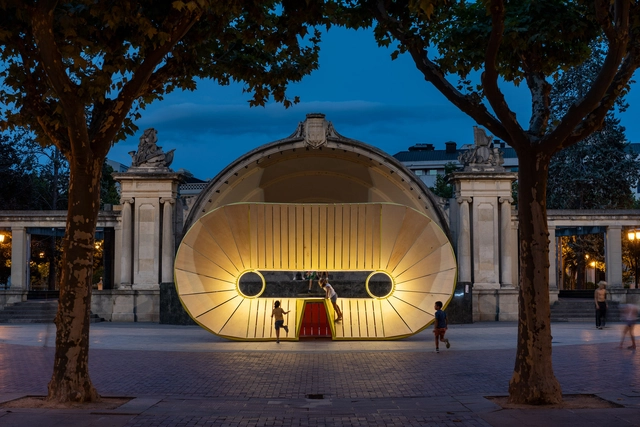
Every year, the Concéntrico festival in Logroño, Spain, brings together architects and designers from all over the world with the hope of employing creativity to create a better city. During this year's event, a few overarching themes could be observed as critical points of interest for the participating architects and designers. Many urban installations hoped to help citizens rediscover places of interest in their city and beyond, while others challenged the often-fixed ideas of what a home can and should look and function. Many designers saw opportunities in the concept of unstructured play, as the exploratory activity can activate unused public spaces and engage people of all ages.
Since 2015, the Concéntrico festival has presented 91 installations and pavilions during its seven editions. The festival is primarily known for bringing together emerging architects and designers who are given the freedom to experiment with new fields of environmental design. The festival is organized by the Cultural Foundation of the Architects of La Rioja together with Javier Peña Ibáñez, promoter of the initiative, in collaboration with the Logroño City Council, the Government of La Rioja, Garnica and Bodegas LAN, and 30 other supporting institutions.
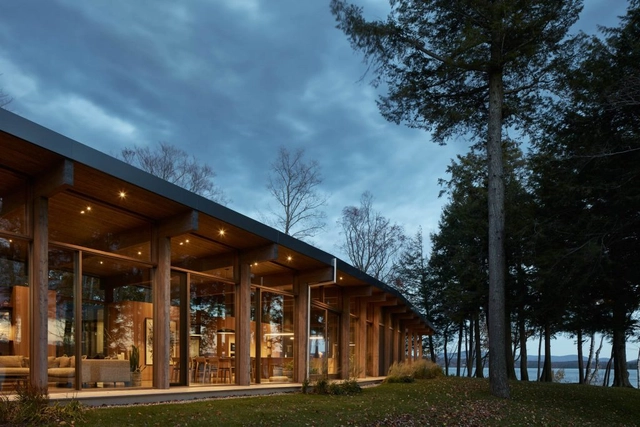
Lac-Brome House - Art Massif Glulam Wood Structure. Image Courtesy of Carbon Fixers
Timber construction and its benefits is moving into the BIM space for even more sustainable uses. A new BIM-integrated web application, called Carbon Fixers (which expands on its Offsite Wood plug-in for Revit), pre-calculates the carbon-benefit of choosing timber and other bio-sourced materials in early design.
Carbon Fixers lets you rapidly build a scenario using only basic architectural program information, such as the type, size, and number of stories in the building. For advanced users, preferences can be saved for firms with a regional expert dashboard, side-by-side comparisons and detailed assemblies.
Housing is a mess in Northwest Arkansas. The metropolitan area between the college town of Fayetteville, the buzzing art hub of Bentonville, and the bedroom communities of Rogers and Springdale are expected to double in size over the next two decades, and like many quickly growing urban areas across the country, there aren’t enough places to live.
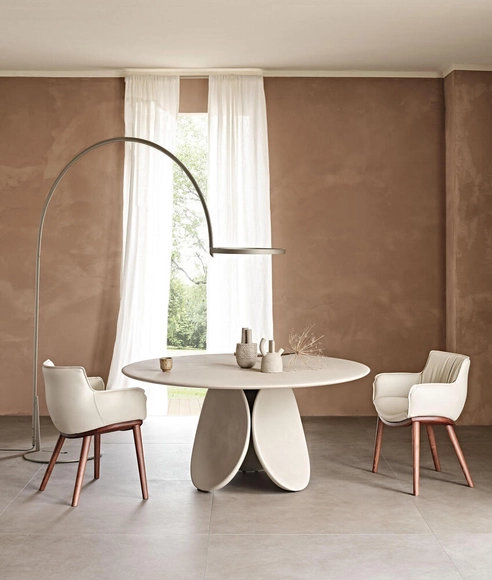
The Maxim Argile table brings the shapes and materials of nature inside. It is hand-finished with Argile, a textured clay-based material, offered in three natural shades, Oslo, Cairo or Havana. Image Courtesy of Cattelan Italia
Even before the ‘C’ word came to dominate our lives, homes were starting to be viewed as sanctuaries, and our furniture required to work ever harder in form and function to coset us. Straight lines have been warping and chairs starting to envelop, while the soothing textures and patterns of nature are in high demand.
https://www.archdaily.com/988574/uncomplicated-and-fluid-designing-wellbeing-with-cattelan-italiaEmma Moore
As part of a new initiative led by Francesca Borgonovo and Luis Young in Mexico City, "Preludio"—the inaugural exhibition of BY Galería—was presented from August 25 to September 3 at Proyecto Público Prim. This space arises from the question: "Is it possible to materialize architectural thought?"
"Domingos Libro" is hosted by Carmelo from Enorme Studio, delving into forgotten architectural publications, books, and architecture magazines from the '60s, '70s, and '80s that hold some of the most fascinating backstories.
After a hiatus in 2022, the series returned with episode 19, titled “Siempre Joven” (Forever Young). It focuses on Ettore Sottsass Jr. and how, at 62—when mere mortals would be contemplating retirement—he founded a studio alongside four twenty-somethings that would change the history of design.
Architecture is realized through design. Professionals who face a blank canvas and fill it with lines that express desire, technique, and beauty know the many challenges inherent in this task. The act of designing involves a complex web of references, knowledge, and culture. Therefore, when we share a project, we know that more than simply showcasing a building, we are telling a story and inspiring the public. In its eleven years of existence, ArchDaily Brasil has published more than 23,000 projects, recognizing the importance of each one and how they help transform visions through what they propose—influencing not only local architecture but also bringing this discussion and inventiveness to the entire world.
There are two ways to get to Cape Verde, by sea or sky. Either way, we are surprised by the landscape of immense rocky masses sprouting from the Atlantic’s navel before setting foot on land. Unpopulated until the middle of the 15th century, the volcanic archipelago is made up of ten islands, nine of which are currently inhabited, with unique characteristics in each one of them — some more touristy, like Sal, others more rural, like Santo Antão — and a version of Kriolu Kabuverdianu, which is not the official language (Portuguese occupies this place), but which is by far the most widely spoken.
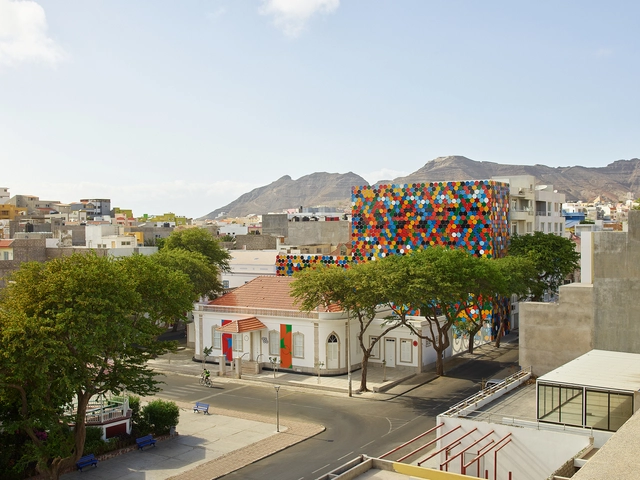
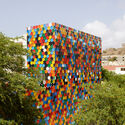
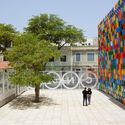
São Vicente is the second most populous island in the country and makes up the northern insular group called Sotavento, along with Santo Antão, Santa Luzia, São Nicolau, Sal and Boa Vista. Its largest city, Mindelo, has a port vocation and has historically been the point of departure and arrival for people and goods. Marked by traffic, the city is a place of passage and intense cultural exchanges. It is also home to the first museum built in the country, the National Centre for Art, Crafts and Design — CNAD.
While the construction industry has been advancing into new fields like nanotechnology and 3D printing for years, it is still one of the most technologically lagging sectors. Many innovations remain purely experimental, and despite constant efforts to reverse this trend, we face a troubling reality: construction is one of the world's most polluting and waste-generating industries.
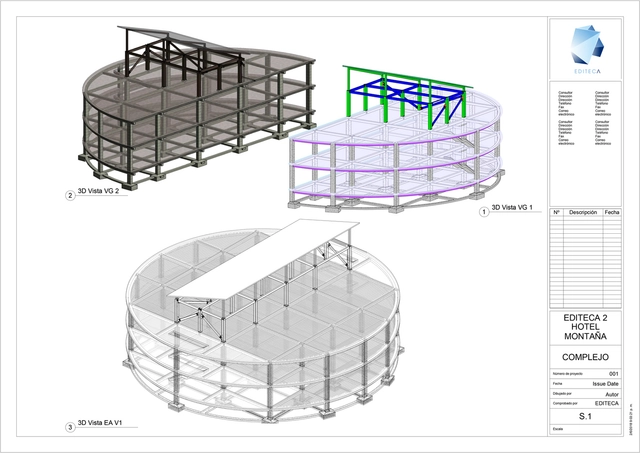
BIM methodology is currently booming and on the lips of every industry professional, making it essential for any sector expert to keep in mind. In this article, we review the five most relevant factors to help you assess your compatibility with BIM, according to Editeca.
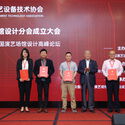
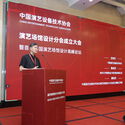
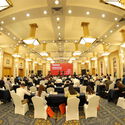
On August 28, the Inaugural Assembly of the Performing Arts Venue Design Branch of the China Association of Performing Arts Equipment Technology and the First China Performing Arts Venue Design Summit Forum were held in Beijing. Co-organized by the Architectural Design and Research Institute of Tsinghua University Co., Ltd. (THAD), the newly established branch is dedicated to fostering the integration of the cultural tourism, performing arts, and architectural design industries. By driving scientific planning, optimizing theater technology, and expanding multifunctional capabilities, the branch aims to enhance the design, construction, and operational quality of performing arts venues across China, contributing to the industry's advancement.
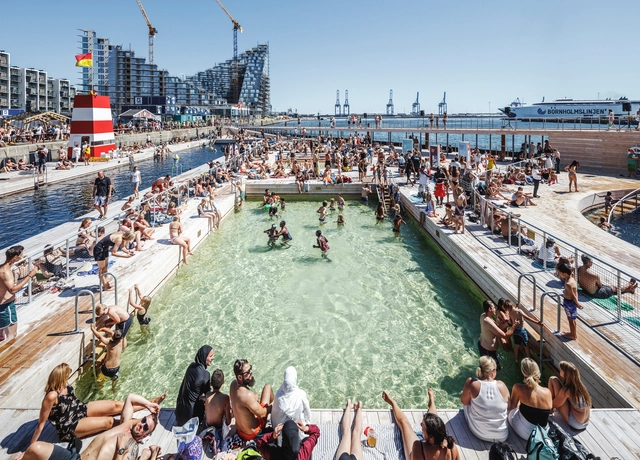
The end of the summer season is usually marked by crowds rushing to public pools to enjoy their final days splashing around the water. Public pools are much more complex than the fenced-in, chlorinated, and noisy bodies of water that they may seem to be. A delicate history and many socio-economic influences lie beneath the surface and dictate who gets to go for a swim. What happens when pools shift towards becoming private property and a sort of status symbol, and when these public spaces aren’t intended for everyone?
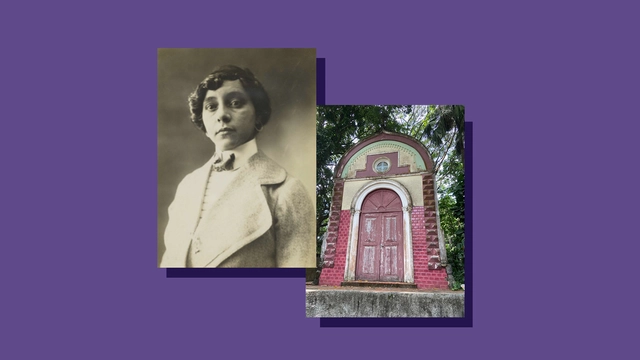
For decades, the history of Brazilian architecture has crowned male figures as its primary representatives. In recent years, however, we have seen a growing body of work dedicated to identifying female figures in this field. “Where are the women in the history of architecture in Brazil?” was, and still is, one of the questions most frequently encountered by architectural and urban historians. Often, the answer points to Lina Bo Bardi and Carmen Portinho—fundamental references, to be sure, but we might still wonder: how many other figures built their careers in this field?
Extending private space to the public. Author's image
The eruv divides the public from the private, the secular from the sacred, and labor from the shabbat. This essay aims to understand how Jewish cultural traditions have adapted over the centuries and coexist today with the dynamics of the metropolis, leaving identity markers on the urban space. Ultimately, we seek to examine the tension between community, identity, and belonging, which construct alternative readings, understandings, and modes of sharing in the city's public spaces.
https://www.archdaily.com/1132074/the-eruv-as-a-territorialization-device-for-orthodox-jewish-communities-in-metropolisesIsabel Seber, Lilla Lescher, Tamara Crespin e Victória Liz Cohen
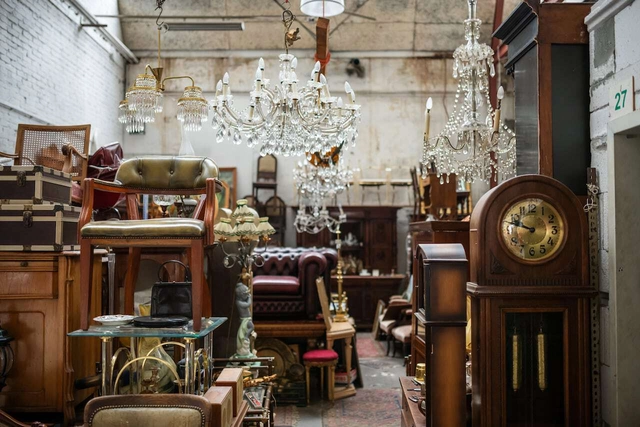
Driven by Gen Z's preference for access over ownership, the secondhand market is beginning to see significant growth worldwide.
This includes the secondhand furniture market, which, in addition to giving a second life to items destined for landfills, helps reduce industrial CO2 emissions—manufacturing and shipping a single piece of furniture emits about 90kg of CO2, equivalent to a one-hour flight on a Boeing 747.
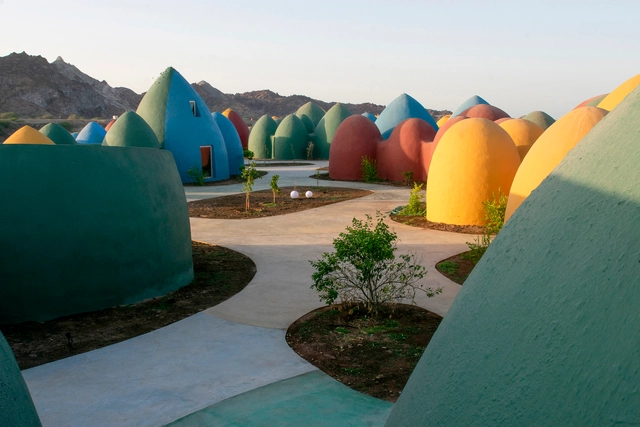
Proyecto: The Superadobe Domes of Hormuz, Zav Architects, Hormuz, Irán. Image Cortesía de ZAV Architects / Tahmineh Monzavi, The ArchDaily Guide To Good Architecture, gestalten 2022
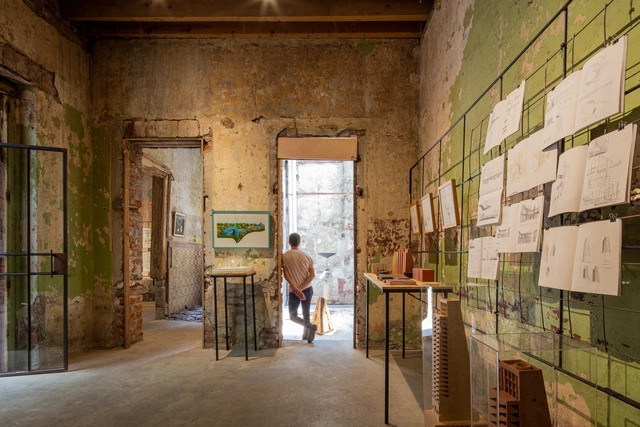
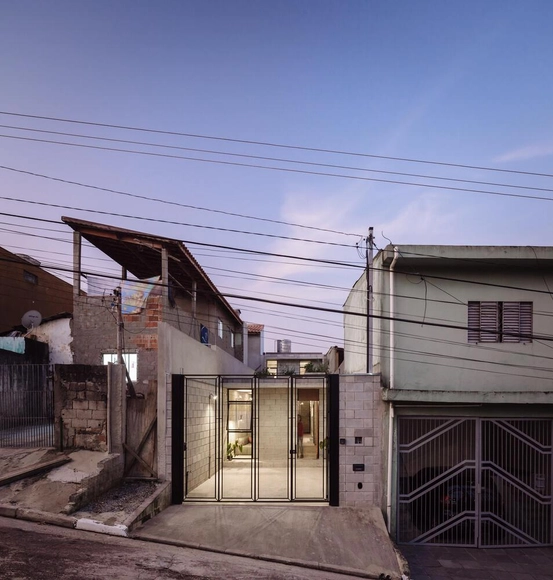
Together with publisher gestalten, we recently published our first book: The ArchDaily Guide to Good Architecture. It represents a pause to reflect on the more than 40,000 projects curated over the past 15 years, drawing from their contributions to answer the ambitious question of what constitutes good architecture.
Now, it is your turn—our readers—to tackle this question.
Almost a century ago, the world was introduced to a new architectural typology that changed the entire construction industry. Starting off with the Home Insurance Building in 1885, leading to the Empire State and Chrysler Buildings in Manhattan, skyscrapers became a symbol of power and financial abundance. Soon enough, they were being constructed in almost every city across the world with state-of-the-art designs that defy engineering norms. But with all the changes taking place in the architecture practice, what does the future hold for these heavily criticized yet constantly developed buildings?























_Nick_Merrick_for_Hedrich_Blessing_(10).jpg?1637696683 "Burj Khalifa by SOM. Image © SOM")