By God, don’t walk by me, I am an architect. I am trying to show you something. Look at it! - Morris Lapidus
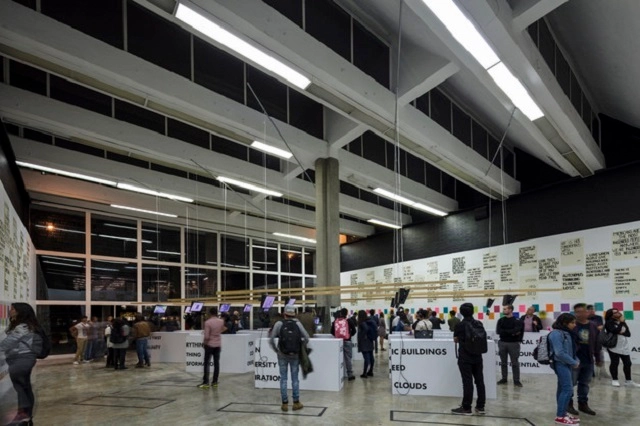
Never before there were so many distinctive and original voices and visions in architecture. Multiplicity of voices is the defining feature of architecture’s current moment. Architecture of distinction and originality is being produced all around us. Our built environment is growing ever more diverse and complex. Is architecture oversaturated with ideas? How many architectures do we need? How can we remain critical by being exposed to such a proliferation of voices? Do architects need common ground? Should architects’ voices be amplified? Should architecture be ego-driven? Is iconic and signature-style architecture still relevant?
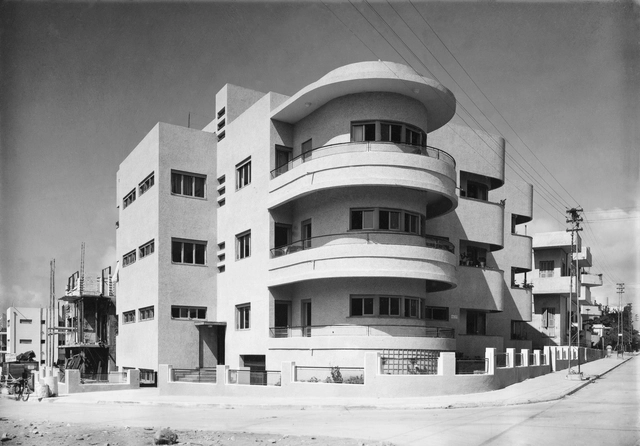
The exhibition Social Construction: Modern Architecture in British Mandate Palestine, tracing the influence of international Modernism on the architectural vernacular that developed in Palestine during 1917–48, is on display at the Yale Architecture Gallery from August 31to November 18, 2017. Originally organized by the Israel Museum, in Jerusalem, the show draws inspiration from the extensive research of architects Ada Karmi-Melamede and Dan Price, whose accompanying book, Architecture in Palestine during the British Mandate, 1917–1948, explores not only the functional aspects of this new architecture but also the social values that shaped the defining language of this new architectural style. The original exhibition was curated and designed by Oren Sagiv, chief of exhibition design at the Israel Museum, with Eyal Rozen.
How long-term should urban planning be? Munich’s Oktoberfest, the Kumbh Mela pilgrimage in India (or the largest gathering of humans on the planet), the Burning Man Festival in Nevada, and other major events demonstrate that flexible architectural configurations are temporarily deployed around the globe to provide medium-term shelter, often to enormous crowds. Such structures fulfill a range of functional tasks and are used in religious and cultural festivals or can take the form of military camps, refugee camps, or even temporary mining towns. This show traces a global phenomenon that has become increasingly topical given today’s current state of mass migration triggered by climate change, political strife, and natural disasters.
Entrance to the Visitors Center at the Chhatrapati Shivaji Maharaj Vastu Sangrahalaya (CSMVS), formerly known as the Prince of Wales Museum, Mumbai. Photo: Rajesh Vohra
As a point of entry and exit, a threshold has a dual coding in society as both a physical and symbolic marker of separation and connection. Thresholds are often explicitly hard-edged or even brutal in their expression, demarcating rigid boundaries, as in the definitive lines of walls, barricades, and security checkpoints in buildings, around cities, or across larger territories. Too often, thresholds also divide human activity or communities according to social, ethnic, national, or economic characteristics. Architecture and planning can unwittingly contribute to these different forms of physical separation, especially in ways made visible through their practitioners’ interpretations of culture, religion, or legislation. As the academic disciplines that inform spatial practices, architecture and planning are themselves often similarly separated by disciplinary thresholds, inhibiting porosity between fields of research. By definition, an individual discipline necessarily is organized around a self-referential center of discursive production, but this often happens at the expense of the richness found at the intersection of multiple disciplinary perspectives. Is architecture, in its compulsive drive to create the autonomous object, inherently hardening the thresholds separating it from other disciplines and, by extension, reproducing those schisms within the built environment? Can architecture and planning intentionally construct soft thresholds―lines that are easily traversed, even temporarily erased―thereby allowing for multiple perspectives across different modes of research and practice and catalyzing disciplinary and social connections? What, then, is the physical expression of a soft threshold―a space that is visually and physically porous, plural in spirit, encompassing of its context, and yet rigorous in its expression?
The story of master architect Louis Kahn (1901 – 1974) is intrinsically connected to Philadelphia, where he spent most of his life and career. Louis Kahn: The Power of Architecture is the first major retrospective of Kahn’s work in two decades, encompassing over 200 objects related to Kahn’s buildings and projects in the form of architectural models, plans, original drawings, photographs, and films. With complex spatial compositions and a choreographic mastery of light, Kahn created buildings of archaic beauty and powerful universal symbolism. The Fabric Workshop and Museum is proud to be the final venue of the international tour.
Nine Toronto architecture studios and artist groups have been invited to propose ideas and prototypes in model form that foster analytical, conceptual, physical and tectonic frameworks for inhabiting and constructing urban space and the public sphere. They are: CN Tower Liquidation; LAMAS; Lateral Office; Nestor Kruger and Yam Lau; Mitchell Akiyama and Brady Peters; Public Studio; studio junction; Terrarea; and UUfie.
Produced in various scales that involve speculative, functional, representational and/or relational approaches, these architectural models, in response to the theme “Meet Me There”, take as their point of departure an exemplary public space – the Sir Daniel Wilson quad, an
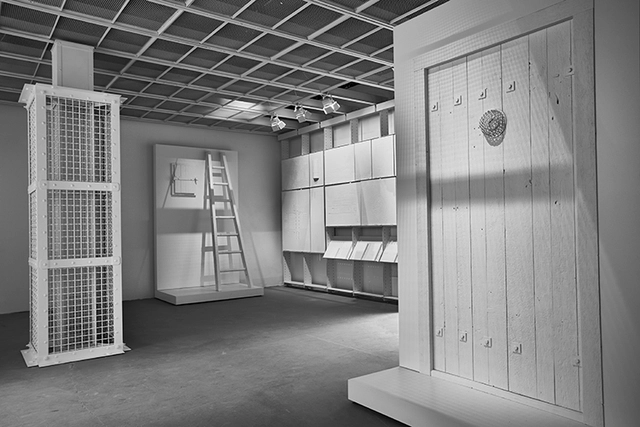
Interior perspective of The Evidence Room with models of Auschwitz gas column and gas-tight hatch, plaster casts, and model of gas-tight door. Photo by Fred Hunsberger, University of Waterloo School of Architecture.
Widely acclaimed as a critically important work on its debut at the 15th International Architecture Exhibition of the 2016 Venice Biennale, The Evidence Room examines the chilling role architecture played in constructing the Auschwitz death camp.
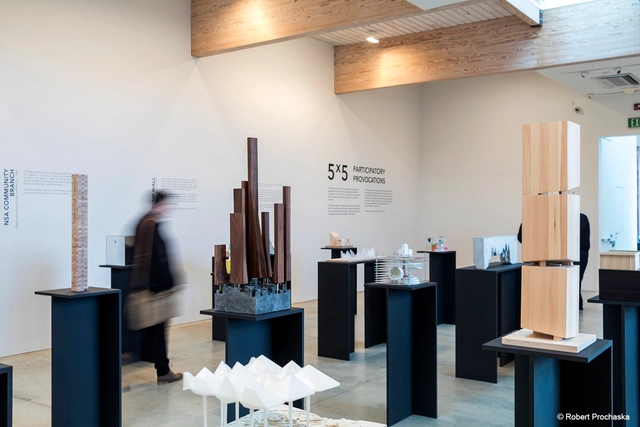
Architecture Exhibition5x5 Participatory Provocations opened its doors at the New York Center for Architecture on July 11, featuring 25 models by 25 young American architecture firms. The exhibition engages its participants to take clear stances on a series of provocative issues facing architecture today, with their models “producing a physical expression or provocation that is then made available to the public.” Curated by Kevin Erickson, Julia van den Hout, and Kyle May, the exhibition argues for “participatory criticism” covering growing income gaps, immigration, globalization, technology’s impact on our lives, surveillance, and power.
TOTAL RECALL is a reference to see and feel what really is there, a sudden clearness, independent of program, with no hierarchy or status, just a hint of cultural context, like a ruin in a landscape.
In collaboration with the Canadian Centre for Architecture (CCA), Het Nieuwe Instituut presents The Other Architect, an exhibition of architects who expanded their role in society to shape the contemporary cultural agenda without the intervention of built form. It showcases architecture’s potential to identify the urgent issues of our time, featuring 22 case studies, dating from the 1960s to the present day, that illustrate how international and often multidisciplinary groups invented and adopted new methods outside of traditional design practices. The Other Architect is a touring exhibition organized by the CCA and will be on view in Rotterdam from 8
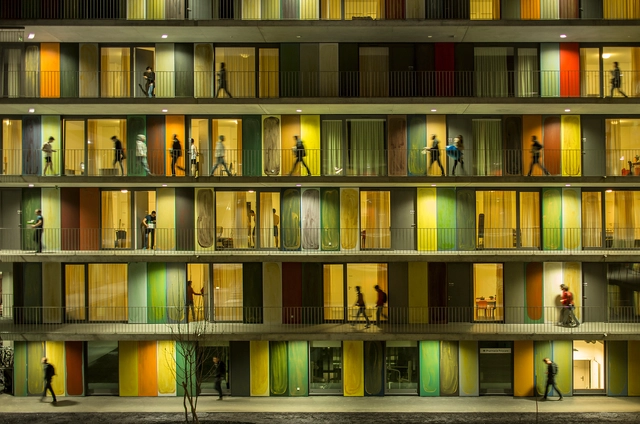
With the new millennium, architectural photography has gained exponential prominence in the relationship that architects have with society. The FG+SG studio has taken on the challenges presented by the greater media impact of architecture, which today constitutes a photographic practice rewarded with international prizes and recognition.
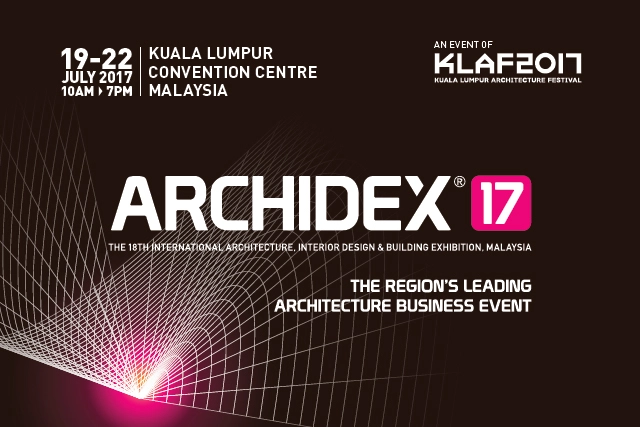
The International Architecture, Interior Design & Building Exhibition (ARCHIDEX) — Southeast Asia’s premier annual architecture, interior design, and building industry event is back for its 18th year.
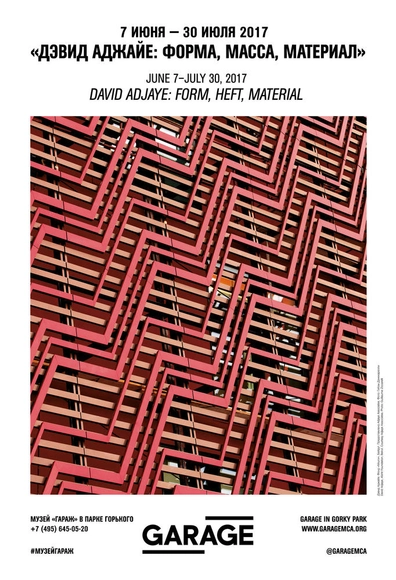
"Form Heft Material", Sir David Adjaye's Retrospective Exhibition
David Adjaye: Form, Heft, Material, a review of world-renowned architect Sir David Adjaye’s work to date, is travelling to the Garage Museum of Contemporary Art in Moscow. The exhibition, which debuted at the Haus der Kunst in Munich in 2015 before travelling to the Art Institute of Chicago, offers insight into the global architect’s unique approach, highlighting the ways he weaves local geographies and cultural legacies into his celebrated designs.
As the building production had been limited during the preceding socialist era, buying land for building a house was next to impossible and the society as a whole preferred mass housing construction of block of flats, the idea of a house was wrapped in the aura of scarce goods. Thus, it was no wonder that after 1989 many new designs and building companies responded to the existing strong demand.
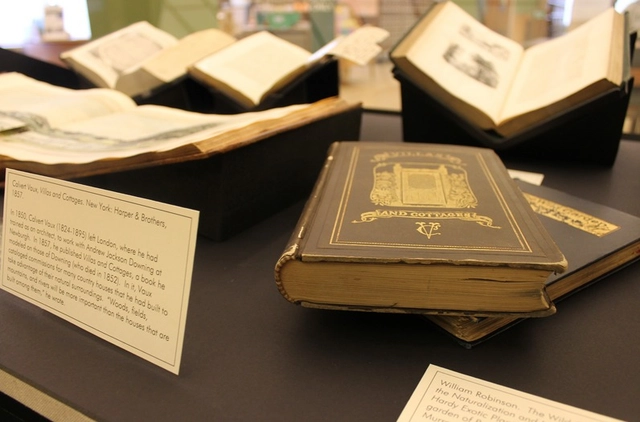
Buffalo and Erie County Public Library of Buffalo, New York, has recently opened a new exhibit at their Central Library titled Building Buffalo: Buildings From Books, Books From Buildings. The exhibit will feature a large selection of rare, illustrated architectural books from the Library’s collection dating from the fifteenth century to the mid-twentieth century. The bonus for those who are geographically distant from Buffalo is that, as part of the exhibit, the Library has also made dozens of historical architecture books available online, completely digitized and free to the public.
A new exhibition by OMA/AMO, lR100-Rinascente: Stories of Innovation, has officially opened in Milan’s Palazzo Reale. Marking the 100th anniversary of the classic Italian department store, la Rinascente, the exhibition commemorates the company’s long creative history and experimental spirit that has served as an influential part of Italian design, culture and commerce.
Gordon Matta-Clark (1943-1978) is one of the most influential artists of the 1970s, whose work has continued to be a noted influence of both architects and visual artists since. SPLITTING, CUTTING, WRITING, DRAWING, EATING…GORDON MATTA-CLARK surveys the constructive and destructive verbs that defined his relation to art and architecture, featuring correspondence, drawings, photographs, notebooks, and films related to the artist's key projects, drawn from the archive of the Canadian Centre for Architecture, Montréal. Along with his major building cuts from 1973 to 1978, in which laboriously cut holes into floors of abandoned or disused buildings, including A W-Hole House, Conical Intersect, Day's End, and Splitting (1974), the exhibition also explores his interest in metabolic and cooking processes, including his restaurant Food (1971); his play with language and the syntax of voids, gaps, and abandoned spaces; and the use of drawing as a mode of thinking through space.The exhibition will focus on these social and creative aspects of Matta-Clark´s conception of architecture, or as he put it, "making space without building it."
The "After Schengen" photo series shows old border crossing points between different states in the European Union. After the Schengen agreement, most of these old checkpoints remain abandoned and out of service, allowing us to gaze into the past from the present. It causes many reflections, especially at a moment when European Union project is heavily discussed.