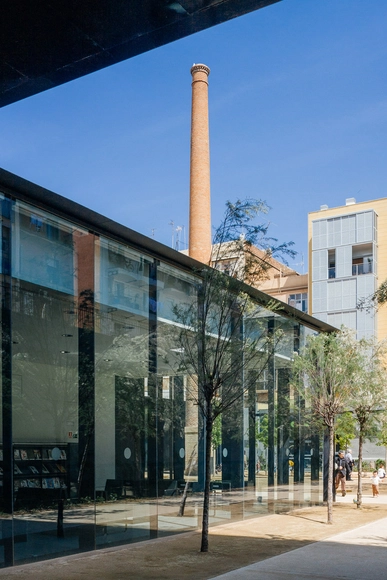
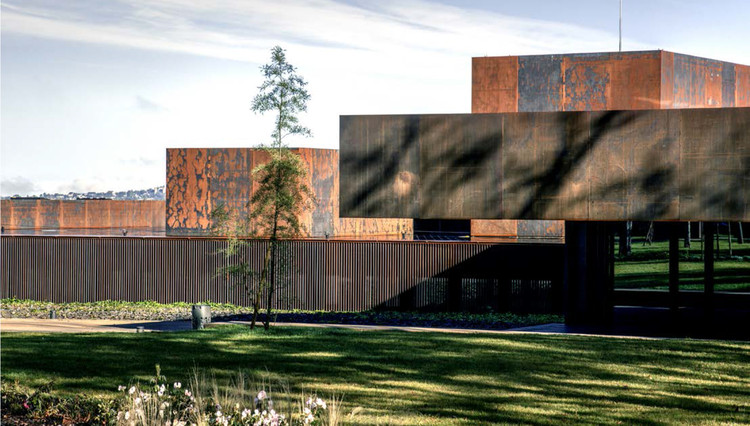
As with many of the Catalan trio's work, the library stands out for its materiality and careful construction, making intense use of transparency and light.
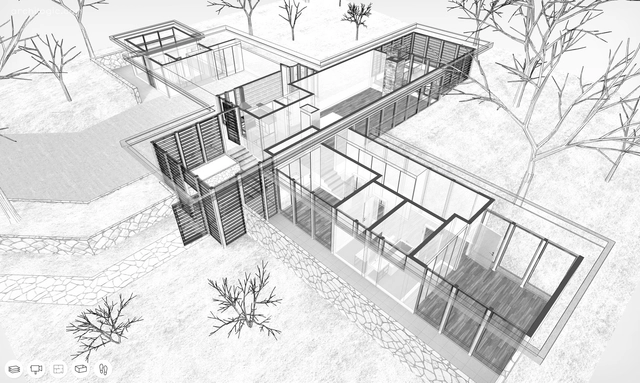
In designing his (unbuilt) house for the Arts & ArchitectureCase Study program, Whitney Smith, like Richard Neutra, prioritized the connection to outdoor space. His motivation, however, was more specific than a desire to extend the living area of a small house. Rather, he wanted to create a highly personal space, geared to the passion of his hypothetical client. Seeing conventional plans as a straitjacket for residents who craved appropriate working space within their home (be it a sewing studio or a photography darkroom), he aspired to fit this house to the needs of a keen horticulturist.
Today, the Pritzker announced Rafael Aranda, Carme Pigem and Ramon Vilalta, the three founders of Catalan firm RCR Arquitectes, as the recipients of the 2017 Pritzker Prize. As designers of an architecture that is both stylistically and physically local—RCR Arquitectes’ work is mostly found in Catalonia, although recent projects have taken them to France and Belgium—the firm has established a strong profile in north-eastern Spain and a cult following among academic circles around the world. However, other members of the architectural community might find themselves forced to reach for the nearest search engine. For those people, the following 9 facts will provide the information you need to understand architecture’s newest Pritzker Prize laureates.
Slovenian designer Saša J. Mächtig conceived the concept for the Kiosk K67 project half a century ago, but its ideas of indeterminacy and open-endedness remain relevant. Image Courtesy of Museum of Architecture & Design, Ljubljana
Even in relative old age, the Kiosk K67—a shape-shifting system of modular fiberglass structures—keeps active. A kiosk in Kromberk, Slovenia, in the former Yugoslavia has become a beehive. Another, used by a Bosnia and Herzegovina food vendor, has received a masonry addition. In Ljubljana, a kiosk that formerly sheltered parking lot attendants now supports an automated ticket machine.
These may not have been adaptations the Slovenian designer Saša J. Mächtig had in mind when he first conceived the K67 50 years ago. But accounting for all of them would have been impossible. In theory, the system permitted unlimited configurations and variations. By the time production stopped in 1999, around 7,500 units of the K67 had been manufactured. While most remained in Yugoslavia, some were exported abroad—among other places, to Poland, Japan, New Zealand, Kenya, Iraq, the former Soviet Union, and the United States. Around the world, they were adapted to uses ranging from border patrol stations and ski lift ticket booths to retail and fast-food stands. No one is really sure how many are still in use today, or what other kinds of folksy, improvised alterations have been made to them, but among the greatest pleasures of the kiosks is their endless capacity to surprise. The K67, a recent retrospective of Mächtig’s work at the Museum of Architecture and Design in Ljubljana managed to restore its original brilliance. And it did so without suppressing the deviations. As the show’s curator Maja Vardjan writes in her catalogue essay, what distinguishes the K67 is “its position between architecture and industrial design, embeddedness in the framework of a modern city and society, the rituals of daily life, and, last but not least, its persistent capacity to reinvent itself.” While the visionary architectural schemes of the 1960s and 1970s may inspire wistful longing (What could have been!), the K67 kiosks, even as they disappear from view, provoke a question: Why have they persisted for so long?
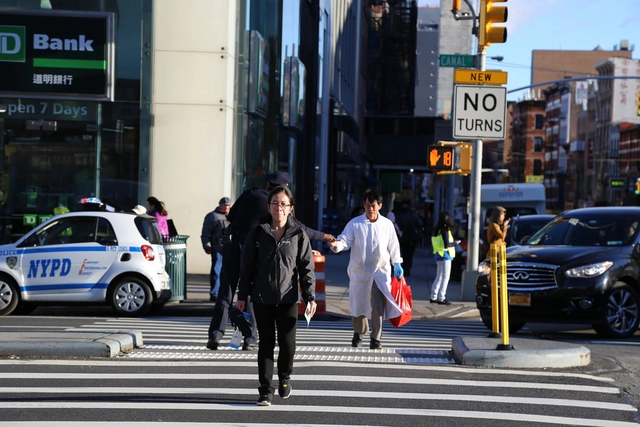
Vision Zero is an initiative that started in Sweden in 1997 when the country began implementing a series of road safety measures to reach their goal of zero deaths from traffic accidents. As a result, the country managed to reduce the number of deaths to 3 people per 100 thousand inhabitants.
Since then the plan has been adopted by different cities and has inspired the creation of various organizations that are looking to make our streets a safer places. One of them being the Vision Zero Network that brings together traffic engineers, health professionals, local leaders, and policy makers.
On Thursday, December 22nd, an email arrived in the inboxes of ArchDaily’s editors that made us sit up, shake off our holiday-induced lethargy, and take notice. MASS Design Group’s Year in Review email might initially have blended in with the many other holiday wishes and 2016 recaps we receive at that time of year—it recapped such highlights as Michael Murphy’s TED Talk in February or the launch of the first African Design Center—but it had one thing that we hadn’t seen from other firm’s years-in-review: detailed statistics about the firm’s achievements that year.
In recent decades, certain aspects of architecture have become increasingly open to scientific analysis, most notably when it comes to a building’s environmental impact. It’s no surprise, therefore, to see MASS Design Group’s claims that their work uses 74% less embodied carbon than typical building projects, or that 78% of their materials are sourced within 100 kilometers, but alongside these were some more unusual metrics: since it was founded, the firm has invested 88% of construction costs regionally, created 15,765 jobs, and in 2016 alone, their work served a total of 64,580 users. These numbers suggest a way of thinking about architecture that few have attempted before—a way that, if widely adopted, could fundamentally change the way architecture is practiced and evaluated. We spoke to MASS co-founder Alan Ricks to find out how these statistics are calculated, and what purpose they serve.
The "architectural pilgrimage" is much more than just everyday tourism. Studying and admiring a building through text and images often creates a hunger in architects, thanks to the space between the limitations of 2D representation and the true experience of the building. Seeing a building in person that one has long loved from a distance can become something of a spiritual experience, and architects often plan vacations around favorite or important spaces. But too often, architects become transfixed by a need to visit the same dozen European cities that have come to make up the traveling architect's bucket list.
The list here shares some sites that may not have made your list just yet. Although somewhat less well known than the canonical cities, the architecture of these six cities is sure to hold its ground against the world's best. The locations here make ideal long weekend trips (depending of course on where you are traveling from), although it never hurts to have more than a few days to really become immersed in a city. We have selected a few must-see buildings from each location, but each has even more to offer than what you see here—so don't be afraid to explore!
It is often said that architecture only makes projects more expensive; that architects only add a series of arbitrary and capricious complexities that could be avoided to lower costs, suggesting that the project could function exactly the same without them. Is this true in all cases? Although they may be more profitable economically, human beings don't seem to be happy inhabiting cold concrete boxes without receiving sunlight or a breeze every now and then, or in an unsafe neighborhood where there's no possibility to meet your friends and family outdoors. Quality in architecture is a value that sooner or later will deliver something in return.
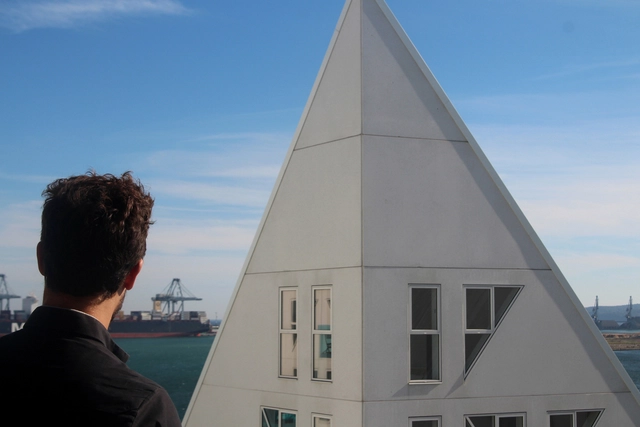
Balance is key, and a good design will never be complete if it's not economically efficient. How do we achieve this ideal? We reviewed the design process for 'The Iceberg' in Aarhus, Denmark, a project that managed to convince the authorities and investors by proposing a high-impact and tight-budget design, which seeks to respond to the objective of guaranteeing the quality of life of its users and their neighbors.
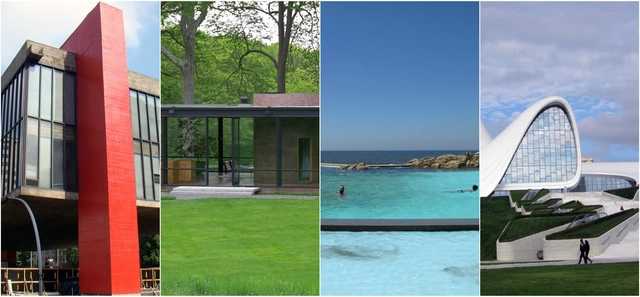
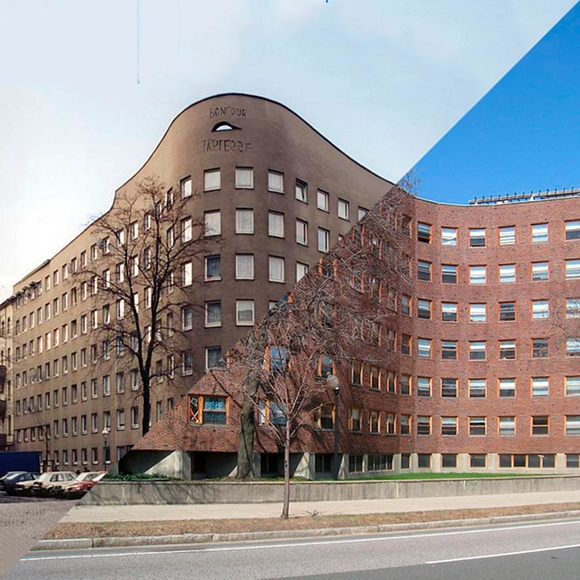
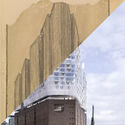
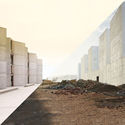
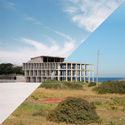
Confórmi(also on Instagram) is a project which began two years ago as a way to manage its curator's visual references. Bologna-based Davide Trabucco, the curator in question, describes the archive as "a personal work-instrument" that positions apparently dichotic elements into a visual relationship with each other. All of these images, Trabucco believes, "are already present in our collective imagery and in visual culture." Their visual impact is clear: formally and aesthetically, each visual pairing "is immediately understandable – even to the uninitiated."
ArchDaily is continuing our partnership with The Architectural Review, bringing you short introductions to the themes of the magazine’s monthly editions. In this introduction to the December – January 2017 issue—the magazine's celebration of its 120th anniversary—Editor Christine Murray discusses the legacy that comes from more than a century being one of architecture's most respected magazines, and looks forward to the future of the publication. "Looking forward, we are committed to doing things differently – which, paradoxically, is what we’ve always done," she explains.
The archive of The Architectural Review is a great cabinet of curiosities – a cacophony of voices, styles, illustrations and photographs, Outrages and Delights, personalities and proclivities, polemics, failures and fetishes. In creating this anniversary edition celebrating 120 years of criticism, we wanted to capture the diversity and eccentricity of this ongoing architectural conversation. As such, the archive content is organized not chronologically, but in perennial themes that have echoed and evolved across the decades, from technology to education – forces that have shaped the profession.
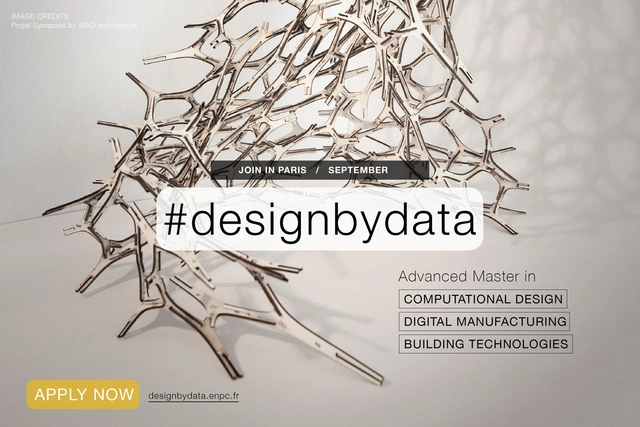
The Design by Data Advanced Master® in Computational Design, Digital Manufacturing and Building Technologies provides attendees with a cross-disciplinary culture of computational design and a comprehensive knowledge of cutting-edge technologies in the fields of parametric architecture, robotics, digital manufacturing and 3D printing for the construction industry.
The best thing about Revit templates is how much time they can save you. The worst thing about Revit templates is how much time they take to create.
It’s a bit of a catch-22. In order to save time, you need to spend time. It’s not easy to find that time when you have billable projects to work on and deadlines to meet. Believe me, I know.
And once you do finish the template, how often do you review it and keep it updated? What if you have a project that’s a new building-type? Does your template still work for that kind of building? What if you need to follow an owner’s BIM standard? Can you modify your template to fit their requirements?
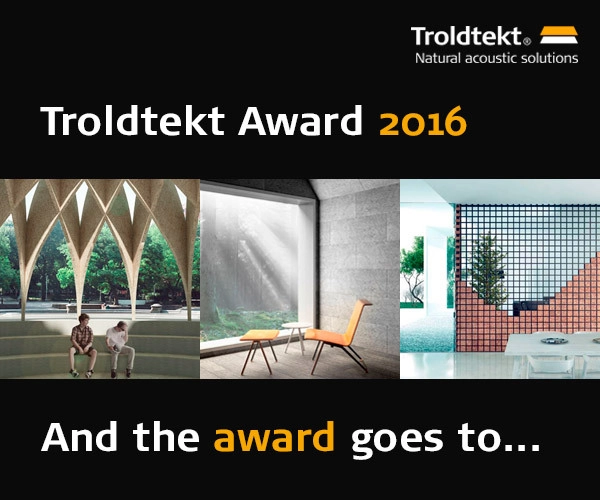
The jury panel has selected two students from the ‘Ion Mincu’ University of Architecture and Urbanism (UAUIM) in Bucharest as winners of the Troldtekt Award and a EUR 5,000 prize. Both the runners-up prize and the special prize go to students from Iran.
Architecture lovers, rejoice! First, there was the zoom feature that we all love, now Instagram has rolled out a new feature that will make documenting and sharing your favorite buildings even easier. Just released this week, the update to the iOS app will now allow you to create photosets (with videos included) in one single post.
https://www.archdaily.com/806031/instagrams-newest-feature-allows-you-to-make-a-photoset-of-your-favorite-buildingsAD Editorial Team
“Public space is the new backyard,” says Hamish Dounan, Associate Director of CONTEXT Landscape architects. “Great landscape architecture projects can actually get people out of their apartments and going for walks. It can get them engaging in a social way,” adds Shahana Mackenzie, CEO of the Australian Institute of Landscape Architects (AILA). Trends to activate public spaces are increasing in popularity around the world; urban parks and gardens, vibrant street places, wider pedestrian walkways, cafes with outdoor seating. So during the 2016 International Festival of Landscape Architecture held in Canberra during October 2016, Street Furniture Australia launched a pop-up park in the underused urban space of Garema Place, in collaboration with AILA, the ACT Government and In The City Canberra. The aim of the pop-up park was to create a small social experiment, “to test the theory that the fastest and most cost-effective way to attract people is to provide more places to sit.” In addition to moveable furniture, the design by CONTEXT Landscape architects included bright colors, additional lighting, a lawn, free Wi-Fi and bookshelves as techniques to make Garema Place more inviting.
The process and results of the pop-up park were documented in a report by Street Furniture Australia, with some impressive results: before the #BackyardExperiment, 97% of people were observed to just pass through Garema Place without stopping, and 98% of the people who did stop in the space were adults. During the 8 days of the experiment, the number of passersby increased by 190% as people chose to walk through Garema Place instead of taking other routes. In addition to this, 247% more people stayed at the place to sit and enjoy the pop-up park and surrounding area. There was an incredible 631% increase in children at the park, double the number of groups of friends, close to a 400% increase in the number of couples and almost 5 times the amount of families. With the numbers as evidence for the success of the #BackyardExperiment, here is a summary of the elements used to evoke such a positive response. Simple, cost-effective and relatively easy to implement, these interventions are an attractive “cocktail” for any underused urban space.
In this article, originally published by Strelka Magazine, journalist and writer Stanislav Lvovskiy recommends ten forthcoming books (which will be published this year) on architecture and urbanism written by leading experts and scholars.
A person of prescience never renounces the pleasures (and, yes, perils) of forecasting, especially the realistic kind, and even more so after all the "bad news" of the past year. Without a doubt, the year to come has its own surprises in store. For those who still relish reading or, at the very least, find it useful, let’s now have a preview of the pleasures we can expect from the university presses in 2017.
Interiors is an Online Publication about the space between Architecture and Film, published by Mehruss Jon Ahi and Armen Karaoghlanian. Interiors runs an exclusive column for ArchDaily that analyzes and diagrams films in terms of space.
Damien Chazelle’s La La Land (2016) is an ode to the Technicolor musicals of Hollywood by way of Jacques Demy and Paul Thomas Anderson. The film is less of a musical and more of a love story with music, as its rich color palette and Cinemascope presentation create an idealized world that strips away its artificiality over the course of its runtime, ultimately becoming more and more realistic.
La La Land uses its filmmaking—particularly its long, unbroken takes—to bring its audience into its world and its spaces. The opening sequence, for instance, where helpless drivers stuck in a traffic jam hop out of their cars and break into a synchronized dance number, was filmed on the 105/110 freeway interchange and was edited to appear as one take, ultimately resulting in an immersive experience that highlights the architecture of the scene.
Planning can be a complex task depending on the factors at play such as time, participants, and topics.
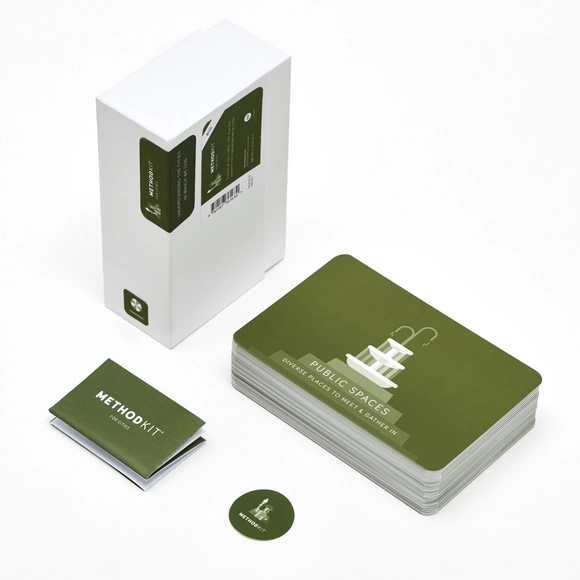
Since 2012 a Swedish firm called MethodKit has dedicated itself to designing kits to simplify task in many professional disciplines using cards that raise an issue and guide the discussion.
Initially, these kits were oriented towards design and digital technology, however, with such a collaborative and easy to use tool they were expanded to architecture and urban planning.


















.jpg?1487538662)