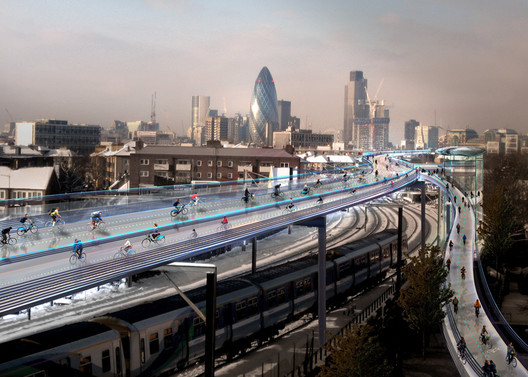
There's no doubt about it - cycling in cities is a big deal these days. But, while cycle lanes and bike-sharing schemes are all well and good for our cities, the cycling revolution hasn't yet brought us many examples of beautifully designed infrastructure to gawp at. This article, originally printed on The Dirt as "Do Elevated Cycletracks Solve Problems or Just Create More?" discusses two seemingly similar examples of high profile cycling infrastructure, examining why one is a success and the other a non-starter.
This year, two designs – one proposed and one built – for elevated cycletracks, which create bicycle highways above street level, have gained considerable media attention. They highlight questions at the heart of urban design: Should cities blend or separate transportation options? How can cities best mitigate the hazards created when cars, bikes, mass transit, and pedestrians mix? How can cities create low-cost transportation networks in increasingly dense urban cores?
In January, Exterior Architecture and Foster + Partners unveiled their design proposal for the London SkyCycle, a 220 km (136 mile) network of elevated cycletracks following existing rail services with over 200 entry points (see image above). The design team claims that each route will be able to “accommodate 12,000 cyclists per hour and will improve journey times by up to 29 minutes.”