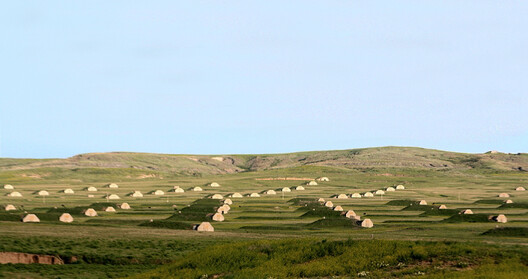
Inverting the conventional narrative, this story begins at the end. The day after the world's collapse. While almost the entire population struggles to survive flames and solar storms, a tiny fraction is greeted by a heavily armed guard at the entrance to the Survival Condo Project, a former missile silo in Kansas converted a few years ago into luxury apartments.
Forget, then, the hermit who stockpiles canned food in his basement or the end-times prophet. In recent years, survivalism has expanded into wealthier circles, taking root in Silicon Valley among technology executives and hedge fund managers. What could once be seen merely as an eccentricity has also become a way of thinking about the future and, for some, an investment.
The apocalypse is an idea we have grown accustomed to living with: as prophecy, literary genre, and business opportunity. It is not a static idea, but a construction that evolves with our anxieties, flourishing especially in moments of political insecurity or rapid technological change. Perhaps this helps explain the millions of dollars currently invested in structures designed to enable human survival.
Related Article
Architecture to Postpone the End of the WorldBut what, in all of this, is paranoia, and what is true? In The Rise of End Times Fascism, Naomi Klein and Astra Taylor identify three important factors accelerating the post-apocalyptic appeal of the end of the world. The first is the climate crisis. Although many people deny it, global elites living in beachfront properties are extremely vulnerable to rising sea levels and are well aware of the dangers of global warming. The second is Covid-19: the arrival of a global epidemic reinforced epidemiological predictions that a pandemic could indeed devastate our world. The third and final factor is the rapid advancement and adoption of AI, heading toward a path beyond our control.
According to the authors, none of this should be dismissed as paranoia. After all, many of us also feel the imminence of collapse, even if from the safety of our sofas, entertained by versions of life in a post-apocalyptic bunker, such as Silo, the hit series on Apple TV+. Perhaps also because we cannot afford to buy our own bunker. But how many of us would succumb to the idea of escaping global collapse into a private bunker?
In the book Notes from an Apocalypse, Mark O'Connell (2020) visits bunkers in South Dakota, refuges in New Zealand, and the Mars project in an attempt to understand why this idea flourished precisely in Silicon Valley, a place known for its unwavering confidence in its ability to change the world for the better. The author suggests that digital-media billionaires seem particularly fascinated by an impending apocalypse and by extravagant strategies for surviving it. Perhaps it is because their exorbitant fortunes give them obsessive dreams of immortality, or because they understand the darker implications of the monsters they have created. Technology brings with it the ability to imagine radically different futures, where utopia and dystopia coexist.
These escapist ideas, although they may seem benign at first glance, are permeated by assumptions about which parts of humanity deserve to be saved. They also share a remarkable lack of interest in urgently addressing the underlying causes of collapse. Douglas Rushkoff wrote the book Survival of the Richest in 2022, after giving a lecture to billionaires, where they asked him how to maintain authority over their guards after "the Event," when money would lose its value. He describes the idea of bunkers and arks as a naive and deeply antisocial response from those who prefer to optimize their bunkers rather than contribute to preventing the apocalypse.
Without making generalizations, it is important to note that a large portion of this population understands that the only real solution is to address the problems. Therefore, most donate significant amounts of money to good causes while also investing in their own escape plan. An architecture that is gaining ground in the luxury real estate market.
The place mentioned at the beginning of the article may seem as though it came straight out of a science-fiction novel, but it is real. Journalist Evan Osnos describes his visit to the Survival Condo Project in his article Doomsday Prep for the Super-Rich. As a former underground missile silo, the concrete structure housed a nuclear warhead between 1961 and 1965, when it was decommissioned. Built by the Army Corps of Engineers to withstand a nuclear attack, the complex has 15 floors, with enough food and fuel to survive five years off-grid. By raising tilapia in tanks and growing vegetables hydroponically under grow lights, powered by renewable energy, the site could operate indefinitely, CEO Larry Hall claims.
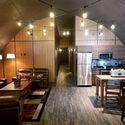
Osnos describes the private units as windowless ski apartments, with stainless-steel appliances and leather sofas. According to Hall, the most difficult part of the project is maintaining life underground while avoiding depression. To achieve this, the walls of the apartments are equipped with LED "windows" displaying live video of the prairie above the silo. Osnos reports that owners can choose forests or other views. One prospective resident from New York wanted a video of Central Park, day and night, complete with the sound of taxis and horns.
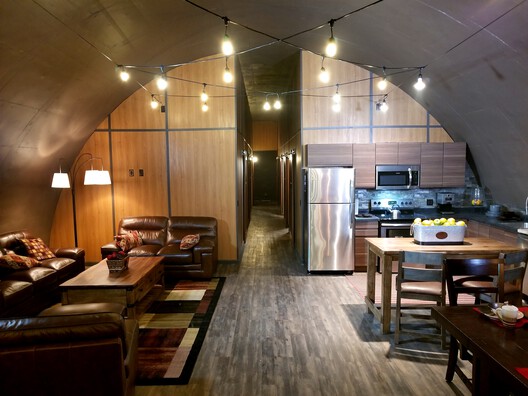
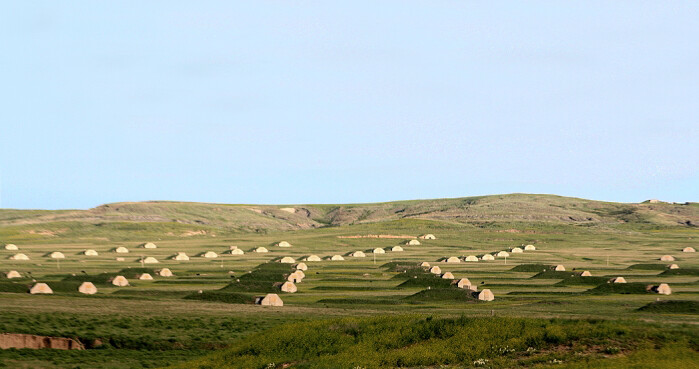
Another example that seems to have come straight from a science-fiction book is Vivos xPoint in South Dakota. It is part of a global network of underground shelters with units in the United States and Europe. The South Dakota site was developed from a former set of underground shelters built by the U.S. Army during World War II to store ammunition. It has 575 private reinforced-concrete bunkers, each measuring 205 m2, capable of accommodating more than 5,000 people, and is self-proclaimed as the largest survival community on Earth.
For those who are more claustrophobic, however, one option involves staying away from major centers of power. In this case, remote places such as New Zealand and Hawaii have been on the radar. New Zealanders used to speak of the "tyranny of distance," but now it has become their greatest asset. Requests for immigration permits from Americans have increased significantly in recent years, with Peter Thiel, co-founder of PayPal, as its most enthusiastic advocate.
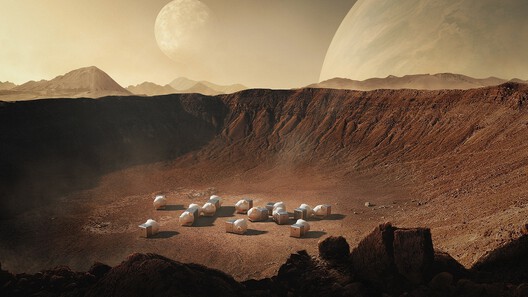
There are also those who want to go even farther, seeing the Milky Way as an escape route, such as billionaire Elon Musk and the idea of space colonization as salvation for humanity. By viewing Mars as a "secular ark" essential to human survival, the illusion is also fostered that we can destroy Earth and still be fine.
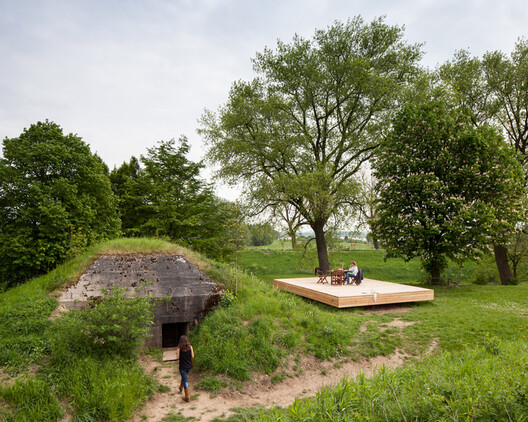
From an architectural perspective, it is interesting to note that most of the structures being built emerged from the adaptive reuse of military equipment. Beatriz Colomina, in her book Domesticity at War (2007), states that "war does not end, but evolves, and so does architecture."When analyzing the Cold War era in the United States, she discusses how military technologies were incorporated into domestic environments as part of a new awareness of global geopolitics, which required the normalization (or domestication) of social conditions that would otherwise be frightening. Are we moving toward the normalization of living in bunkers and other structures originally designed for war?
From a broader perspective, the idea of the bunker goes far beyond the private refuge of the wealthy; it appears to be a global project. The bunker nation closes its borders to the world while violently claiming the land and resources it considers necessary to withstand the coming collapse.
Faced with a context that emphasizes individualism and class supremacy, trying to understand how we, as humanity, should respond to the imminence of global collapse may seem utopian if it were not necessary. Between accepting the end of the world as inevitable and striving to postpone it, Krenak advises the latter, drawing inspiration from Indigenous peoples who have resisted the end of their worlds for more than 500 years.
Bunkers, arks, and space colonies are responses produced by the same mindset that brought us here. Postponing the end of the world means, instead, addressing the causes that bring us closer to it, changing our relationship with the Earth, reconsidering the idea of unlimited growth, and recognizing that our survival depends on the life we share. It is not about finding a place to escape the future, but about changing the future we are building.
This article is part of the ArchDaily Topic: The Lure of Escapism in Architecture and Alternative Worlds. Every month we explore a topic in-depth through articles, interviews, news, and architecture projects. We invite you to learn more about our ArchDaily Topics. And, as always, at ArchDaily we welcome the contributions of our readers; if you want to submit an article or project, contact us.


