AD Classics: Landhaus Lemke / Mies van der Rohe

© www.flickr.com / Thom

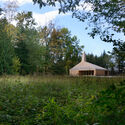
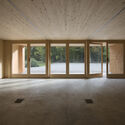
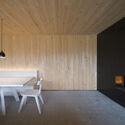
The Landhaus Lemke private residence by Mies van der Rohe exudes the crisp, clean and formal aesthetics that are characteristic of his architectural proclivity. Built in 1933 for Karl and Martha Lemke, the house is rich with history and encompasses a storied past. More details after the break.

EVERREST / Simon Takasaki

Courtesy of

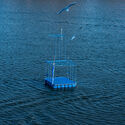
Simon Takasaki shared with us his competition entry for a monument in , Germany. Holding the path of the history of the place and its use to its open, undefined future, the 30 meter high walk-in sculpture is characterized by the special treatment of the history of the site and the end of the mining industry. More images and architect’s description after the break.

VitraHaus / Herzog & de Meuron

Photography by , © Vitra

Over the years the Vitra Campus has become an architecture museum, featuring works by the most renowned architects:  Frank Ghery, Zaha Hadid, Alvaro Siza, Tadao Ando, Jean Pruvé, Nicholas Grimshaw, Buckminster Fuller and SANAA (under construction).
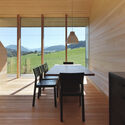
The latest addition to the complex is the VitraHaus building, a series of stacked pitched-roof boxed, designed by Herzog & de Meuron for Vitra’s Home Collection:

Berlin’s Bunkers

© Nicor / Wikimedia Commons

When one mentions the architecture of during World War Two, the first ideas that come to mind are not the possibilities for new growth in the 21st century. But that is exactly what the Nazi bunkers that were built provide for us today. In , these bunkers are a monolithic and often oppressive reminder of the past, but are also ripe for intelligent thought about what they can be used for in the future. More information and images after the break.

Holiday Park / Christian Müller Architects & Krill Architecture

Courtesy of & Krill Architecture

In collaboration with Christian Müller Architects, Krill Architecture and Archilos Plan Development, Basement project development, who commissioned the project, realized a sustainable holiday park in contrast to holiday parks that promise nature but deliver suburbs. The developers approached the architects to come up with a scheme that allows for contemporary and luxury living as part of the surrounding nature in the German , North Rhine-Westphalia. More images and architects’ description after the break.

Architecture City Guide: Berlin

This week, with the help of our readers, our Architecture City Guide is headed to . The twentieth century changed nearly all cities, but perhaps none more so than . From its destruction in World War II that left few historic buildings intact to its division until 1989 that brought together the architecture of two competing ideologies into one city, ’s modern and contemporary architecture speaks to a past that seldom accompanies such recent additions. The city is filled with new and wonderful architecture that might not have found space in other cities in Europe. With that in mind, we were unable feature all our readers’ suggestions on the first go around. We will be adding to the list in the near future, so please add more of your favorites in the comment section below. Once again, thanks to all our readers for your help.

The Architecture City Guide: Berlin list and corresponding map after the break.

Roll it Experimental Housing / University of Karlsruhe

, a cool experimental house, resulted from the collaboration among different institutes within the .  This cyclindrical design is a modular protype that provides flexible space within a minimum housing unit.  Three different sections are dedicated to different functional needs: there’s a bed and table in section, an exercise cylinder, and a kitchen with a sink.

More images and more about the prototype after the break.

Stretched Pavilion / Centrala

© Jakub Szczęsny

Most design and building processes relay on pre-determination and accuracy, plus an efficient coordination of data input leading to a physical realization representing previously conceived ideas as closely as possible. Parametric and generative design add an extra element of “objective” formulae playing role of legitimizations of designer’s intentional design, while the choice of data pools, algorithms or auto-generative formulae is in fact another intentional element.

Architect: Centrala
Location: Schloss Solitude, ,
Designer: Jakub Szczęsny
Assistant: Helmut Dietz
Project Year: 2011
Photographs: Rolf Wohrle, Hagen Betzwieser and Jakub Szczęsny

Water-Curse or Blessing!? Exhibition / S+PBA

Courtesy of

The Bangkok-based Architecture firm S+PBA has been invited to attend the exhibition Water-Curse or Blessing!? organized by Aedes East – International Forum for Contemporary Architecture n.p.o. as part of the Asia Pacific Weeks 2011. The event will take place at Aedes Gallery in from the 9th to 21st September 2011. More images and event description after the break.

Designing from the Inside Out Competition

Competition Site

This open ideas competition invites practicing architects, architecture students and designers to design an Academic Interchange for the University of Bremen, . The Academic Interchange is envisioned as an incubator for interdisciplinary collaborations and international relations for academics at the university.

Entrants are encouraged to pay particular attention to the immersive experience of a visitor or visiting resident of the Academic Interchange with respect to their experience/understanding of the building and movement/flow through it. The design concept should originate from the perspective of the building user and be designed from the bottom up.

For more information, including awards, submissions and timeline please go to the competition’s official website.

Green Bistro Interior Design / Siddik Erdogan + Jörn Fröhlich

© Siddik Erdogan

Architects: Siddik Erdogan + Jörn Fröhlich
Location: ,
Project Area: 100 sqm
Project Year: 2011
Photographs: Siddik Erdogan

Help us with our Architecture City Guide: Berlin

Courtesy of Wikimedia Commons / Unify

Next week we will be taking our Architecture City Guide to and we need your help. To make the City Guides more engaging we are asking for your input on which designs should comprise our weekly list of 12-24. In order for this to work we will need you, our readers, to suggest a few of your favorite modern/contemporary buildings for the upcoming city guide in the comment section below. Along with your suggestions we ask that you provide a link to an image you took of the building that we can use, the address of the building, and the architect. (The image must be from a site that has a Creative Common License cache like Flickr or Wikimedia. We cannot use images that are copyrighted unless they are yours and you give us permission.) From that we will select the top 12 most recommended buildings. Hopefully this method will help bring to our attention smaller well done projects that only locals truly know. With that in mind we do not showcase private single-family residences for obvious reasons. Additionally, we try to only show completed projects.

This week we are headed to Berlin.

Example of the information we need for your suggestion:
Berlin Philharmonic /
://en.wikipedia.org/wiki/File:Philharmonie_1a.jpg
Address: Herbert-von-Karajan-Str 1, Berlin, Germany

Deutsches Bergbau-Museum / Benthem Crouwel Architekten

© Udo Kowalski, D-Wuppertal

Architects: Benthem Crouwel Architekten
Location: , Germany
Project Year: 2009
Project Area: 1,800 sqm
Photographs: Udo Kowalski, D-Wuppertal

Siemens Headquarters / Henning Larsen Architects

rendering

Henning Larsen Architects was recently awarded the international competition for Siemens’ new headquarters. The design by is an urban, recognizable composition of plazas, courtyards and alleys that will unfold a new, vibrant urban space in central . Siemens and are integrated into a harmonious whole by merging two archetypal entities – mass (Siemens) and void () – into a complementing formation. The city opens up the mass, which in response opens up to the city.

Cafe Pavilion / Martenson and Nagel Theissen Architecture

© Brigida González

Architects: Martenson and Nagel Theissen Architecture
Location: ,
Project Year: 2010
Project Area: 150 sqm
Photographs: Brigida González

JustK House / Martenson and Nagel Theissen Architecture

© Brigida González

Architects: Martenson and Nagel Theissen Architecture
Location: Tübingen,
Client: Katrin Martenson and Dominik Bless-Martenson
Project Year: 2010
Project Area: 278 sqm
Photographs: Brigida González

Veronica House Elderly Care Facility / f m b architekten

© f m b architekten

Architects: f m b architekten / Norman Binder, Andrew Thomas Mayer
Location: , Germany
Project Year: 2010
Photographs: Courtesy of f m b architekten

Westpark Bochum / Archwerk Generalplaner KG

© Peter Lippsmeier

Architects: Archwerk Generalplaner KG
Location: , Germany
Project area: 1,850 sqm
Project year: 2004 – 2005
Photographs: Peter Lippsmeier, Archwerk – Sascha Völzke

Kö-Bogen / Studio Daniel Libeskind

© Archimation

Several hundred guests joined in a ceremony last Friday as he laid the foundation stone of  the Kö-Bogen building along with ’s Lord Mayor Dirk Elbers, investor Kurt Zech of Zech Group, and project developer Stefan H. Muehling.  The stainless steel foundation stone, designed by Libeskind, will be visibly integrated into the facade of the building.

The new 432,300 sqf mixed use building is scheduled for completion in 2013 will house both office and retail space in downtown Dusseldorf.  The design of Kö-Bogen intends to naturally blend landscape into the building space through geometry, permeated cuts in the facade, the green courtyards, and green roof system.   All of these elements are ‘part of a new environment that bridges urban space with park space’.

Händelallee 47 House / dax_I

© Volker Renner

Architects: dax_I
Location: Berlin,
Project Team: Manfred Daxenberger, Kai Bergmann
Project Year: 2008/09
Photographs: Volker Renner

Sculptural Playground / ANNABAU

© ANNABAU

Architects: ANNABAU
Location: ,
Project year: 2009 – 2011
Photographs: ANNABAU