How to visualize architectural concepts in SketchUp using D5 Lite for faster design exploration.
How to visualize architectural concepts in SketchUp using D5 Lite for faster design exploration.



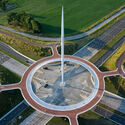
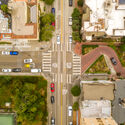
The Netherlands, colloquially referred to as Holland, is synonymous with its bicycles, an iconic element of the country's urban landscape. The integration of cyclists and motor vehicles often surprises visitors.
The Dutch connection to bicycles is clear in the statistics: in 2021, 84% of the Dutch population used bicycles daily. In Amsterdam, this figure reaches around 63%, demonstrating a strong preference for the vehicle. In contrast, only 7% of Brazilians choose the bicycle as their primary mode of transportation.

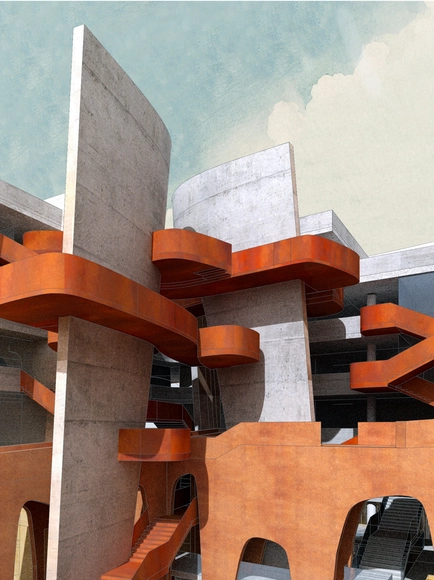
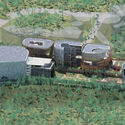
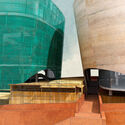
Sir Peter Cook and Gavin Robotham’s CRAB Studio has unveiled the design for a new cultural center to be constructed in New Delhi, India. Located on the site of a former quartzite quarry, the BRIJ offers facilities for the visual, performing, literary, and culinary arts as well as a new arts academy. The scheme, aiming to promote interactions between artists and audiences via an immersive environment, is designed by CRAB Studio, now led by Gavin Robotham, and CP Kukreja Architects (CPKA) as Executive Architect.
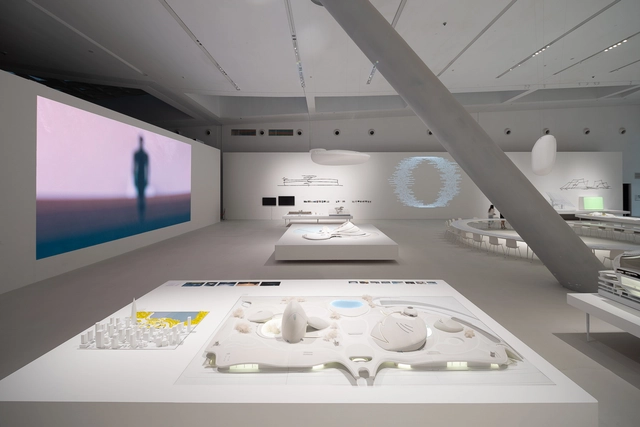
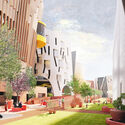
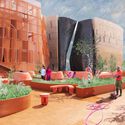
The Shenzhen Museum of Contemporary Art and Urban Planning in China (MoCAUP) has recently opened an exhibition titled “Ma Yansong: Landscapes in Motion.” This retrospective showcases the work of MAD Architects, led by Ma Yansong, Dang Qun, and Yosuke Hayano, spanning nearly two decades and 52 projects. Running until December 17, the display is envisioned as a platform for imaginative exploration of future urban life.
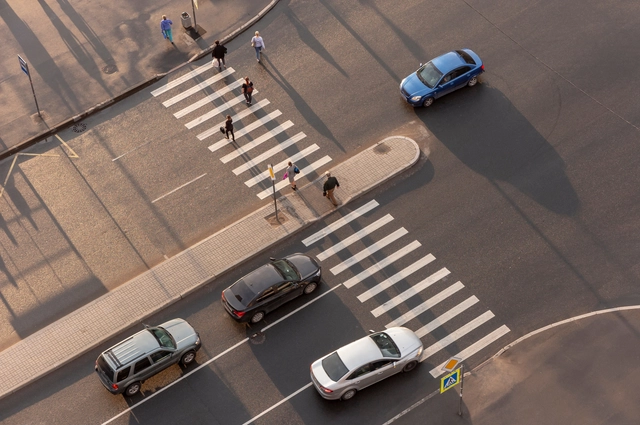
The fabric of our cities is shaped by millions of small decisions and adaptations, many of which have become integral to our experience. Nowadays taken for granted, some of these elements were revolutionary at the time of their implementation. One such element is the curb cut, the small ramp grading down the sidewalk to connect it to the adjoining street, allowing wheelchair users and people with motor disabilities to easily move onto and off the sidewalk. This seemingly small adaptation has proven to be unexpectedly useful for a wider range of people, including parents with strollers, cyclists, delivery workers, etc. Consequently, it lends its name to a wider phenomenon, the “curb cut effect”, where accommodations and improvements made for a minority end up benefiting a much larger population in expected and unexpected ways.
This article was originally published on Common Edge.
Since the advent of Modernism, architects have become schizophrenic in dealing with the reality of time. This is a problem, because time and gravity are two universal forces. Architects are exquisitely good at dealing with gravity—it is present in everything we design. We study it and engineer its unrelenting requirements. Gravity does a symbiotic dance with structure. No matter how a design feigns weightlessness, its mass cannot be denied. Architects must deal with gravity, whether it’s Frank Lloyd Wright’s sagging balconies at Fallingwater or today’s steroidally enhanced parametric buildings.