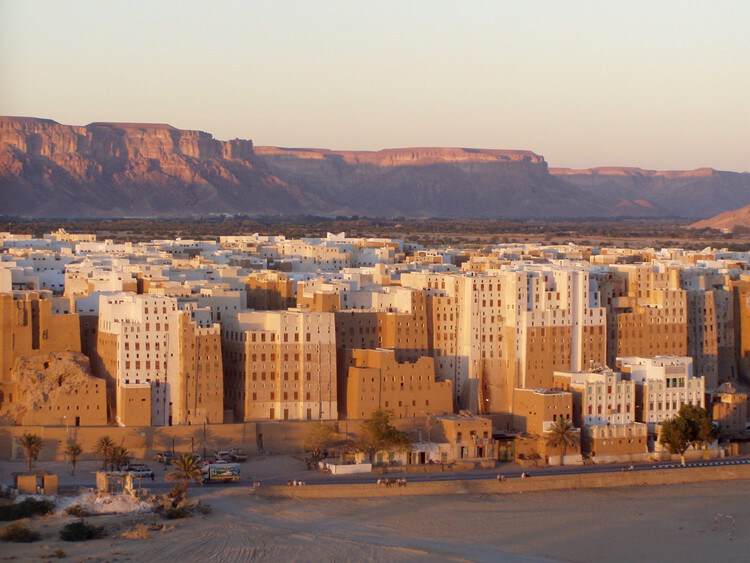
Symbols of technological development and urban density, tall buildings as we know them today emerged in the late nineteenth century, particularly in the United States, as a response to the rapid expansion of urban commerce and the need to grow cities without occupying additional land. The term skyscraper, for instance, was coined in the 1880s and originally referred to buildings with around 10 to 20 stories—an impressive height for the time.
However, the idea of building vertically is much older than the steel-and-glass skyscrapers of modern cities might suggest. Long before the Industrial Revolution, some societies were already experimenting with forms of vertical urbanization as a response to limited space, territorial defense, or environmental adaptation.
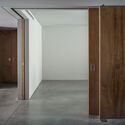
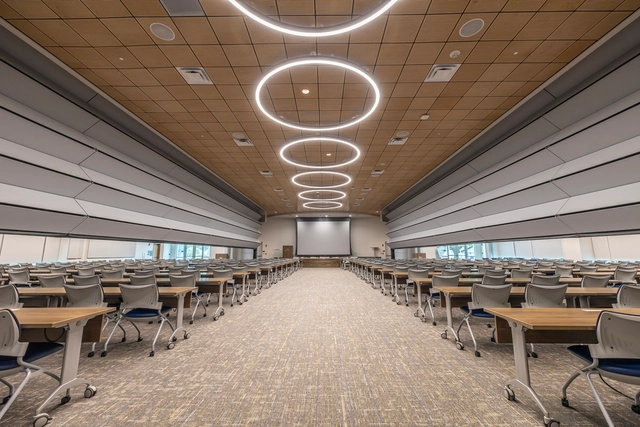
Today, our use of space—and by extension, our built environment—embraces a variety of functions, dimensions, and configurations. However, one key trait stands out: flexibility and multi-purpose design. This marks a shift from the traditional model, where spaces were rigidly defined by function, with distinct areas for working, resting, or socializing, each separated by fixed, solid walls. A key example of this shift is Skyfold's vertically folding retractable walls. With over 10,000 installations, Skyfold's operable walls redefine spatial boundaries and enhances versatility, enabling dynamic adjustments that quickly respond to evolving needs. Their widespread adoption underscores their effectiveness in addressing the challenges of modern interiors and architectural design.
https://www.archdaily.com/1023429/achieving-precision-in-flexible-design-the-path-to-10000-vertically-folding-skyfold-wallsEnrique Tovar
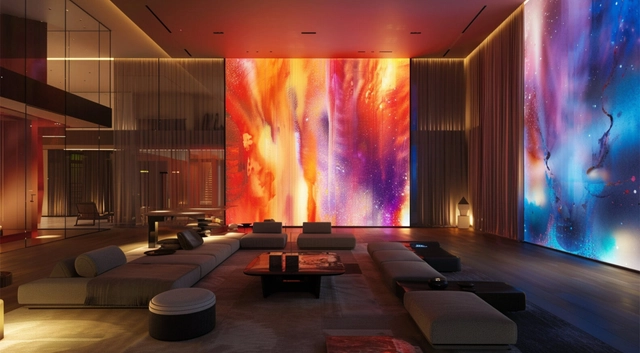
Walls have long been more than mere structural elements; they are canvases that narrate stories, reflecting desires for nature, spirituality, or the pursuit of tranquility and stimulation. With advancements in addressable LED pixels, walls have evolved into immersive digital surfaces capable of displaying any image in large format, adapting to the needs of the moment.
However, while universities continue to train architects and interior designers to create static buildings, the art of meaningful storytelling through digital screens—especially those with dynamics—remains largely unexplored in academic curricula.
How we perceive space is a crucial aspect of architecture and interior design, profoundly influencing our interaction with the environment. Consequently, spatial perception is shaped by elements such as furniture arrangement, lighting, color choices, and materials. The latter is particularly significant, as the same material can be employed in various ways, resulting in atmospheres with unique characteristics.
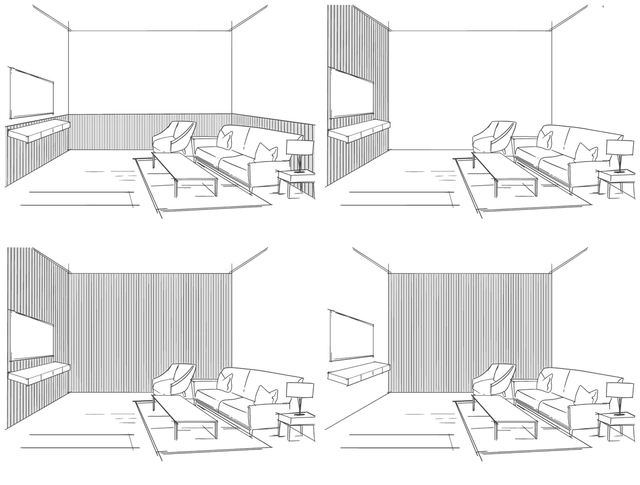
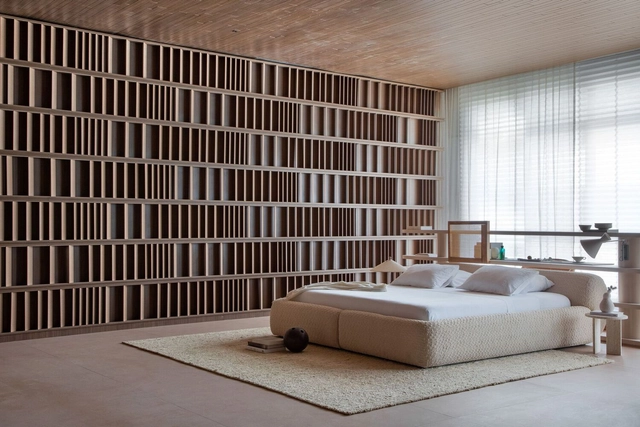
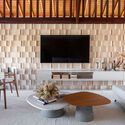
Fluted cladding is a good example of the potential for variations in material use. These are milled MDF surfaces with a linear pattern designed to decorate interior walls and ceilings. They can be applied to a variety of surfaces, though they should only be used in areas not exposed to humidity. The system is notable for its ability to accentuate space through different configurations. Depending on their arrangement and type of fluting, these configurations can modify the spatial experience by highlighting, directing, enveloping, and achieving visual balance in homes, offices, commercial spaces, and more.
https://www.archdaily.com/1019443/how-to-use-fluted-cladding-on-interior-wallsEnrique Tovar
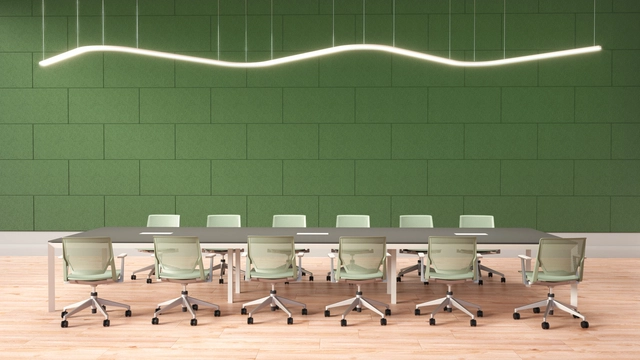
Throughout history, the undeniable interrelationship between sound and architecture has shaped users' experiences. From auditoriums to offices, cultural centers, and schools, acoustics in architecture can manifest itself in two ways: as a determining element of a structure's shape and as a material. When discussing aesthetics, the latter aspect is particularly relevant, as any material that forms part of a composition aims to have a cohesive design with the rest.
Integrating acoustics through materials presents a significant challenge, as certain attributes such as color, texture, or dimensions may hinder harmonization with the overall design of the space. This can unbalance the experience of the environment, since, although the acoustics are improved, the interior atmosphere is negatively affected. This situation highlights the importance of selecting the right material that can enhance acoustics while maintaining the coherence of the design.
https://www.archdaily.com/1015929/acoustics-that-blend-performance-with-aesthetics-why-material-choices-matterEnrique Tovar
Flexibility has become a distinctive feature of contemporary interiors, driven by factors like the evolution of architectural programs and the progressive reduction of interior spaces, among others. This transition has shifted interiors from static to dynamic, aiming to achieve a state-of-the-art balance in space configuration. This sentiment is well encapsulated by Ricardo Bofill's statement that "architecture is the art of structuring space."
Considering the intricacies of interiors, it is essential to foster versatile spaces, aided by elements such as multipurpose design and flexible furniture. However, a challenge arises: while these strategies redefine the boundaries and dynamic essence of interiors, aspects like acoustics are often overlooked, which has become crucial in environments such as offices, conference rooms, schools, auditoriums, etc. Therefore, improving acoustics becomes essential to create functional multipurpose interiors. In that sense, Skyfold’s operable walls are an interesting alternative, as their solutions can serve as both soundproofing barriers and design pieces.
https://www.archdaily.com/1014623/movable-walls-the-transformative-effect-of-retractable-and-folding-partitionsEnrique Tovar
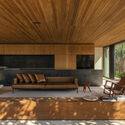
Almost half of Brazil is covered in forest, producing nearly 150 million cubic meters a year. Thanks to the large country’s wide range of tree species, Brazilian designers looking for natural, locally sourced materials have a lot of wood to choose from. Unsurprisingly, wood is a common feature in both traditional and contemporary Brazilian homes, both in construction and when creating decorative surfaces.
The aesthetic beauty of wood’s grain pattern, combined with the warm, rich, and varying color palettes on offer, means that while achieving the strength and stability required for flooring and construction, wood is also a perfect material to form interior surfaces. Its natural color and aesthetic allow for a simple, minimalist form, giving spaces a timeless mid-century feel.
As a response to this rapidly changing world, flexibility has become a top priority in contemporary interior design. That explains, for example, the growing demand for spacious and multifunctional spaces over rigid, enclosed floor plans –as is the case of the open kitchen trend. This shift in spatial needs suggests that designing for the present and the future is about creating spaces that can easily adapt to many uses: one day, a room may be destined for a big event; another day, it may be needed for smaller, more private environments. Therefore, materials, products and other interior design elements must respond accordingly, integrating technology and innovation to create flexible, yet functional spaces.
In recent years, social media (especially Instagram) has become an extremely important tool in the field of architecture. Instagram has become the go-to visual platform for showcasing a wide variety of architectural typologies and styles, city views, and stunning edifices that often go unnoticed. While these buildings may seem ordinary to the everyday passerby, they become objects of art for not only architects but those who stop to take notice of their design.
Below we have selected 13 Instagram accounts dedicated to highlighting facades and walls from around the world, showcasing the diversity of our cities.
As architects, we all have a 'thing' for walls, windows, and everything in-between. The aptly named Instagram account @ihaveathingforwalls celebrates the beauty of walls—the peeling, the painted, the colorful, the dilapidated. As a curated selection of submissions from their followers, the page displays photographs of walls from Warsaw to Hong Kong; snapshots of beauty from everyday life.
Take a tour of walls across the globe below, and feel inspired to pay a little more attention to the surfaces around you:
Warning: this article proposes a narrative according to the route taken from one side to the other of the wall, from the predictable to the most unpredictable. To better situate ourselves, the narrative will be told through my personal experience.
"Do you know the wall that divides the rich from the poor?," asked three Greek travelers who, after visiting the "pretty" side of Lima, suspected that something was hiding behind appearances. But, "how is it that from, even though you're from the other side of the world, you knew about the wall?" Well, news travels. And "why is this wall something that has to be seen in our city?" if it's not a cause for pride. I knew exactly what they were talking about. I spelled it out: the wall of shame. Certainly, I wasn't familiar with it in situ either, since I hadn't left my urban bubble, like many of those who live in these parts, so with the same curiosity, as a tourist of my own city, we made our way.