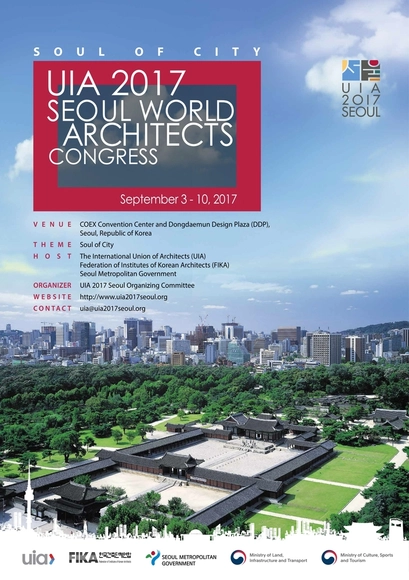
The UIA (International Union of Architects) world congresses are a premier forum for professionals and future leaders in the field of architecture to exchange the best and latest practices, visions and first-hand experience. The UIA 2017 Seoul, in particular, will promote various innovative architectural techniques and technologies among member sections and global citizens. In doing so, academic programs, exhibitions, competitions, student activities, and public outreach programs will simultaneously take place.
It is often thought that architecture has a quality permanence. In the third issue of [TRANS-] journal we seek to understand that this is not always true. Exploring how the construction of spaces can speak to impermanence, transient design could be a variety of things: built one day and disassembled another; rootless, wandering, and drifting as a nomad among environmental and geopolitical conditions; or spaces that house impermanent populations or respond to temporary phenomena or needs. With transient space comes participants that condition its purpose and interpretation. Perhaps of equal importance is not the design itself but rather the symbolic significance of its remnants, which has the capacity to endure or pass.
As a young architecture student looking for a way to take his mind off schoolwork, architect/artist Tristán began drawing comics that drew inspiration from what he knew best: architecture school. Settling on the protagonist of the architecture student, he created a full series of comic strips focusing on the day to day routine of architecture students and teachers.
The comics take on moments from the life of architecture school, from the stresses of pulling all-nighters to the realities of dealing with clients in the professional world. By creating these strips, Tristán aims to shed some light on the complexities of being an architecture student – not forgetting that humor can sometimes be the best medicine for what ails you.
Wan-Hsuan Kung in Dwayne Oyler Studio. Image Courtesy of SCI - Arc
SCI-Arc, one of the few remaining schools whose undergraduate program culminates in a thesis project, asks students to locate their position within the discipline, theorize a problem around that position, create a project that tests their theory, and ultimately to present and defend that position to an audience of future peers and professionals. It’s a cathartic endeavor that is to some degree fraught with anxiety, as defining a position and speculating on the future of the discipline can be a rather daunting endeavor.
https://www.archdaily.com/804127/sci-arcs-new-undergraduate-curriculum-radically-rethinks-conventional-educational-modelsSponsored Post
One of the main difficulties encountered by students when looking for a job is dealing with a lack of professional experience. This fact is a paradox since people who apply for a trainee position have often never worked in the chosen area. Therefore, it is vital to invest in education and also to know the cultural diversity that’s available. Below we have 10 tips that serve as guidelines for students who want to build up their CV and get through the interview processes:
A national symbol for the spirituality of Senegal. Introspection, spirituality, and divinity. These are the elements around which the sacred architecture revolves. The light and the lightness of the materials join sacred and profane, creating an architecture that, through spaces and forms, try to invite humans to an introspective research. The competition is open to architects, designers, engineers, and students. It’s possible to participate as a team or individually.
At its best, architecture can be a dream come true: the physical manifestation of the creative architect's most exquisite design fantasies. Nowhere is this kind of creative liberty more pervasive than in architecture school—with few practical concerns for cost, policy, or even structural integrity, architecture students are free to execute the purest and most complex proposals their imaginations will allow. And indeed, as their representation and spatial skills progress, students gain the ability to realize more advanced interventions over time. In the real world, though...not so much.
Thinking of continuing your studies but don't want to start a master's or a doctorate just yet? Around the world, short-term courses taken remotely are increasingly popular alternatives, and platforms such as edX, created by Harvard and MIT Universities make it even easier to dive deeper into the most diverse topics.
Of course, for long-term and undergraduate courses, the face-to-face experience cannot be replaced by online classes. However, being able to follow lessons and participate in discussions with people from around the world online is definitely an important advantage offered by the internet.
We have compiled a few courses in areas ranging from video game design to bio-cellular engineering, and from the history of Japanese architecture to courses in architectural imagination. See our list below:
A tribute to the sacredness in a remote place of the earth. A national symbol for the spirituality of Senegal.
Introspection, spirituality and divinity. These are the elements around which the sacred architecture revolves. The light and the lightness of the materials join sacred and profane, creating an architecture that, through spaces and forms, try to invite humans to an introspective research .
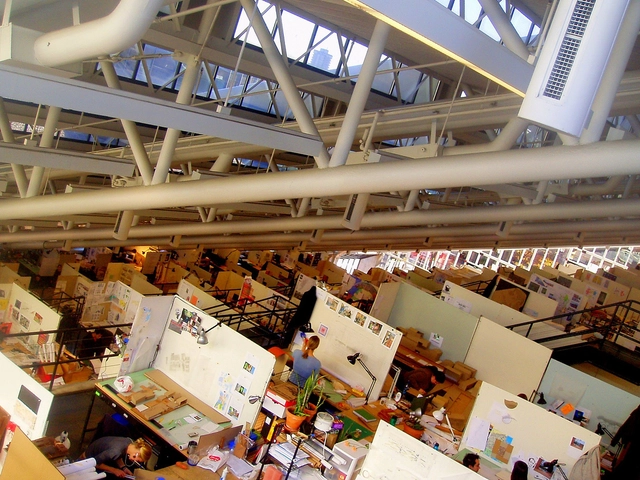
Pablo Pinares has created a video with which all past and current architecture students can identify: a time lapse of the final hours before a studio review. Whether your architecture school days are behind you or you still have juries to look forward to, read on to revel in your school experiences with us.
https://www.archdaily.com/801516/this-time-lapse-perfectly-captures-the-days-leading-up-to-your-final-reviewPola Mora
This entry for the competition proposes a new lush core to this specific industrialized area of Sao Paulo, Brazil.
The SGA (Schindler Global Award) 2017 is open to final-year bachelor’s and all master’s degree students of architecture, landscape architecture, urban design and planning, from degree-granting educational institutions worldwide.
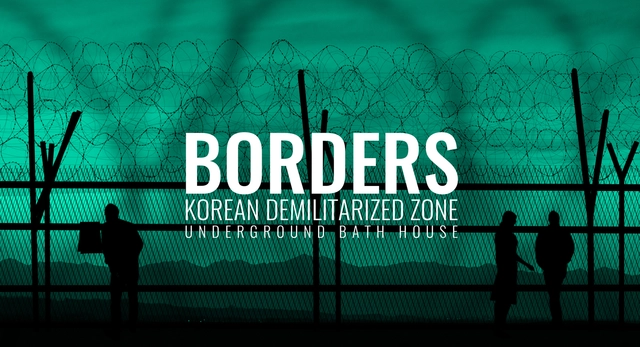
Borders - The Korean Demilitarized Zone Underground Bath House
The border between North and South Korea is not just a symbolic line dividing the two countries. It is a high tensioned zone not freely entered or explored. arch out loud is excited to announce their international open-ideas competition, Borders - The Korean Demilitarized Zone Underground Bath House, which will explore the implications of border conditions.
In this article, originally published as "¿Qué es un portafolio de proyectos y cómo se hace?" (What is a portfolio and how do you make one?) from blog Enlace Arquitectura, the author shares a series of suggestions and steps on making a suitable and convenient portfolio for when you’re job hunting. The basis of these recommendations is to correctly understand what a portfolio is and what it should contain. It also details how to maximize creativity in the representation and execution of architectural projects when included in a portfolio.
These days architecture is both a weapon and a victim of intolerance. Historic buildings are destroyed for what they symbolize, and there are calls for the building of walls and the construction of refugee cities. These actions are symptoms of the global preoccupation with the fear of others and the attempt to keep people “out.” The MassachusettsCollege of Art and Design (MassArt) community rejects these injustices and has built the architecture department on the principle that the purpose of architecture is to support the social good.
https://www.archdaily.com/797357/massachusetts-college-of-art-and-design-architecture-program-supports-social-goodSponsored Post
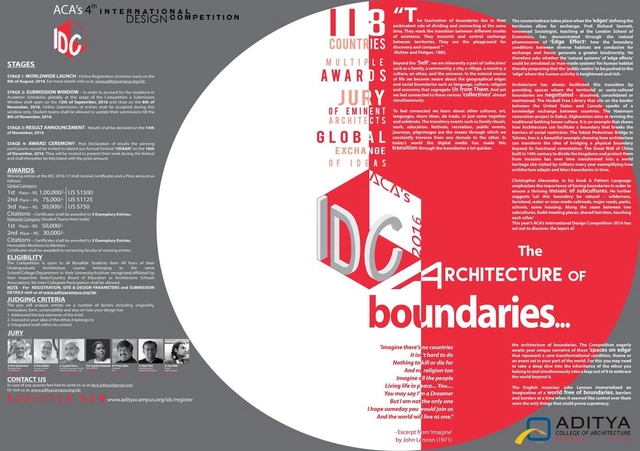
ACA's 4th International Design Competition by Aditya College of Architecture
The Architecture of Boundaries: “The fascination of boundaries lies in their ambivalent role of dividing and connecting at the same time. They mark the transition between different modes of existence. They transmit and control exchange between territories. They are the playground for discovery and conquest." —Richter and Peitgen (1985)
How to Succeed as a Young Architecture Professor (Without Dying in the Process)
In this article originally published in Spanish by the Arquia Architecture Foundation's blog, the author Manuel Saga speaks about the important task of involving young professors in architecture schools, arguing that it is essential that the academic route is seen as a real option with as much value as being a “big name designer,” especially when you take into account the current crisis seen within the industry.
High unemployment and under-employment statistics amongst the youth in Zimbabwe cannot go unnoticed. The need for strategic partnerships is now evident.
In 2016, Emerge is addressing this issue through proposing a brief that rethinks the traditional youth centre building typology.
Emerge would like to see your new visions for a Youth and Entrepreneurship Centre.


![Call for Submissions: [TRANS-]ient - Featured Image](https://snoopy.archdaily.com/images/archdaily/media/images/58a5/8e68/e58e/cec2/1d00/0166/slideshow/open-uri20170216-15296-jiuusk.jpg?1487244878&format=webp&width=640&height=580)
.jpg?1486494963&format=webp&width=640&height=580)


.jpg?1482771046&format=webp&width=640&height=580)



.jpg?1476460856&format=webp&width=640&height=580)
.jpg?1470849709&format=webp&width=640&height=580)