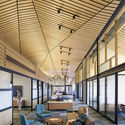
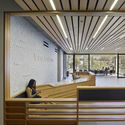
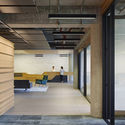
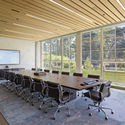
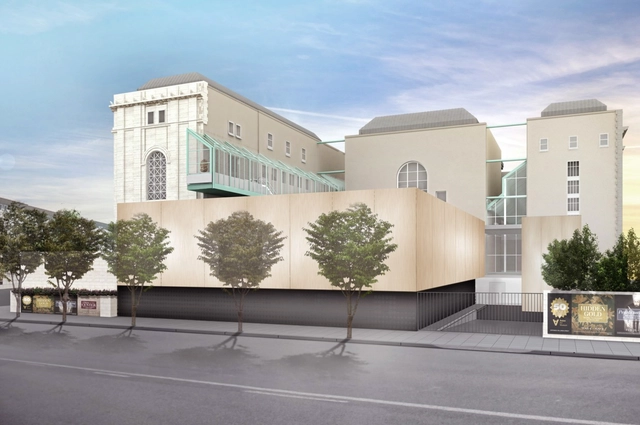
As part of its 50th anniversary celebrations, the Asian Art Museum of San Francisco has announced major renovation and expansion plans by wHY Architecture. The practice is expected to design a new 12,000-square-foot exhibition pavilion, reconfigure the Museum’s existing galleries, and modernize its education and public programming spaces. Work will begin in 2017.
"The new pavilion will underscore San Francisco’s cultural diversity, create one of the nation’s premier exhibition spaces dedicated to Asian art, and increase the number of special exhibitions on view for visitors," says the Museum.
Following on from the success of ‘Cambodia 2015’ (awarded 3rd Top Competition of 2015 by Bustler), Eleven is excited to announce their latest architecture and idea challenge: ‘San Francisco 2016 - Tenderloin System Update’.
For this challenge, we move to California, in the beautiful city of San Francisco. The city is the USA’s most sought after real estate location and its Bay Area is today leading the way for innovative technologies and new urban models for the future. However, San Francisco is also home to the Tenderloin, one of the most distressed and dangerous neighborhoods of the USA.
Until recently, the only options for providing clients and the public with visualizations of what a prospective building would look like were almost exclusively hand drawn renderings, or scale models built by hand. Both of these practices are still in use today, but now there is a much wider range of options with 3D modeling software providing the bulk of renderings, the growing presence of 3D printing, and even video fly-throughs with special effects that rival the latest Hollywood action movie. This 16mm film created by architecture firm Skidmore, Owings & Merrill (SOM) in 1984, and digitized by illustrator Peter Little, reminded us of what the early days of digital 3D modeling looked like.
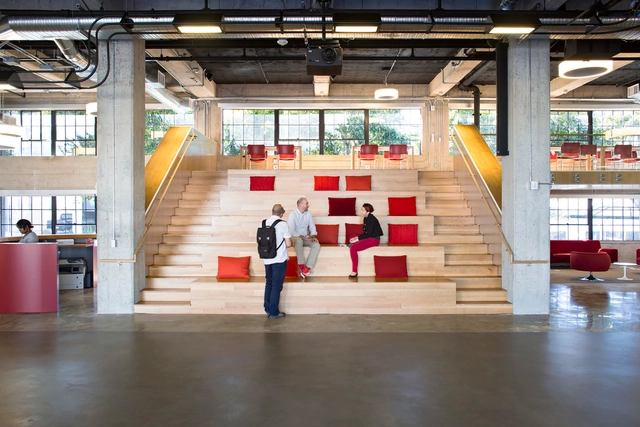
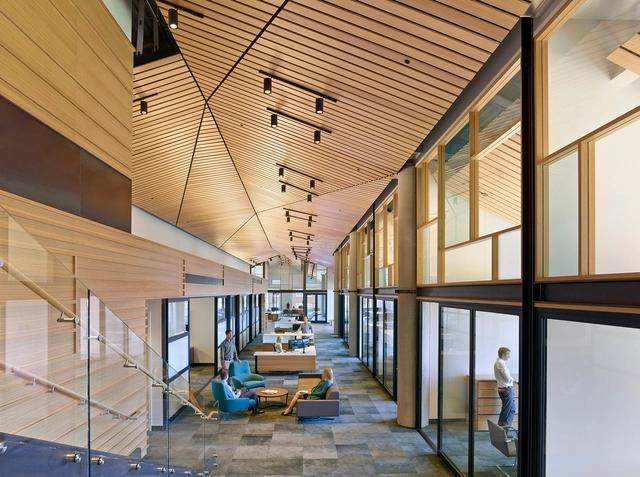
Digital design and fabrication have combined with ubiquitous computing and globalization to change the field of architecture. At California College of the Arts in San Francisco, faculty and students in the Bachelor of Architecture, Master of Architecture, and Master of Advanced Architectural Design programs team up with companies, agencies, and community groups to make architecture that addresses the challenges and opportunities of economic growth, climate change, and technological disruption.
https://www.archdaily.com/776499/prototyping-the-futureSponsored Post
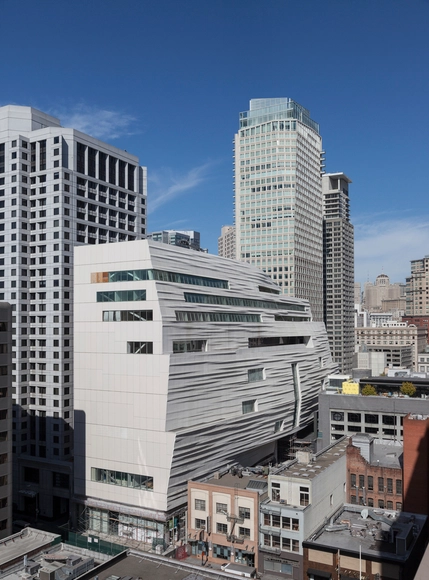
Snøhetta's 10-story expansion of the San Francisco Museum of Modern Art (SFMOMA) is nearing completion. As announced by SFMOMA, the "transformed" museum will reopen to the public on Saturday, May 14, 2016. Its new 235,000-square-foot addition (that nearly tripled SFMOMA's gallery space) was designed by Snøhetta to "weave" into the city and connect "seamlessly" to the museum's existing 225,000-square-foot building designed by Mario Botta.
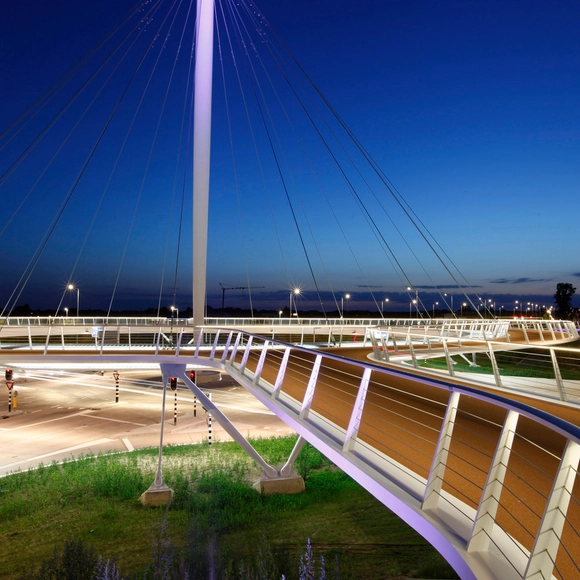
WIRED Magazine has created a list of Eight Cities That Will Show You What The Future Will Look Like in the latest edition of their design issue. In the relatively short span of time that humans have been planning cities, more and more decisions have been made that have shaped the path of new technologies and methods that will make cities better. Such projects—like new streetlights, bicycle infrastructure, and traffic-sensitive museums—highlight some of these advances in the urban lifestyle.
"The cities of tomorrow might still self-assemble haltingly, but done right, the process won’t be accidental. A city shouldn’t just happen anymore. Every block, every building, every brick represents innumerable decisions. Decide well, and cities are magic," writes Wired author Adam Rogers. Read on after the break to see how 8 different cities from around the world are implementing innovative projects.
“These are methods to actually create the optimum amount of freedom for the occupant themselves to figure out how they want to use the space and live with the least […] architectural impediments, and the least […] predetermined idea of where things should go and what should happen where.”
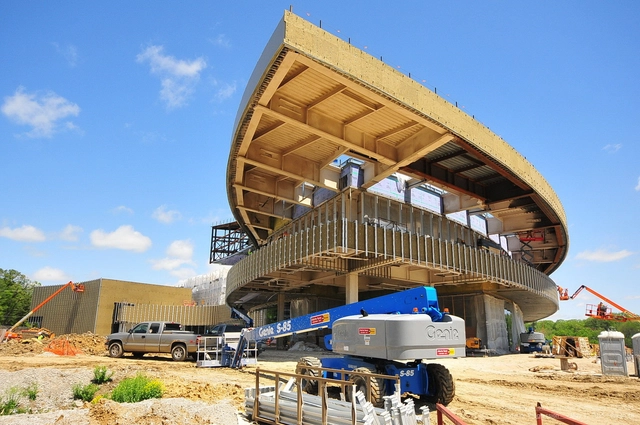
Hancher Under Construction. Image Courtesy of Pelli Clarke Pelli Architects
US firm Pelli Clarke Pelli Architects is renowned for their iconic and sustainable designs, having won numerous awards, including the AIA’sFirm Award. They currently have several projects under construction, ranging from a transit center in San Francisco to an office and retail tower in Seville, Spain. Read on after the break for an overview of three of their current projects, all in various states of completion.




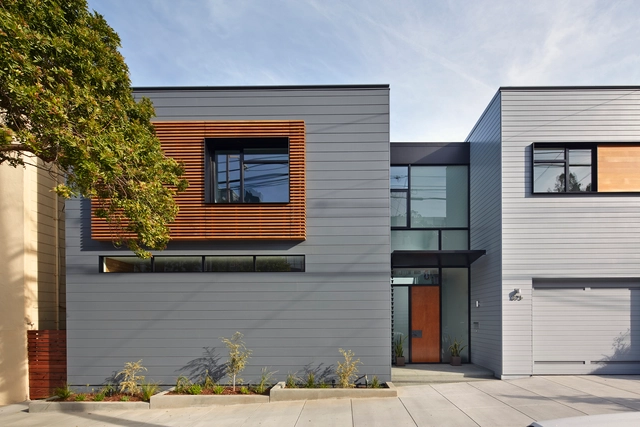













.jpg?1446519973&format=webp&width=640&height=580)
.jpg?1446519922 "© Joe Fletcher")
.jpg?1446520084 "© Joe Fletcher")
.jpg?1446520171 "© Joe Fletcher")
.jpg?1446519805 "© Joe Fletcher")
.jpg?1446519973)