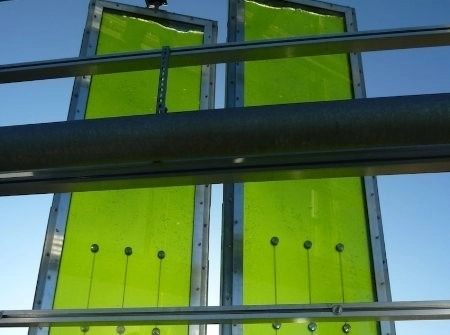
In a recent article for 99% Invisible, Kurt Kohlstedt explores how integrating microalgae into buildings can create a dualistic system of living and built, in order to perform services like create shade, generate power, and work with HVAC systems to modulate interior environments.
Projects that utilize such technology include bioreactors that produce oxygen and bio-fuel, a building with a bio-adaptive façade, and a street lamp that filters carbon dioxide from the urban environment.
Humanity is at a key moment in a larger story, one in which we are willfully manipulating both our global environments as well as our human bodies. The first is changing the makeup of the physical spaces we occupy and the second, the very body that perceives that space. At this intersection are the physical boundaries that define architectural space. Both our environments and our bodies are therefore open for design, and architecture has swerved in a new direction.
Created in response to these changes is a new podcast, “Night White Skies” w/ Sean Lally: A podcast about architecture's future, as both earth's environment & our human bodies are open for design. The podcast is about conversations with designers, engineers, and writers on the periphery of the architecture discipline, engaging in these developments from multiple fronts. Though the lens of discussion is architecture, it is necessary to engage a diverse range of perspectives to get a better picture of the events currently unfolding. This includes philosophers, cultural anthropologists, policy makers, scientists as well as authors of science fiction. Each individual’s work intersects this core topic, but from unique angles.
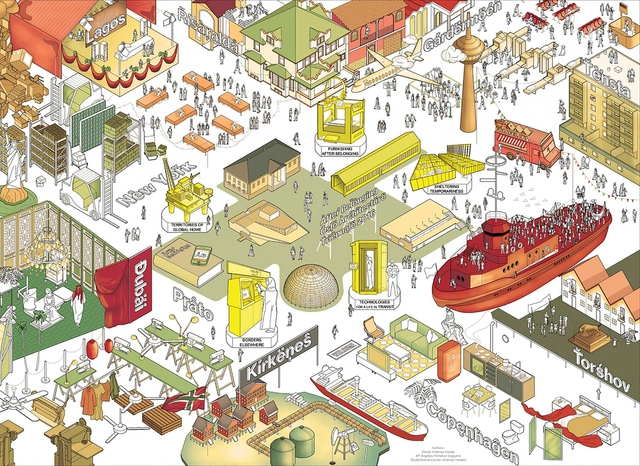
In the latest edition of Section D, Monocle 24's weekly review of design, architecture and craft, Henry Rees-Sheridan visits Oslo to speak to Hanna Dencik Petersson, Director of the 2016 Oslo Architecture Triennale, and Alejandra Navarrete Llopis and Ignacio González Galán – two members of its curatorial team, the After Belonging Agency. The show explores the concept behind the exhibitions of the Triennale, what it means to be located in Norway's capital, and how the event's trajectory is both a symptom and cause of Oslo’s development as a design city. ArchDaily's James Taylor-Foster weighs in on After Belonging's significance.
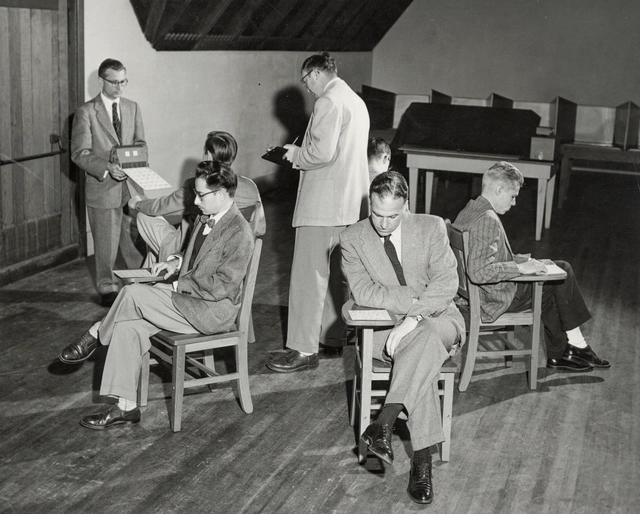
via 99% Invisible. Image Courtesy of f Institute of Personality and Social Research, University of California, Berkeley / The Monacelli Press
In two intriguing new podcasts, the team over at 99% Invisible uncovered some never-before-heard audio and forgotten secrets about elements of architectural history. In the first, The Mind of an Architect, producer Avery Trufelman explores the audio archives of the Institute of Personality Assessment and Research (IPAR), where a study undertaken in the late 1950s mapped the personalities of prominent architects. Eero Saarinen, Philip Johnson, and Richard Neutra were among the study group, and the data came to some interesting conclusions about the role of ego and the presence of creativity.
In the second, Photo Credit; The Negatives of the Bauhaus Sam Greenspan explores the misattribution of credit for some of the most prolific images of the Bauhaus. Taken in the 1930s by German photographer Lucia Moholy, the historic images paint one of the clearest pictures of life at the Bauhaus. In the turmoil of the war, her negatives were lost, and absorbed by the school's collection, denying her the credit she deserved.
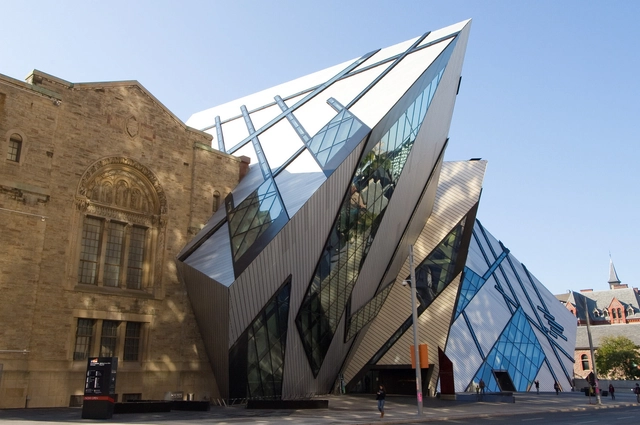
The Royal Ontario Museum extension by Daniel Libeskind, image by The City of Toronto. Image via 99% Invisible
All architects desire recognition of their built work; for their signature design style to be identified, or for the quality of materials and details to outshine those around it. Unfortunately, if every new architectural structure was to insert itself into its context looking to be the star, soon it would become impossible to gauge the civic relevance of the area. Some buildings, such as Daniel Libeskind's Jewish Museum, appear dislocated with due cause, but others stand out for the sake of standing out, turning their back on their rich historical setting.
While there can be no singular strategy for contextual integration, Kurt Kohlstedt argues that a consideration of historical context, whether eventually chosen to acquiesce with or deny, will result in richer and more engaging built environment. In his latest essay for 99% Invisible, Kohlstedt unpacks the myriad ways in which a new building can engage with what was there before, highlighting examples which successfully and unsuccessfully take up the challenge. He acknowledges the difficulty of finding the sweet spot, as many designs are unable to navigate the "fine line between contextual and contemporary."