1. ArchDaily
  2. Phillip Johnson

Phillip Johnson: The Latest Architecture and News

Framing Interiors and Landscapes in Aluminum and Glass to Master the View

 | Sponsored Content

Windows have long held an ambivalent role in architecture, as they both define and enclose interiors while simultaneously creating a link to the outdoors. This dual function goes beyond simply meeting construction needs or providing daylight, directly influencing how occupants experience and engage with the views. The 20th century saw the introduction of materials such as steel, aluminum, and glass, which enabled different types of windows with thinner frames and expansive panes, enhancing transparency and reinforcing the visual connection with the surrounding setting.

American architects such as Frank Lloyd Wright and Philip Johnson explored these possibilities to harmonize architecture with landscape. In Fallingwater House, windows and terraces seamlessly connect the house to the waterfall and surrounding forest, whereas the Glass House's minimal framing nearly dissolves the boundary between interior and exterior, bringing the natural environment to life inside the house. Through its evolution, windows have become an element that unites space, materials, and perception, opening new pathways for exploring the relationship between architecture and its environment.
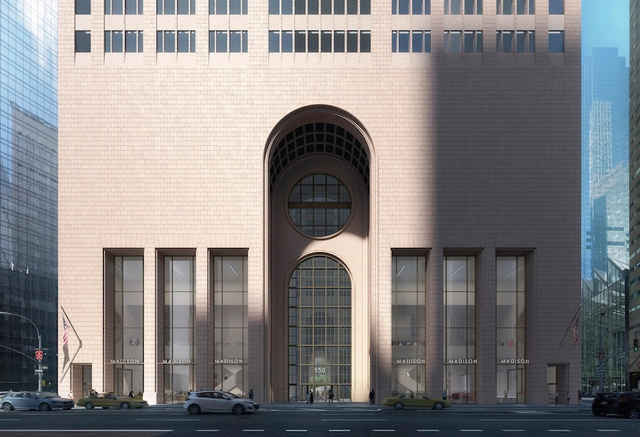
Will Snøhetta's Redesign Calm the Outcry From Its Original Controversial Proposal?

Labeled as "vandalism" and "murder" of an icon of postmodernism, Oslo-based firm Snøhetta's redesign proposal for Phillip Johnson and John Burgee's AT&T Headquarters was received with instantaneous backlash across the architectural community last year. Architect Robert A. M. Stern, marched alongside a protest outside 550 Madison Avenue, and even critic Norman Foster, who never claimed to have any sympathy for the postmodern movement, still vocalized his sentiments that "[the building] is an important part of our heritage and should be respected as such."

A rejection of the bland and cold functionality of Midtown's crystal skyscrapers, the AT&T building was intended to encourage a more playful approach architecture in the corporate world; the crazy socks beneath a three-piece suit. It was not without controversy. Upon its completion, the building was derided for its decorative and outsized pediment and occasionally dark interior spaces. Indeed, the building's arched entry spaces were among the only architectural elements to be met with praise from both critics and the public. 

Will Snøhetta's Redesign Calm the Outcry From Its Original Controversial Proposal? - Image 1 of 4Will Snøhetta's Redesign Calm the Outcry From Its Original Controversial Proposal? - Image 2 of 4Will Snøhetta's Redesign Calm the Outcry From Its Original Controversial Proposal? - Image 3 of 4Will Snøhetta's Redesign Calm the Outcry From Its Original Controversial Proposal? - Image 4 of 4Will Snøhetta's Redesign Calm the Outcry From Its Original Controversial Proposal? - More Images+ 1

13 Buildings That Have Aged Magnificently

Subscriber Access | 

Humanity always cherishes great works of art that stand the test of time. This June, for example, marks the 50th anniversary of The Beatles’ psychedelic Sgt. Pepper's Lonely Hearts Club Band, and the 20th anniversary of Radiohead’s dystopian Ok Computer. These psychologically satisfying birthdays have generated serious appreciation and nostalgia. Similarly, we also love to praise the longevity of innovative architecture. The AIA bestows an annual “Twenty-five Year Award” to acknowledge projects that have "stood the test of time” and “exemplify design of enduring significance.” But one project a year seems stingy. Below are 15 modern classics which, though not always given the easiest start in life, we’ve come to adore:

13 Buildings That Have Aged Magnificently - Image 1 of 413 Buildings That Have Aged Magnificently - Image 2 of 413 Buildings That Have Aged Magnificently - Image 3 of 413 Buildings That Have Aged Magnificently - Image 4 of 413 Buildings That Have Aged Magnificently - More Images+ 9

The Architectural Lab: A History Of World Expos

The Architectural Lab: A History Of World Expos  - Featured Image
The Universal Exposition of 1889. Image © Wikimedia Commons

World Expos have long been important in advancing architectural innovation and discourse. Many of our most beloved monuments were designed and constructed specifically for world’s fairs, only to remain as iconic fixtures in the cities that host them. But what is it about Expos that seem to create such lasting architectural landmarks, and is this still the case today? Throughout history, each new Expo offered architects an opportunity to present radical ideas and use these events as a creative laboratory for testing bold innovations in design and building technology. World’s fairs inevitably encourage competition, with every country striving to put their best foot forward at almost any cost. This carte blanche of sorts allows architects to eschew many of the programmatic constraints of everyday commissions and concentrate on expressing ideas in their purest form. Many masterworks such as Mies van der Rohe’s German Pavilion (better known as the Barcelona Pavilion) for the 1929 Barcelona International Exposition are so wholeheartedly devoted to their conceptual approach that they could only be possible in the context of an Exposition pavilion.

To celebrate the opening of Expo Milano 2015 tomorrow, we’ve rounded up a few of history’s most noteworthy World Expositions to take a closer look at their impact on architectural development.

The Architectural Lab: A History Of World Expos  - Image 1 of 4The Architectural Lab: A History Of World Expos  - Image 2 of 4The Architectural Lab: A History Of World Expos  - Image 3 of 4The Architectural Lab: A History Of World Expos  - Image 4 of 4The Architectural Lab: A History Of World Expos  - More Images+ 14

AD Recommends: Phillip Johnson by David LaChapelle

Subscriber Access | 
AD Recommends: Phillip Johnson by David LaChapelle - Featured Image
© LaChapelle Studio

Philip Johnson (1906-2005), one of the most influential American architects portrayed by David LaChapelle.