Time Magazine’s list of the World’s Greatest Places 2018 celebrates 100 destinations to visit, stay, eat, and drink from around the world. Chosen by Time’s global team of editors and correspondents, the contenders have been evaluated on quality, originality, innovation, sustainability, and influence.
https://www.archdaily.com/901009/22-of-the-worlds-greatest-architecture-projects-selected-by-time-magazineNiall Patrick Walsh
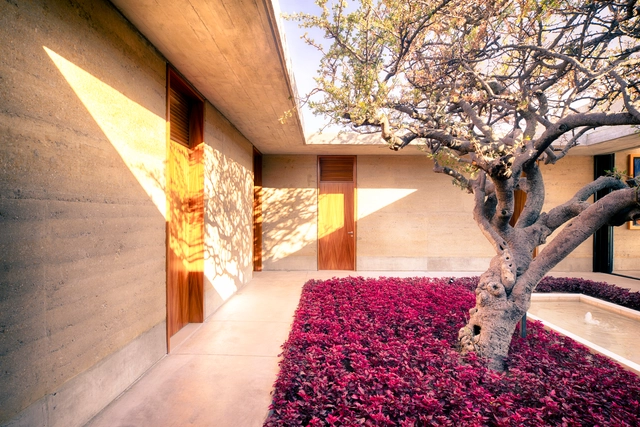
Quinta Gaby (QG) is a single-family residence built using rammed earth, a thousand-year old technique which consists of building solid walls by tamping layers of damp earth inside a wooden formwork.
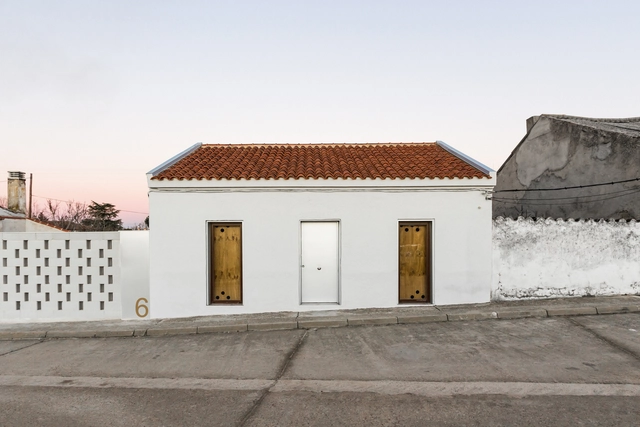
This small construction, property of the local council of Villanueva de Duero, was built in the 1950s as the house for the bailiff. It responds to a very common building typology during the post-war period, in social promotions carried out in Valladolid by the Ministry of Housing and the National Housing Institute. These were very simple constructions, with load-bearing brick walls as support system and brick vaults that cover the space, considering the high costs of steel structures and that the use of wood was in disgrace.
Faced with the challenge of designing homes on terrains with steep slopes - or in compact urban contexts that do not allow much variation in plan - several architects have experimented and proposed split-level homes to enhance the use of space, allowing, among other things, interesting visual perspectives.
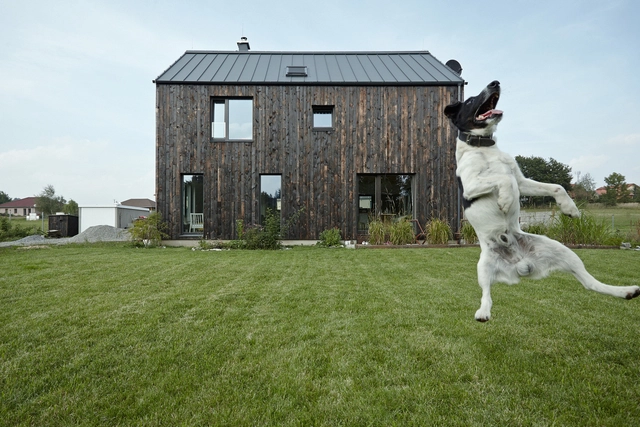
Are you a cat or dog lover? At ArchDaily we know that you're as big an animal lover as we are. They inspire us, keep us company, and in the case of architectural photography, give us an idea of a structure's scale. We previously made a collection of photographs starring cats and architecture, and we could never forget our dog-loving readers. We bring you a collection of photographs where dogs take center stage.
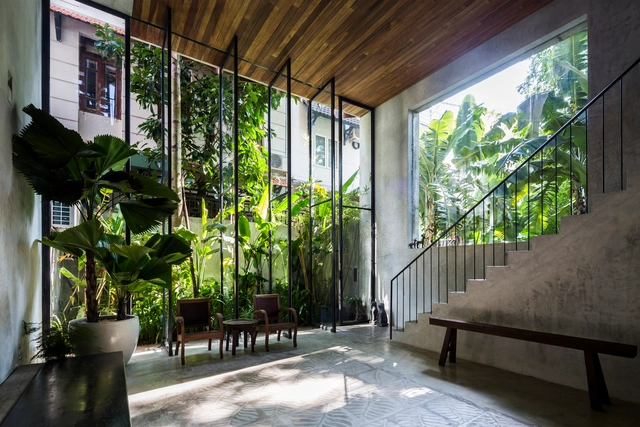
Plants are excellent elements to add in architecture and built spaces. However, when it comes to indoor environments, which usually receive less natural light and ventilation, certain species are resistant to adaptation.
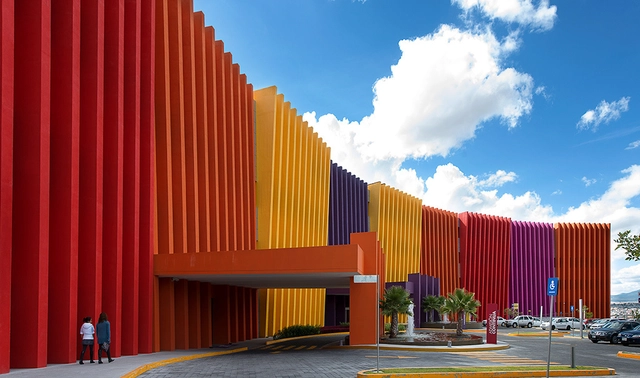
Color, inherited from indigenous cultures of Mexico, is a defining characteristic of Mexican architecture. Vibrant colors have been used by architects and artists such as Luis Barragán, Ricardo Legorreta, Mathias Goeritz, Juan O'Gorman, and Mario Pani.
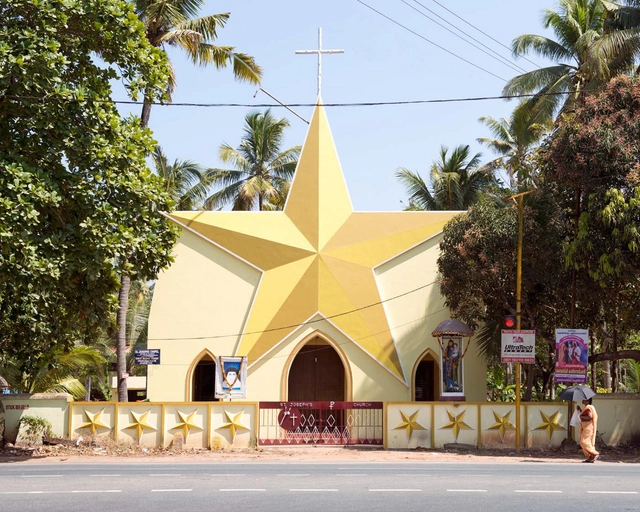
Photographer Stefanie Zoche of Haubitz-Zoche has captured a series of vibrant images showcasing the “hybrid modernism” churches of the Southern Indian region of Kerala. The images below, also available on the artist’s website, depict the blend of modernist influences and local architectural elements that defined many Indian churches following the country's 1947 independence.
https://www.archdaily.com/900488/the-wild-churches-of-kerala-southern-india-as-captured-by-stefanie-zocheNiall Patrick Walsh
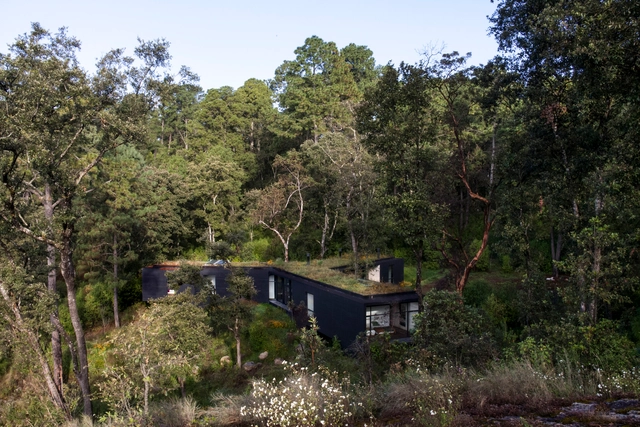
The landscape surrounding the house is a unique place, where each and every one of its corners can be celebrated. The project works with a double strategy: to build lookouts towards three specific points distant from each other while building a central, nodal, protected but open to the outside, and that has a total exposure to different environments that the own architecture delimits. The architectural strategy is also developed through the materiality of the project: on the one hand with decisions that have to do with maintenance, structure and thermal behavior; and on the other, by material decisions that result from considering the visual weight that architecture must have in landscapes as recondite as the one the house occupies.
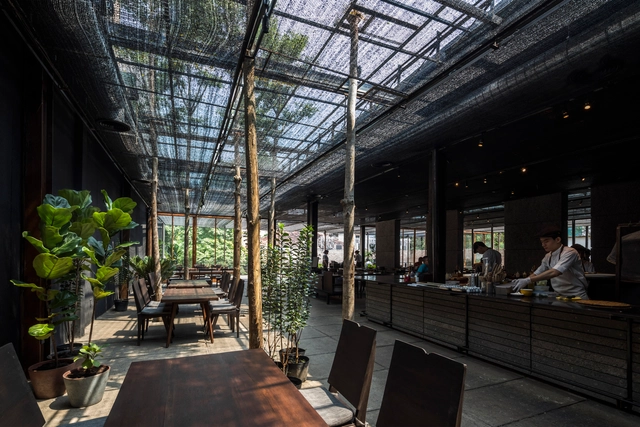
Here, the tropical sunlight is so intense that we primarily recognize it as a physical hindrance, like the rain or the wind, before we consider it as an abstract existence in architecture. You can easily imagine its harshness when you see most of the people outside wearing, even in the hottest season, coats and multiple layers of clothes to protect themselves from the sun’s strong rays. If you look around the city’s streets, you can also note they are full of add-ons purposefully arranged to create shades: observe the outdoor parking areas, the street-cafes, the flower shops or the play-yards in schools… Indeed, under such a heavy sunlight, it is as natural to seek and generate shadows as to have umbrellas and raincoats under rainy conditions.
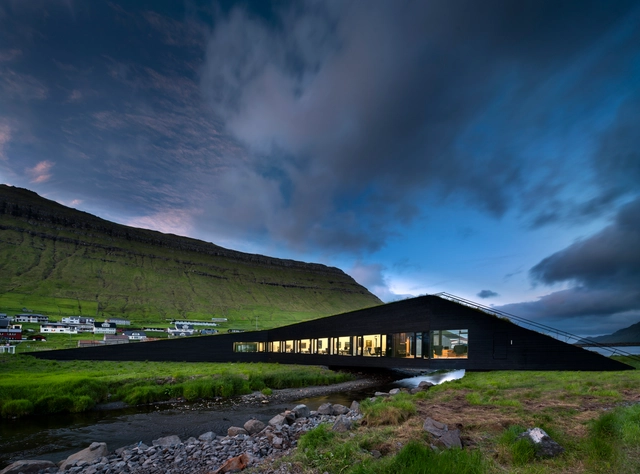
Located in the breathtaking Faroese landscape, the 750m2 green roofed town hall of Eysturkommuna bridges the river in the village of Norðragøta and unites what used to be two separated municipalities into one. Discreetly cut into the lush landscape, seemingly floating between the river and the green grass blanket on the roof, the town hall forms the new workplace for the City Council and the administrative staff of the small Eysturkommuna.
This project seemed like an Architect’s dream at first but upon closer understanding, of the site and the brief, revealed its complex nature. The seemingly large plot of 2.45 acres, populated with a variety of trees - small and large, was to be shared between the client and his brother, who had an existing house on site, without any compound wall in between. However, an informal pedestrian path, allowing the plot at the back an access to the main road, literally cut the site into two. Moreover the extending site towards the south, marked aside for the future commercial activity further reduced the buildable site to a linear strip.
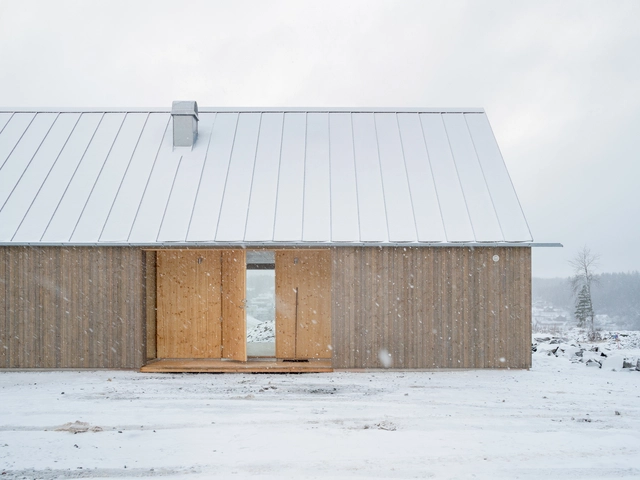
“Dalslandsstugan 2.0” (Dalsland cabin 2.0), propose a new standard house for the Dalsland county, Sweden. The proposal is based on the traditional Dalsland cabin; a timber cabin being the common residential house in the area before the industrial revolution. The house finds inspiration in the material palette and certain details from the old cabins seen in the surrounding landscape.
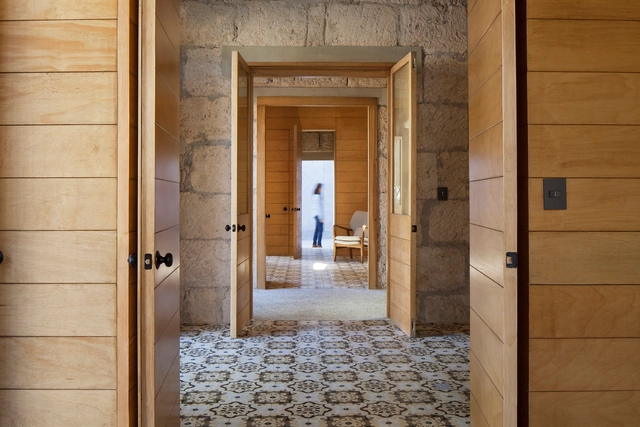
The 15 de Mayo project is located in the center of the city of Monterrey, Nuevo Léon, three blocks from the Iglesia de la Purísima on one of the defining corners of the Plaza del Mediterráneo. At the beginning of the project, we found a shell of typical Northeastern Mexican architecture, with ashlar walls, rooftop terraces and exposed board and beam, much of which had fallen into a state of considerable disrepair. The decision to preserve the building allowed for a continuity of dialogue between the built environment and the context in which the intervention is located.
Hong Kong is an autonomous territory in southeastern China known for its skyscrapers, urban density, and high prices. However, on Nico Van Orshoven's travelogue, Everywhere in Particular, the Belgian architect creates a visual portrait of the territory beyond the stereotypes. With lively public spaces and stunning natural landscapes, Hong Kong can and will surprise you.
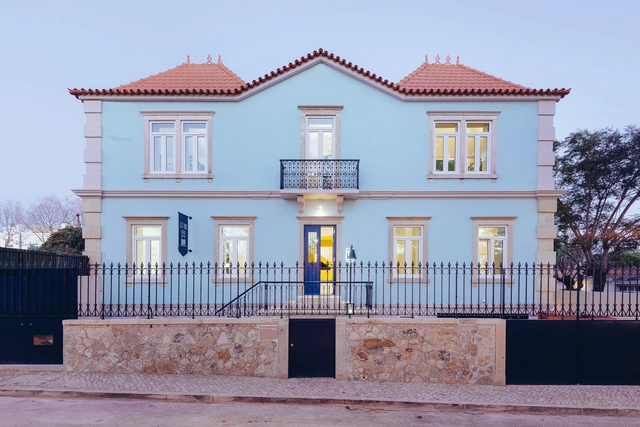
The interior of this building was in a state of ruin but, despite that, its roof was still standing. Its complex geometry, with four corner pyramidal volumes, determined the project structure and interior partitions, dividing the plan into 9 modules. In the center module, a staircase joins the three floors, contaminating the space with its yellow glow and natural light coming from above. Its drastically rounded corners carry, in a hidden way, all the building’s vertical services.
Henning Larsen's art museum in Videbæk is a unique pavilion on a reflective lake in a picturesque park in the small town of Videbæk, Denmark. The sculptural pavil- ion is inspired by its setting and gives back to the people of Videbæk and its visitors.
https://www.archdaily.com/899664/art-pavilion-in-videbaek-henning-larson-architectsMartita Vial della Maggiora
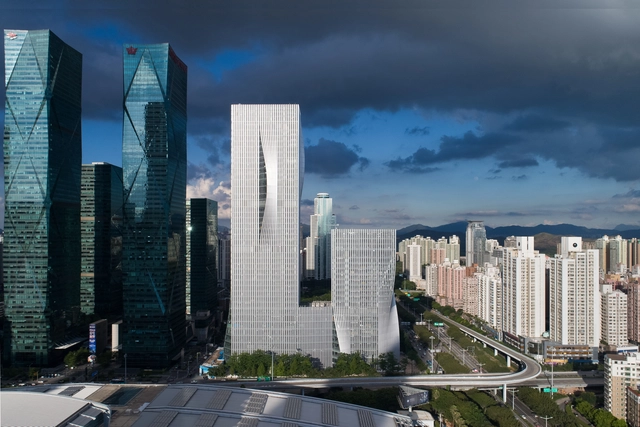
The new home for Shenzhen Energy Company looks different because it performs differently: the building skin is developed to maximize the sustainable performance and workplace comfort in the local subtropical climate of China’s tech and innovation hub in Shenzhen.




_(36).jpg?1533767622&format=webp&width=640&height=580)

.jpg?1533569787&format=webp&width=640&height=580)