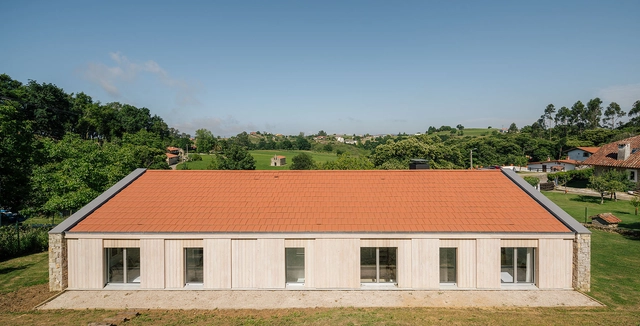
The rural landscape of Cantabria presents very unequal situations. During the last decades, some areas have been negatively affected as a result of rapid growth, while others have managed to preserve their urban identity shaped by the vernacular architecture of the place, mainly built in stone, wood, and sloping red ceramic tile roofs.
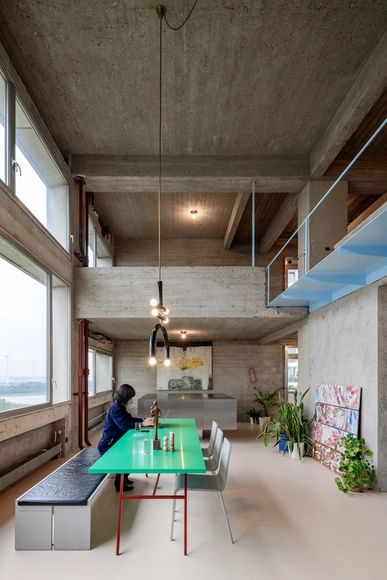
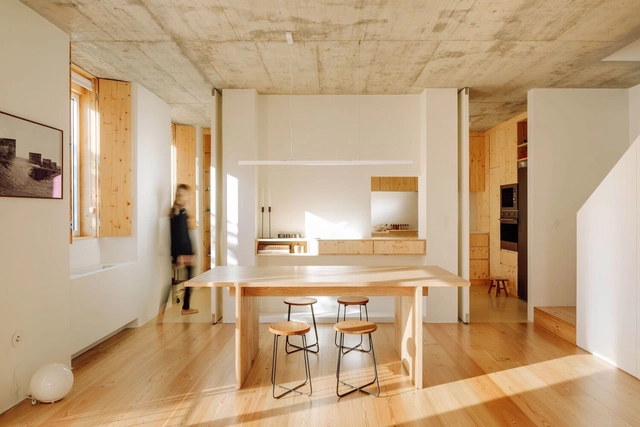
The Riverside Tower is a high-rise development from the early 70s designed by Leon Stynen & Paul De Meyer, beautifully situated in the bend of the river Scheldt, a stone’s throw from the city center of Antwerp. It’s here, on the 13th floor, that founding partner Bram Van Cauter of Studio Okami Architects renovated a duplex to match the brutalist tower which he calls his home.
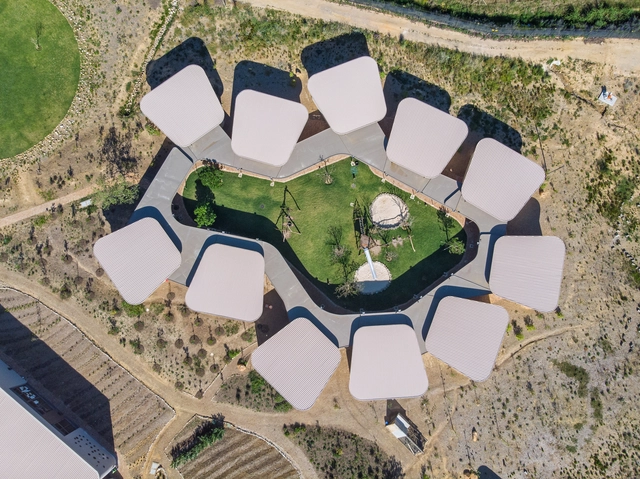
Green School South Africa, is an eight-hectare sustainable schooling campus located in the low-lying Paarl Valley in the Western Cape, spatially defined by the Paarl Berg to the north, Drakenstein Mountains to the east and south, and Simons Berg towards the southwest. The spatial arrangement at a macro level is what inspired the space making, but also down to the individual buildings and spaces between them.
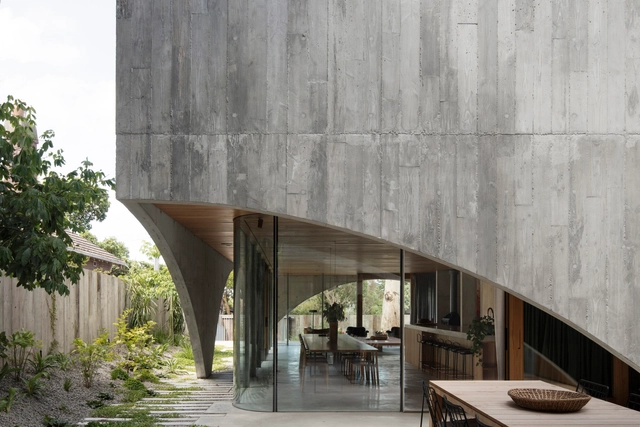
Our primary design response for the Hawthorn House was to first recalibrate the entire project site into a large and singular terrace; one grand outdoor theatre for living which peels upwards at each title boundary to form a living garden backdrop that would appear at every viewpoint from the living areas of the home. Within this garden platform, the house is defined by a pair of heavily textured concrete shrouds, each with its own proportion and personality, linked together by a walkway and courtyard garden. The arched concrete shrouds evolved as a method of structurally supporting the house with its own skin; designed to be understood as protective cloak rather than as signifiers of support. These shrouds provide the framework for how the spaces within the home relate to each other and to the external environment. From the first floor the context appears denied, however these more private bathing and sleeping spaces are pulled away from the ends of the solid skin which allows each elevated pavilion to look out through full height glazing onto their own private courtyards full of plants, sky and tree canopy. At ground floor within the living, cooking and dining spaces the concrete shells provide clear connectivity with the entire landscape and a sense of unexpected lightness, while carefully concealing the neighbouring context.
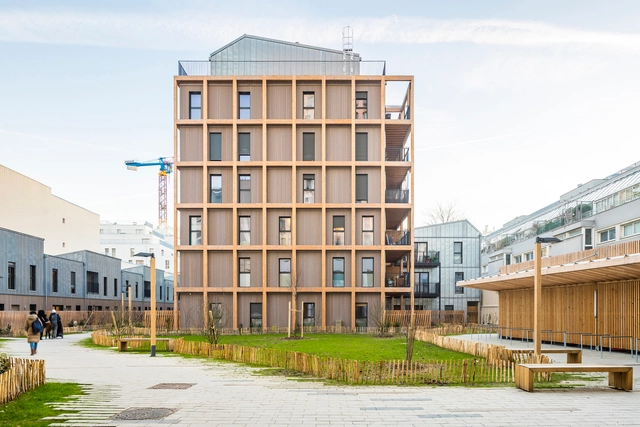
Located on a plot of land in the heart of the block occupied by an 8 stories car park, the project comprises two operations of 75 housing units for sale and 74 social housing units. The project proposes to engage the project’s actors, as well as the inhabitants, in the steps of a rational, visionary, and sustainable approach to urban transformation. The social housing building is built in a wooden structure, while the building for homeownership is built by preserving and adapting the concrete structure of the existing car park. Through their respective specificities, the two projects meet the overall challenge set.
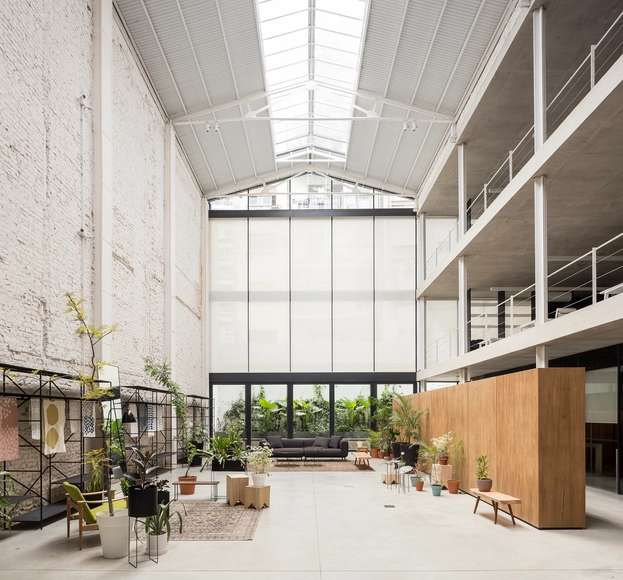
SOLER Project was developed in a particular space: an old warehouse next to an annexed area in the back, in Palermo, neighborhood, in Buenos Aires city, Argentina.
https://www.archdaily.com/958358/soler-textiles-office-ana-smudClara Ott
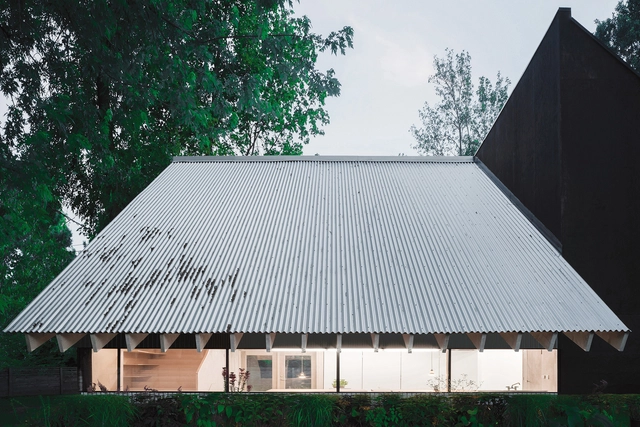
He, She & It is a collection of three distinct buildings for three different spatial needs, collaged into a single structure. The 1500 sq ft building houses workspaces for a painter, a ceramist/silversmith, and a greenhouse. Each space offers an atmosphere which differs radically from the others. The distinct atmospheres of the spaces reflect not only their respective uses but also, the predilections of the clients.
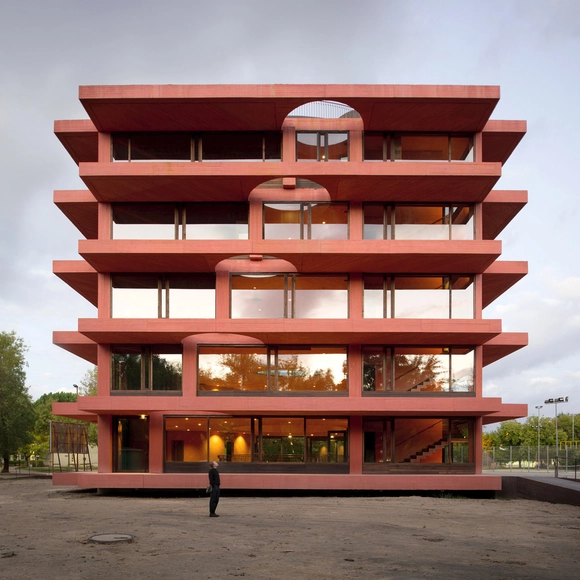
We were told that when resources are scarce, intensity compensates for high performance (because there seems to be a deep gap between ingeniousness and intelligence). Of course, we knew that any project is a reaction to its circumstances.
https://www.archdaily.com/958300/ines-innovation-center-pezo-von-ellrichshausenClara Ott
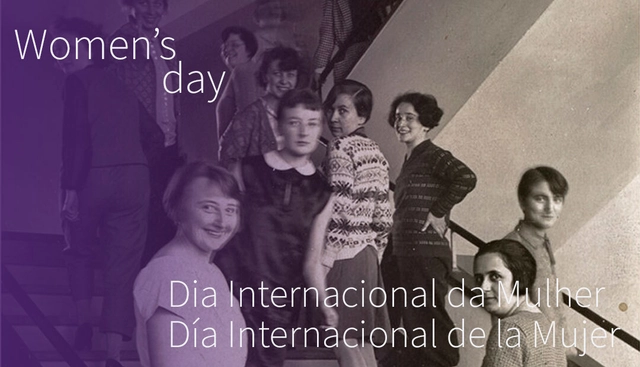
While women make up an equal part of the population, they are not equally represented when imagining, planning, designing, and constructing the built environment around the globe. Thriving to rebalance forces and close the gap of gender inequality, the world is moving slowly but surely into a more diverse, equitable, and inclusive future. Looking back at 2021, this year has seen the selection of Lesley Lokko as curator of the 2023 Venice Biennale, Anne Lacaton winning with her partner Jean-Philippe Vassal the 2021 Pritzker Prize, the 6th woman to ever receive the award, and the MAXXI Museum celebrating the transformative role of female architects in the profession's evolution over the last century.
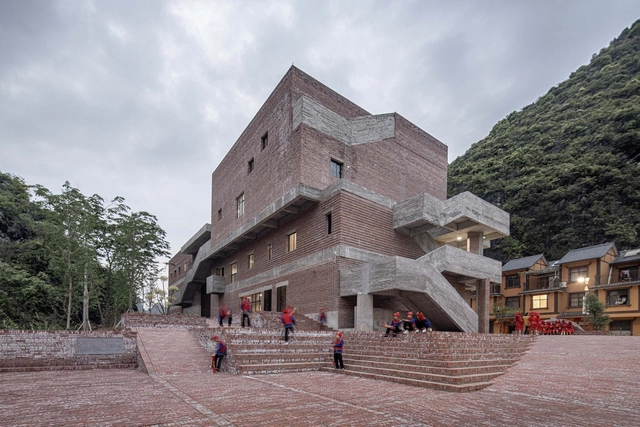
The Cultural Service Center and Special Workshops in Ruyi Village, Shuikou Town, which was designed by the local studio led by Chunyu Wei, is located in Shuikou Town, Jianghua Yao Autonomous County. The town was located in the flooded area of the tearful river reservoir expansion project, but now it is located in an area surrounded by longitudinal mountains and relatively flat.
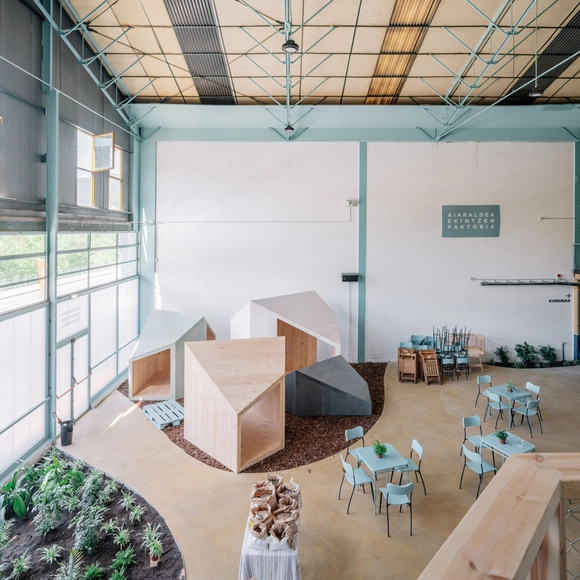
Hell or High Water / Egunen batean mundua leunagoa eginen da gure inguruan eta nahinorantz abiatuko gara nahieran, eta maite ditugun lagunak besarkatuko ditugu, eta den edaririk bizigarriena edanen dugu, eta legeaz landako gure mintzairan solastatuko gara, Inveniam viam aut faciam.
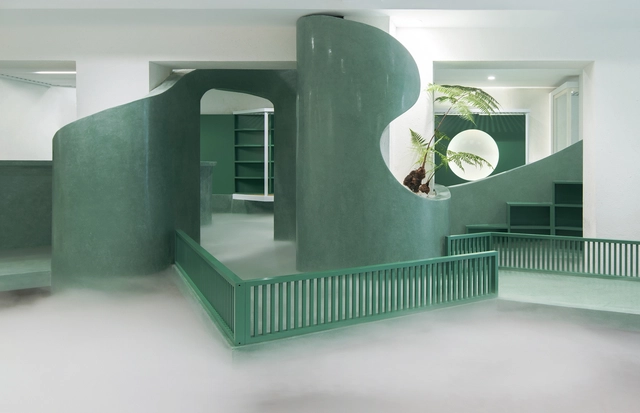
Project Background. This is a bookstore reconstruction project located on the west side of Zhongguancun Street in Beijing. The owner of Sheyu World bookstore entrusted us with the reconstructing design of its first floor on the basis of the original two-story building. Besides, the teahouse function is added except for the bookstore function. The site is situated inside the city block and surrounded by urban buildings. There is only an eastern side opening towards the front public courtyard. We try to find the relationship both inside and outside from here, aiming to build a block facade facing outside and an inward courtyard facing inside. Green cloud house is the name of this courtyard. A half misty pond, a winding bridge, three cloud walls, seven pavilions, and several mountain terraces are the places built in this garden. You can enjoy reading or tea parties here, which are sooner upcoming.
The illusion materialized through the looking glass allows us to perform spatial actions where it was not possible at first glance, to expand or reduce spaces, to make uses appear or disappear, to cause material levitations of built volumes, generating surprise in the viewer of a changing environment, within an apparently static and defined space. I. The commission. The house to be refurbished is located in Calicanto, Valencia, a garden house development linked to the mountain landscape. The sufficient slope in the plot allowed the existing construction to be developed on two floors: one with direct access from the street and the second one, to be refurbished, on a lower level with three free façades in relation to the park and the pool. The preexistent building was organized according to use, being the level related to the access specifically allocated to housing and placing the service floor and garage in the semi-basement. The developer family wanted to regain the semi-basement level, a relegated space in the house, and with it all the moments shared as a family (cooking, playing, exercising, reading, resting), to be able to enjoy it alone or with friends.
Norwegian Bathhouse. Modern in a traditional way. The bathhouse looks like a traditional Norwegian small boathouse with red-painted cladding, tin roofs and rest on granite columns into the water. This is the first impression - especially when coming from the road at the back - where the building seems closed and modest. At the same time as it blends well into the cultural-historical diversity, it gives an assumptions about a twist. If you look closer, you notice that several of the cladding boards are angled. They close the building towards the back and open it towards the front. When you enter, you experience the purpose - you are sheltered at the same time as you have a view of the entire sea.
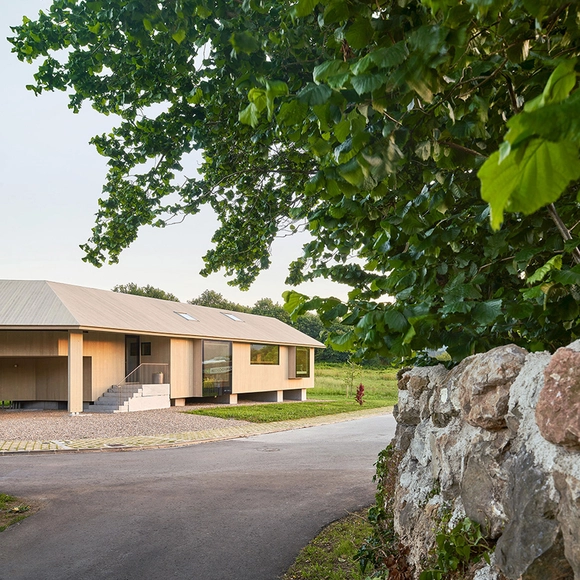
The house is located on the buildable outskirts of Gautegiz Arteaga in the surroundings of the wetlands of the Urdaibai biosphere reserve. The watershed formed by the Oka and Golako rivers flows into Mundaka, where they form an extensive estuary flanked by beaches. The climate is humid and temperate with rainfall throughout the year, although less frequent in the summer months.
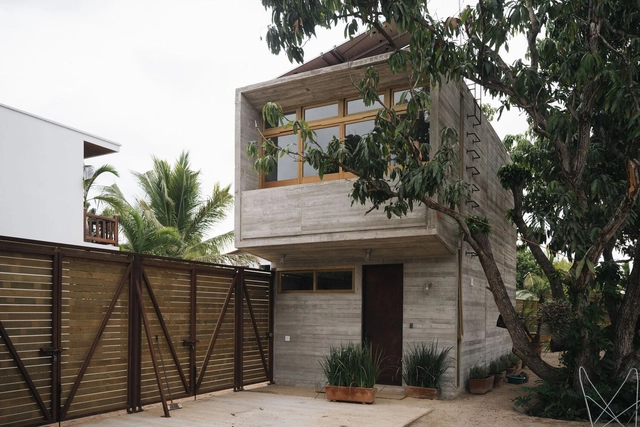
The commission was to design a refuge for surfers in the area of La Saladita beach. It is a peculiar case arising from the exchange of ideas and good conversations, the search for creative coincidences, and the discussion of better conceptual differences between client and architect. Casa Nu (from the French “nous”, we, personal pronoun) was the material reinforcement of a friendship of years, which now offers a different and innovative experience for those who want a quiet refuge after enjoying the waves in this part of the Mexican Pacific.
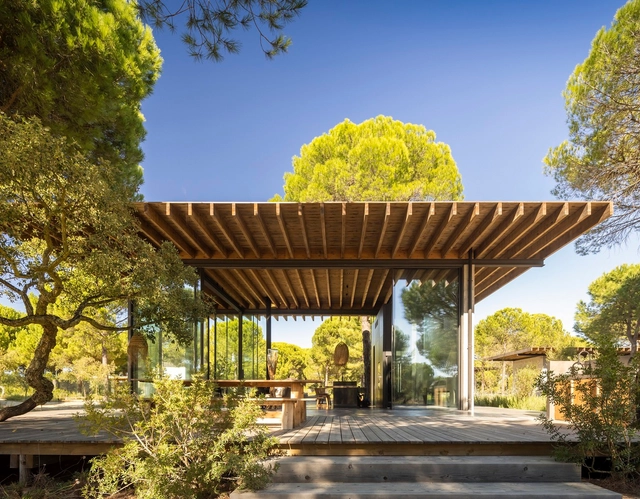
Located in Comporta, MJA house results from an extension of the existing house on site. The project is made up of four distinctive volumes that are perpendicular to the main house, a set of access paths, and a pool, the central piece of all these elements. The new volumes are defined by rectangular concrete platforms, laid on the site on only one level.