Camp del Ferro Sports Center / AIA + Barceló Balanzó Arquitectes + Gustau Gili Galfetti

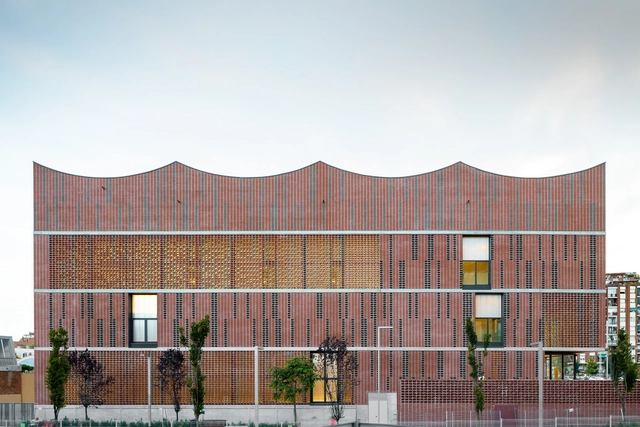
The project by the architects Albert Salazar Junyent and Joan Carles Navarro (partners of AIA), by Antoni Barceló and Bárbara Balanzó (members of the Catalan firm Barceló-Balanzó Arquitectes) and by the architect Gustau Gili Galfetti for the construction of the Camp del Ferro municipal facility in the Sagrera neighbourhood (Barcelona) won the first prize in the public competition called by BIMSA in 2015. The project, with an area of 7,237 m2, began construction in 2017 and now, recently inaugurated, provides the Sant Andreu district with a facility that includes three sports courts, as well as a public space that improves accessibility and connection to the new infrastructure.

Nasillonner House / Moreless Architects

 “Hallasan Mountain, Sanbangsan Mountain, low hills, and Oreum seat themselves softly on a spacious green carpet… When I see the quiet, low, and long Cheongsu-ri gotjawal, which sometimes seems to be far away and sometimes seems to be near, my spirit seems to be purified in spite of myself. I’m sitting beside a solid and small square concrete box.” In client text. I wanted a house, but not a contemporary common residence. I desired that a new rest at a residence as a space containing ideas as well as physical spaces would be presented. This project represents an inquiry into rest in contemporary residential spaces, and the beginning of spaces in which the mind and heart as well as the body can get a rest.

Concrete Plinth House / DGN studio

Tasked with crafting versatile spaces suitable for relaxation, entertaining, and hosting intimate dining and arts evenings, DGN Studio have transformed a dark Victorian semi-detached terrace into a serene, brutalist-inspired home in East London.

EL House / Estúdio Centro Arquitetura e Urbanismo

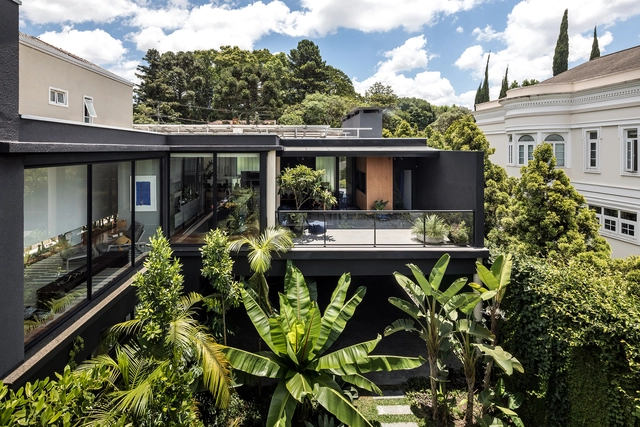
Casa EL is located in Curitiba, close to Bosque Alemão, in a region with relatively rugged topography. It is a residence for a family composed of a couple with their two children and that, eventually, hosts their parents, who live in another city. The architectural design concept was guided both by the intention of creating different spaces suitable for coexistence and by the conditions of the terrain.

Tree House / Sala 03 Arquitetura

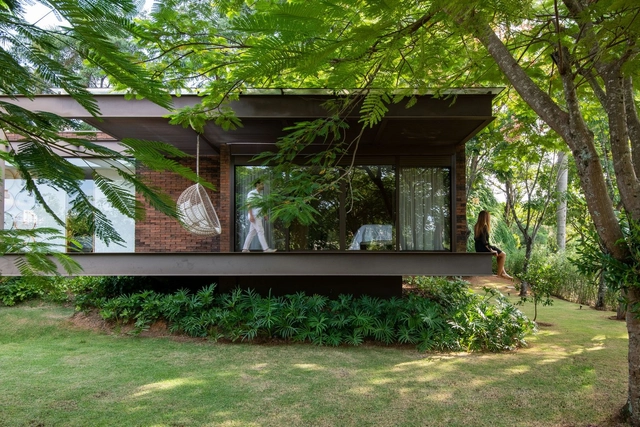
Located in the state of Sao Paulo’s countryside, the project was developed for a couple and their young daughter, who relocated from the capital seeking to enjoy a greater quality of life and host family and friends on the weekends and holidays.

Nathos House / Edouard Brunet + François Martens

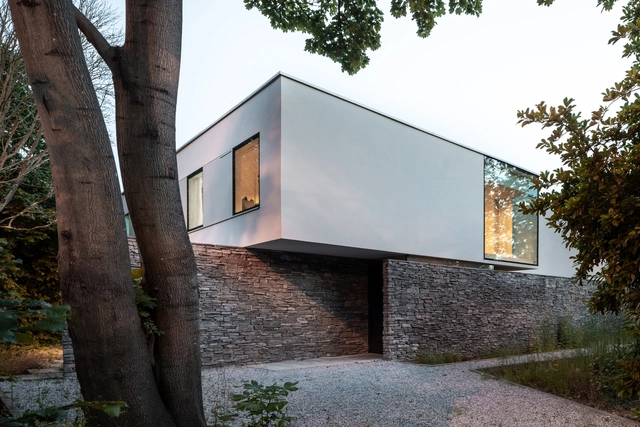
Located in a residential area on the outskirts of Brussels, this new house was designed to blend in discreetly while asserting its contemporary character. It is partially hidden behind the vegetation that has been preserved and is characterized by a very horizontal volumetry. A suspended volume ornates the front facade in which only a large bay window in the corner creates an interaction between the interior and the street. The large horizontal stone walls anchor the house to the land, ensure the privacy of the ground floor and allow to give a sequence to the entrance of the house. They also contrast with the more refined and white architecture of the rest of the house.

Casa Espera / AToT - Arquitectos Todo Terreno

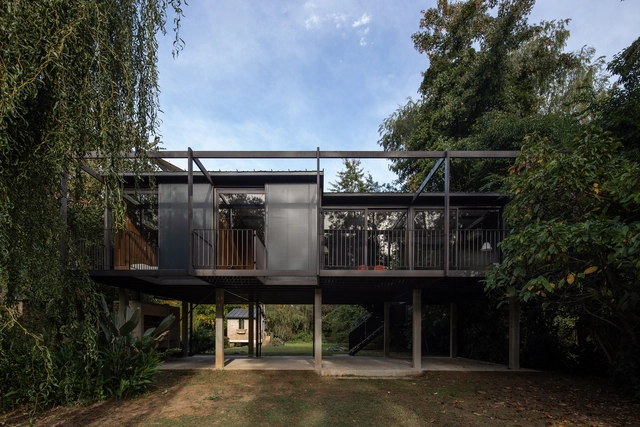
The project is located in an area quite consolidated by the urbanization in the Delta del Tigre area. The proposal is to recognize and recover the depth of the island through the house, valuing not only its riverfront but also its floodplains. Therefore, as a design strategy, the passing space where the route is forced under the house is included in the project, thus recognising the entire site through the long sequence of visuals and highlighting the notion of a promenade.

Casa Hache 01 / Pablo Dellatorre + Studio Brava

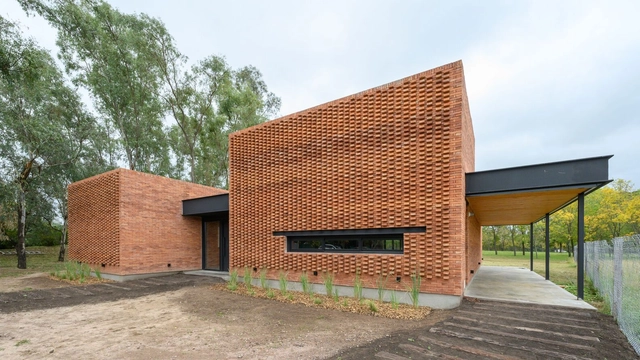
This house is in Jesús María, a city located about 50km from Córdoba Capital, on a land surrounded by a Eucalyptus forest. Designed on a single level as an H, in a unique environment, this mass of bricks emerges from the traditional and classic buildings that surround it. Only on one of its sides would it border a neighbor, so the project was designed to look 360 degrees.

Upcycling Pavilion Icarus Open Air Museum / Barman Architects

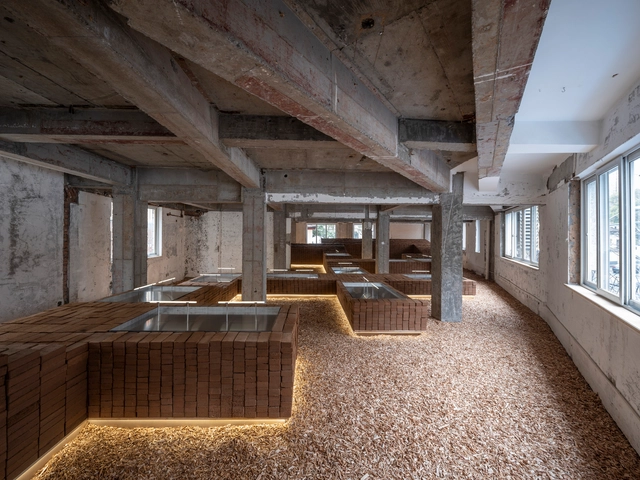
State prior to the works. Every year in the world, there are several temporary exhibitions related to the fields of art and architecture. The case study of the Biennale of Venice shows us that this kind of event creates different polarities in the city which attracts people to new temporary structures, like installations or pavilions. Usually, the lifecycle of temporary structures goes from the preliminary idea to its demolition. Which is the problem? Temporary exhibitions produce tons of construction and demolition waste per year. The MePart program aimed to give new life to temporary installations and structures produced by major cultural events through a network platform to promote the transition towards a circular economy in line with the European Green Deal: that whole of political initiatives proposed by the European Commission with the general objective of achieving climate neutrality in Europe by 2050.

Tropicario Bogotá Botanic Garden / DARP - De Arquitectura y Paisaje

Bogotá is the capital of Colombia, it is located in the centre of the country at 2,600 meters above sea level. The territory that the city occupies is known as the “The Bogotá Savanna”, a plateau that is part of the eastern mountain range of the Andes. The city is limited in the eastern area by a mountainous system known as the eastern hills and in the west by the Bogotá River. About 20,000 years ago this territory was a large lake that joined the hills and the river. Today there are only some traces of this past lake, the city drained the vast majority of wetlands for its urban development, going from 50,000 hectares at the beginning of the 20th century, to only 727, leaving only 1.45% of the original area. This deterioration is largely due to widespread ignorance of the importance of wetlands in ecosystems.

Elevated Camp House / Murdough Design Architects

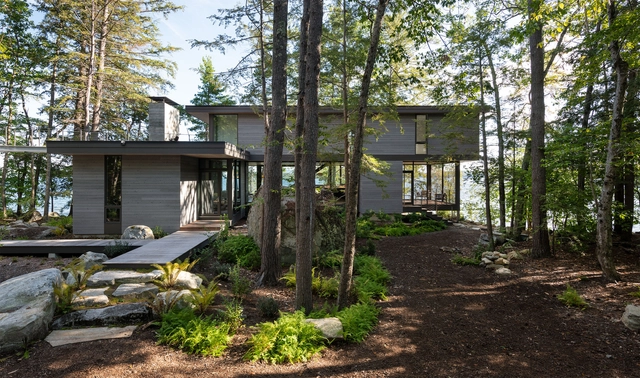
The Elevated Camp is a four-season lakeside retreat for a family of five and is comprised of a 2,733 s.f. residence and a 382 s.f. guest cabin, linked via an elevated boardwalk. The camp is located on the footprint of a prior cabin, allowing the new design to utilize the grandfathered footprint (required by local regulations) and limit the clearing of trees from the site.  The clients requested that the camp be intimate and private for the family to enjoy one another, but also open to the site to actively engage and enjoy the natural surroundings.

Project N.0378 Exhibition / AIM Architecture

Project No.0378 by AIM ARCHITECTURE, is an exhibition that offers an insight into architecture, interior design, and furniture projects. An invitation to understand the design journey, of AIM’s founders: Wendy Saunders & Vincent de Graaf.
The exhibition is inspired by buildings and their future: their ambiguity, ever-changing - always questioning.

Water Garden House / Wallflower Architecture + Design

A property owned for 30 years, the tired old house was to make way for a new one that maximized the allowable built envelope, while addressing new needs and wants. Among them was a desire to have a waterfall feature in the design, and a need for privacy from the many neighbors. The site is perfectly circular when seen from the top, and unique in Singapore. This circle bounds a site that is in the middle of a steep valley.

Glass House / Max Núñez

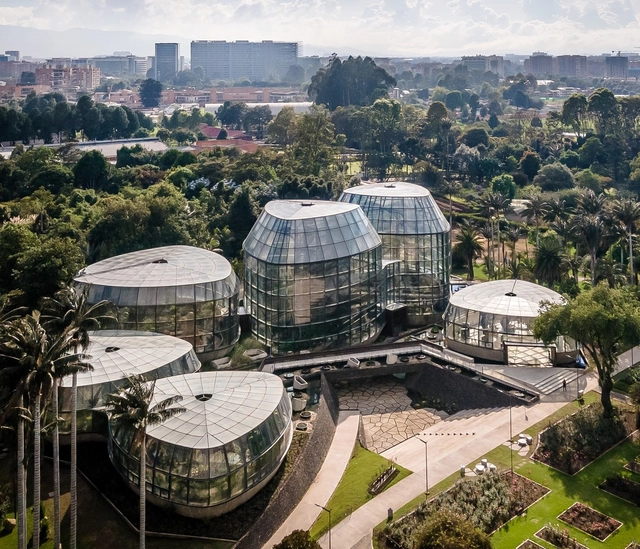
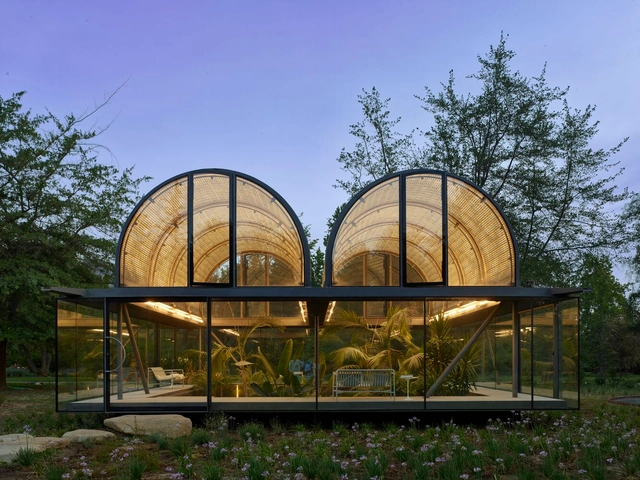
The glasshouse contains a small captive forest. Through various mechanical systems, it generates an artificial environment conditioned to recreate a fragment of tropical forest at a different latitude. Its inhabitants are a variety of plants, ferns, palm trees, orchids, mosses, small trees, and some insects that have found their new habitat in this controlled atmosphere.

Project Burma Hospital / a+r Architekten

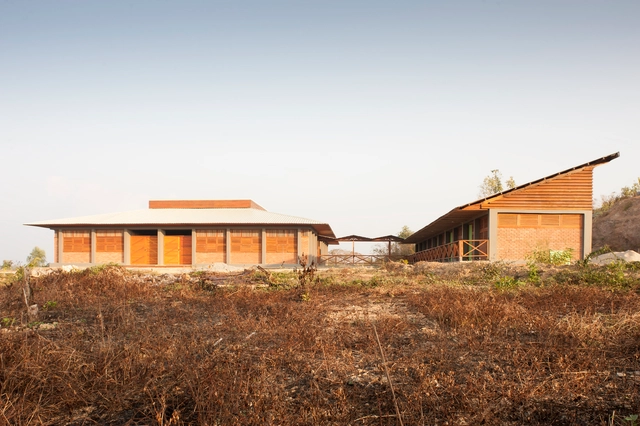
The non-governmental organisation and registered association Projekt Burma e. V. has set itself the goal of improving the living conditions of people affected by poverty in Myanmar. “Helping people to help themselves” is the motto of the association, which Marion Mück founded in Filderstadt near Stuttgart in 2009. Projekt Burma in cooperation with local partners has already realised various projects in the areas of education, health, water, hygiene and disaster prevention. One of them is the high school in Thazin, which was opened in 2014. The school is the first building that a+r Architekten designed by order of the NGO and had the opportunity to assist in the implementation on site.

Nea House / YDR estudio + DEOC Arquitectos

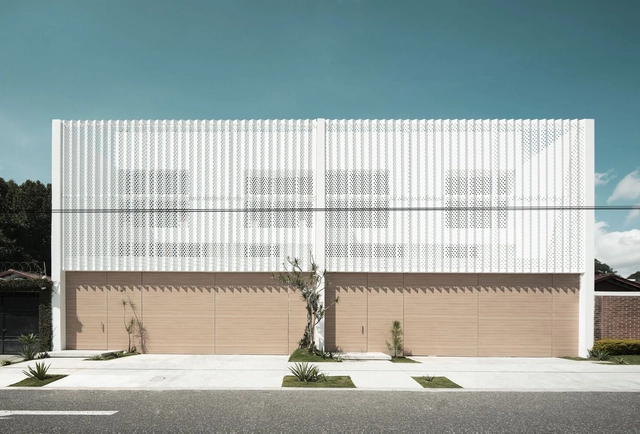
Located in the city center of Guatemala, the twin houses are nestled in a gated community. Gated communities and houses enclosed by high walls are common in the city to provide needed security. The high walls of these houses, however, make it almost impossible to enjoy the beauty of diversity and interaction between neighboring houses.

Madison Desert Club / Kovac Design Studio

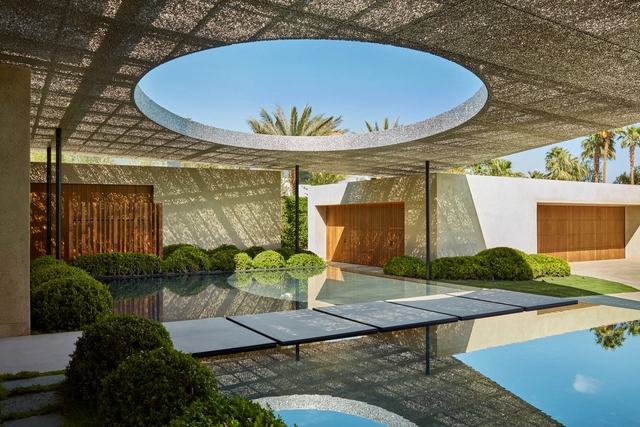
Located in La Quinta’s fabled Madison Club, this vacation home was designed as an interpretation of a boutique hotel for a sophisticated client who loves to entertain family and friends when in town. He sought to take maximum advantage of the dramatic desert views and, through the home’s interior design, pay homage to the Golden Hollywood era of nearby Palm Springs. These factors along with his love for indoor/outdoor living served as driving forces behind the project’s design and articula­tion.

Tres Aguas House / Diez+Muller Arquitectos

Background. In recent decades, the coastal city of Bahía de Caráquez has been characterized by the growth and development of the industries of tourism and leisure. Unfortunately, the strong earthquake that occurred in 2016 compromised several buildings, especially the tallest ones in the area. Many of them had to be demolished, leaving empty lots and the question of how the city should be reconfigured in this seismic zone with poor soil quality.