The project is located in the suburbs of Wuhan. The owners are internet professionals, a family of four who wanted a vacation cabin in nature to accompany their children and relax. The house is built with a light wood structure and hidden in the bushes.
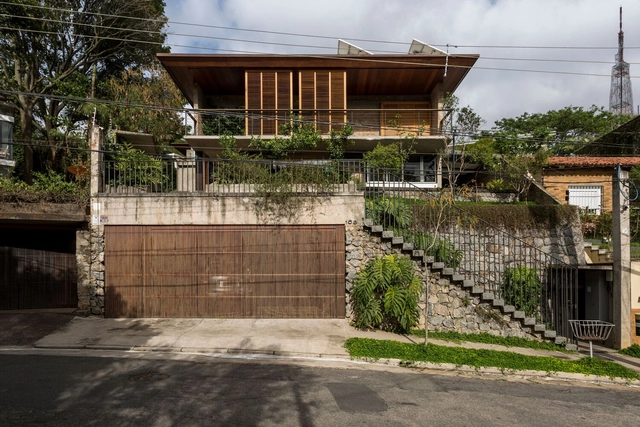
At a construction site before this, while seeing tons of rubble without a destination, was when I first used this technique. Each of the walls developed a different texture as we studied ways to build them. This surprises who walks by, and maybe makes them think about sustainability, which is evident in these rubble walls, that carry memories of the house that stood there once. They are living walls, full of information.
Northern Sweden is known for its natural beauty, expansive forests, and distinctive biosphere. Strong climatic contrasts through the seasons have required highly resilient architectural types, incorporating the local materials of wood and stone. The Treehotel in Swedish Lapland is known for its broad variety of cabins, with each cabin having a distinct identity that reacts differently to the forest.
El Roser Social Centre is laid out in the old prison in Reus, a building listed as a Cultural Asset of Local Interest and included in the Inventory of Architectural Heritage of Catalonia. The facility is an innovative program in Spain. It comprises a shelter for the homeless, a soup kitchen, and a community space, bringing together all the social services of the city, which makes it the first comprehensive facility of its kind.
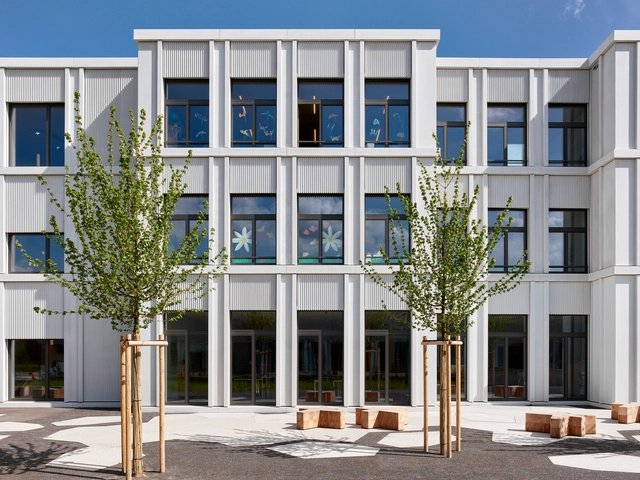
Six cluster gardens for a sustainable school. The new primary school augments the Brühl school site in Gebenstorf and creates a coherent ensemble. It is organized into six teaching clusters – in which every classroom has its own group room. Each cluster is grouped around a courtyard planted with creepers that provide natural ventilation for all the rooms and brings light into the entire school building, down to ground floor level.
Apart from being our refuge, a house must relate to the city and generate new encounters with the urban context in which it finds itself. Yet, at the same time, it must express a certain enigmatic notion of what goes on behind its walls and enclosures.
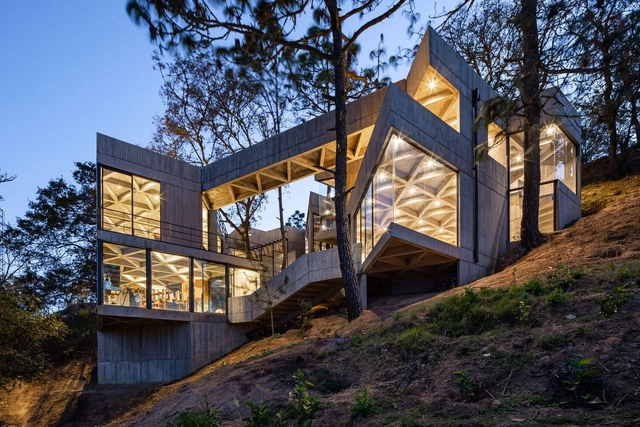
The project emerges based on the necessity to consolidate the community of San Pedro Cajonos with a higher silk production within the Sierra Norte in the state of Oaxaca. Due to the topography in the region, the project consists of finding the correct form to settle and emerge each volume and create a pathway for two options: the perpendicular or diagonal angles within the platforms. The purpose of the platforms is to respect the pre-existing trees and generate a series of ramps that have an adequate slope to disperse you from one place to another. Between each platform, we search for the correlation of interior-exterior, marking the landscape and searching for an adequate transition between each space, whose characteristics and temperature vary between one another.
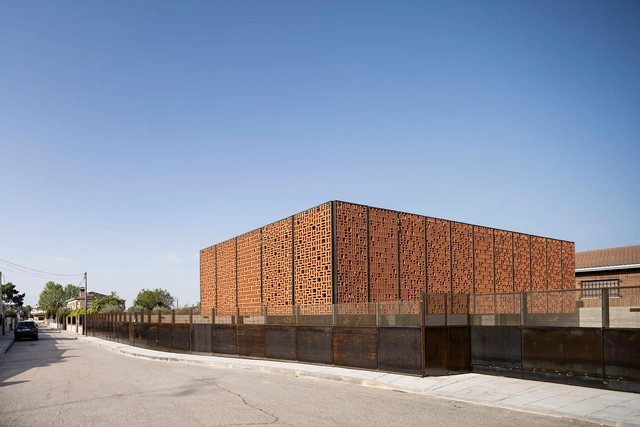
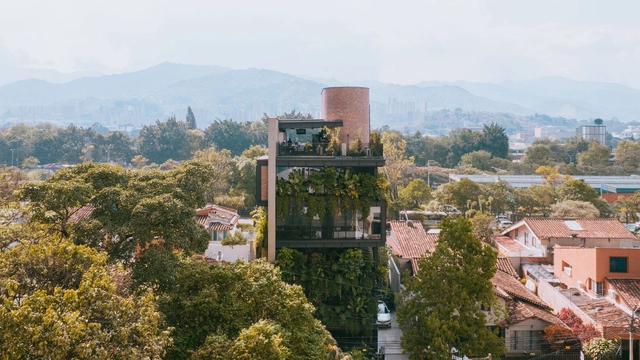
GP Building is located in the traditional La Aguacatala neighborhood of the city of Medellin, a few meters from the river, surrounded by low-density projects. La Aguacatala, originally conceived as a neighborhood of single-family homes, has been transformed into a sector for institutional use and services. GP Building pays special attention to this, and its architecture, without denying its institutional status, is a response to its surroundings, it is the reinterpretation of those forms of living, of the domestic in its built form. In its facades we find brick, concrete, and metal; The relationship between the masonry and the domestic is intentional and arises from the need to rescue traditional construction systems typical of the city. Medellín is a brick-colored city.
Text by Lesly Noguerón. Through active participation in the regeneration and creation of public spaces, this project encourages meeting, integration and neighborhood life and promotes the right of young people to inclusive cities.
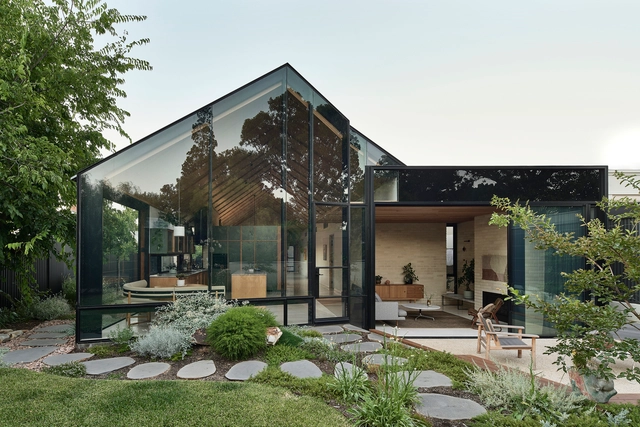
Taking cues from the adjacent 1880’s Villas – form, scale, setbacks, roof profiles – a simple, contemporary palette of complementary materials and finishes was introduced. House and garden were orchestrated to reflect the owner’s generosity of spirit, modern taste, dynamic family lifestyle, and desire to engage with their suburban community.
Casa 3 Elementos is a 200m2 single-family home located in Rio Ceballos, Córdoba, situated on a lot with irregular geometry and uneven topography, typical of the Sierras Chicas area. The architectural concept comes from a search to achieve the simple, without falling into simplicity, with a total absence of ornamentation and the free resolution of detail.
The two-story house is located in the town of La Garriga, near Barcelona, and it was built in 1884. The House occupies a narrow plot of 5x30 meters next to the old town.
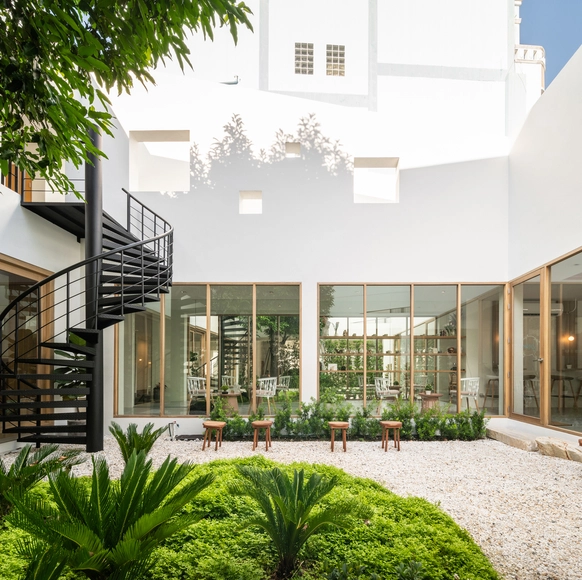
Risu Café is a home café located in the central area of Bangkok, Soi Ekamai 12th which is surrounded by residential, offices, hotels, and pubs. The space is separated into 2 zones, a public zone and a social space zone, and a residential zone.
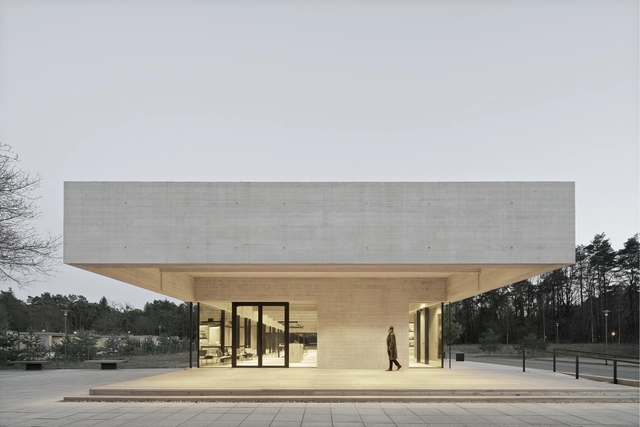
In summer 2017, the Bauhaus Monument “Bundesschule Bernau” was inscribed on the UNESCO World Heritage List. In order to meet the growing public interest in the building ensemble built by Bauhaus director Hannes Meyer and Hans Wittwer and the associated increase in visitor numbers, the town of Bernau launched a competition for the visitor center at the end of 2017.
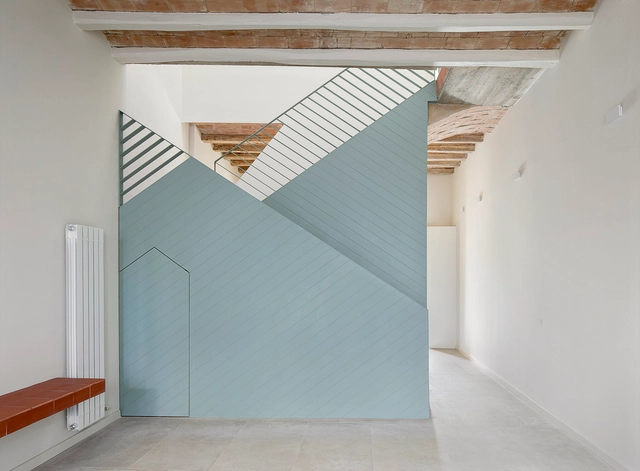
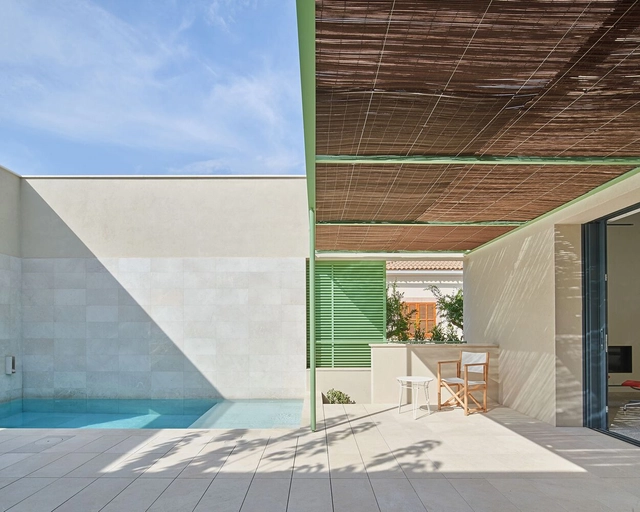
The architect Vicenç Mulet has recently completed a residential project on his native island, Mallorca. Connoisseur of the particularities of the place, Mulet has designed a house that pays homage to Mediterranean and Majorcan construction. Ca n'Uli is a house designed on a human scale, an intimate space, with a deliberately austere appearance and, above all, easy to inhabit. From the outside, you can appreciate the simplicity of the lines and a precise solution to maintain privacy. Inside, the rooms are connected as a single space around a central courtyard. The green color of the doors, typical of the buildings in the area, enlivens the neutral tones of the house and spreads placid well-being.
Casa Paraíso responds to a private commission for an individual home located in the Quinta Los Nores neighborhood, Córdoba, Argentina. The project begins at the beginning of 2019 with a visit to the lot, where we were particularly surprised by the enormous amount of large existing vegetation on the lot. The vegetation was located mostly on the final part of the lot, in close relation to the river La Cañada, and without any order or criteria, that is, it formed an irregular, moving fluid landscape. The first reaction was to walk there, stay under that blanket of vegetation, and perceive and feel what it conveyed. It was there that the concept of living under this mantle arose, locating the house away from the street, bringing it closer to the river, and enjoying living under this very particular and unique microclimate.
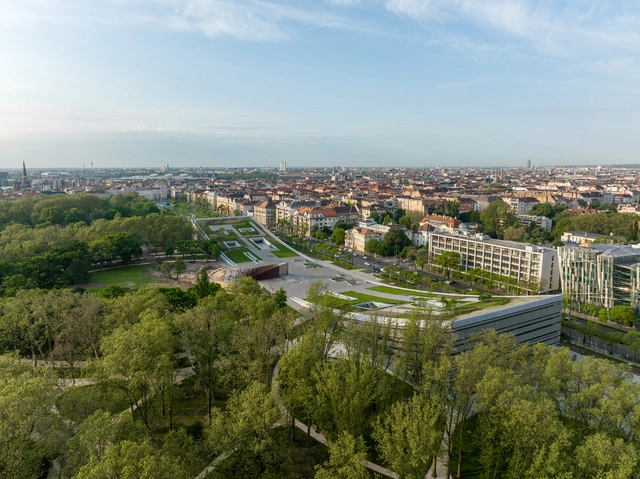
The new building of the Museum of Ethnography in Budapest City Park (Városliget) was opened (on 23/05/2022). The multiple-award-winning new museum building – which is part of Europe’s largest urban-cultural development called Liget Budapest Project - designed by FERENCZ, Marcel; Napur Architect - has dynamic yet simple lines simultaneously harmonized with the park environment and communicating with the surrounding urban area. The City Park (Városliget) is a familiar venue for the Museum of Ethnography: its collection debuted here at the 1896 Millennium Exhibition. The City Park (Városliget) is not an entirely unknown venue for the Museum of Ethnography, since it was here in 1896, at the National Millennium Exhibition.
Boulevard House is an exemplar of passive solar design that sits comfortably in its context, providing a robust, exciting, and flexible home. It finds a balance between a large home befitting its context and a humble, liveable, and friendly family home. The construction has been implemented impeccably. Every detail has been considered, high-quality materials are employed throughout, and landscaping integrates seamlessly.



![The Ark Cabin / Wiki World + Advanced Architecture Lab[AaL] - Exterior Photography, Cabins & Lodges, Forest](https://snoopy.archdaily.com/images/archdaily/media/images/62b4/6eef/3e4b/311f/ee00/0010/slideshow/DSCF3367.jpg?1655992038&format=webp&width=640&height=580)