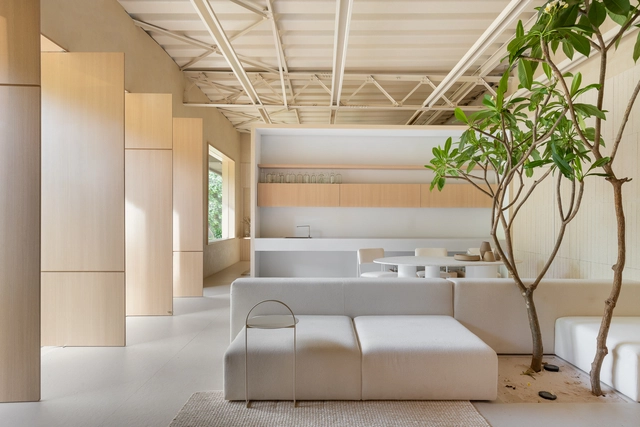
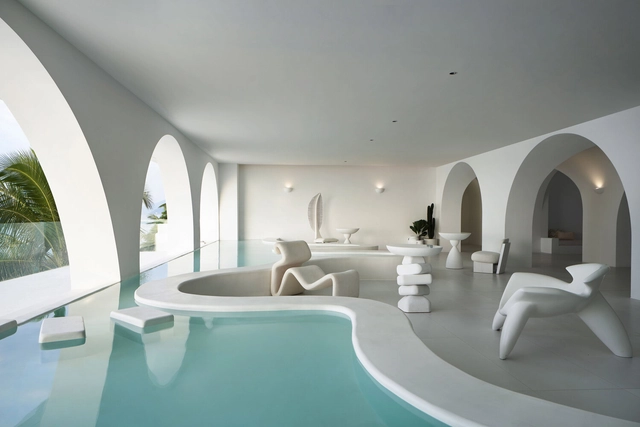
In the midst of a pandemic period, of impermanence, we understand that the house starts to function as a shelter and that returning to its own essence, getting to know and meeting ourselves is fundamental. This is how Ori Refuge was born, a space that instigates all who contemplate it to return to origins and to search for balance, through an architecture that overflows comfort and calm.
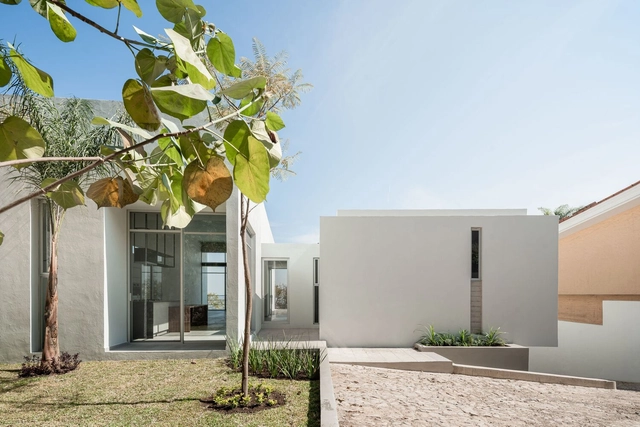
At the begging of the creative process, sometimes metaphors are so intimately infused in the essence of its materialization, that even if users are not sure of the threads moved for them to experience it, they manage to appreciate the result intuitively. In house EP 02 this is so subtle and prevailing, that even without knowing it, you can be watching perfectly synchronized planes landing in a straight line from the balcony, like aligned stars marking the horizon. This was achieved because the main axis of one of the 2 upper modules of the house was traced at the same angle as the landing track of the Guadalajara international airport, approximately 10 km away.
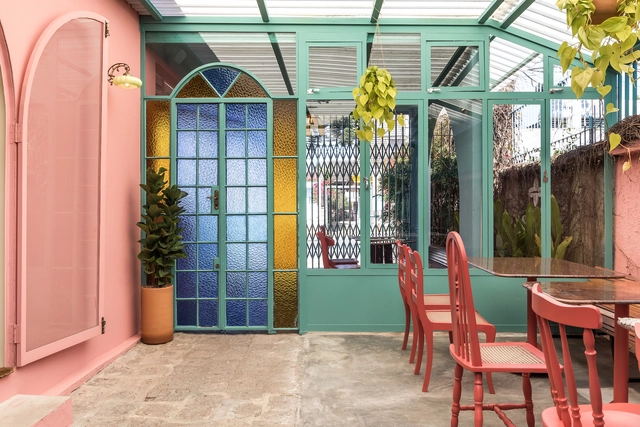
Family memories and vintage aesthetics are the protagonists of this multifunctional space. Through colors and details, this Brazilian emporium tells its story and perpetuates the harmonious relationship between food and well-being.
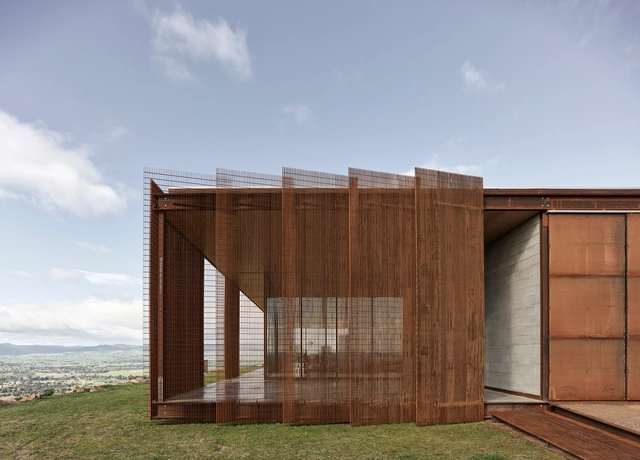
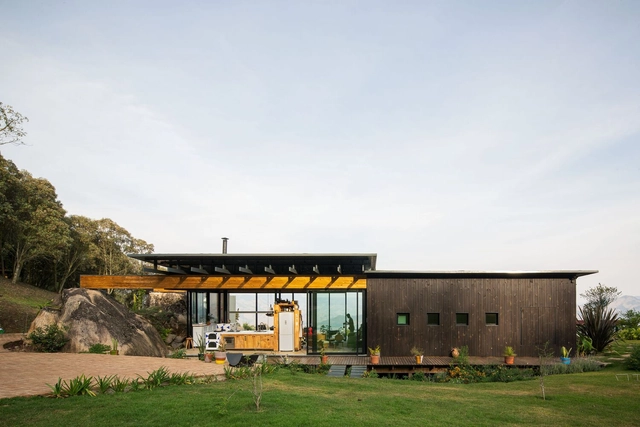
An off grid house built on top of a hill that needed to battle the wild weather. Built with rugged materials, and designed to minimize waste and last a long time.
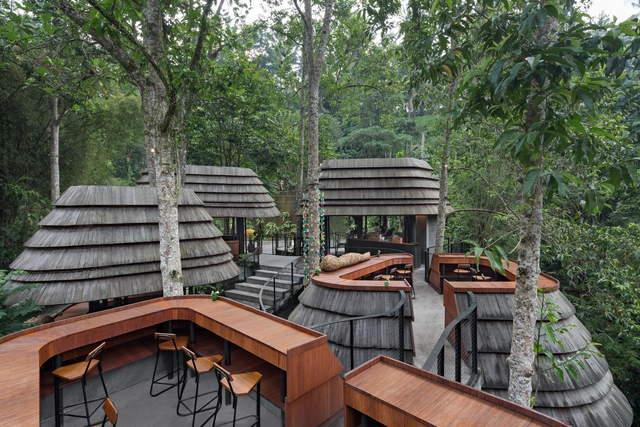
Located in the remote area in Ubud, Bali, the building is surrounded by forest and contoured land. This site is challenging to make a building that merges with nature. The design started with maintaining the existing elements, such as contoured land and trees. It makes the building initiate people to have more connection with nature.
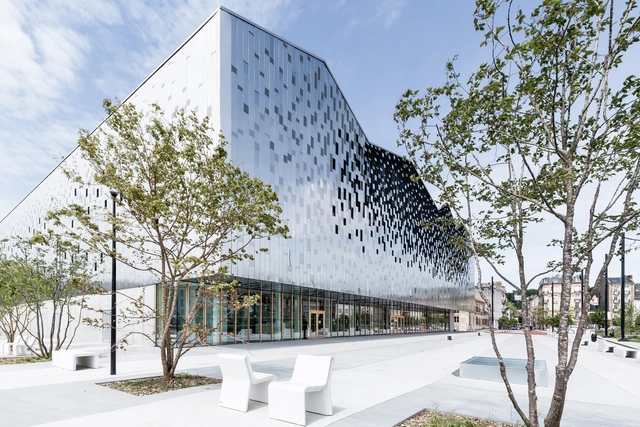
The mountain. The new extension is directly linked to its natural environment. The old facade evolves generating a second faceted skin that protects and characterizes the project. The result is a fragmented volume that generates a new public space with its movement and revamps the old sports center’s image. A triangulated geometry that mirrors its inner pearl towards the outside: a climbing wall for the town residents, intrinsically linked to the mountains.
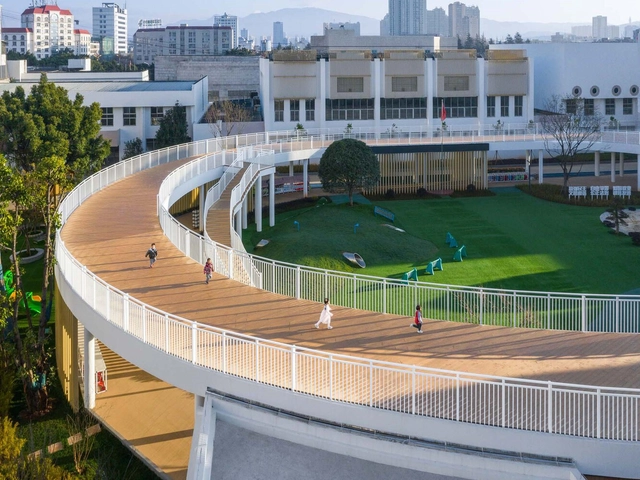
This case is YUXI NO. 1 KINDERGARTEN GUISHAN BRANCH (hereinafter referred to as Guishan Kindergarten). Its predecessor was the Youth Sports College of Yuxi City, Yunnan Province (hereinafter referred to as the Junior Sports School) with a history of 45 years. As one of the important livelihood projects for Yuxi City to welcome the centenary of the founding of the Communist Party and to respond to the "14th Five-Year Plan" urban renewal strategy, it eliminates large demolition and construction, releases children's characteristics, and penetrates ecological nature in the renovation and reconstruction, and interprets the new significance of public kindergartens in the practice of urban idle educational assets reuse.
The city of Le Havre immerses us in a moving atmosphere full of powerful stories and spray. The new cultural, associative, and sporting facilities are being established as one of the centerpieces of the Danton district, which is in the process of being upgraded. It responds to the policy of the city of Le Havre and more closely to the expectations of the inhabitants who were consulted to compose its program.
This project's challenge consisted of designing a compact house adapted to the irregular geometry of the lot, its changing levels, and regulation with a strict limit of the built area on the first floor. We leave the only small flat space of the lot for the parking. In this way, we cut the sloping area of the land (45% slope), generating a terrace to locate a longitudinal volume, taking advantage of the best views of the natural landscape.
The project is located nearby the “The Skyline Coast”, a popular tourist attraction in Sanya, Hainan, enjoying vast and open seascape and surrounded by the lovely sound of crashing waves, which can relieve people’s spirits in the immersive blue natural ambiance. The designer offers two interpretations for the façade structure of this project from different aspects - for the exteriors, it looks like the ocean waves rising and falling along the shore; for the interiors, each peak of the ocean wave encloses an independent frame, presenting vivid pictures of the infinite blue ocean.
‘Meteorite’ designed by Ateljé Sotamaa is a residential building located in seemingly remote Kontiolahti in eastern Finland. Approached on foot through the woods – as preferred by the architect – it appears a mystical dark object among the trees. The inside of this ultra-modern, ecological, three-storey wood building, however, is another world of open interconnected rooms that integrate with the surrounding landscape.
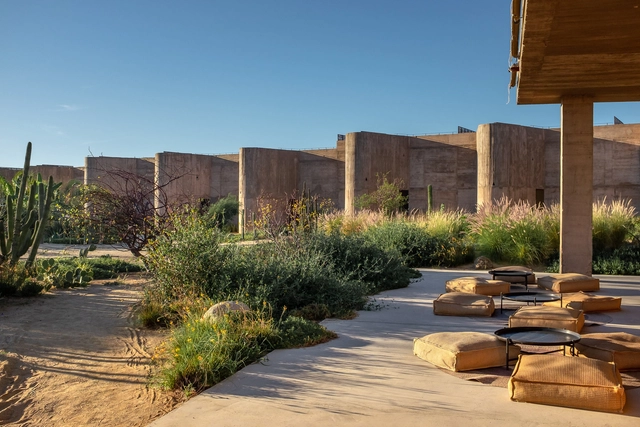
In this project, we aimed to emphasize the dynamism of the natural motion of the desert by exploring and highlighting the topography created by its winds, the elements that make it a gift to the senses, its natural form of creating paths and spaces that appear and disappear as in a landscape of surprises, and we did this by keeping true to its nature and cycles. The desert is a land of constant change. Winds and seasons shape and reshape it, transforming its undulations, its reliefs, its fissures, its entire appearance with a single sweep of the wind. In order to emphasize its motion, we worked on a design inspired by these winds. We worked without hard lines, imagining each and every contour of its topography as if shaped by desert gusts rather than pen on paper.
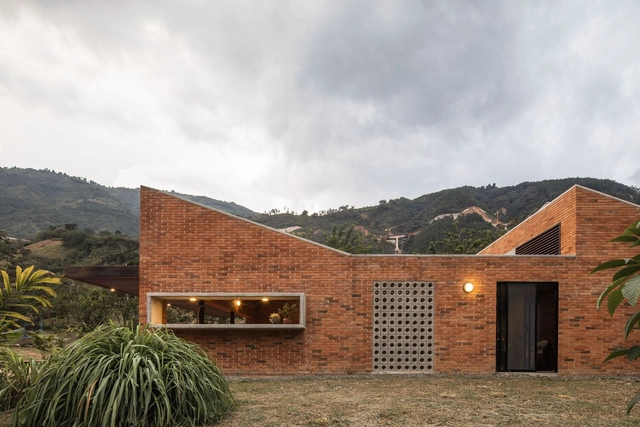
The challenge in this project was to design a compact and affordable country house with local technology and connected to the surrounding mountainous and tropical context. First, we defined the position of the house following strict setbacks regulation and taking advantage of a previously made earthwork. We located the built volume on a narrow strip of land surrounded by native forests and on the existing flat terrace. In this way, the social area faces the distant landscape to the north, and the house does not cast shadows on the pool at any time.
Shangen Village is a renovation project in Wenzhou, dedicated to transforming the once traditionally built village into a tourism destination. SpActrum left the project soon after we proposed the master plan during 2017-2018. The village has been hugely cleaned up since then but has lost some of its ancient ambiance. The once charming chaos has turned into the blankness of purposeful building activity. The SpActrum team became involved again, aiming to recall and restore the power of ambiguity once felt on the site, and started to work on an empty plot by the village bridge.
The house is located on the third floor of a unique building built in 1927 by the architect Luis Ferrero. In chamfer and with 5 balconies to the street, the house was distributed in 2 small rooms, dining room, living room, kitchen, and bathroom. In contrast to the regionalist style of the building's façade, the inspiration for the interior project was the Sonneveld House (Rottherdam 1930), due to the use of color and materials in the different rooms. The new distribution aims to give priority to spaces with an obvious social function, uniting the dining room, living room, and kitchen in a single 45m2 room. This space is characterized by being the only one whose walls have a neutral, light beige base. For the floor, a green-based lime mortar is chosen. This floor, together with the metal pillars, the partition curtain, and part of the furniture, manage to generate a dynamic space where color is strongly present, but only occasionally.
After some conversations with the clients, we scheduled the site visit. On the way there, after a paved road we got to a small steep dirt road, where we found a clearing in the vegetation, in the shape of a shell, there was the plateau where we were to embed the design. With 1470 meters of altitude above sea level, the site is 600 meters higher than the paved road. It´s may sound only like a curiosity, but it was crucial data that determined the approach we had to take on the construction.
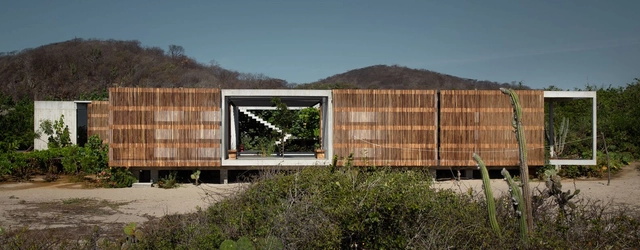
Two volumes offset from each other define the configuration and dynamics of this typical patio house, containing part of the existing vegetation, to which we include a natural water space, generating a new microclimate. Both volumes assembled from their structure of concrete walls and wooden facades are connected through a pergola that filters the light from the patio. The long sides extend towards the sea and the mountains, allowing an unlimited dialogue with the territory on all its ventilated faces.
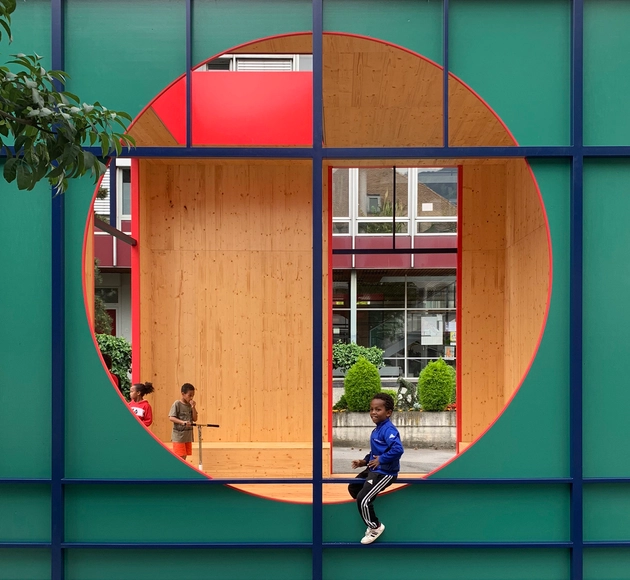
For the municipality of Aigle (Switzerland), we have designed three temporary pavilions on the town’s central square, the Place du Marché. This square will undergo a transformation during the next years, to become greener, pedestrian-friendly, and prominent for the city.