Mixed Use: The Latest Architecture and News
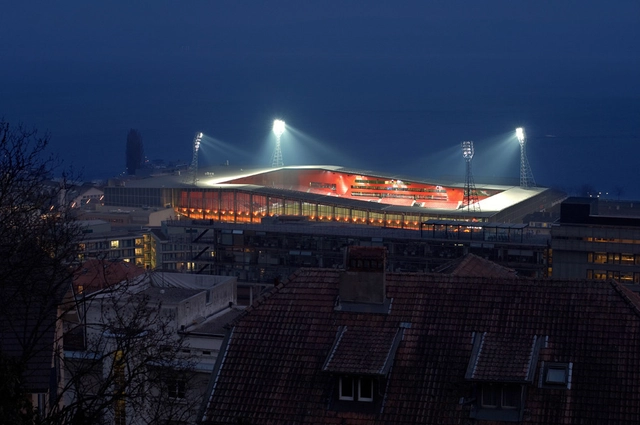
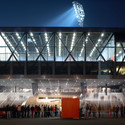
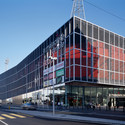
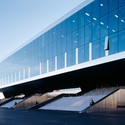
Multifonctional Complex La Maladiere / Geninasca Delefortrie Architectes

https://www.archdaily.com/60746/multifonctional-complex-la-maladiere-geninasca-delefortrie-architectesNico Saieh
Edgar Street Towers / Iwamoto Scott

San Francisco based IwamotoScott sent us their latest tower development produced for the Greenwich South design study led by Architecture Research Office, Beyer Blinder Belle and Architects & Planners and OPEN. Contributing architects, artists and designers included Coen + Partners, DeWitt Godfrey, IwamotoScott Architecture, Jorge Colmbo, Lewis.Tsuramaki.Lewis Architects, Morphosis, Rafael Lozano-Hemmer, Transolar Climate Engineering and WORKac.
https://www.archdaily.com/59925/edgar-street-towers-iwamoto-scottNico Saieh
Lace Hill / Forrest Fulton Architecture

For Forrest Fulton Architecture‘s competition proposal, the Alabama-based firm designed a 900,000 sqf biomorphic spatial surface that connects the adjacent city and the landscape. The architecture focuses on creating an urbanistic landscape that morphs the common urban element of Yerevan, the superblock, to the site, a truncated hill along the natural amphitheater of the Yerevan. This new model of development supports a “holistic, ultra-green lifestyle” with overlapping natural and urban phenomenon.
More images and more about the project after the break.
https://www.archdaily.com/58797/lace-hill-forrest-fulton-architectureKaren Cilento
Benson & Forsyth wins competition to design Islington towers

London-based Benson & Forsyth has won the competition to design two skyscrapers in north London. They defeated John McAslan & Partners, Panter Hudspith, Flacq and Studio Egret West, and will design two 21-storey towers, with 355 flats, shops and office space.
Seen at the Architect’s Website. More images after the break.
https://www.archdaily.com/56989/benson-forsyth-wins-competition-to-design-islington-towersSebastian Jordana
One Bloor / Hariri Pontarini Architects

Toronto-based architectural firm Hariri Pontarini Architects in collaboration with Great Gulf Homes has recently revelaed the new design for One Bloor, a mixed-use residential condominium tower in Toronto, Canada.
More images and architect’s description after the break.
https://www.archdaily.com/56719/one-bloor-hariri-pontarini-architectsSebastian Jordana
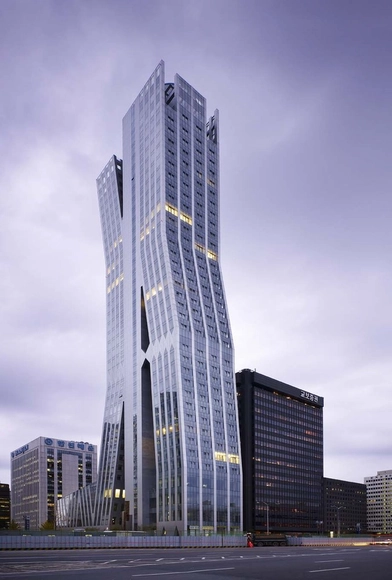

ArtsQuest Center / Spillman Farmer Architects

Land used by the former Bethlehem Steel Corporation in Pennsylvania is now being transformed into a dynamic arts, culture and education campus known as SteelStacks. Anchoring the 4.5 acres campus will be Spillman Farmer Architects’ ArtsQuest Center, a four-storey glass and steel structure with 68,000 sq ft of distinctive venues to showcase the arts.
More about the ArtsQuest Center after the break.
https://www.archdaily.com/53146/artsquest-center-spillman-farmer-architectsKaren Cilento
Shanghai High-Rise / EXH Design

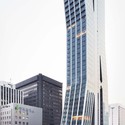
EXH Design was hired to redesign the façades of high-rises in one of the most active urban areas in Shanghai. With the plans of the buildings already halfway through government approval, EXH was allowed little leeway in trying to change the existing plans. Instead, EXH turned their attention to “sculpting” the building’s surface. Taking a geometrical approach, the new façade aims to create a dynamic effect that will become a strong architectural expression for the surrounding areas.
More about the facades after the break.
https://www.archdaily.com/49774/shanghai-high-rise-exh-designKaren Cilento
Hua Qiang Bei Road / Work AC

WORKac‘s design for a 1-kilometer section of Hua Qiang Bei Road in Shenzhen was awarded first prize. The design responds to the area’s growing commercial character which has unfortunately created traffic problems. For the proposal, the road becomes a series of “strategic interventions” where “five iconic lanterns”, (twisting bands of required program) create unique, visible destinations through a process of “urban acupuncture”.
More images and more about the design after the break.
https://www.archdaily.com/47031/hua-qiang-bei-road-workacKaren Cilento
Hybrids III / a+t

Every time my architect friends drop by my office, I have to hide the a+t books and magazines because they always want to borrow them… And I don´t blame them, as the publications by this spanish editorial are useful tools for the architects.
The D Book, Density, HoCo and the Hybrids Series dissect some of the most iconic built/ongoing projects in the world, presented in full detail.
Hybrids III is the last one in the Hybrids series, covering residential mixed-use buildings. The book starts with a brief comparison between hybrid buildings and social condenser built during 1945-1975 to introduce the subject, like the John Hancock Center in Chicago by SOM or the Unite d’Habitation in France by Le Corbusier.
After this historic context, there is a good selection 0f 20 contemporary residential mixed-use buildings, such as the Sky Village by ADEPT + MVRDV, the St Jakob Turm by Herzog & de Meuron, the Market Hall by MVRDV (under construction), the Porta Fira Towers by Toyo Ito + b720, the Beekman tower by Frank Ghery, De Rotterdam by OMA (under construction), the Aqua Tower by Studio Gang and more.
The editorial seems to work very close to the offices, as the detail of the projects are amazing: detailed drawings, large photos, good diagrams, size comparisons, and all the facts you need to completely understand these projects as you can see on the photos after the break:
https://www.archdaily.com/46316/hybrids-iii-atDavid Basulto
Lucien Rose Complex / Atelier du Pont

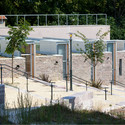
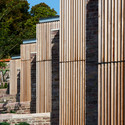
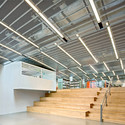
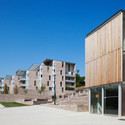

https://www.archdaily.com/45990/lucien-rose-complex-atelier-du-pontNico Saieh
B199 / Oncuoglu Architecture

Oncuoglu Architecture designed the B199, a 74.500 m² mix-use development for Istanbul, Turkey. Inspired by the urban landscape of Istanbul, the project occupies the intersection of the Gultepe and Buyukdere, two districts with different urban patterns. The project is designed to act as a “bridge integrating the spatial discontinuity between two sides of the site.”
More about the B199 after the break.
https://www.archdaily.com/45373/b199-oncuoglu-architectureKaren Cilento

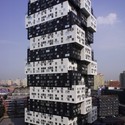
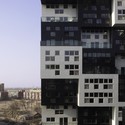
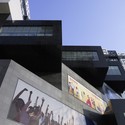
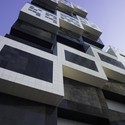


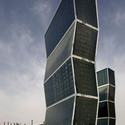


Zagrad Center / Randić & Turato
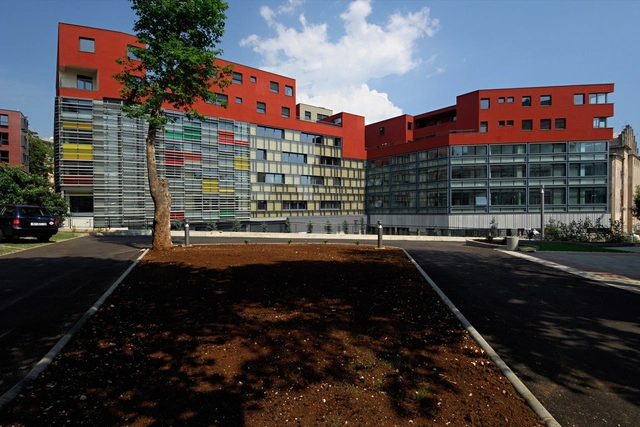


https://www.archdaily.com/43739/zagrad-center-randic-turatoNico Saieh
The Docks Dombasles / Hamonic + Masson architects
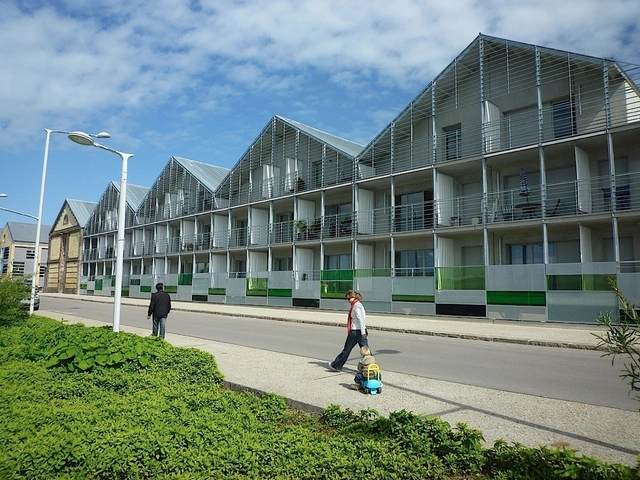
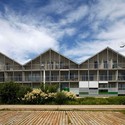
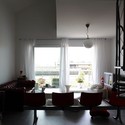
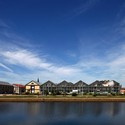
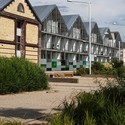

https://www.archdaily.com/43394/the-docks-dombasles-hamonic-masson-architectsNico Saieh
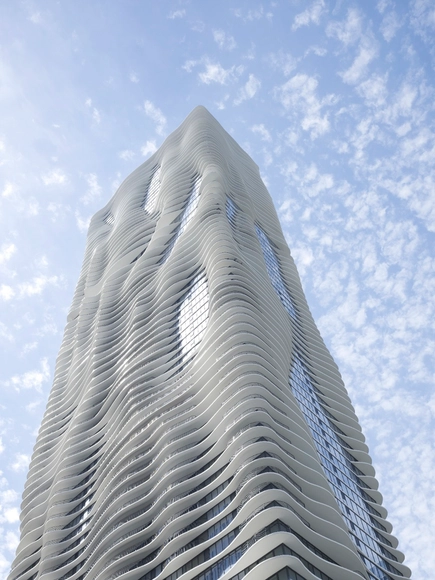
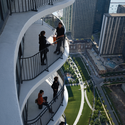
Aqua Tower / Studio Gang


-
Architects: Studio Gang
- Year: 2009
https://www.archdaily.com/42694/aqua-tower-studio-gang-architectsDavid Basulto