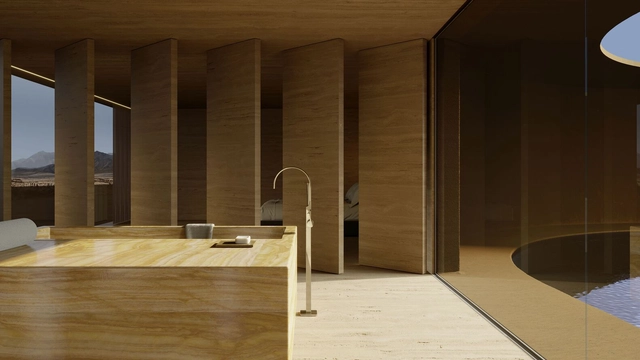
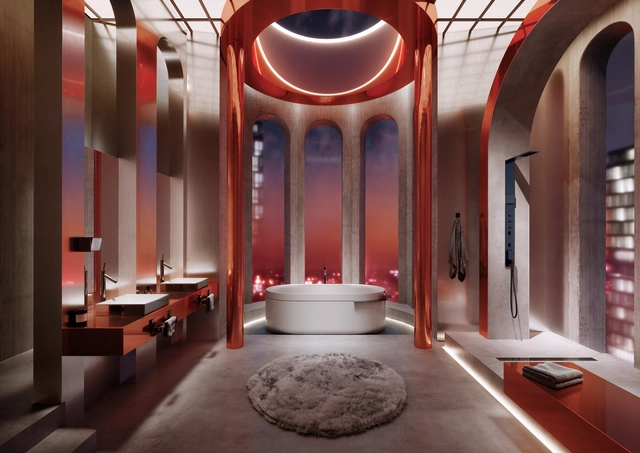
Inspiring applications of the MEM collection in architectural settings inspired by AI. Image Courtesy of Dornbracht
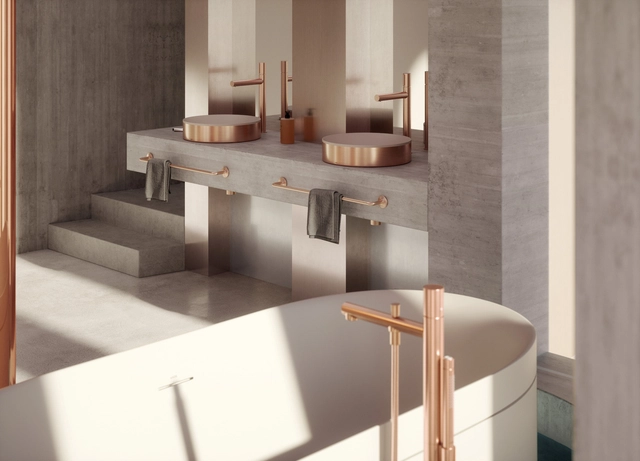
In addition to contributing to the functionality of the space, bathroom fittings underlie the overall aesthetics of a chosen design style. Within their technical features –as well as the possible materials, finishes, and styles–, fittings play a role in both the visual appeal of a space, while also focusing on comfort and user experience. This is part of Dornbracht's continuous re-imagination of bathrooms as living spaces, in which the brand seeks to create innovative solutions based on proportion, precision, progressiveness, performance, and personality.
Nowadays, the term “utopia” is used to describe an idea that seems unattainable —at least in the contemporary context— intrinsically related to philosophical, scientific, urbanistic, and architectural concepts, among others. The close connection between utopias and architecture is evident, as this discipline is often associated with imagination. Some notable examples include “The Unreliable Utopia of Auroville's Architecture” and “The City in Space: A Utopia”by Ricardo Bofill. In this context, architects and designers alike use design as a means to develop innovative and disruptive ideas through various elements.
https://www.archdaily.com/1007798/balancing-neoclassical-and-futuristic-design-the-utopian-dream-bathroom-conceptEnrique Tovar
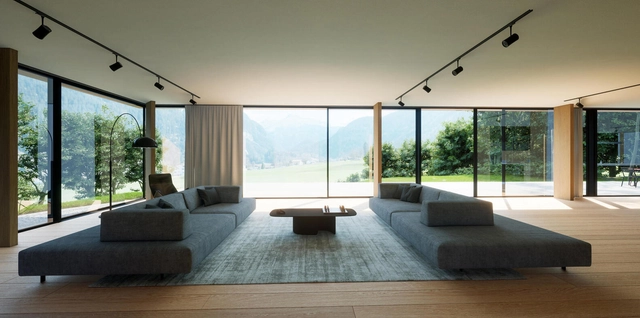
For architecture full of light: large-area glass facades allow daylight to play a role throughout while also providing unrestricted views. Image Courtesy of Solarlux
Living spaces framed solely by glass, whether in the city or the countryside, are a long-cherished architectural dream to which various architectural monuments already bear witness. First and foremost, there's Ludwig Mies van der Rohe, who blurred the lines between inside and out with modern steel constructions and large-scale glass facades that stage absolute space. Anyone strolling through the Neue Nationalgalerie in Berlin will sense the light-footedness and transparent generosity of this idea in all its glory.
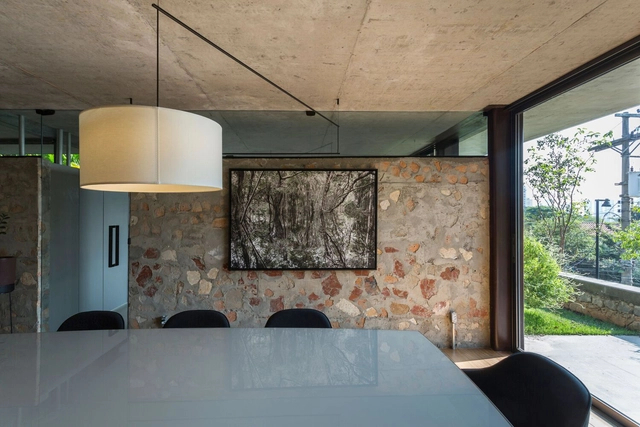
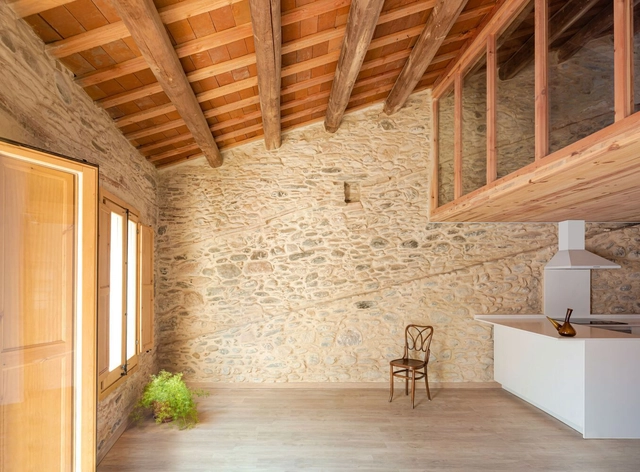
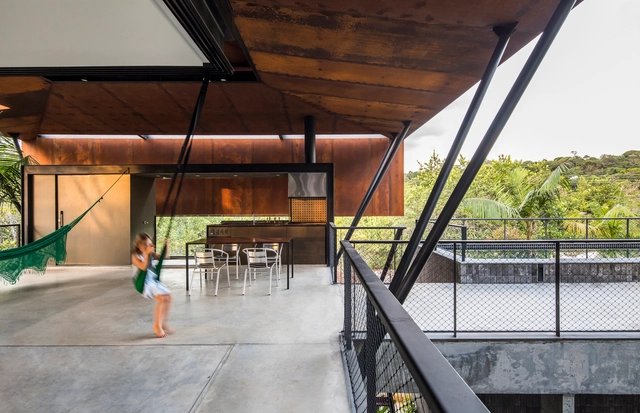
Ancient cyclopean walls were built by overlapping raw stones, supported one on the other, without the use of mortar. The name derives from the Cyclops, the giants of Greek mythology, as their construction required seemingly superhuman effort due to the weight and difficulty of lifting and fitting each wall piece. Cyclopic concrete, in turn, mixes this ancient constructive technique with contemporary materials and techniques. What sets it apart from traditional concrete is essentially the size of the coarse aggregate, which is traditionally composed of stones but can also include brick or concrete remains. Our Projects section includes examples of this constructive technique, which, unlike the cyclopes, clearly carries traces of the workers who built it. We talked to Rafic Jorge Farah, from São Paulo Criação Office, about his experience with this technique in recent works.
How can a building be more efficient? It is a concern that architects face on a daily basis, as they try to keep up with the demands of an industry that is increasingly aware of its environmental impact. Today more than ever, there is an effort to design buildings that integrate sustainability, efficiency and thermal comfort, which are fundamental pillars of a healthier built environment.
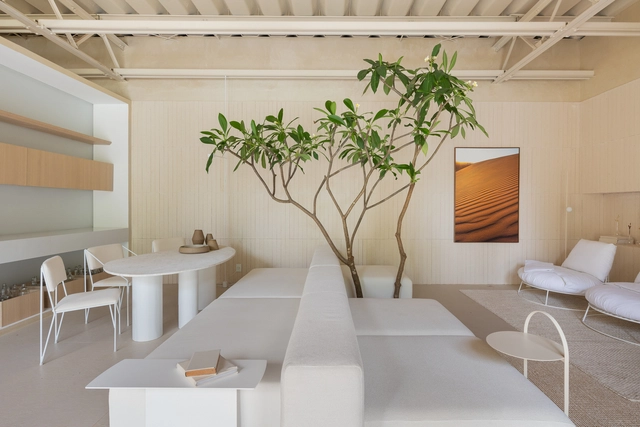
The history of 'neutral colors' is a fascinating journey through the evolution of human aesthetics and design sensibilities. Closely related to the makeup of materials organically found in nature, the color chorus of whites, grays, and earthy brown tones has played a pivotal role in artistic expression, fashion, interior design, and architecture for millenia. From the understated hues of early clay, straw, wood, or brick architectural structures to the now prevalent contemporary interior style, neutral colors have transcended cultural boundaries and continue to hold a special place in our visual landscape – offering a sophisticated elegance and versatility that has stood the test of time.
Exploring materiality, contextuality, and approach, our editors developed thought-provoking articles seeking to question and describe some of the aspects that make any Architecture, a good one.
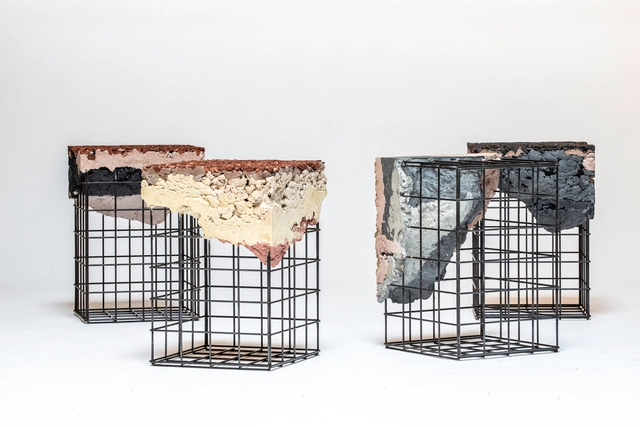
Irene Roca’s “Appropriating the grid” project is born out of the contemporary ruins of our current construction processes. An exploration of the waste that is generated and the legal complexities of discarding this waste awakened a sense of urgency and creativity in the architect, resulting in a collection that molds and re-formulates construction waste into versatile interior design objects.
https://www.archdaily.com/963957/materials-are-being-produced-according-to-fictitious-demand-in-conversation-with-irene-rocaDaniela Porto
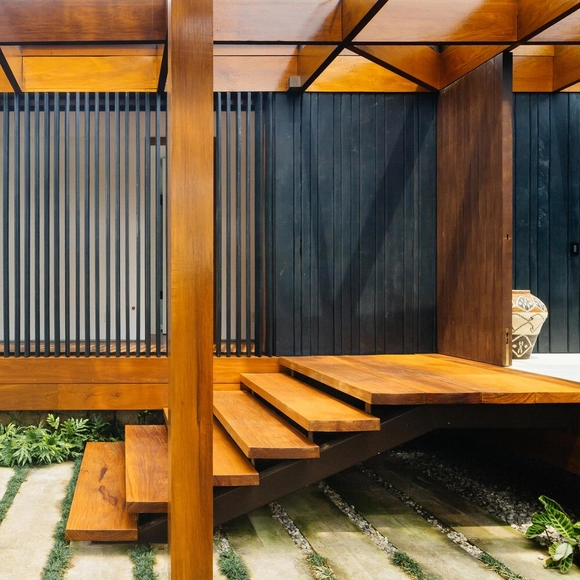
Wood in contemporary construction is often associated with coziness, simplicity, and a certain sense of nobility. Despite requiring more frequent maintenance compared to materials like concrete, wood is increasingly considered a viable option within the concept of regenerative design, owing to its place in the natural organic cycle of our planet. While wood has been a staple in architectural design, carbonized wood, known as yakisugi, is gaining significant attention as a finishing choice.
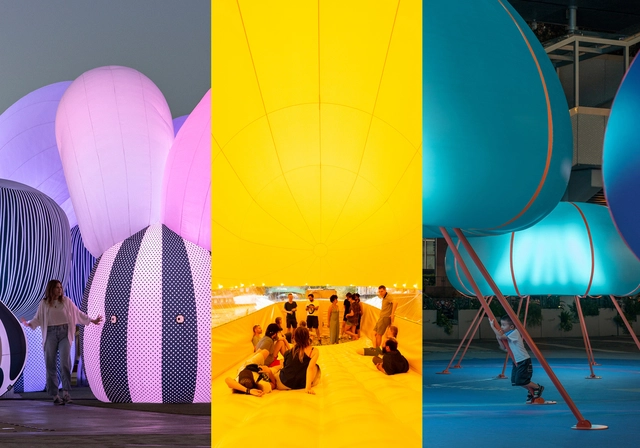
As society, technology, and architecture have evolved, designers and architects have embraced novel construction systems and innovative approaches to reshape the built environment. This advancement has stretched the boundaries of traditional construction techniques and ignited fresh ideas in building design.
https://www.archdaily.com/1007496/inflatable-architecture-pneumatic-structures-transforming-built-environmentsEnrique Tovar
Timeless design possesses qualities that resonate with people on a fundamental level, whether through its simplicity, functionality, emotional impact, or adaptability. It continues to captivate and inspire indefinitely, remaining relevant and cherished across generations. This is the primary ambition of any designer, to endure through their creations over time. Philippe Starck, the renowned French designer, has long been at the forefront of the design world. He emphasizes that "The keywords for the future and ecology are longevity, transmission and heritage." His designs aim to go beyond mere aesthetics, incorporating a commitment to timelessness and a dedication to environmentally conscious practices.
Innovation thrives when we pause to observe, question, and reimagine the world around us, turning challenges into opportunities for progress. Nature, in particular, serves as a rich source of inspiration. By observing it, studying its daily challenges, and contemplating its processes, we can discover valuable insights that inspire innovative solutions.
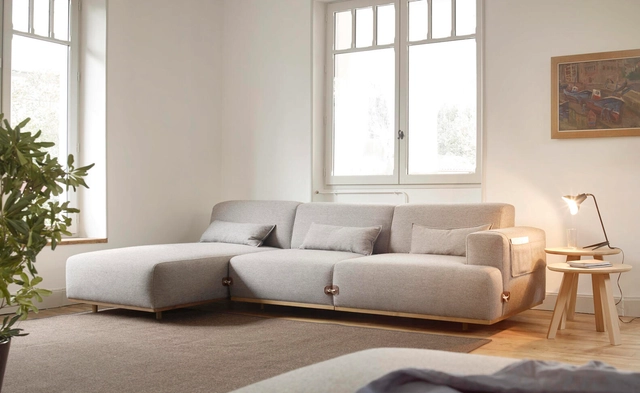
The Duffle is a modular system that can create an armchair, or a much larger composition of units joined together, offering a broad spectrum of possibilities depending on the space it occupies. Image Courtesy of BOSC
There’s something old-fashioned, or indeed anti-fashion about a duffle coat. It’s charmingly naïf, the stuff of school uniforms and Paddington Bear, with a history that goes way back to the mid-19th century. It had a life in the military, as part of the uniform for the Royal Navy, and like much service attire, was then reimagined by the world of high fashion. Jean Cocteau used to stroll with close friend Coco Chanel, wearing his white version. Decades later, Rei Kawakubo made an oversized statement with versions at Comme des Garçons, and it remains a favorite of arch Modernist Margaret Howell. When Jean Louis Iratzoki was working on plans for a new sofa to join his ever-growing range of designs at BOSC, he took inspiration from the toggles and nostalgia of all things duffle. It was a subtle way to infuse what is a contemporary and highly sophisticated piece of furniture with a touch of something softer, from the past.
https://www.archdaily.com/1007402/nostalgic-comfort-the-charm-of-the-duffle-coat-on-a-sofaMark C. O'Flaherty
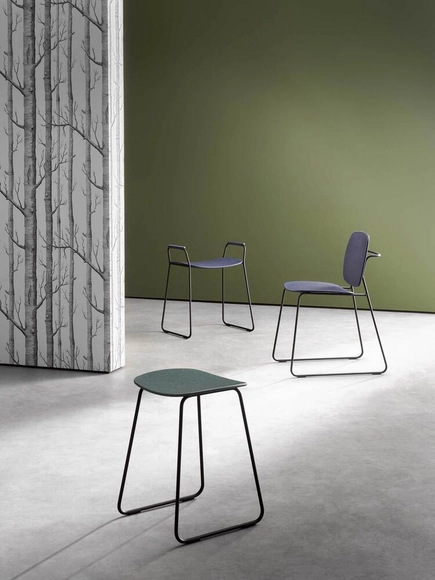
The role and relationship of furniture in architecture and space design are of great relevance. Designers such as Eileen Gray, Alvar Aalto, Mies Van der Rohe, and Verner Panton conceived furniture —primarily stools and chairs— that endure over time as powerful and timeless elements, with a determining impact on the interior atmosphere. Thus, the relationship between furniture and space becomes a constant dialogue in which design, aesthetics, and materials contribute their dimension.
https://www.archdaily.com/1007326/re-purposing-materials-from-post-industrial-recyclate-to-accessible-furnitureEnrique Tovar
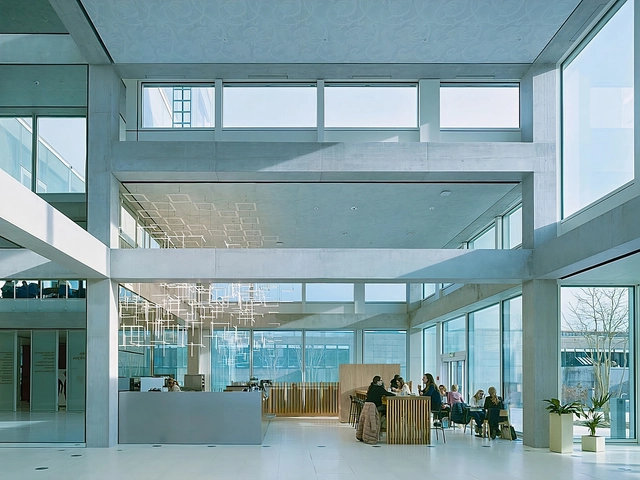
HSG Learning Center / Photo by Roland Halbe. Image Courtesy of Holcim
The need to reduce the construction industry's carbon footprint and its reliance on virgin natural resources is the most pressing issue facing the sector. It is therefore extremely important to foster innovation that can improve existing building materials and make them environmentally friendly, in order to successfully tackle its sizable carbon footprint and close the material loop.
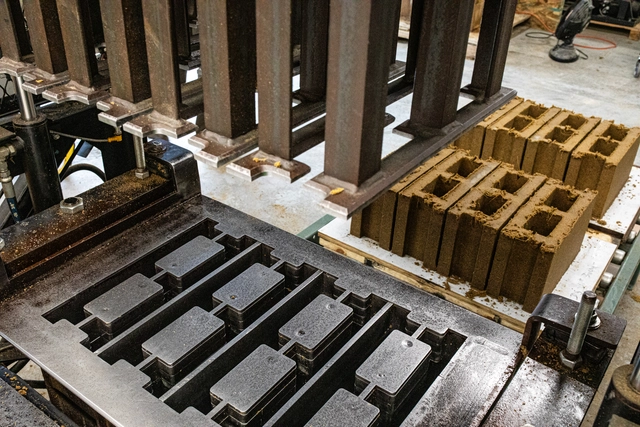
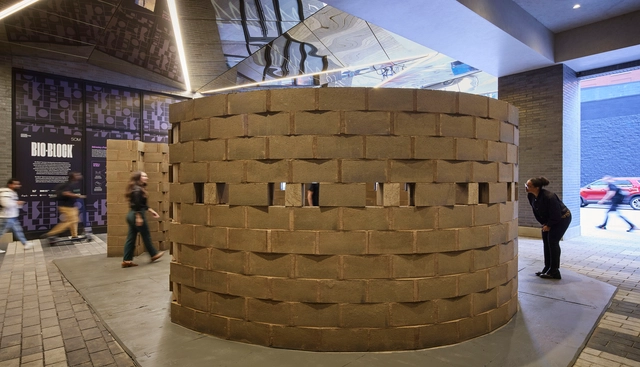
For the opening of CAB 5, the 5th edition of the Chicago Architecture Biennial,Skidmore, Owings & Merrill (SOM) presented an eco-friendly alternative to traditional concrete. Named the “Bio-Block Spiral,” the installation is at The Mews in Fulton Market in Chicago. The creation was developed with Prometheus Material, a materials company that provides sustainable building materials for a carbon-negative future.
Laurent Troost is a Belgian architect with a vast history of projects in the Netherlands, Spain, and Dubai. He made the decision to move to Brazil in 2008, settling in the city of Manaus. In this region filled with challenges and inspiration, Troost developed a unique architectural practice by combining his experiences in designing luxury buildings abroad with structures in the heart of the Amazon. His work gained international recognition and has been honored with multiple awards. On September 4th, 2023, he was in Florianópolis for a lecture at the NCD Summit, where we had the opportunity to discuss his work and his views on architecture and sustainability.
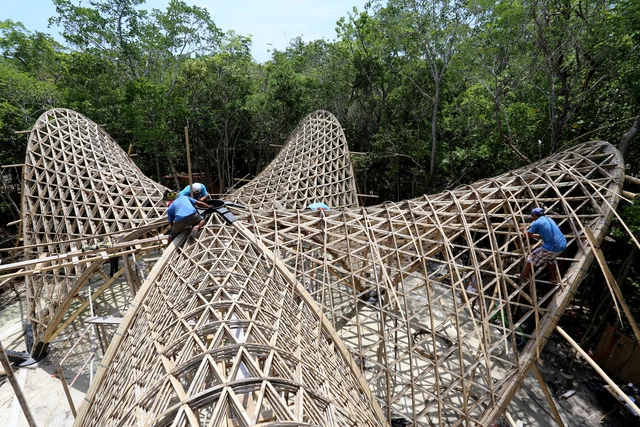
Aerial perspective of the Luum Temple under construction, revealing the network of bamboo elements. Image Courtesy of CO-LAB design office
In a world grappling with environmental challenges, forward-thinking architects and engineers are increasingly leaning towards more sustainable solutions. While steel and concrete have long dominated the construction industry, bamboo is now stepping into the limelight as a compelling alternative. Thanks to its potent mix of strength, flexibility, and eco-friendliness, bamboo is fast becoming the go-to material for those keen on pushing the boundaries of sustainable architecture.