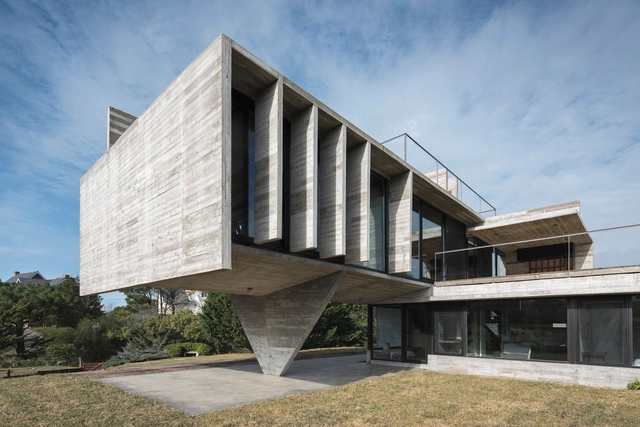
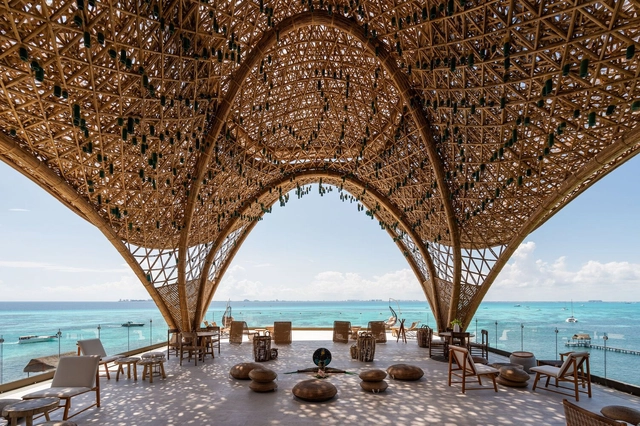
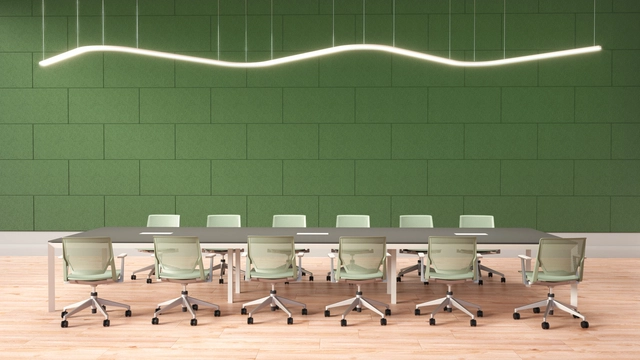
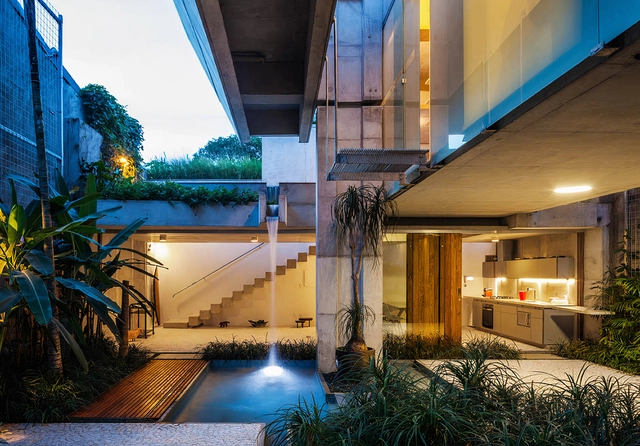
In response to the diverse topographies and natural conditions throughout the Argentine territory, the works of Luciano Kruk propose an architecture that works in harmony with the environment, the landscape, and the nature in which they are situated. Whether immersed in a forest, on sloping terrain, or on a rural plain, among other geographies, his intention is to enhance the relationship between the interior and exterior of the architecture, using concrete as the main material in most of his projects.
In pool design, one big challenge is to make sure that the pool blends in with the rest of the architecture. If it is being designed from scratch, the materials must meet the necessary design criteria, as well as the technical requirements of areas exposed to the elements and in direct contact with water.
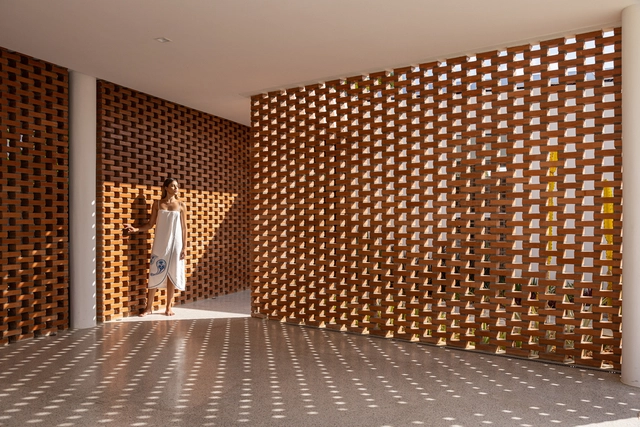
Brick is one of the oldest and most versatile materials in construction, going beyond the simple masonry wall. Its origins date back to 7500 B.C., with kiln-fired specimens appearing around 3000 B.C., representing a technological breakthrough for the construction of sturdier buildings. Spreading across Europe and Asia around 1200 BC, they replaced materials such as wood and stone in scarce regions. Roman bricks, notable for their long shape, were widely used in the construction of their cities and are still used today. The history of bricks is intertwined with that of civilization, being an easy-to-produce, resistant and versatile material, allowing for a multitude of applications and achieving impressive and unusual results.
Limited resources are becoming an increasingly common challenge in architecture. Today, regardless of the region, projects are affected by the availability of resources, which are now compounded by environmental considerations. This situation, far from being restrictive, prompts us to explore new possibilities in how we conceive the built environment. In this context, it is crucial to understand that resources are not only limited to the economy but also include technological, material, and spatial aspects. Thus, we can enhance our creativity and efficiency by broadening our considerations when approaching architectural design and its challenges, doing more with less.
https://www.archdaily.com/1016682/community-growth-through-architecture-maximizing-limited-resources-for-positive-impactEnrique Tovar
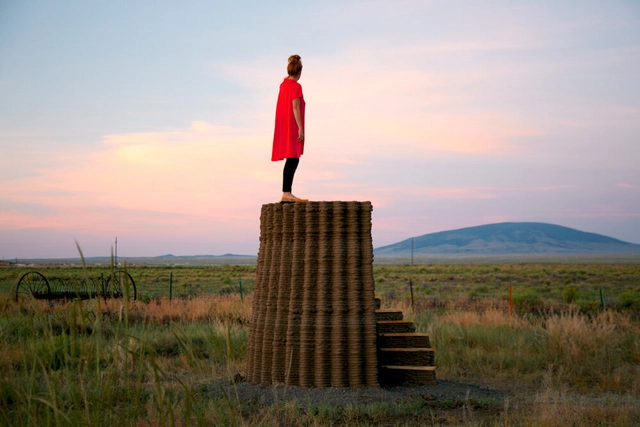
Mud Frontiers. Image Courtesy of Rael San Fratello
Understanding a discipline from multiple perspectives and intersections is essential for acquiring a deep understanding of it. In architecture, the diversity of approaches to its study enriches our perception by allowing us to appreciate its complexity from different angles. For students and professionals alike, exploring aspects such as history, sources of materials and products, construction processes, implementation of new technologies, and contemporary social challenges is crucial. These aspects intertwine and expand the conventional notion of "architecture," transcending the mere creation of buildings or the definition of spaces.
https://www.archdaily.com/1016555/we-can-transform-the-profession-by-rethinking-how-we-might-serve-society-a-conversation-with-ronald-raelEnrique Tovar
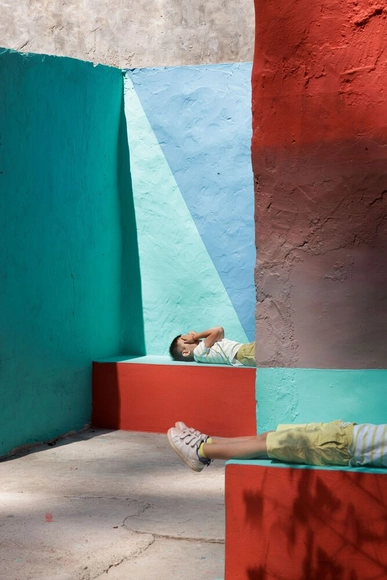
In the quest to promote a more sustainable construction where the use of natural materials contributes to the transmission of local traditions and cultures, an increasing number of architecture projects are exploring different resources and techniques to address environmental, economic, or social concerns. Understanding the benefits and qualities of materials such as color or texture influences the final experience of those who inhabit, walkthrough, or visit spaces. Therefore, understanding their technical, constructive, aesthetic, and functional properties should be part of the design process from the beginning.
Throughout history, the undeniable interrelationship between sound and architecture has shaped users' experiences. From auditoriums to offices, cultural centers, and schools, acoustics in architecture can manifest itself in two ways: as a determining element of a structure's shape and as a material. When discussing aesthetics, the latter aspect is particularly relevant, as any material that forms part of a composition aims to have a cohesive design with the rest.
https://www.archdaily.com/1015929/acoustics-that-blend-performance-with-aesthetics-why-material-choices-matterEnrique Tovar
It's fundamental that architects know about structures, not only to bring their designs to reality but also to be able to discuss their projects with engineers in order to find the best solutions for construction. Structural pre-dimensioning is crucial to the initial design of the structural components, revealing the restrictions and the possibilities of the spaces.
https://www.archdaily.com/891880/learn-to-pre-dimension-a-reinforced-concrete-structureJoão Carlos Souza
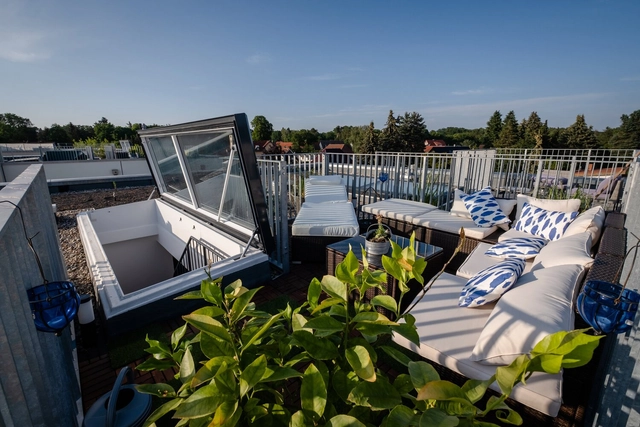
TALE Townhouse - Hohen Neuendorf. Image Cortesia de LAMILUX
Humanity has inhabited cities for millennia and witnessed a shift to a predominantly urban global population since 2010. Throughout this time, it has repeatedly come up with creative solutions to ease the challenges of living in urban environments. The “fifth façade," as Le Corbusier proposed, is a yearning for serenity, greenery and space, and is currently experiencing a growth in popularity, with people transforming rooftops into serene sanctuaries as one way to achieve it. Especially in densely populated areas, the attraction of roof terraces is undeniable, offering a break from the frenetic pace of urban life and a deeper connection with nature.
However, access to these spaces requires care, especially when it breaks through the roof slab. This requires seamless integration with the space below, technology to enable water-tightness and visual connection, along with easy handling for opening and closing. Designed with functionality and aesthetics in mind, these access hatches can integrate seamlessly into the roofscape, offering convenient access, adding value to the property, increasing its appeal to potential buyers or tenants, and creating a symbiotic relationship between architecture and lifestyle, where innovation drives desirability.
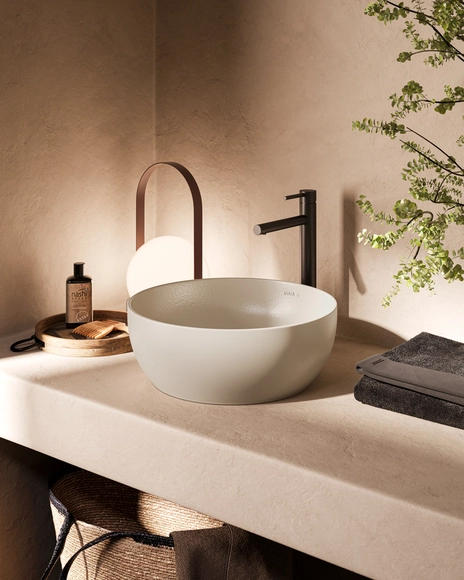
Recycled Ceramic Washbasin. Image Courtesy of VitrA
Producing sustainable materials and products demands constant analysis of how we conserve resources and manage waste effectively. This unfolds within a scenario where the environmental impacts of global warming and the climate crisis are becoming increasingly evident. In that context, sustaining the dialogue on waste disposal is fundamental to positively impacting our environment and maximizing circular economy opportunities.
https://www.archdaily.com/1016103/repurposing-discarded-waste-materials-into-a-100-percent-star-recycled-washbasinEnrique Tovar
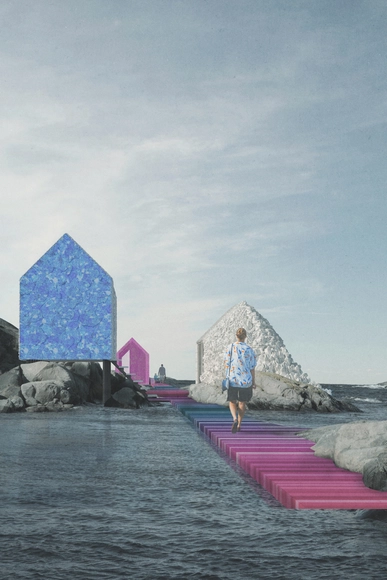
Plastic Island. Image Courtesy of Emily-Claire Goksøyr
As you read this, you may notice that you are surrounded by several items made of plastic. This omnipresence is no coincidence; the versatility of plastic has made it suitable for a variety of applications, and was described by its inventor—Leo Baekeland— as “the material of a thousand uses.” However, when it comes to environmental impact, the problem lies in its very qualities: it is so durable, adaptable, and easy to produce (430 million tons per year) that, according to UN data, the equivalent of 2,000 garbage trucks full of plastic are dumped into the oceans, rivers, and lakes every day.
https://www.archdaily.com/1016334/making-the-case-for-plastic-free-architecture-innovative-solutions-for-the-present-and-futureEnrique Tovar
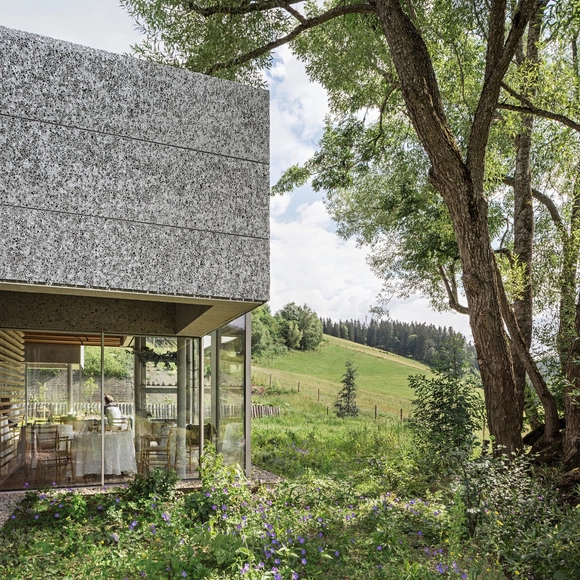
The use of contrast is an essential practice in both cuisine and architecture, whether it's harmonizing different aromas and flavors or integrating buildings from different eras. This principle comes to life in a striking way at the top of the imposing Austrian Alps, where the Steirereck am Pogusch restaurant strives for culinary excellence, architectural mastery and the fusion of tradition and innovation. Under the guidance of PPAG architects, the establishment has undergone a revitalization and expansion marked by a deep respect for nature, while making a bold statement of contemporary design.
Videos
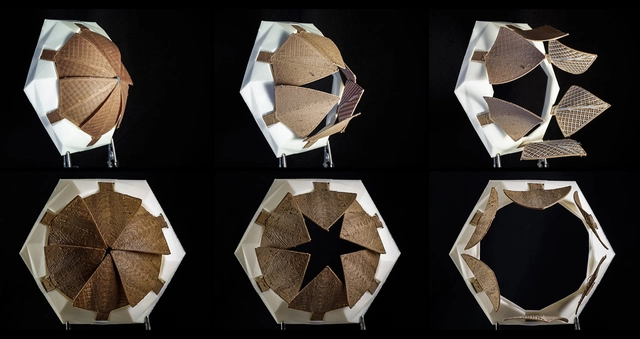
Fused filament fabrication for multi-kinematic-state climate responsive aperture. Image Cortesia de David Correa / Achim Menges
While we are still trying to understand the possibilities and limits of three-dimensional printing and additive manufacturing, a new term has emerged for our vocabulary. 4D printing is nothing more than a digital manufacturing technology -3D printing- which includes a new dimension: the temporal. This means that the printed material, once ready, will be able to modify, transform or move autonomously due to its intrinsic properties that respond to environmental stimuli.
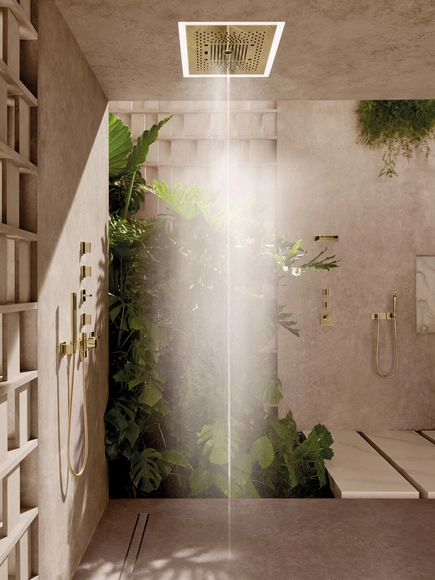
Water is fundamental to human life on several levels, and encompasses a spectrum of meanings that transcend the biological sphere, reaching the cultural and spiritual spheres. Biologically, it is indispensable, making up approximately 70% of our bodies and playing a central role in our physiological functions, from temperature regulation to vital cellular processes. Culturally and spiritually, water has deep significance, symbolizing purification, renewal and spiritual rebirth in a multitude of rituals and ceremonies performed in different cultures over the centuries.
In architecture, the presence of water is equally important, going beyond its basic cleansing function to encompass a rich diversity of meanings and influences. From the majestic Roman baths, where water was used for hygiene and also represented social status, offering moments of entertainment and relaxation; to contemporary bathrooms, where water is skillfully integrated to create luxurious and invigorating spa experiences. Its presence goes beyond the functional aspect and is also deeply symbolic. Evoking feelings of purification, renewal and serenity, water enriches architecture with an emotional and aesthetic dimension that transcends the boundaries of time and culture.
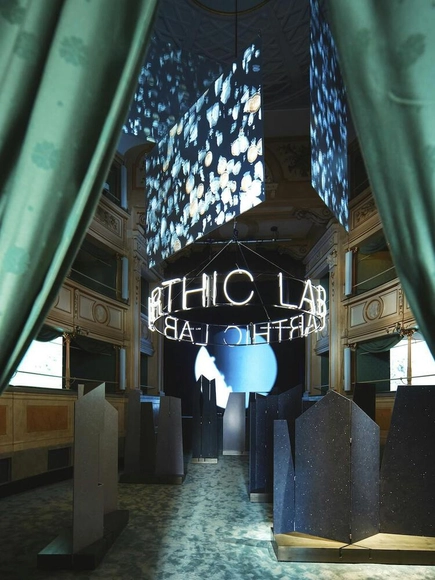
Milan Design Week is a celebration of creativity, innovation and excellence in design, captivating audiences from all over the world. It is an event that encompasses various design-related exhibitions and activities in Milan, while Salone del Mobile is Milan Design Week's main trade fair focused specifically on furniture and interior design. Every year, the city is transformed into a vibrant hub where designers, architects, artists and enthusiasts converge to explore the latest trends, ideas and innovations in the world of design. The instance is a catalyst for inspiration, promoting dialogue, collaboration and discovery across a range of design disciplines, from furniture and interior design to architecture, fashion and more.
In the Brazilian architectural scene, Felipe Savassi stands out for being a unique mix of designer and communicator. He shares his passion for architecture and his entrepreneurial vision with his thousands of students and followers on social media, with content that seeks to promote an approach centered on the promotion of industrialized and modular construction. With a degree in Architecture and Urbanism from the Isabela Hendrix Institute in Belo Horizonte, his professional activity is supported by four essential pillars: design and execution of architectural projects, education, mentoring and consulting, and a strong commitment to communication and content dissemination.
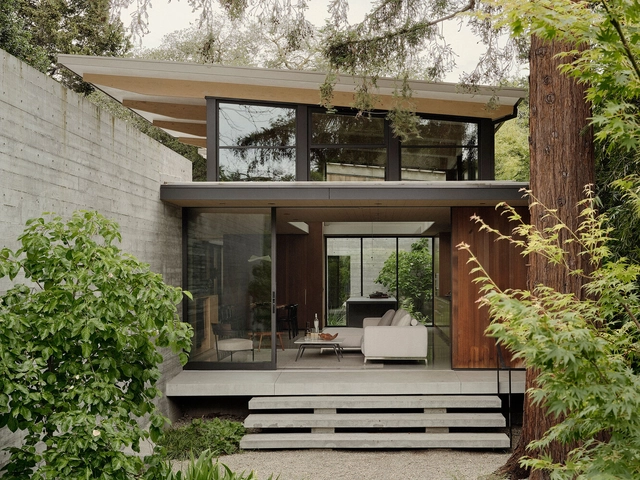
Courtesy of Feldman Architecture and Western Window Systems
When it came to designing a nature-embracing modern home in Palo Alto, California, USA, architect Tai Ikegami took his responsibility to protect and venerate the magnificent trees on the lot seriously.
When Wallace S. Broecker first introduced the concept of global warming in the 1970s, society probably didn't anticipate the implications of this phenomenon. Today, more than 50 years later, we have stopped predicting an adverse climate scenario and have begun witnessing it directly. It is now evident that the earth is breaking temperature records year after year, as a result of a disparity in the global response to the issue and a slow-moving reduction in carbon emissions.
https://www.archdaily.com/1016044/the-curtain-a-key-element-in-the-certification-of-sustainable-buildingsEnrique Tovar