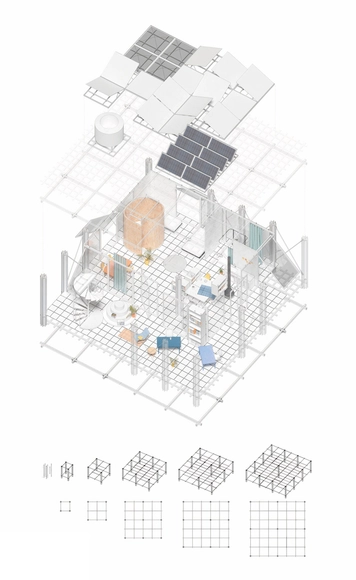
Housing is a diverse architectural typology whose configuration is determined not only by those who design it but also by the use of those who live in it. Therefore, homes are fundamentally adaptable structures that evolve in line with their time and users, undergoing constant changes manifested in the ways of living. The house conceived today will not be the same as the one built tomorrow, so it becomes necessary to maintain a critical and profound approach to the role it plays in the built environment.
https://www.archdaily.com/1015545/how-can-modular-design-be-used-to-revolutionize-housing-architectureEnrique Tovar
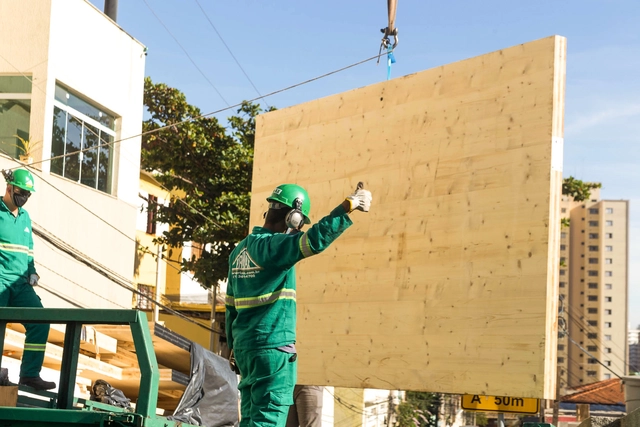
Obra realizada com Mass Timber Urbem. Image Cortesia de Urbem
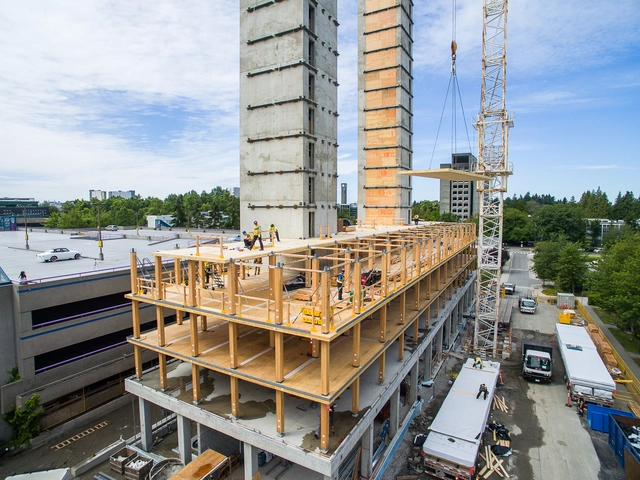
At a time when sustainability and ESG (environmental, social, and governance) concerns are prevalent, there is a crucial need to focus on a sector that accounts for 38% of all global CO₂ emissions and consumes 30% of global resources: the construction industry. In 2022, at COP27, the United Nations announced the Clean Construction Accelerator, a program with actions designed to reduce greenhouse gas production by up to 50% by 2030. A report by ARUP and the World Business Council for Sustainable Development suggests that half of building emissions come from embodied carbon, which is generated in the manufacturing and transportation of materials, not just in construction sites and buildings themselves. It is precisely in this scenario that we see an opportunity for the sector. What is the only renewable material in construction that retains carbon instead of emitting it? Wood.
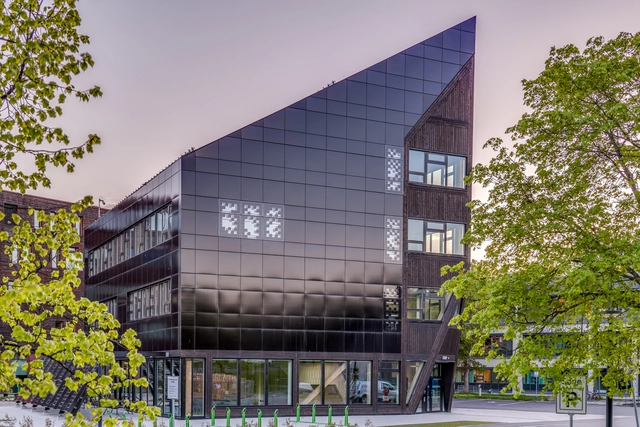
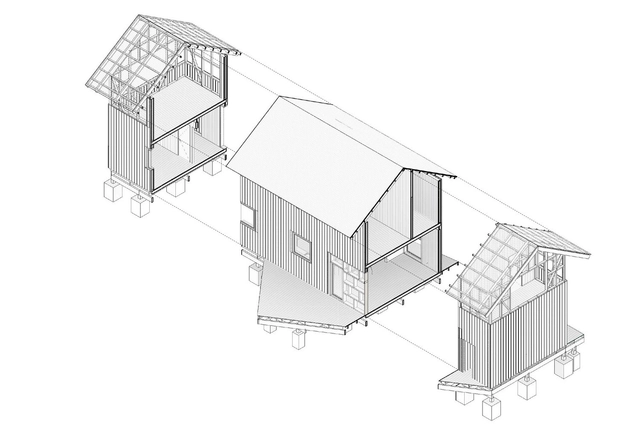
ZEB Living Lab is a research building that stands out for its pioneering initiative among zero-emission buildings, seeking to have a significant impact on the future. Located in Trondheim, Norway, it is much more than just a building; it is a tangible manifestation of the global commitment to sustainability and innovation. Conceived as an advanced research laboratory and a practical example of sustainable construction practices, it represents the point of convergence between architecture, technology and environmental awareness. Managed in collaboration between NTNU (Norwegian University of Science and Technology) and SINTEF (Scandinavian Institute of Technology), this center of scientific excellence is a platform for living experimentation, where innovative materials and solutions are developed, tested and demonstrated in direct interaction with the building occupants.
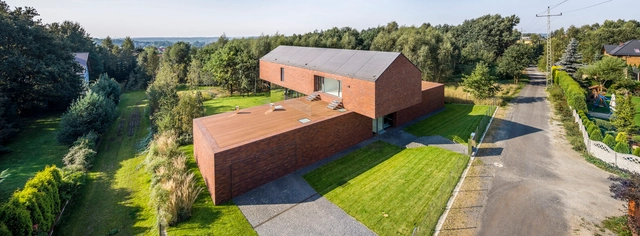
Among the "Five Points of New Architecture" formulated by Le Corbusier, terrace gardens figure as a way to take advantage of a building's so-called fifth facade, either as leisure areas or landscaping spaces. Thanks to technological advances in reinforced concrete in the mid-twentieth century, usable flat roofs are far from new. There are traces in Mesopotamia and vernacular architecture from Greek and Arab civilizations. However, problems that frequently arise relate to infiltration and leaks. Water is relentless in finding a place to drain, and flat roofs are exposed to this when execution and design are not carefully thought-out. In fact, as documented in several letters, this was a source of disagreement between the owner and the Swiss-French architect in the case of the influential Villa Savoye. Today, nonetheless, there are good waterproofing options on the market that provide durability, resilience, adaptability and, above all, avoid headaches and fights between builders and owners. Elevate is built on 40 years of history in the production of roofing membranes, as well as insulation and vapor barriers, and develops solutions for waterproofing flat roofs with a low inclination.
El Tume House / abarca+palma. Courtesy of abarca+palma
The current demands of the industry lead architects to design based on construction solutions that accelerate processes without compromising quality, while reducing waste and dependence on intensive labor. Among these options, SIP panels stand out as a modular alternative that combines thermal and acoustic insulation with speed and construction precision.
Named after their acronym, SIP panels are self-supporting elements consisting of a rigid foam core sandwiched between two structural claddings, typically OSB boards. Strong yet lightweight, these panels are manufactured under strict factory controls and transported to the construction site, facilitating the rapid assembly of floors, walls, and ceilings, while creating an airtight thermal and acoustic envelope. The thickness of the panel depends on the combined thickness of its components, and its weight typically does not exceed 20 kg per square meter.
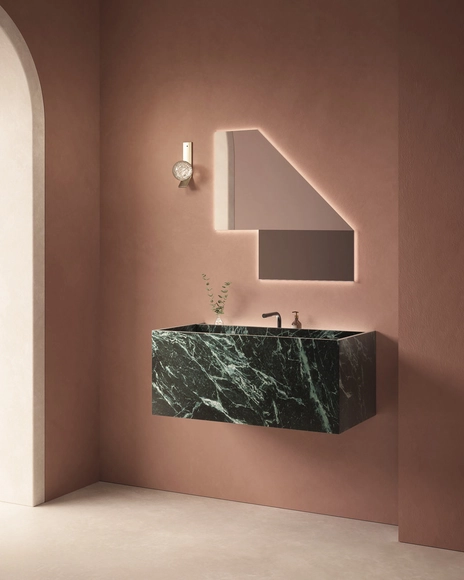
MyStreet washbasin in Verde Alpi marble _Design AL Studio. Image Cortesia de antoniolupi
Marble held profound significance in Greek and Roman architecture due to its abundance, luminous surfaces, and subtle veining. Its durability ensured structures' longevity, while its cultural symbolism of purity and divine favor made it ideal for temples, theaters, and amphitheaters. As a symbol of perfection, marble facilitated intricate craftsmanship for decorative elements, inspiring architectural marvels and exquisite art, leaving a legacy of sophistication and refinement.
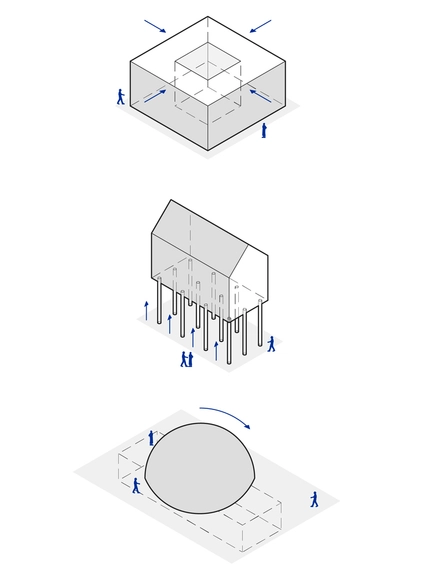
Introspection, Elevation, Covering-Up. Image Courtesy of Enrique Tovar
The flexibility of architecture allows it to continuously change and adjust its form in response to technological progress, social and artistic trends, and the collective experiences we undergo. Large-scale global events, such as the transatlantic migrations of the 19th century, the impact of tuberculosis on design, and most recently, the effects of the last major global health crisis (COVID-19), have all played significant roles in shaping the evolution of architecture.
https://www.archdaily.com/1015368/introspection-elevation-covering-up-radical-architectural-operations-for-adverse-climatesEnrique Tovar
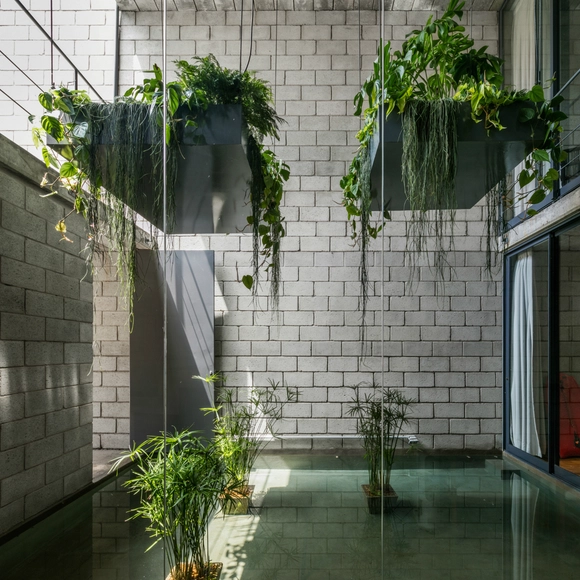
Concrete blocks are prefabricated materials primarily used for constructing walls. Similar to bricks, these blocks are stacked together and bonded with mortar, typically composed of cement, sand, and water. They are hollow inside to accommodate steel bars and mortar filling.
For some, it may be terrifying to think that we inhabit a sphere orbiting the Sun, whose core has temperatures of up to 6,000°C and all human activities are located on the Earth's crust, the smallest layer in thickness, in the so-called tectonic plates. These plates float on the mantle, more precisely in the asthenosphere, and sometimes collide, causing earthquakes. As we can see in this interactive map, earthquakes are much more frequent than we imagine, with dozens occurring daily around the world, many of them unnoticed. But some are extremely potent, and when they occur near urban areas, they are one of the most destructive forces on Earth, causing death and damage to the built environment.
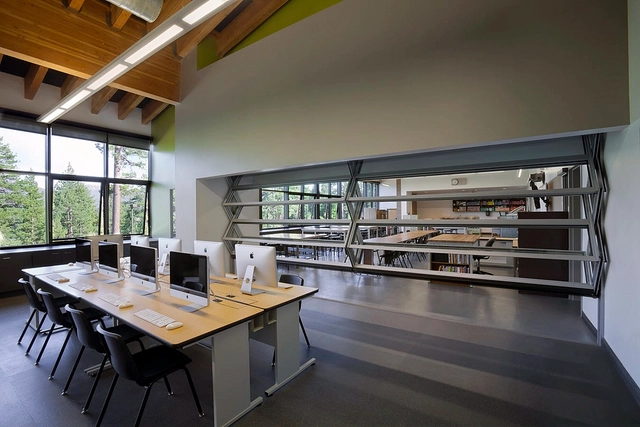
Flexibility has become a distinctive feature of contemporary interiors, driven by factors like the evolution of architectural programs and the progressive reduction of interior spaces, among others. This transition has shifted interiors from static to dynamic, aiming to achieve a state-of-the-art balance in space configuration. This sentiment is well encapsulated by Ricardo Bofill's statement that "architecture is the art of structuring space."
https://www.archdaily.com/1014623/movable-walls-the-transformative-effect-of-retractable-and-folding-partitionsEnrique Tovar
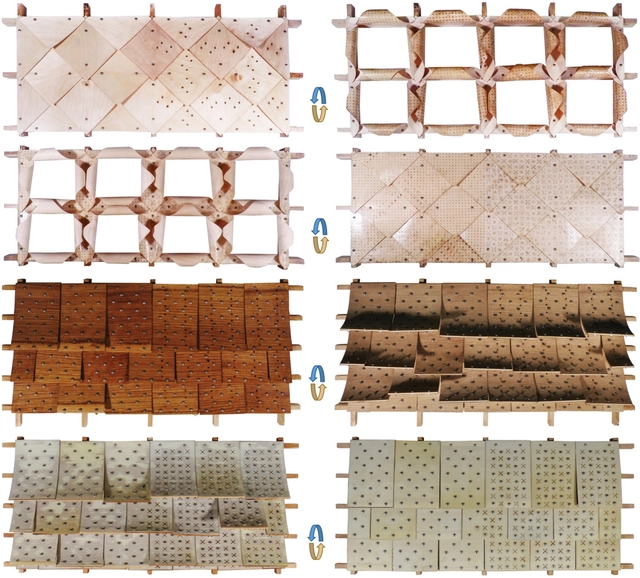
When discussing sustainability in construction, we are used to an approach based on complex technological solutions, expensive sensors, costly materials and, most recently, artificial intelligence. But what if everything we are looking for (in terms of sustainability) could come from the materials themselves, taking advantage of their intrinsic properties, without even relying on electricity? The use of hygromorphic materials offers an innovative perspective and sheds light on little-explored possibilities in the field. These materials can adapt to variations in environmental humidity, changing their shape, size or other physical properties. Examples in nature include wood, hygroscopic proteins such as collagen, polysaccharides such as cellulose and chitin, hygroscopic minerals such as certain salts and silica gel, as well as spores and pollen grains; all of which exhibit the ability to absorb or release moisture in response to changes in humidity. In architecture, researchers have been striving to develop materials, particularly for façades, that can take on a life of their own and make buildings more comfortable naturally.
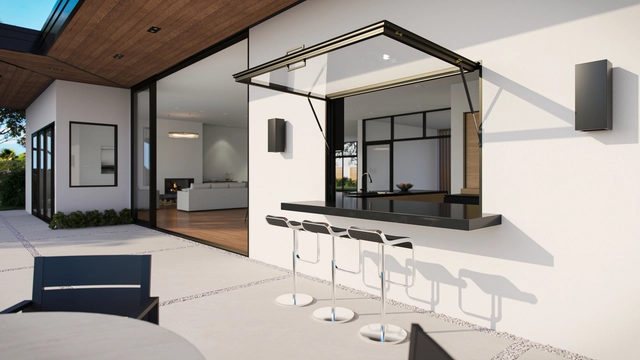
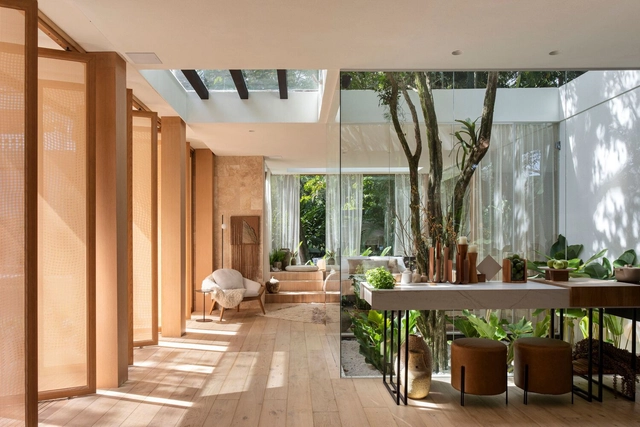
The desire for fluid integration between spaces has become increasingly relevant in contemporary architecture. This reflects a search for more connected and harmonious living experiences, especially in urban environments, where the cityscape can saturate us. By transcending conventional boundaries and blurring the lines between interior spaces and the vast outdoors, living environments can be created to celebrate connectivity, sustainability and the well-being that comes from being alongside nature. These types of integration not only make it possible to unite spaces with their surrounding contexts, but also to segment indoor environments when necessary, maintaining a visual connection while keeping them functionally separate. By creating these integrations, architects and designers allow spaces to merge with each other or with nature, promoting a sense of tranquillity, balance and rejuvenation, as well as integration and fluidity—a seamless transition that blurs the distinction between the two. This is achieved through architectural elements such as large windows and doors, which dissolve barriers through the simple action of opening and closing.
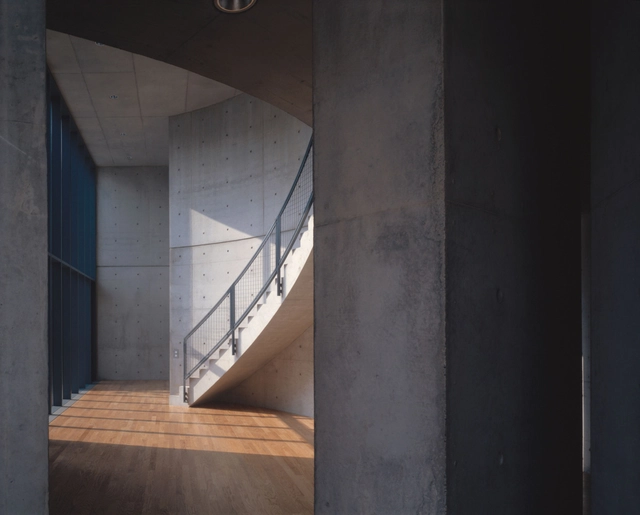
If there is any consistent factor in his work, says Pritzker-winning architect Tadao Ando, then it is the pursuit of light. Ando’s complex choreography of light fascinates most when the viewer experiences the sensitive transitions within his architecture. Sometimes walls wait calmly for the moment to reveal striking shadow patterns, and other times water reflections animate unobtrusively solid surfaces. His combination of traditional Japanese architecture with a vocabulary of modernism has contributed greatly to critical regionalism. While he is concerned with individual solutions that have a respect for local sites and contexts Ando’s famous buildings – such as the Church of the Light, Koshino House or the Water Temple – link the notion of regional identity with a modern imagining of space, material and light. Shoji walls with diffuse light are reinterpreted in the context of another culture, for instance, filtered through the lens of Rome’s ancient Pantheon, where daylight floods through an oculus. Ando’s masterly imagination culminates in planning spatial sequences of light and dark like he envisioned for the Fondation d’Art Contemporain François Pinault in Paris.
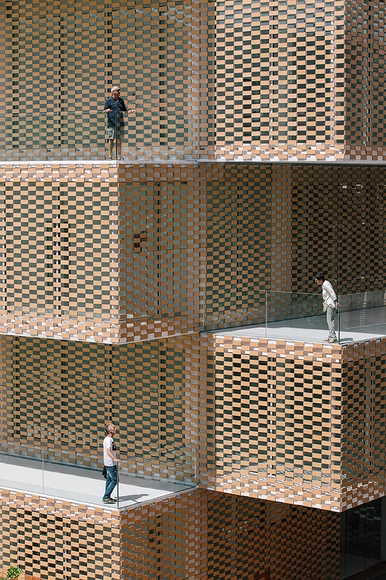
When considering traditional brick facades, we usually conjure up images of solidity and robustness. Solid ceramic blocks, recognized for their ability to withstand compression and offer strength and durability to structures, are materials frequently used in architecture. However, innovation in construction materials has made space for solutions that combine tradition and modernity, transforming the use of materials such as brick. In contemporary construction, the integration of solar control measures has become essential to improve the energy efficiency of buildings, especially in hot climates where the need to mitigate the effects of solar radiation is critical. This is one of the areas in which brick can play a significant role, aided by new technologies.
The early 20th century marked a pivotal era in Brazilian architecture with the advent of the modernist movement. Architects like Oscar Niemeyer or Lúcio Costa introduced avant-garde designs characterized by sleek lines, reinforced concrete, and a focus on functionality. What's more: residential projects of the era, in particular, blurred the lines between indoor and outdoor, flawlessly merging interior and exterior spaces to reflect a lifestyle that harmonizes with nature. Fast forward to the present day, and contemporary architects and designers in Brazil continue to embrace the challenge of creating indoor-outdoor homes that nod to the country's tropical climate. These residences often feature open floor plans, expansive glass walls, and strategic positioning of courtyards, gardens, or terraces with a design philosophy that emphasizes natural light, ventilation, and the incorporation of greenery for increased well-being. We take a detailed look at four recently completed residential projects in Brazil that fuse contemporary architecture, sustainable living, and a deep appreciation for their natural surroundings.
Just as fashion designers use pins, needles and textiles to bring their creations to life, architects rely on materials to shape our built environment. From steel and glass to wood and concrete, these form the artistic palette that transforms blueprints into tangible structures, bridging the gap between imagination and reality. It's as simple, yet as complex as that. But with so many materials –and countless shapes, finishes, textures and colors– available in this day and age, making the correct choices for a particular project can be quite challenging. Several questions naturally arise: How do architects navigate the endless possibilities to handpick the elements that will breathe life into their designs? What does the material specification process entail? Where does one begin?
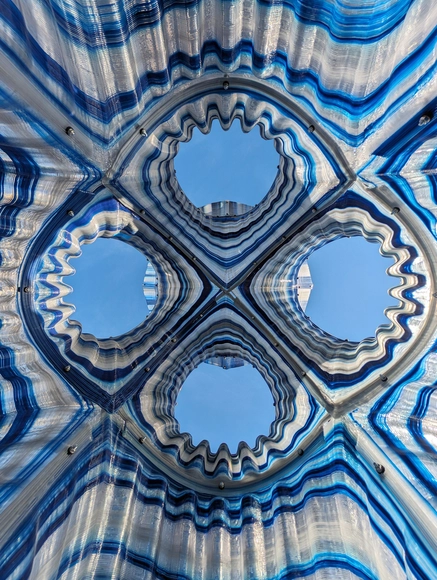
As an additive manufacturing method, 3D printing has been characterized by the construction of objects through the horizontal deposition of material, layer by layer. This still restricts, nonetheless, the manufacture of elements and limits the shape of early prototypes to within the range that allows the addition of material in a single direction, making it difficult to create complex shapes with smooth curves.
Each piece of furniture, be it a table, a chair, or a sofa, is much more than just a functional element. It is a bearer of stories, a keeper of memories, and a reflection of the craftsmanship of those who brought it to life. When it comes to wooden furniture, this connection with history and skill is even deeper; every grain, knot, and shade tells the story of the tree it came from, and the craftsmanship of the artisans is manifested in the curves and joints. In the contemporary context, where mass production and fast-paced trends tend to standardize the world around us, furniture making remains a beacon of authenticity, and wood continues to be highly prized. It's a haven where exclusivity and connection with the natural are celebrated, resisting the passage of time.