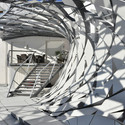
The ten finalists competing in the final phase of the National Mall Design Competition are dreaming big. Proposals to restore the National Mall include flourishing lakeside gardens, contemporary cafés hovering over water, grassy new amphitheaters and underground pavilions exposed at the foot of the Washington Monument. Since the announcement of the finalists, the teams have been refining there proposals behind closed doors.
Now, the Trust for the National Mall has released the highly anticipated proposals to the public. From now until Sunday, at the Smithsonian Castle and the National Museum of American History, you can view each proposal in its entirety. If you don’t live in the D.C. area, no need to worry. Continue after the break to catch a glimpse of each submission and learn how you can help the jury decided who will revamp America’s “front yard”.
The center of Tirana is marked by a clear urban layout, but its recent growth filled up a large area around it without any order, structure, adequate services or meaningful public spaces. In this proposal by Cino Zucchi Architetti, in collaboration with One Works, Gustafson Porter, Buro Happold London, and Antonello Stella Architects, the voids rather than the buildings become the catalysts of new urban regeneration. In doing so, their design attracts public and private functions around a sequence of green spaces of high environmental quality. The extension of the boulevard into a lively green promenade progressively opens up to the beautiful landscape of the hills across the Tirana river. More images and architects’ description after the break.
Walk into the cafeteria at the Googleplex and you are nudged into the “right” choice. Sweets? Color-coded red and placed on the bottom shelf to make them just a bit harder to reach. “Instead of that chocolate bar, sir, wouldn’t you much rather consume this oh-so-conveniently-located apple? It’s good for you! Look, we labelled it green!”
Like the Google cafeteria guides you to take responsibility of your health, Google wants to transform the construction industry to take responsibility of the “health” of its buildings. They have been leveraging for transparency in the content of building materials, so that, like consumers who read what’s in a Snickers bar before eating it, they’ll know the “ingredients” of materials to choose the greenest, what they call “healthiest,” options.[2]
These examples illustrate the trend of “medicalization” in our increasingly health-obsessed society: when ordinary problems (such as construction, productivity, etc.) are defined and understood in medical terms. In their book Imperfect Health, Borasi and Zardini argue that through this process, architecture and design has been mistakenly burdened with the normalizing, moralistic function of “curing” the human body. [3]
While I find the idea that design should “force” healthiness somewhat paternalistic and ultimately limited, I don’t think this “medicalized” language is all bad – especially if we can use it in new and revitalizing ways. Allow me to prescribe two examples: the most popular and the (potentially) most ambitious urban renewal projects in New York City today, the High Line and the Delancey Underground (or the Low Line).
More on “curative” spaces after the break. (Trust me, it’s good for you.)
Sasaki Associates, with RDG Planning & Design and Applied Ecological Services (AES), were recently announced as the winning team of the Water Works Parkitecture Competition. The international design competition entailed the creation of a conceptual plan for Water Works Park to form dynamic relationships between the river, the watershed, and the community. Education and the connection between the river and the community were highly stressed in Sasaki’s winning proposal. More images and architects’ description after the break.
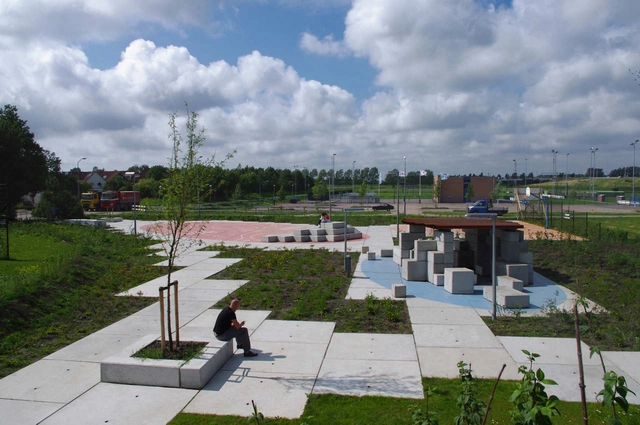
The Europan 11 winning proposal by CUAC Arquitectura, Serrano + Baquero Arquitectos, and Luis Miguel Ruiz Aviles arises Niwu Water Garden by the ensounter of three main materials: water, city and farmland. In a scenic enclave of particular importance to the city of Leeuwarden an appropriate balance between these materials allows to think about a hybrid landscape which establishs a transition between rural and urban. The result is a new environment in which elements of the city (the traditional and the present) establish a proper dialogue with the existing agricultural plot and its associated infrastructure. More images and architects’ description after the break.
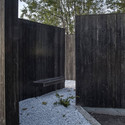
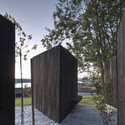
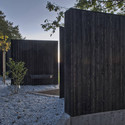
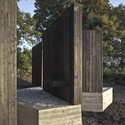
The series of a pavilions with different public functions and programs by AWP + HHF Architects are part of a future 113 hectare large public green space along the Seine river, in Carrière-Sous-Poissy, at the end station of the RER line A and close the renown Villa Savoye from Le Corbusier. The Park designed by the Paris based landscape architects Agence TER will be a public park and ecological showcase for local residents and a leisure destination for people living in and around Paris. More images and architects’ description after the break.
Skidmore, Owings & Merrill (SOM) and PWP Landscape Architecture shared with us their proposal for the 8 Washington development in downtown San Francisco. The plans will continue the revitalization and support enjoyment of the historically under-utilized northeast waterfront by reconnecting the City with the Bay and providing housing and community amenities which include: dynamic pedestrian corridors linking Pacific Avenue and Jackson Street with The Embarcadero; a children’s play area featuring interactive sculptural gardens; an expanded health and aquatics center; cafés, restaurants and retail; and centralized underground public parking for the Ferry Building Waterfront Area. More images and project description after the break.