1. ArchDaily
  2. Landfills

Landfills: The Latest Architecture and News

Unearthing the Ground: Architecture and the Politics of Waste

Audio available

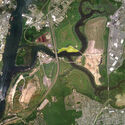
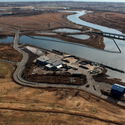
In 1948, Robert Moses established the Fresh Kills Landfill on the western shore of Staten Island. The site, chosen for its remote marshland and cheap land value, was meant to be temporary, but by 1955 it was the largest landfill in the world, receiving up to 29,000 tons of refuse per day at its 1991 peak. By 2001, after more than fifty years of continuous operation, Fresh Kills covered 2,200 acres, roughly three times the area of Central Park, and was, unspectacularly, visible from space. When it started, Moses didn't expect to design a dump but, without calling it that, a new landform with four artificial hills rising up to sixty meters above sea level built entirely from the accumulated residue of eight million daily lives.

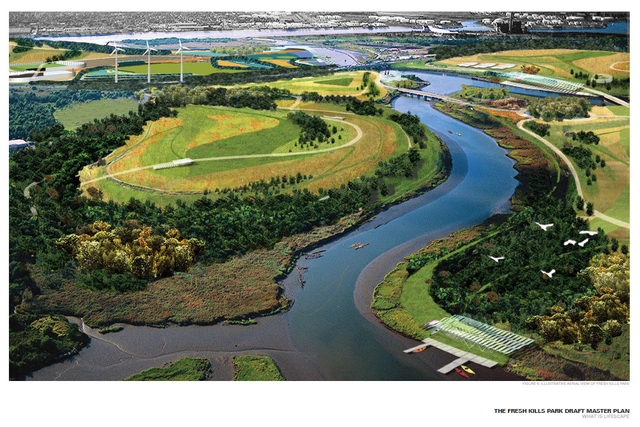
That landform is now, slowly, becoming a park. James Corner Field Operations won the international design competition launched by the city in 2001, producing a master plan called Lifescape that will take thirty years to complete. The landfill's four mounds are being capped, planted, and gradually opened to the public. Methane from decomposing waste is captured and fed into an energy system as the wetlands are being restored around the engineered hills. Evidence of New York's consumption transformed into a feat of ecological engineering and an act of institutional memory management (a way of making a city's most embarrassing landscape slowly look like something it was always meant to be).
Unearthing the Ground: Architecture and the Politics of Waste - Image 1 of 4Unearthing the Ground: Architecture and the Politics of Waste - Image 2 of 4Unearthing the Ground: Architecture and the Politics of Waste - Image 3 of 4Unearthing the Ground: Architecture and the Politics of Waste - Image 4 of 4Unearthing the Ground: Architecture and the Politics of Waste - More Images+ 10

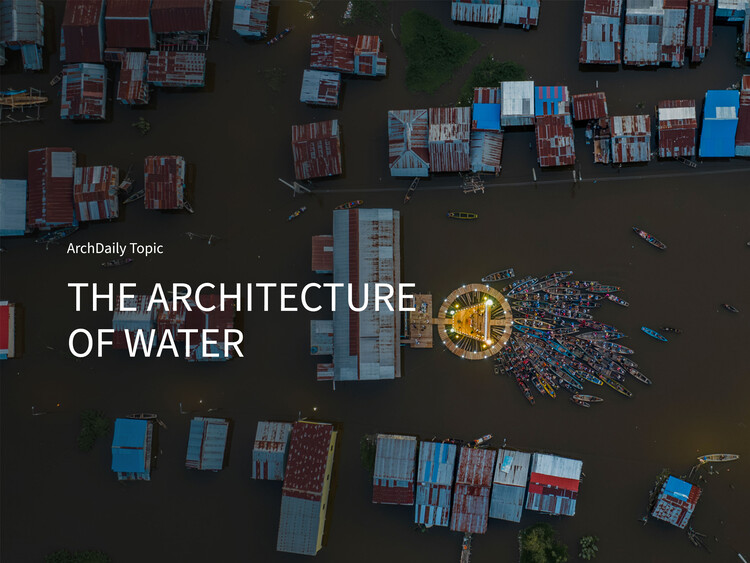
The Architecture of Water: ArchDaily's October Editorial Focus

Audio available

Water is life. Animals, plants, fungi, and bacteria all depend on it: water structures their cells, carries their nutrients, and hosts the chemistry that keeps them alive. Even the rare exceptions confirm the rule. Some seeds and spores can lose nearly all their water and enter a dormancy so deep that their metabolism almost stops, yet it is water that brings them back. In the most literal sense, water connects us.

But it also divides us. Every year, thousands of people leave North Africa in overcrowded boats bound for Lampedusa, seeking better living conditions in Europe; more than 30,000 have died or gone missing in the Mediterranean since 2014. Water draws borders and controls flows. Before the war on Iran began in February 2026, the Strait of Hormuz carried around 25% of the world's seaborne crude oil, with effects felt in fuel prices far from the Gulf. Water also sits at the center of the environmental debate, where its excess can be as lethal as its absence. Severe floods increasingly strike countries that have contributed least to global emissions, while the largest polluters remain better equipped to resist. If water is life, it can also mean death. Ultimately, water is political.

The Architecture of Water: ArchDaily's October Editorial Focus - Image 1 of 4The Architecture of Water: ArchDaily's October Editorial Focus - Image 2 of 4The Architecture of Water: ArchDaily's October Editorial Focus - Image 3 of 4The Architecture of Water: ArchDaily's October Editorial Focus - Image 4 of 4The Architecture of Water: ArchDaily's October Editorial Focus - More Images+ 2

Landfill Reclaimation: Fresh Kills Park Develops as a Natural Coastal Buffer and Parkland for Staten Island

Every natural disaster has an "aftershock" in which we realize the fragility of our planet and the vulnerability of what we have built and created. We realize the threat to our lifestyles and the flaws in our design choices. The response to Hurricane Sandy in October 2012 was no different than the response to every other hurricane, earthquake, tornado , tsunami or monsoon that has wrought devastation in different parts of the world. We recognize our impact on the climate and promise to address how our development has caused severe disruptions in the planet's self-regulating processes. We acknowledge how outdated our systems of design have become in light of these damaging weather patterns and promise to change the way we design cities, coastlines and parks. We gradually learn from our mistakes and attempt to redress them with smarter choices for more sustainable and resilient design. Most importantly, we realize that we must learn from how natural processes self-regulate and apply these conditions to the way in which we design and build our urban spaces.

Since Hurricane Sandy, early considerations of environmentalists, planners and designers have entered the colloquiol vocabulary of politicians in addressing the issues of the United States' North Atlantic Coast. There are many issues that need to be tackled in regards to environmental development and urban design. One of the most prominent forces of Hurricane Sandy was the storm surge that pushed an enormous amount of ocean salt water far inland, flooding whole neighborhoods in New Jersey, submerging most of Manhattan's southern half, destroying coastal homes along Long Island, and the Rockaways and sweeping away parts of Staten Island. Yet, despite the tremendous damage, there was a lot that we learned from the areas that resisted the hurricane's forces and within those areas are the applications that we must address for the rehabilitation and future development of these vulnerable conditions. Ironically, one of the answers lies within Fresh Kills - Staten Island's out-of-commission landfill - the largest landfill in the United States until it was shutdown in 2001. Find out how after the break.

Fresh Kills Landfill was opened in 1947 along the western coast of Staten Island as a temporary solution for New York City's waste just in time to accommodate an exponential rise in consumption in the post-World War II United States. Three years later, and the landfill continued to operate until it became the principal landfill for New York City, collecting the solid waste from all five boroughs in the "age of disposability". It is no wonder then, that the temporary solution swiftly became a 50-year one.